Skip to content
Live
Oct 23Fri
  1. Microsoft Research58

    Flint-interactive: A language for creating interactive data visualizations

    Flint-interactive makes AI-generated charts highly interactive, allowing users to explore data through clicks, filtering, zooming, highlighting, and cross-chart interactions. It simplifies the construction of complex interactions through advanced semantic events and update operations, and leverages the Flint compiler to handle interaction logic and visual dependencies, enhancing reliability and development efficiency. Flint-interactive supports creating interactive data stories, dashboards, and connected experiences, enabling AI agents to generate charts with interactive features to help users analyze data more efficiently.


  2. AWS Machine Learning Blog34

    How Rescale uses Strands Agents and AI-DLC to build intelligent AI routing agents

    Rescale utilizes Strands Agents and the AI-DLC framework to set up intelligent routing agents on AWS in five days and deploy them in production within weeks. The agent classifies end-to-end test failures at night by calling Claude Opus 4.8, retrieves historical failure patterns from the knowledge base, queries MCP logs for runtime evidence, and generates remediation reports containing file references, function names, and recommended fixes for engineers to review.

  3. Hugging Face Daily Papers65

    LASAGNA evaluated the composition of retrieval augmented generation (RAG) pipelines

    LASAGNA evaluated the performance of 450 RAG pipeline configurations on 8 benchmarks and 5K-200K document corpora, finding that individual technology advantages at different stages do not necessarily combine effectively, retrieval quality and answer faithfulness optimization directions are different, the best combination varies with corpus size, indicating that isolated test results are unreliable, new RAG technology needs to be evaluated in a complete environment.

Oct 22Thu
  1. Sierra Blog75

    𝜏-Entity: How does the speech intelligence agent accurately capture entity information

    The 𝜏-Entity benchmark speech intelligence agent captures the accuracy of entity information such as names and phone numbers in 200 tasks. GPT Live 1 has a correct rate of 60.3% under normal conditions, but only 34.0% under noise and voice interference; recommended verification strategies can increase success rates by 14-31 percentage points, but call duration increases by 21-28 seconds.

  2. Google DeepMind

    Google DeepMind releases Forest Typology (ForTy) 2020 global forest type map

    Google DeepMind and Google Research jointly release the Forest Typology (ForTy) 2020 Global Map, which classifies every 10x10 meter land on Earth into six types of forests and land use, and tracks changes from 2017 to 2025. The map is based on definitions by the United Nations Food and Agriculture Organization, accurately distinguishing native forests, plantations, monoculture forest plantations, economic crop forests, and other land types, supporting the EU's deforestation regulations with an accuracy of 90%.

    Same story · 2 outlets

    How the accounts differ:Google DeepMind states the map classifies land into six types; The Decoder mentions only four types (original forest, plantations, and tree crop farms).

  3. Hugging Face Daily Papers

    AKV introduces caching project management for LLM intelligent entity key-value caching

    AKV proposes a caching engineering solution, managing LLM agent key-value caches through drop and repos operations, enhancing efficiency and accuracy. Experiments show that tool response rolling drop caching strategy improves the average benchmark score by 1.7 points, reduces costs by 27.7%, maximizes output throughput by 1.2 times, and accelerates P95 request latency by 1.5 times.

  4. Hugging Face Daily Papers65

    Future Chunk Prediction (FCP) enhances the physical plausibility of autoregressive video generation.

    Future Chunk Prediction (FCP) improves autoregressive video diffusion models by introducing future chunk supervision, generating videos that better adhere to physical laws and reducing training costs. This method, under the teacher forcing framework, predicts temporally separated video chunks without relying on intermediate visual context, directly utilizing training videos for supervision, requiring no additional pre-trained visual encoder, and not altering autoregressive inference.

  5. Hugging Face Daily Papers65

    StreamEval: Benchmark for evaluating interactive streaming video generation models

    StreamEval benchmarked the performance of interactive streaming video generation models on five tasks, finding reliable request execution and sustained state consistency to be major challenges. The benchmark includes 300 scripted test cases, covering character dialogue, character performance, world generation, instruction editing, and reference editing tasks, scored across four evaluation dimensions (task execution, state consistency, visual fidelity, and audiovisual coordination).

  6. Hugging Face Daily Papers70

    Spectral-Spatial Interpretation (SSI) Released: Explain Model Scores Through Symbolic Attribution of Spatial Units and Spectral Channels

    Spectral-Spatial Interpretation (SSI) released, using symbolic attribution to explain model scores, assigning contributions to each spatial unit and spectral channel. SSI performed best on average across three metrics under three datasets and two mask baselines, for example, the mean baseline score of HLS joint removal was 0.1545 higher than KernelSHAP's 0.2096. SSI outperformed comparative methods in spatial localization, spectral Hit@K, and channel removal.

  7. The Verge · AI40

    Investment Research Company Attempts to Use Anthropic's Claude to Generate Scorpion Antivenom but Fails

    Investment Research Company Citrini Collaborates with Anthropic to Try Generating Scorpion Antivenom Using an Unreleased Claude Model, Which Generated Approximately 211 Candidate Protein Designs, 17 of Which Can Bind to Part of Scorpion Toxin. Experts Point Out This is Only an Early Stage of Drug Development, and Converting Candidate Molecules into Effective Drugs Still Faces Huge Challenges. Citrini Admits the Experiment Did Not Successfully Create a Drug but States It Showcases the Potential of AI-Assisted Drug Discovery

  8. ChinaTalk

    ChinaTalk reports: The third wave of data collection for humanoid robot training - taking the NVIDIA EgoScale project as an example

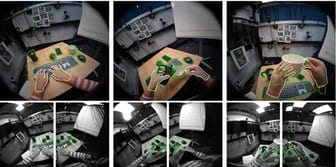
    NVIDIA EgoScale project collects first-person video data for 20,854 hours from 1000 participants by installing cameras on their foreheads and wrists to train humanoid robot hand skills; this new method, called 'ego-centric data collection', marks the third generation of humanoid robot data collection, aiming to solve the fatigue, cost, and accuracy problems of traditional remote operation and isomorphic exoskeleton methods.

  9. Synced65

    Shengshu Technology Motubrain Team Discloses Full Process of Physical AI Training

    The Motubrain team of Shengshu Technology has been live-streaming for half a month, openly showing the entire process of Physical AI training. Previously, Luo Fuli, the former head of Xiaomi's MiMo, had already disclosed the training progress of the MiMo-V2.6 reinforcement learning stage.

  10. Synced58

    Adobe Research and UCLA jointly propose the Tev model, an open-source 27B model that matches the performance of GPT-6 Astra and Claude Opus 5 on long-range reasoning tasks.

    The Tev model proposed by Adobe Research and UCLA matches the performance of GPT-6 Astra and Claude Opus 5 on long-range reasoning tasks. This model is an open-source 27B parameter model that enhances agent capabilities by constructing a 'world of answers' and designing long-range questions.

  11. QbitAI58

    Qianju Technology releases the predictive world model Polibrain, a year earlier than the similar research by the LeCun team.

    Qianju Technology released the predictive world model Polibrain, a year ahead of similar research by the LeCun team. The model uses polynomial representation and causal memory techniques to enable robots to learn autonomous decision-making based on changes in the physical world and has been adapted to various robot forms such as quadrupedal, humanoid, and wheeled. Polibrain employs a loosely coupled architecture, separating environmental understanding from action execution, supporting reuse across different architectures, and providing intelligent capabilities for various robots.

  12. The Decoder

    OpenAI agents analyzed mouse brain data in 32 minutes, while humans take months to complete the task.

    OpenAI, together with PerturbAI and Scripps Research, deployed thousands of AI agents to analyze biological data from millions of mouse cells on GPT-Rosalind, completing the full-brain CRISPR spectrum analysis in 32 minutes, whereas manual analysis takes months to a year. Human experts preferred the reports of distributed agents 75% of the time in blind tests; the 'reasoning graph' has been open-sourced on GitHub, and related papers are published on bioRxiv.

  13. ITHome · AI

    MiHoYo, in collaboration with Tsinghua and Peking Universities, has released the open-source GameScaling game model, covering parameter scales from 0.8B to 27B.

    MiHoYo, in collaboration with Tsinghua and Peking Universities, has released the open-source GameScaling game model, covering parameter scales from 0.8B to 27B. This series of 8 models is based on the Qwen3.5 visual language model for continued pre-training, with training data involving games such as Minecraft and Doom. The model generates subsequent instructions based on game screens and operation records, supporting real-time game interaction. There are two versions for each of the 4 parameter scales: S1 and S3, and they are licensed under Apache 2.0.

  14. MarkTechPost

    Perplexity and NVIDIA researchers have launched JOLT: a joint teacher-student reinforcement learning method.

    Perplexity and NVIDIA have jointly launched JOLT, a post-training method for language models that uses joint online learning and teaching, where a single model plays both teacher and student roles. The teacher model receives privileged information and accepts KL punishment to approach the student model, while the student model learns through token-level distillation signals from the teacher model.

  15. MarkTechPost55

    Cactus Whistle 16.9 MB Speech Model Performance Evaluation on CPU: Comparison Results with Whisper Base

    The Cactus Whistle speech model transcribes seven languages on the CPU with a 16.9 MB file size and returns word timestamps and probabilities. Tests show it outperforms Whisper Base on its test-other dataset, but there is no significant difference from beam search, with the speed advantage shrinking as audio length increases. Additionally, it tested 30-second window audio processing, streaming latency, timestamps, keyword bias, other languages, noise, embedding, and speech-to-tool calling features.

  16. Hugging Face Daily Papers60

    WildAWM synthesizes controllable computer environments in real scenarios for general agent training

    WildAWM enhances the generalization performance of general agents in web, CLI, and GUI benchmark tests through interactive synthesis of controllable computer environments and tasks. The system supports graphical interfaces, model context protocol services, and command-line interfaces, fully based on open-source models, and introduces an execution-based level mechanism to address solvability, difficulty maintenance, and verifier reliability issues in task synthesis. After training the Qwen model in the WildAWM synthetic environment, it achieved significant improvements in 8 cross-distribution benchmark tests.

  17. Hugging Face Daily Papers65

    Hugging Face Daily Papers: Research on continuous pre-training of embodied agents in diverse virtual worlds

    Research has improved the learning ability of embodied agents in virtual worlds through continuous pre-training (CPT) across three dimensions: data scale, diversity, and model size, but there are limitations in long-distance world generalization. The study tested 120 configurations covering parameters from 0.8B to 27B, data budgets from 50 to 1600 hours, and five data mixtures. It was found that increasing data volume improves internal performance, diversity enhances related world transfer, and larger model sizes improve data efficiency but result in worse long-distance generalization.

  18. Hugging Face Daily Papers75

    PrismaCoder: Advancing open-source multimodal code intelligence through formulaic scoring synthesis

    PrismaForge enhances open-source models in visual encoding tasks to rival proprietary systems through scoring-based pipeline synthesis and filtering of high-quality multimodal code data; PrismaCoder-2M is currently the most diverse and largest open-source multimodal code dataset, with PrismaCoder-9B and PrismaCoder-35B outperforming the open-source field and matching proprietary systems after training on this dataset.

  19. Hugging Face Daily Papers65

    Can SpatialScout's VLM agents proactively explore and map 3D scenes?

    SpatialScout evaluated the performance of VLM agents in active 3D object mapping, revealing significant flaws in their precision metric map construction. Claude Opus 5.5 scored an average overlap of 41.71% in this benchmark test, with 47.23% of target IoU below 0.5 and only 3.25% exceeding 0.9, showing a significant gap between recovering rough layouts and building complete, precise metric maps.

  20. Sierra Blog75

    𝜏-i18n releases: Cross-language voice agent evaluation extended to five countries.

    𝜏-i18n expands 𝜏-Voice to five languages: Spanish, Brazilian Portuguese, Hindi, Korean, and Mandarin, evaluating cross-language performance using aviation, retail, and telecommunications tasks. The evaluation includes three dimensions: task completion, interaction effectiveness, and generation quality. The results show that Korean performed the weakest, GPT Live 1 had the highest task completion and generation quality, and Grok Voice Think Fast 2.0 had the best interaction but low generation quality.

  21. Microsoft Research

    Microsoft researchers and collaborators combined new mathematical ideas with human-guided AI to address the core problem of the KLS conjecture in high-dimensional geometry and probability.

    Microsoft researchers and collaborators combined new mathematical ideas with human-guided AI to prove the KLS conjecture in high-dimensional geometry and probability, which has been proposed for 31 years and widely regarded as the central unsolved problem in the field. AI tools explore candidate methods and perform detailed derivations, researchers evaluate, prune, and reorient the search, ultimately proving geometric principles in high-dimensional spaces, making the barrier no longer grow unbounded with increasing dimensions. Independent researchers confirm the result, identify key criteria, and complete formal verification with machine checking.

  22. Hugging Face Blog

    How to reduce inference cost by 77% in real-world applications using a specialized SLM vocabulary list.

    Qwen3-4B's specialized vocabulary list VocabX reduces inference cost by 77% by focusing on the cost of each token rather than frequency, without changing the base model. This method for the Portuguese essay scorer reduces the output layer vocabulary from about 152,000 lines to about 65,000 lines, significantly reducing the computational overhead of token splitting and unused vocabulary items.

Oct 21Wed
  1. Hacker News · AI hot posts

    Wiz Research uses AI to discover PHP core vulnerability PHP2Shell

    Wiz Research has discovered multiple severe memory safety vulnerabilities in PHP using cutting-edge AI models, allowing unauthenticated attackers to remotely execute code or leak memory-sensitive data, affecting PHP versions from 5.4 to the latest; the vulnerability chain requires complex steps, and AI has significantly reduced the difficulty of its implementation, being considered one of the most severe vulnerabilities in software history, PHP team has released a fix patch.

  2. NVIDIA Technical Blog35

    Use RFD4-Proteina to design proteins through reward-guided reasoning during the search.

    The RFD4-Proteina can design octapeptide protein sequences, with over 2.5 billion combinations; 100-peptide sequences have possibilities exceeding the number of atoms in the observable universe, among which there are proteins that can be developed for new therapies; this model uses reward-guided reasoning to search for solutions to the protein design search problem.

  3. NVIDIA Technical Blog65

    How NVIDIA OpenShell Reference Architecture Ensures Security and Governance for AI Agent Workloads at Scale

    NVIDIA OpenShell Reference Architecture ensures the security of AI agent workloads at scale by defining security boundaries and governance policies. The architecture allows agents to access files, tools, and the internet while performing complex tasks and enables dynamic collaboration. It mitigates risks associated with long-running agents through enhanced access control, audit logs, and permission management.

  4. QbitAI65

    Motubrain team from Shengshu Technology will live stream the entire process of Physical AI training, lasting for half a month.

    The Motubrain team from Shengshu Technology has launched a live stream of the 2.0 training process, lasting for half a month to showcase the training process of embodied models. The live stream covers four stages: pre-training, post-training, Agent task execution, and RSI exploration, opening the process from model training to capability iteration to the public. This move aims to enhance the transparency of Physical AI R&D and share research experiences in large-scale training and cross-task generalization.

  5. NVIDIA Technical Blog45

    Build AI factory digital twins with intelligent agent assistance using NVIDIA Omniverse DSX Blueprint

    NVIDIA Omniverse DSX Blueprint integrates plant floor plans, equipment assets, and engineering requirements into a unified model, supporting teams in review, revision, and simulation. Its intelligent agent-assisted workflow can connect these inputs, helping teams explore design alternatives and incorporate engineering feedback. The platform is open-source, supports an 8k context length, and provides usability through APIs.

  6. The Decoder78

    Claude Science designs protein binders from scratch to combat lethal scorpion venom

    Anthropic's Claude has essentially designed a protein complex targeting scorpion neurotoxins in the Claude Science research environment, a type of toxin that kills over 3250 people annually.

    Why it matters: Claude autonomously generated over 310,000 protein binder designs, and 17 of 211 validated in the laboratory met the criteria, providing the actual hit rate of AI-designed proteins.

  7. AWS Machine Learning Blog58

    vLLM enhances the TTFT performance of multi-round agent workloads through bidirectional KV transmission.

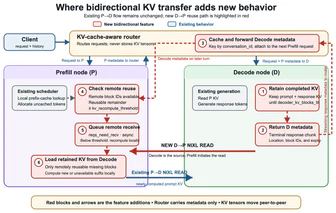
    vLLM's bidirectional KV transmission mechanism reduces redundant calculations by allowing the decoding node to return previously computed KV cache to the pre-filled node in subsequent dialogue turns. In multi-round benchmark tests on AWS EC2 P5en instances, it improved the TTFT of Qwen3-32B by 1.6x and zai-org/GLM-5-FP8 by 3.3x. This feature is implemented by extending the NIXL KV connector and utilizing a KV cache-aware router to coordinate KV reuse across dialogue turns.