Skip to content
Live
Nov 14Sat
  1. MarkTechPost62

    Stanford has open-sourced Memorilla, a potential memory module for freezing LLM development

    Stanford researchers have open-sourced Memorilla, a potential memory system designed for frozen LLMs. It converts the entire document collection into 16 vectors for use by frozen LLMs. On FactKG, the frozen Qwen3-8B paired with Memorilla achieves an accuracy of 84.33%, which is 3.9% higher than using all document contexts, but only requires 16 memory tokens, reducing the number of document tokens by 108 times.

Nov 13Fri
  1. Hacker News · 300+82

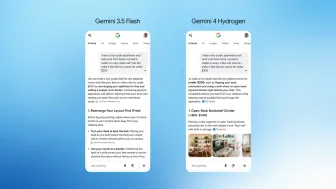
    Google launches Gemini 4 Hydrogen and Orchestrator in Antigravity.

    Google has launched Gemini 4 Hydrogen in Antigravity and added an Orchestrator model option, combining Hydrogen with stronger models like Gemini 4 Carbon for long-period tasks.

  2. Ars Technica · AI82

    Google launched Gemini 4 Hydrogen, replacing 3.8 Flash

    Google releases Gemini 4 Hydrogen, replacing Gemini 3.8 Flash in its own products, with access restrictions more relaxed than previous Argon and Carbon, available for use upon release

Nov 12Thu
  1. Hugging Face Daily Papers65

    MACaQ: A Fast, Model-Agnostic Calibration Quantization Method

    MACaQ is a post-training quantization method for MXFP4 W4A4, which reduces costs while maintaining accuracy in language and diffusion models by using online activation transformations and Hessian-aware refinement to independently quantize each linear layer. MACaQ achieves only a 2.3% end-to-end overhead increase on Qwen3-32B with vLLM, has a lower perplexity than DuQuant++ and MR-GPTQ, and reaches the best perplexity of Llama-3-8B in 11 times shorter quantization time.

  2. The Decoder85

    Google DeepMind releases AlphaProof Code, a four-week verification of the Signal encryption core

    Google DeepMind releases AlphaProof Code, an AI-powered mathematical proof software that meets security specifications, and completes the verification work usually requiring several years on the Signal encryption protocol in just four weeks.

  3. Claude · YouTube42

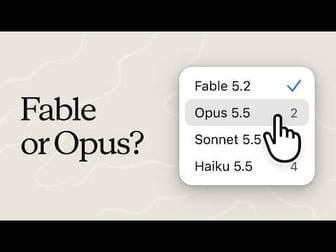
    Claude Code's use case selection between Fable 5.2 and Opus

    Claude Code released Fable 5.2, requiring users to select Opus 5.5, Fable 5.2, Sonnet 5.5, or Haiku 5.5 based on task type, or distribute tasks across models. The availability and usage restrictions of each model vary depending on the subscription plan. Guidelines suggest using the corresponding model for complex coding and knowledge work, open-ended technical tasks, and low-cost limited tasks, respectively.

Nov 11Wed
  1. Hugging Face Daily Papers

    World In-Context Learning for Agentic Robot Manipulation

    World In-Context Learning (WICL) method freezes the model, practices tasks in simulators, and writes feedback into the context rather than weights, enabling robots to learn operational skills from a single demonstration. RoboScript implements WICL, achieving an 83.4% success rate on 50 tasks in RoboTwin 2.0 with no gradient updates from a single demonstration, surpassing the strongest training strategy by over 20 points, and supports cross-visual distribution generalization, improvement through reflection, base model extension, and cross-platform memory migration.

  2. Hugging Face Daily Papers65

    The DexForesight framework enhances dexterous manipulation performance through implicit spatial foresight.

    The DexForesight framework implicitly learns spatial foresight by injecting a dynamic perception world representation into the latent space of dexterous strategies, increasing the success rate of basic strategies from 49.4% to 60.5% on 11 DexJoCo simulation tasks and achieving a 58.3% success rate on 3 real robotic dexterous operation tasks.

  3. Latent Space65

    OpenAI discussed new ways of working for Codex at the AI Engineers Code Summit.

    OpenAI introduced new ways of working for Codex at the AI Engineers' Code Summit, including improvements to cloud functions, voice interaction, and agent collaboration. Codex Cloud 2.0 allows users to run multiple tasks in isolated instances, but there are still usability issues with cloud functions. The voice mode, as a control plane, can manage code repositories, and personal agents dots can serve as safety nets, delegation nodes, and ubiquitous presences.

  4. Factory News

    Secure Factory: Connecting Security Discovery, Remediation, and Validation into a Continuous Workflow

    Security Factory connects the signal, classification, and remediation three stages to help engineering teams transform security discoveries into test fixes. It integrates existing tools and contextual information, automatically coordinates investigation tasks, generates a risk-prioritized remediation list based on validation, and simplifies the entire process from discovery to remediation.

  5. Google DeepMind87

    Google DeepMind releases the Gemini 4 Carbon cutting-edge model

    Google DeepMind has opened Gemini 4 Carbon to developers, enterprises, scientists, and consumers, claiming it has reached cutting-edge levels in network security capabilities and long-range intelligent agent workflows.

    Why it matters: The official provides the positioning division of roles between Carbon and Argon, multiple benchmark rankings, and cost comparisons per task to help determine when to use a heavier model.

Nov 10Tue
  1. MarkTechPost82

    Anthropic released Claude Fable 5.2 and Mythos 5.2: The same model, different safety guards.

    Anthropic releases Claude Fable 5.2 and Claude Mythos 5.2, both based on the same underlying model. Fable 5.2 adds a classifier to intercept high-risk cybersecurity tasks and most biology research tasks, while Mythos 5.2 removes these restrictions and requires access through the Cyber Verification Program and Life Sciences Verification Program.

  2. Hugging Face Daily Papers

    Frontier3DBench: A 3D creation benchmark test for code intelligent agents in open worlds across objects, scenarios, and interactions

    Frontier3DBench uniformly evaluated the ability of code agents in object, scene, and interactive 3D world creation across 145 tasks, GPT-6.1-sol performed best at the object and scene levels, with a total score of 66.02/100, but all configurations had reference reconstruction scores lower than text-driven generation in object and scene tasks. The generated world averaged 83.08/100 in local mechanisms, but only 20.82 and 30.26 respectively in motion removal and stateful workflow, showing that coordinated activity completion remains a core bottleneck

  3. Hugging Face Daily Papers

    Fast and Exact Relative-Position Attention via Structure-Aware Kernels

    A precise tile attention algorithm integrates additive relative position terms into the computation similar to FlashAttention, reducing memory and computational overhead, accelerating long-context relative position Transformers. The method (1) uses offset-aware tiles to avoid redundant index and memory access, (2) only computes necessary key/query relation products and reuses them in forward and backward passes, and (3) uses offset-based gradient sharding and aggregation to eliminate atomic contention.

  4. Hugging Face Daily Papers

    OneTrans-GSR: A generative ranking list paradigm, unifying re-ranking and hybrid sorting

    OneTrans-GSR generates unified recommendation ranking lists through a single autoregressive Transformer, improving business metrics and reducing re-ranking and hybrid sorting latency. After deployment in industrial recommendation systems, GMV/u increased by 2.63%, advertiser value increased by 2.06%, and repurchase rate increased by 2.03%, while end-to-end latency was reduced by 13%.

  5. Hacker News · 300+

    e-means: Surpasses k-means within one-tenth of the training rounds.

    e-means achieved a test loss lower than Lloyd's algorithm within 25 rounds of training, requiring only 1.2 to 3 rounds. Compared to the state-of-the-art Flash-KMeans, GPU end-to-end speed improved 10-45 times, and CPU end-to-end speed improved 8-15 times. e-means achieved dual optimization of speed and loss through exponential moving average updates, automatic hyperparameter adjustment, improved initialization, and dead cluster revival strategies.

  6. ITHome · AI

    Anthropic released Claude Fable 5.2, surpassing GPT-6 Astra in programming capability and topping multiple benchmarks.

    Anthropic released the Claude Fable 5.2 model, achieving 49.1% programming capability in the FrontierCode 2.0 test, surpassing GPT-6 Astra's 42.8%; scoring 74.2% in the Humanity's Last Exam test, leading GPT-6 Astra's 57.2%. The model's output speed has increased by up to 30%, with a 20% cost reduction and API call fees lowered to $3/ million tokens.

  7. Hugging Face Daily Papers

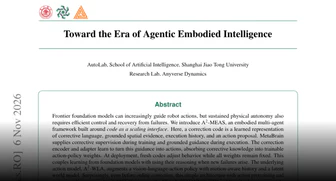
    A2-MEAS framework strides towards the era of embodied intelligent agents

    The A2-MEAS framework enhances robot control and fault recovery by learning correction codes and embodied visual language action models, achieving a 0.5755 Q-score on the 50-task BEHAVIOR 2026 public subset and a 45.40% task success rate, with an average success rate of 57.92% on 12 real robot tasks. The framework employs action pre-training and task specialization, with a training throughput of 427.1 samples/second, and the system will open-source the model, training scripts, and infrastructure.

  8. AWS Machine Learning Blog

    Anthropic launched Claude Fable 5.2 and Claude Mythos 5.2 on AWS

    Anthropic Launches Claude Fable 5.2 and Claude Mythos 5.2 on AWS, Fable 5.2 is its most powerful general model for coding and scientific fields, supporting unsupervised operation for days; Mythos 5.2 is provided through a validation program and performs more reliably in cybersecurity and life science fields.

    Same story · 5 outlets

    How the accounts differ:TechCrunch states the input price of Fable is reduced to $8 per million tokens; others do not mention the price.