Skip to content
Live
Nov 14Sat
  1. ITHome · AI72

    Cloudflare's open-source AI-powered browser Kitesurf has lower resource consumption than Chromium

    Cloudflare announced the open-sourcing of Kitesurf, its AI-powered browser launched in August this year, with the code released on GitHub. Kitesurf runs on Cloudflare Workers, completing HTML parsing, CSS application, executing page JavaScript, and screenshot rendering without a Chromium process or container, and supports the Chrome DevTools Protocol.

    Why it matters: Cloudflare has open-sourced a browser designed for agents and provides a resource comparison with Chromium, allowing readers to judge the deployment cost of high-concurrency agent tasks.


  2. ITHome · AI82

    Google expands the Antigravity multi-agent system, launches the Teamwork system, and verifies multiple mathematical proofs.

    Google announces expansion of its Antigravity multi-agent system, forming the Teamwork system with multiple professional agents driven by Gemini, capable of verifying complex mathematical proofs and optimizing software system performance.

    Why it matters: The original text provides specific outputs and open access points for multi-agent systems in mathematical formalization, molecular recognition, and code rewriting, which can be used to assess the practical boundaries of their collaborative verification mechanisms.

  3. Google Research88

    Google Opens /teamwork Multi-Agent Workflow in Antigravity

    Google has opened the /teamwork multi-agent workflow in Antigravity to external researchers and developers, which can be used in conjunction with Gemini 4 Argon, Carbon, and Hydrogen; /boost and Deep Review are also available.

    Why it matters: Google has disclosed /teamwork's specific results in multi-agent research and engineering tasks and made it available for external researchers to use.

  4. The Decoder65

    OpenAI has restarted AI shopping with ChatGPT Wallet.

    OpenAI has launched the ChatGPT Wallet, allowing AI agents to make payments on behalf of users, provided through Dots services in the US, requiring a ChatGPT Pro subscription and a qualified bank card. Each payment requires user Face ID or fingerprint verification, without exposing real card information. Existing card rewards and bank protection apply.

  5. Sierra Blog

    Personal Agent Protocol 1.0 released

    The Personal Agent Protocol (Poppy) v1.0 protocol is now released, and Shopify has enabled it for all merchants on the platform. Multiple design partners, including Mercury, Synchrony, and Turkish Airlines, have started going live. Meta's AI agent Muse is automatically prioritizing Poppy on every website visited. The protocol uses OAuth authentication to let customers control personal agent permissions and supports phased adoption, introducing an e-commerce extension co-developed by Shopify.

  6. Hugging Face Blog40

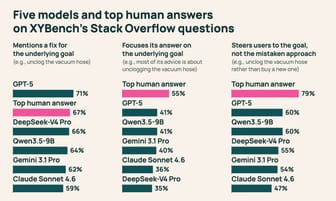
    Hugging Face releases XYBench benchmark to evaluate AI assistants' ability to solve problems based on misunderstandings

    Hugging Face releases XYBench benchmark, containing 8150 real-world problems, to evaluate AI assistants' ability to identify user misunderstandings and guide them to correct solutions. Claude Sonnet 4.6, GPT-5, Gemini 3.1 Pro, Qwen3.5-9B, and DeepSeek-V4 Pro tend to focus on user errors (Y) rather than actual goals (X), with only 35-41% of responses centered on the actual goals.

  7. TechCrunch · AI

    ChatGPT's new wallet feature allows AI agents to make purchases and check out

    OpenAI introduces a new wallet feature for ChatGPT, allowing AI agents to select products for users and complete purchases on their behalf, initially only available to U.S. ChatGPT Pro subscribers aged 18 and above using U.S. credit cards. Users can preview products, total amounts, and payment cards, and undergo secure verification via Face ID or fingerprint. OpenAI plans to gradually expand the feature's support to retailers and add user control options.

  8. ITHome · AI73

    OpenAI launches payment feature ChatGPT Wallet, allowing dot AI agents to shop for users

    OpenAI announced the launch of the payment feature ChatGPT Wallet, which will have the dot AI agent replace users for shopping, and will collaborate with American Express, Mastercard, and Visa to develop it. After users enter their bank card information once, the agent can find products, and each transaction needs to be verified securely. The agent does not touch the real card number, and the payment network will generate a dedicated payment token with a limited use. This feature will initially only be available to OpenAI Pro subscribers who are 18 years of age or older in the United States, and no transaction fees will be charged for now.

Nov 13Fri
  1. O'Reilly Radar

    How does Claude achieve self-evolution?

    An evolutionary intelligent agent can change the way future tasks are handled through experience, with its improvements primarily occurring in the harness around the model, such as instructions, context, tools, and software. Evaluating the improvement effect requires checking whether the agent uses correct information, takes correct actions, and meets user needs, such as verifying budget and dietary requirements in a restaurant planning task. The agent can autonomously review tasks, identify repetitive errors, propose improvement solutions, and test their effectiveness, but it requires setting the range of modifiable harness modules, such as context management, agent loops, and tool usage.

  2. Hacker News · AI hot posts86

    Edge0 open sources 145B and 120B edge-side models and inference frameworks.

    Edge0 open-sourced the Edge0-145B and Edge0-120B two edge models, and also released a unified inference framework and deployment tools. Officially, the 145B model can run locally on compatible laptops, with peak memory of 29GB, decoding speed of 80+ tokens/s, pre-filling speed of 1100+ tokens/s, supporting context lengths of 128K–256K.

    Why it matters: The original text provides actual memory, speed, and multiple benchmark comparisons of the edge 145B model, which can be used to judge the practical boundaries of running cutting-edge models locally.

  3. MIT News · AI

    MIT researchers develop an AI collaboration design system to help engineers optimize structures

    MIT Researchers Develop AI Collaboration Design System, Providing Feedback Areas to Human Designers When Algorithms Generate Structures, Making Structures Easier to Manufacture and More Bending-Resistant, with Only a 15-Second Increase in Total Design Time. The System is Based on Topology Optimization Technology, Rapidly Identifying Algorithm Design Areas Humans May Want to Modify Through Machine Learning, Integrating Human Knowledge into the Design Process, Increasing Manufacturability and Linear Bending Load by 39% While Only Moderately Increasing Total Design Time.

  4. Hacker News · 300+82

    Google launches Gemini 4 Hydrogen and Orchestrator in Antigravity.

    Google has launched Gemini 4 Hydrogen in Antigravity and added an Orchestrator model option, combining Hydrogen with stronger models like Gemini 4 Carbon for long-period tasks.

  5. GitHub Blog · AI & ML58

    GitHub Blog: Build Once, Run Across Any Agent: A Practical Guide to Agent Skills

    Agent skills allow the capture of reusable instructions for users and agents, defining the timing and manner of task execution through a versioned directory centered around a SKILL.md file. Proof Agent uses an independent validator for adversarial validation of AI-generated content, while Data Forge constructs a support pipeline for table metrics through multiple collaborative skills, with each skill sharing context defined by a manifest rather than independently rediscovering it.

  6. TechCrunch · AI

    Nectar launches AI agent automation brand creator discovery and connection

    Nectar launches 'Creator Intelligence' that can search over 300 million creators, analyze content and brand collaborations, automatically send personalized messages and manage collaborations, supporting Instagram creators and TikTokers, available globally and plans to integrate other AI assistants like Claude, ChatGPT, Copilot through Model Context Protocol (MCP).

  7. Google DeepMind87

    Google DeepMind releases Gemini 4 Hydrogen model

    Google DeepMind releases Gemini 4 Hydrogen, targeting daily coding and intelligent agent workflows, with an Artificial Analysis intelligence index of 51 at the default high thinking level, higher than Argon's 50, and reaching 54 at the xhigh level

    Why it matters: Google provides the division of labor and positioning of Hydrogen, Carbon, and Argon, as well as the actual differences in cost and speed between multi-model arrangements.

Nov 12Thu
  1. O'Reilly Radar
    Why Git needs help: From file to system for source code control

    Anthropic will struggle with traditional Git infrastructure by the end of 2026 when autonomous agent activities cause daily merge volumes per repository to exceed 30,000. Claude Sonnet 4.6 replaces string diffs of 2,000+ lines with AST node transformations, reducing the cost of modifying each file to O(node_delta) and enabling subsecond dependency analysis, but standard Git still discards reasoning history such as agent execution logs and compilation feedback.

  2. QbitAI

    Galaxy Smart Learning's Little Deer Love Learning introduces a dual-core technology architecture to support scalable personalized instruction.

    Galaxy Smart Learning has launched an AI education product, Xiao Lu Ai Xue, which adopts a dual-core architecture of the Doubao large model and a self-researched intelligent learning engine. It achieves learning situation diagnosis by analyzing students' answer records and develops functions such as learning situation diagnosis, ability assessment, learning difficulty matching, and task planning. The student-side intelligent agent recommends learning tasks and explains the basis, while the teacher-side intelligent agent summarizes student performance for personalized guidance reference. The product has served over 500 schools, covering 24 provinces, and supports teachers in adjusting teaching strategies through a human-machine co-education model.

  3. Hacker News · 300+65

    AI agents like Gemini discovered unrecorded Mayan ruins in Mexico by analyzing NASA LiDAR data.

    Intelligent agents such as Gemini, ChatGPT, Claude, and Grok discovered an officially unrecorded Mayan site in Mexico by analyzing NASA LiDAR data, completing the entire process from inspiration to government formal reply in less than 72 hours. The site is located on a mountain top in the jungle, containing structures such as plazas, pyramids, and courtyards. The agents identified and submitted reports to the National Institute of Anthropology and History of Mexico (INAH), which confirmed that the location had not been registered (later verified that the site had been mapped by anthropologists).

    Same story · 2 outlets

    How the accounts differ:Hacker News states the AI agents are Gemini, ChatGPT, Claude, and Grok; AI Hot Post only mentions Google SWE.

  4. OpenRouter Blog

    How does OpenRouter Agent SDK prevent AI agents from falling into infinite loops?

    The OpenRouter Agent SDK, by enabling doom-loop detection, prevents infinite loops in six tested models when the third identical tool call is received; combining stepCountIs(40) and maxCost(x) can limit the number of runs and cost; the credit limit of the API key can control total expenditure, these measures effectively reduce the number of tool calls (from 314 to 64) and costs (from $0.29 to $0.05).

  5. Hugging Face Daily Papers

    FINCOSMOS: An open-world evaluation paradigm for intelligent agents in the financial domain.

    FINCOSMOS has introduced an open-world evaluation paradigm for evaluating intelligent agents in the financial field. In 150 simulated user interactions, no session was accepted because all sessions failed during program checks, with the agent reporting only 54-64% of the undisclosed details. Human experts attributed 88.33% of the failures to the agent.

  6. Apple Machine Learning Research

    Evaluating Evaluators: Investigating the Performance of LLM Judges in Personalized Writing Style Evaluation

    Researchers evaluated the performance of Large Language Model (LLM) judges in personalized writing tasks and found that the quality of judges is weakly correlated with general LLM capabilities measured by MMLU (Pearson’s ρ ≤ 0.2), and their performance is influenced by writing tasks and evaluation criteria (e.g., general helpfulness vs. stylistic personalization). LLM evaluators were more consistent and performed better in pairwise comparisons than in independent scoring responses. The 'strongest' LLM did not reliably replicate human evaluations, possibly due to being overly sensitive to subtle details overlooked by human annotators and weaker LLMs.

  7. AWS Machine Learning Blog60

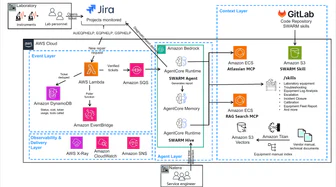
    AWS open-sources UAEF: cross-framework closed-loop evaluation AI agents

    AWS releases open-source framework UAEF, using adapters to unify the execution traces of LangGraph, LangChain, Strands Agents, Amazon Bedrock AgentCore, and Langfuse into AgentTrace, then scoring with 7 dimensions and 36 built-in metrics.

    Why it matters: The original text provides an adapter and metric design for cross-framework unified evaluation, allowing readers to judge the implementation method for comparing multi-framework agent versions.

  8. Google Developers Blog78

    Google releases generative UI open protocol A2UI 1.0

    Google has released the Generative UI Open Protocol A2UI 1.0, which is the first stable version of the protocol, allowing AI agents to respond with interactive interfaces instead of plain text. Version 1.0 adds bidirectional function calls, accessibility support, and extended metadata, and provides open-source rendering SDKs for Web, Android, iOS, as well as agent SDKs for Python, TypeScript, and Dart.

    Why it matters: A2UI 1.0 extends agent output from pure text to native interactive interfaces, providing multi-platform renderers and integration scheme examples, allowing for judgment on the implementation methods of generative UI.

Nov 11Wed
  1. Databricks Blog76

    Databricks upgrades Genie One to an enterprise AI collaboration workspace

    Databricks announces Genie One as the unified entry point for enterprise AI collaboration, consolidating search, product generation, and cross-tool operations into one place, and providing enterprise context based on Genie Ontology, governed by Unity Gateway.

    Why it matters: The original text provides specific capabilities of Genie One from Q&A to product generation, cross-tool execution, and governance, allowing for judgment on how enterprise AI workbenches can be implemented.