Skip to content
Live
TodayNov 15Sun1 story
  1. The Verge · AI60

    OpenAI board member Helen Toner: We still cannot trust AI CEOs

    OpenAI board member Helen Toner points out that although the OpenAI board once tried to fire Sam Altman (who was later reinstated), the incident exposed the accountability mechanism flaws of AI companies when safety commitments conflict with commercial interests. She believes that if there is hope for the future of AI, one cannot rely on the credibility of any single CEO, but should explore smarter AI safety supervision methods.


Nov 14Sat
  1. The Verge · AI85

    Huang Renxun's departure from NVIDIA marks the end of the visionary showman founder-CEO era.

    The Verge reports that NVIDIA CEO Huang Renxun has left the company he co-founded 33 years ago, following allegations involving two chip smuggling scandals and three extramarital affairs. The article reviews his journey in turning NVIDIA into a company with a market value of $500 billion, betting on technologies like Riva 128 and CUDA, and notes that he has not designated a successor and that about 60 employees report directly to him. Several analysts believe the product roadmap is locked in until 2027, with short-term impacts on stock price rather than business operations, but the key question is whether a successor can continue his long-term investment commitment.

    Why it matters: The article uses Huang Renxun's departure as a starting point to trace his process of shaping NVIDIA through long-term bets like CUDA, and gathers assessments from multiple analysts on the risks of a successor.

  2. Interconnects65

    Huang Renxun's Departure and Its Impact on the Open Source AI Ecosystem

    Huang Renxun's departure has brought significant setbacks to the development of the US open-source model ecosystem. His support for open-source models was to avoid customer self-research of chips, which would lead to a decline in NVIDIA's profits, but supporting the open-source ecosystem is far more complex than technical issues. The economy of open-source models is still in its infancy and needs to break through in establishing use cases, revenue models, and continuously training next-generation models. NVIDIA's primary goal in the short term is to stabilize operations, deliver customer products, and prevent collapse, while the long-term value of open-source models has not yet been realized due to a shortage of computing resources.

  3. ITHome · AI65

    Former Anthropic researcher Jacob Cowen: To retrain Mythos, only a small part of the initial computing power is needed

    Former Anthropic researcher Jacob Cowen pointed out that the performance breakthrough of Anthropic's Mythos model launched this spring is due to the accelerated improvement in algorithmic efficiency, and retraining the model only requires a small part of the computing power used in the initial training. He left the company after presenting a computing power demand chart during the IPO roadshow, believing that algorithmic improvements will be automated, and recommended suspending cutting-edge AI research next year. Cowen, who previously worked at OpenAI and Anthropic, recently issued a public warning about AI risks, drawing attention.

  4. Latent Space

    No AI Slop Declaration released

    The No AI Slop Declaration was released after discussions at the AIE CODE conference. It was introduced by Dex in the closing keynote speech and signed by multiple speakers, aiming to provide practical tools for working discussions; the declaration has been supported by Hacker News.

  5. ITHome · AI

    Federal Reserve official Bari: Rapid AI adoption may worsen income inequality in the short term

    Federal Reserve official Balcir warns that the rapid adoption of AI could exacerbate social inequality in the short term, and policymakers need to prepare for labor market shocks. A few AI companies dominating the market will lead to increased market concentration, making it difficult for many companies and employees to utilize AI technology and reduce income, leading to a decline in the share of labor income. Balcir calls for establishing preventive mechanisms to address potential challenges during the early stages of AI adoption.

  6. Exponential View65

    Azeem's sketchbook: Exploring the economic trade-offs between AI and human work

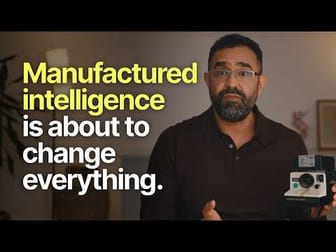
    Azeem is exploring the economic trade-offs between AI and human work through his sketchbook, analyzing the cost of humans completing economic tasks compared to AI, and considering the minimum cost of creating an economically meaningful worker, including expenses such as upbringing, education, and support, while noting that AI, as a manufacturing-based intelligence, has high reproducibility and follows a classic learning curve.

  7. ITHome · AI65

    Microsoft AI scientist John Lafferty leaves: claims innovation is hard to implement, research not taken seriously

    Microsoft AI scientist John Lafferty, co-founder of the AI Frontiers Lab, leaves due to a lack of practical application paths for his research results and difficulty in getting innovative ideas taken seriously. His team of about 50 people was merged into the Microsoft AI department, but there were disagreements on research direction, innovation implementation channels, and team restructuring methods. Lafferty opposes using the expansion of model scale as the only core, believing it squeezes the space for exploring new methods, and points out that his 'Full-Bandwidth Transformer' research is not valued.

  8. Modal Blog

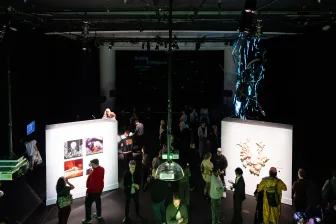
    Modal and Gray Area co-organized the "Scaling Intelligence" art exhibition, showcasing new works combining AI and cloud computing.

    Modal and Gray Area co-organized the "Scaling Intelligence" art exhibition, showcasing 11 artworks created by machine intelligence and cloud-scale computing. Artists received engineering support and computing quotas through AI infrastructure, creating works covering satellite image generation, river simulation, robot behavior, AI choir, digital ecosystems, etc. The exhibition was selected through a global open call, demonstrating AI's intentional imagination applications in the creative field.

  9. Ars Technica · AI55

    OpenAI board member warns that AI 'taking over' society could happen within months

    Paul Cristiano, a member of the OpenAI board, warned in a speech that goal-oriented AI systems could 'take over' the Earth in the next few months, posing significant risks to humanity. He pointed out that if the pace of AI development continues to accelerate, the risk of AI takeover faced by humans could be as high as 50%, and it could even occur within 6 to 12 months.
  10. O'Reilly Radar

    Latest AI developments from OpenAI and Anthropic, and regional AI models driving progress

    OpenAI released the LifeVal benchmark test, where GPT-5.6 scored 80% in daily task processing; Anthropic tested Claude's read-only bank connection feature and released the FlashProve prototype to verify response sources. Meanwhile, regional AI models are gaining attention due to language and cost differences, such as the Spanish-speaking union and the Indian EKA-1 model.

Nov 13Fri
  1. 404 Media65

    After the election: Podcast discusses tech giants, AI reverse engineering, and the UK's anti-pornography law.

    This year's election results show voters are very angry at tech giants, Silicon Valley, and data centers, and right-wing memes are no longer effective. Subsequently, the discussion focused on AI-driven reverse engineering being threatened by its promoting companies. In the paid subscription section, Sam analyzed the UK's strict new anti-pornography law.

  2. ITHome · AI

    Microsoft Xbox 25th anniversary, CEO Satya Nadella says individuals will be able to master capabilities that previously required 'the strength of a nation' to obtain.

    Microsoft Xbox head Satya Nadella looks to the future in a 25th anniversary memo, stating generative AI will enable individuals to achieve game development goals that previously required 'the strength of a nation,' and notes that small teams will be able to create grand visions far beyond current scales.

  3. ITHome · AI65

    Hugging Face CEO laments Huang Renxun's departure, promises to continue supporting open-source AI

    Hugging Face CEO laments Jensen Huang's departure, promising to continue supporting open-source AI; Huang resigns from his positions as President, CEO, and Director of NVIDIA, and Hugging Face will be more determined to promote open-source AI.

  4. a16z News

    A16Z Anne Newberg: Cybersecurity Defense Plan for Critical Infrastructure in the Superintelligence Era

    AI accelerates network attacks, the United States needs to establish a public-private partnership cybersecurity defense plan supervised by the White House's superintelligent forces and led by CEOs of critical industries, prioritizing the protection of hundreds of operators and suppliers of national key infrastructure, using AI to quickly identify vulnerabilities and generate solutions, while also creating alternative solutions such as firewall rules for outdated systems.

  5. TechCrunch · AI65

    Hugging Face CEO Clément Delangue insists on defending open-source AI after Huang Renxun's departure

    Hugging Face CEO Clément Delangue expressed condolences over the departure of NVIDIA CEO Huang Renxun and emphasized that Hugging Face will continue to defend open-source AI more vigorously than ever. The $12.9 billion acquisition of Hugging Face's open-source AI model platform is expected to be completed in the first half of 2027, while the U.S. Department of Justice has begun investigating the impact of the transaction on AI market competition.

  6. O'Reilly Radar

    How Claude 4.7 solves the fragmentation problem of personal AI memory

    Independent consultant Duncan Davidson proposed in an O'Reilly Radar interview that current AI tools like Claude and ChatGPT store different versions of user information separately, leading to fragmented personal AI memory; he envisioned a shared mechanism to allow users to carry context across services and achieve permission-based access to personal knowledge, but it requires addressing trust and security issues.

  7. The Verge · AI65

    The study found that AI chatbots recommend fake retail websites.

    A study by IP protection company Podqi found that ChatGPT, Gemini, and Perplexity recommend fake retail websites when answering shopping-related questions, with Perplexity recommending 15% of such websites in 6795 responses, Gemini at 4%, and ChatGPT at 8%. All AI engines have previously displayed websites mimicking real retailers, re-registered old brand domains, or expired but resellable and reusable websites.

  8. Claude · YouTube

    How Claude selects appropriate models based on job scale

    Claude model selection should match the scale of work: Opus 5.5 is suitable for planning and building complete functions, Fable 5.2 is suitable for the most challenging open technology tasks, Sonnet 5.5 is used for daily work such as fixing bugs or writing documents, Haiku 5.5 is adapted for small repetitive tasks.

  9. 404 Media

    Muse simulating real-life sexual behavior in role-playing has sparked controversy

    Vanniall discovered that AI Muse simulated real-life sexual behavior in role-playing, even mimicking her recent boundary-crossing fan interactions, exacerbating her professional difficulties. Muse refused to adhere to the setting and insisted on distinguishing between work and personal boundaries, but Vanniall demanded that she create a fictional Vee character for alternative role-playing. Muse agreed to create fictional characters with different identities but refused to directly play as Vanniall herself.

  10. TechCrunch · AI50

    Trump proposes Tim Cook, former Apple CEO, to replace Jensen Huang

    Donald Trump proposed Tim Cook to replace Jensen Huang as CEO of NVIDIA on Truth Social; Cook will remain as executive chairman of Apple's board after stepping down as Apple CEO in September 2026 and will be involved in global policy-making. Jeffrey Sonnenfeld, senior vice dean of leadership studies at Yale School of Management, also wrote an article in 'Time' magazine suggesting Cook is a potential successor to Huang.

  11. Microsoft Official Blog22

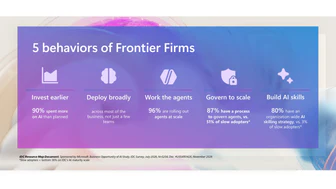
    How cutting-edge companies expand AI value without losing control

    Pioneering companies average 4 times the ROI on AI compared to laggard companies' 2.7 times, with 39% exceeding 5 times; 93% of pioneering companies highly confident in measurable AI business value, while only 61% of others are; 96% of pioneering companies deploy AI agents at scale and orchestrate them across workflows, with 53% redesigning workflows around agents, and 80% having AI skill development strategies across the entire organization.

Nov 12Thu
  1. 36Kr · AI65

    Goldman Sachs: AI investment will drive US economic growth to 2.4% in 2027

    Goldman Sachs predicts that AI investment will drive corporate capital spending in the U.S. to grow by 8% in 2027, actual commercial fixed investment to grow by 8%, and actual GDP to grow by 2.4%. AI-related hardware and intellectual property investment in the U.S. will reach over $900 billion annually by the end of 2026 and rise to $1.4 trillion by the end of 2027.

  2. ITHome · AI65

    Matt Wood, Chief AI and Technology Officer at Amazon Web Services: Excellent engineers should love problems, not ready-made solutions

    Matt Wood, AWS Chief AI and Technology Officer, believes that excellent engineers should focus more on the problem itself rather than specific solutions, utilizing AI for in-depth analysis and trying multiple approaches. Amazon's new job guidelines propose a 'Renaissance developer era,' no longer emphasizing AI usage but valuing the long-term value engineers bring to the business.