Skip to content
Live
Nov 14Sat
  1. ITHome · AI65

    OpenAI reorganizes its embodied intelligence team, making GPT-6 Astra and other general AI the 'brain' for robots.

    OpenAI has disbanded its independent robotics team and transferred relevant personnel to other company departments, integrating robotics researchers into the core research team, and moving the robotics and hardware team to a larger application department. OpenAI aims to directly use general models like GPT-6 Astra for some robotics tasks, making them the 'brain' of the robots. Astra achieved a 74.8% success rate in simulated operational tests.


  2. AWS Machine Learning Blog

    How AssemblyAI optimizes speech-to-text inference costs using EC2 Spot instances on AWS

    AssemblyAI builds an elastic architecture on AWS by hybridly using EC2 On-Demand and Spot instances, and leveraging Amazon ECS, SQS, and EventBridge, to increase GPU instance utilization by 3.5 times, achieve cost reduction within the European AWS region, and meet service level agreements (SLA). Its inference platform is deployed on three GPU instance families: g4dn, g5, and g6.

Nov 13Fri
  1. Hugging Face Daily Papers65

    Ropedia Xperience 2: A gold standard for extending physical AI environments and behaviors

    Ropedia Xperience 2 includes 1,589 published metric 3D scans and 4,230 viewpoint center records for 74 tasks (131 hours), each capture can be reused for robot learning, scene converted to physical interaction simulation environment, human motion redirected to full-body robot trajectories, additional robot behaviors obtained through virtual remote operation and automatic long-term trajectory generation, this joint capture proposed as the gold standard for physical AI data collection.

  2. O'Reilly Radar

    How does Claude achieve self-evolution?

    An evolutionary intelligent agent can change the way future tasks are handled through experience, with its improvements primarily occurring in the harness around the model, such as instructions, context, tools, and software. Evaluating the improvement effect requires checking whether the agent uses correct information, takes correct actions, and meets user needs, such as verifying budget and dietary requirements in a restaurant planning task. The agent can autonomously review tasks, identify repetitive errors, propose improvement solutions, and test their effectiveness, but it requires setting the range of modifiable harness modules, such as context management, agent loops, and tool usage.

  3. MarkTechPost

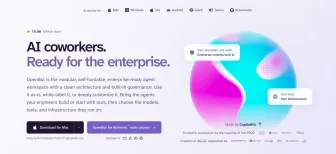
    CopilotKit has released OpenBot 1.0: an MIT-licensed, self-hostable, and built-in governance AI assistant.

    CopilotKit has released OpenBot 1.0, an MIT-licensed, self-hostable, and built-in governance AI assistant. OpenBot 1.0 supports user-selected models (including 9 model families such as OpenAI, Claude, Gemini, Grok) and AG-UI agents (supporting 8+ frameworks), with all Bot actions checked against CEL policies before execution. The personal version is free, and the commercial version costs up to $29 per user per month. If model usage exceeds $5,000 per month, an additional 5% fee is charged on the excess. Annual plans also offer offline deployment and 24/7 support.

Nov 12Thu
  1. AWS Machine Learning Blog

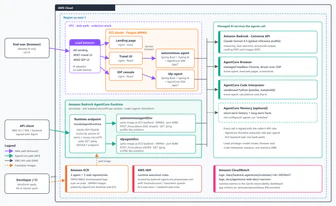
    Build autonomous AI agents using Amazon Bedrock and Spring AI

    Java teams can leverage Amazon Bedrock and Spring AI to build autonomous AI agents, addressing scalability, governance, security, and operational challenges. Spring AI brings AI capabilities to the JVM through the Spring framework (auto-configuration, dependency injection, composable advisors), while the Amazon Bedrock AgentCore platform supports framework and model-agnostic agent construction, connection, and optimization.

Nov 11Wed
  1. Hugging Face Daily Papers

    World In-Context Learning for Agentic Robot Manipulation

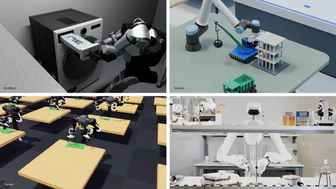
    World In-Context Learning (WICL) method freezes the model, practices tasks in simulators, and writes feedback into the context rather than weights, enabling robots to learn operational skills from a single demonstration. RoboScript implements WICL, achieving an 83.4% success rate on 50 tasks in RoboTwin 2.0 with no gradient updates from a single demonstration, surpassing the strongest training strategy by over 20 points, and supports cross-visual distribution generalization, improvement through reflection, base model extension, and cross-platform memory migration.

  2. ITHome · AI

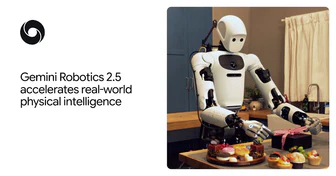
    Google's strongest VLA robot model, Gemini Robotics 2.5, debuts, can tie bows, already on the Mercedes production line

    Google launches VLA robot model Gemini Robotics 2.5, achieving leaps in dexterity, reliability, and safety, with a success rate of 96% on the Mercedes production line. The model has tested 200 tasks, with a success rate 30%-100% higher than the baseline, a speed increase of 20%-30%, and is compatible with robots like Apptronik Apollo 2, adopting ASIMOV-Jailbreak benchmark to enhance jailbreak resistance to 99.5%.

  3. Mastra Blog

    Mastra FDE released: Pre-deployment engineering plan for AI engineers

    Mastra FDE is a pre-deployment engineering plan for all teams building AI agents. By deploying engineers familiar with Mastra at a cost lower than hiring one senior AI engineer, it assists teams from the first week in architecture design to production deployment, and provides regular 1:1 communication, consulting, or proactive development support. It also includes access to a Slack channel with founders and engineers, quick response, roadmap insights, customized training, and the full suite of Mastra Enterprise features.
Nov 10Tue
  1. Google DeepMind76

    Google DeepMind releases Gemini Robotics 2.5 vision-language-action model

    Google DeepMind released Gemini Robotics 2.5, claiming it is the most capable vision-language-action (VLA) model to date, with a 30% to 100% increase in success rate on 200 tasks compared to previous baselines, and 20% to 30% faster task completion speed.

    Why it matters: Officially disclosed were 200 task evaluations and actual production line test data showing a 96% success rate for Mercedes-Benz, which can be used to judge the extent of VLA model deployment in real industrial scenarios.

  2. The Verge · AI

    Adobe is fully committed to AI

    Adobe announced that it will introduce chatbots and AI agents as the next-generation design assistants, even automating creative workflows and repetitive tasks. At the Adobe Max conference in Miami, Adobe introduced a feature that allows third-party AI agents to access and modify Creative Cloud projects, new features for the Firefly AI assistant, and the ability of AI agents to perform repetitive tasks in the background.

  3. Hugging Face Daily Papers

    LingBot-Touch Released: An Heterogeneous Tactile Representation Learning Model Supporting General Dexterity Operations

    LingBot-Touch is a tactile foundational model that learns a unified, scalable representation across different tactile sensors (resistive, magnetic, visual tactile), producing plug-and-play tactile tokens, and continuously enhancing the dexterity of diffusion strategies and visual language action (VLA) models (such as π_{0.5} and LingBot-VLA). Experiments show that this tactile representation significantly improves performance in complex manipulation tasks in both simulation and real robot deployment while maintaining strong computational efficiency.

  4. Hugging Face Daily Papers

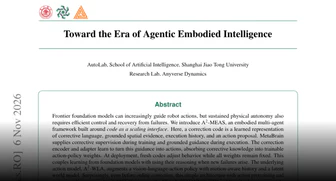
    A2-MEAS framework strides towards the era of embodied intelligent agents

    The A2-MEAS framework enhances robot control and fault recovery by learning correction codes and embodied visual language action models, achieving a 0.5755 Q-score on the 50-task BEHAVIOR 2026 public subset and a 45.40% task success rate, with an average success rate of 57.92% on 12 real robot tasks. The framework employs action pre-training and task specialization, with a training throughput of 427.1 samples/second, and the system will open-source the model, training scripts, and infrastructure.

Nov 9Mon
  1. QbitAI38

    Cainiao Opens Global Warehouse Network, Providing Logistics Real-Scene Training Clusters for Embodied Intelligence Enterprises

    Cainiao Holds AI and Embodied Intelligence Industry Cooperation Launch Event in Hong Kong Smart Port, Opening Up Global Warehouse Network to AI and Embodied Intelligence Enterprises, Creating AI and Embodied Intelligence Logistics Real-Scene Training Clusters. Cainiao Launches Technology Going Global Three-Day Delivery Service for AI Computing Power and Embodied Intelligence Enterprises, Extending Global Three-Day Delivery Capability to High-Tech Product Going Global, Covering Logistics Operation Links Such as Warehouse Sorting, Autonomous Navigation Delivery, and Aerial Inspection, and Supporting a Full Set of Services Including Cross-Border Transportation, Overseas Deployment, Spare Part Supply, Repair and Return Flow, and Local Operation and Maintenance.

  2. NVIDIA Newsroom78

    NVIDIA released the GR00T 2 world action model and Isaac Lab 3.0 on CoRL.

    NVIDIA released the open-source world action model GR00T 2 on CoRL, built on NVIDIA Cosmos, trained with 100,000 hours of NVIDIA open-source first-person human data, and can complete 40 out of 50 evaluation tasks without task-specific demonstrations.

    Why it matters: The original text provides the success rate of GR00T 2 on few-shot tasks and the training throughput improvement of Isaac Lab 3.0, which can be used to judge the extent to which simulation training promotes robot deployment.

Nov 8Sun
  1. ITHome · AI50

    Hitch Open physical intelligence open-source platform is launched at the CIIE, breaking the AI robot ping pong dueling world record

    Hitch Open platform breaks AI robot ping pong dueling world record to 142 hits, jointly created by a team from Shanghai Jiao Tong University and the platform; the platform is aimed at real physical environments, dedicated to solving the challenges of AI perception, decision-making, and action in complex physical worlds, promoting the development of autonomous driving, embodied intelligence, and robotics technology.

  2. Hugging Face Daily Papers24

    From Autonomous Agents to Cognitive Symbionts: Towards AI-Enhanced Human Intelligence

    Physical AI should enhance human intelligence through a lifelong cognitive symbiont, which compensates for cognitive gaps through perception, situational retention, and proactive assistance, requiring embedded governance. Large foundation models and personal agents can already complete multi-step tasks independently, but humans will still forget knowledge, ignore information, and lack historical references, as the machines that can provide help are outside the context.

Nov 7Sat
  1. ITHome · AI67

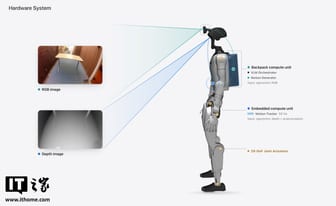
    Apple reveals the humanoid robot system HALO: using the Qwen model to validate on the Yushu G1, achieving an average success rate of 91% for single tasks.

    Apple's research team reveals humanoid robot autonomous control system HALO, with an average success rate of 91% in 360 single task tests in 6 real environments; the system calls the Qianwen model for verification on the Yushu G1, achieving an average success rate of 70% in 10 tests of 3 combinations in a single long sequence compound task, and a success rate of 50% in the most complex task.

  2. 36Kr · AI65

    Qilinbo raises tens of millions in Angel Round funding, developing robot brains based on OpenHarmony

    Chengdu Embodied Brain Company Qilinbo recently completed tens of millions of RMB in Angel Round funding, with investors including Chengdu Fangcun Engine Technology Co., Ltd. and Angel Investors. Qilinbo was established in December 2025, focusing on core software for embodied intelligence, with core directions being robot autonomous action and multi-machine cooperation. Its embodied robots can be equipped with the OpenHarmony system, and its technological differentiation lies in OpenHarmony, domestic computing platform adaptation, and local model deployment.

Nov 6Fri
  1. MIT Technology Review · AI65

    Tau Robotics' humanoid cleaning robot service experience: remote control and future prospects

    Tau Robotics' remotely controlled humanoid cleaning robot service provides cleaning services in San Francisco, where users can pay to experience it, currently charging $60 per hour (or $100 for once a week or a single time for two people). The robot is controlled remotely via cameras on its head and wrists, collecting data to train more autonomous models, but operation still requires real-time human assistance for tasks such as sweeping, vacuuming, and mopping.

  2. Hugging Face Blog71

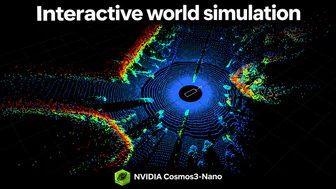
    NVIDIA has released four open-source world model checkpoints for Cosmos 3.

    NVIDIA has added four new open-source weight checkpoints for Cosmos 3 under the Cosmos World Model platform, all of which are post-trained versions of Cosmos 3 Nano, containing 16B trainable parameters, using the OpenMDW1.1 license, allowing commercial and non-commercial use.

    Why it matters: The original text provides four open-source weight checkpoints and a four-stage training recipe, allowing readers to judge how to adapt the world model to their own sensors and robot bodies.

Nov 5Thu
  1. ITHome · AI72

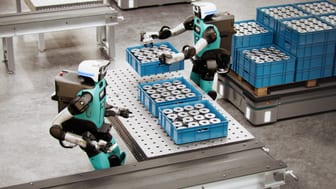
    Agility Robotics listed on the Nasdaq this week, backed by Foxconn and NVIDIA

    American humanoid robotics company Agility Robotics will list on Nasdaq this Thursday local time, with the stock code AGLT, having previously completed a merger with Churchill Capital Corp. XI

    Why it matters: Agility Robotics becomes the first humanoid robot company to list in the US, its funding scale, order backlog, and deployment plans can serve as a reference for observing the commercialization of this industry.

  2. ITHome · AI62

    Huawei announced that Ascend 0 Day support is available for Kimi K3.1 Pro inference deployment, further advancing the capabilities of 2.8 trillion-level MoE models.

    Ascend based on vLLM Ascend and SGLang synchronously implements 0 Day inference adaptation for Kimi K3.1 Pro, supporting the deployment of 2.8 trillion parameter models on Atlas 800 A3, 900 A3 SuperPod, and 950 SuperNode series, with native support for visual understanding and a million token context window.

  3. Cognition Blog

    SWE-2 Flash Released: A Low-Cost Intelligent Coding Model in the US

    SWE-2 Flash introduces a mid-training stage before reinforcement learning for the first time, significantly outperforming the baseline model Inkling-Small. Terminal-Bench 4.0 scores increased from 0.9% to 20.0%, and FrontierCode 2.0 improved from 3.2% to 24.0%, surpassing all US open-source models. This model is available in Devin Desktop and CLI, priced at one-fifth of SWE-2 and three times faster.