Skip to content
Live
Nov 14Sat
  1. MarkTechPost62

    Stanford has open-sourced Memorilla, a potential memory module for freezing LLM development

    Stanford researchers have open-sourced Memorilla, a potential memory system designed for frozen LLMs. It converts the entire document collection into 16 vectors for use by frozen LLMs. On FactKG, the frozen Qwen3-8B paired with Memorilla achieves an accuracy of 84.33%, which is 3.9% higher than using all document contexts, but only requires 16 memory tokens, reducing the number of document tokens by 108 times.

  2. The Decoder65

    Runway open-sources robot control model Praxis-1

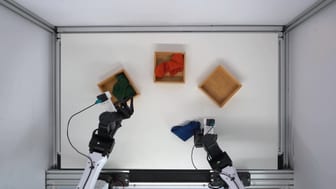
    Runway has released the open-source robot control model Praxis-1, which learns to control robots through video and has shown excellent performance in its own tests, scoring 46.2% on the Nvidia RoboLab-120 evaluation, leading similar models. The model requires additional training to adapt to new robot systems, the standard version requires an 80GB memory GPU, and it has been made available on Hugging Face.

  3. ITHome · AI58

    Huawei's Kirin 9050 series new Malang GPU and AI ISP intelligence disclosed: implements second-generation hardware ray tracing, realizing 200 million pixel fusion photography for the first time.

    The Huawei Kirin 9050 series is equipped with the fourth-generation GPU micro-architecture, offering a 40% performance boost and a 45% reduction in power consumption. The second-generation hardware's ray tracing performance has improved by 78%, supporting BVH, FERT, and AO hardware acceleration units. The new-generation AI ISP integrates a pixel-specific NPU, achieving 200 million pixel fusion photography for the first time, supporting 4K60 video processing, 18EV high dynamic range video, and the full-chain BT.2020 wide color gamut.

  4. ITHome · AI65

    Tsinghua University releases the single-cell proteomics foundational model ProtCell, successfully completing the 'virtual cell' pre-training reproduction using MolThread S5000 intelligent computing cards

    Tsinghua University releases the single-cell proteomics foundational model ProtCell, collecting about 380 million cells and 98 public datasets for pre-training and evaluation, MolThread S5000 intelligent computing cards complete the full process of pre-training reproduction, evaluation metrics differ from mainstream international GPUs by only about 0.2%

  5. ITHome · AI82

    Google expands the Antigravity multi-agent system, launches the Teamwork system, and verifies multiple mathematical proofs.

    Google announces expansion of its Antigravity multi-agent system, forming the Teamwork system with multiple professional agents driven by Gemini, capable of verifying complex mathematical proofs and optimizing software system performance.

    Why it matters: The original text provides specific outputs and open access points for multi-agent systems in mathematical formalization, molecular recognition, and code rewriting, which can be used to assess the practical boundaries of their collaborative verification mechanisms.

  6. Hugging Face Daily Papers

    Test-Time Baking (TTB) released: A strategy for efficiently rendering decoder-only large-view synthesis models

    Test-Time Baking (TTB) strategy enhances the fidelity of new-view decoding for large-view synthesis models (LVSMs) by baking global scene information from cross-view attention into lightweight MLPs, while maintaining Test-Time Training efficiency. It achieves up to 23x rendering speed improvement with quality comparable to current state-of-the-art techniques on multiple benchmarks.

  7. Baseten Labs65

    Claude Code v2.1.159 release

    Claude Code v2.1.159 released, adopting a gradient alignment reward mechanism, using the Qwen3-8B model on arithmetic tasks, rewarding by calculating the gradient similarity between student output and expert demonstrations, experiments show the model may overfit the precise wording of expert examples.

  8. ITHome · AI62

    llama.cpp 1.0.0 released: supports over 150 model architectures, significantly improving the ability to run large models locally.

    llama.cpp version 1.0.0 has been released, supporting over 150 model architectures, marking API/ABI incompatible changes with the major version number; the ggml underlying engine has been enhanced, supporting dynamic loading of multiple hardware backends, improving the performance of locally deployed large models.

  9. AWS Machine Learning Blog45

    Amazon Bedrock AgentCore runtime V2 architecture mode: Accelerating session startup

    Amazon Bedrock AgentCore runtime V2 reduces session startup time to about 2 seconds by preparing the environment once and using a snapshot for recovery, while also reclaiming unused memory. V2 supports building hooks to load large files or CLI, suitable for scenarios requiring resource preparation in advance. Session startup time can be measured via CloudWatch metrics, prioritizing optimization of platform overhead or code execution time.

  10. AWS Machine Learning Blog

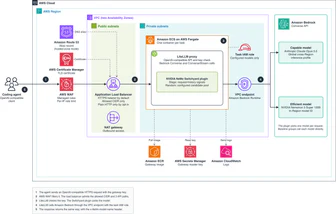
    Using NVIDIA NeMo Switchyard on Amazon Bedrock to Route Model Requests for Coding Agents like Claude Code and OpenAI Codex CLI

    Developers using coding agents like Claude Code and OpenAI Codex CLI need to be billed per task rather than per single call, so model routing should be based on the cost per task. NVIDIA NeMo Switchyard is an open-source library that helps AI agents select models to process each request, supporting Stage and Random routing strategies.

  11. Google Research88

    Google Opens /teamwork Multi-Agent Workflow in Antigravity

    Google has opened the /teamwork multi-agent workflow in Antigravity to external researchers and developers, which can be used in conjunction with Gemini 4 Argon, Carbon, and Hydrogen; /boost and Deep Review are also available.

    Why it matters: Google has disclosed /teamwork's specific results in multi-agent research and engineering tasks and made it available for external researchers to use.

  12. AWS Machine Learning Blog

    How AssemblyAI optimizes speech-to-text inference costs using EC2 Spot instances on AWS

    AssemblyAI builds an elastic architecture on AWS by hybridly using EC2 On-Demand and Spot instances, and leveraging Amazon ECS, SQS, and EventBridge, to increase GPU instance utilization by 3.5 times, achieve cost reduction within the European AWS region, and meet service level agreements (SLA). Its inference platform is deployed on three GPU instance families: g4dn, g5, and g6.

  13. Ai2 Blog40

    XYBench: Benchmark test to solve the problems behind the questions

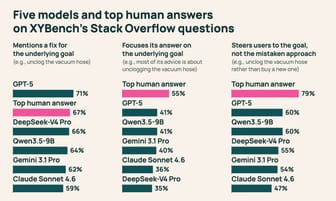
    XYBench released, including 8K+ problem tests to evaluate how AI assistants handle requests based on misunderstandings; Claude Sonnet 4.6, GPT-5, Gemini 3.1 Pro, Qwen3.5-9B, and DeepSeek-V4 Pro often focus on the original incorrect method rather than the user's actual goal in the test.

    Same story · 2 outlets

    How the accounts differ:Ai2 Blog states the benchmark includes 8K+ problems, while Hugging Face Blog mentions 8150 problems.

  14. Meta Engineering

    Cuttlefish runs natively on Mac: Bringing the Android Virtual Device framework to Apple Silicon

    Meta has natively ported the Android Virtual Device framework Cuttlefish to macOS, by supporting QEMU and vhost-user, solving the technical challenges of running virtual devices on Apple Silicon, improving development efficiency, and unifying testing environments. The new version supports macOS's display, signing, and build processes, and expands features such as Bluetooth, Wi-Fi, and 3D graphics, allowing Mac developers to use high-fidelity virtual devices the same as CI.

  15. Sierra Blog

    Personal Agent Protocol 1.0 released

    The Personal Agent Protocol (Poppy) v1.0 protocol is now released, and Shopify has enabled it for all merchants on the platform. Multiple design partners, including Mercury, Synchrony, and Turkish Airlines, have started going live. Meta's AI agent Muse is automatically prioritizing Poppy on every website visited. The protocol uses OAuth authentication to let customers control personal agent permissions and supports phased adoption, introducing an e-commerce extension co-developed by Shopify.

  16. Hugging Face Blog40

    Hugging Face releases XYBench benchmark to evaluate AI assistants' ability to solve problems based on misunderstandings

    Hugging Face releases XYBench benchmark, containing 8150 real-world problems, to evaluate AI assistants' ability to identify user misunderstandings and guide them to correct solutions. Claude Sonnet 4.6, GPT-5, Gemini 3.1 Pro, Qwen3.5-9B, and DeepSeek-V4 Pro tend to focus on user errors (Y) rather than actual goals (X), with only 35-41% of responses centered on the actual goals.

    Same story · 2 outlets

    How the accounts differ:Ai2 Blog states the benchmark includes 8K+ problems, while Hugging Face Blog mentions 8150 problems.

Nov 13Fri
  1. O'Reilly Radar

    How does Claude achieve self-evolution?

    An evolutionary intelligent agent can change the way future tasks are handled through experience, with its improvements primarily occurring in the harness around the model, such as instructions, context, tools, and software. Evaluating the improvement effect requires checking whether the agent uses correct information, takes correct actions, and meets user needs, such as verifying budget and dietary requirements in a restaurant planning task. The agent can autonomously review tasks, identify repetitive errors, propose improvement solutions, and test their effectiveness, but it requires setting the range of modifiable harness modules, such as context management, agent loops, and tool usage.

  2. Hugging Face Daily Papers

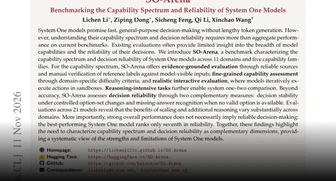
    SO-Arena evaluates the capability spectrum and reliability of a model

    SO-Arena evaluates system one model through 11 domains and 5 capability families, finding differences in scalability and reasoning gain, and high overall accuracy does not guarantee reliable decision-making. This benchmark assesses the capability spectrum through reliable sources and manual verification, domain-specific difficulty standards, and iterative execution of actions in a sandbox; it evaluates decision reliability through decision stability under option set changes and answer identification when there are no valid options. 21 model evaluations show differences in scalability and reasoning gain across domains, and the best system one model ranks only seventh in reliability.

  3. ITHome · AI

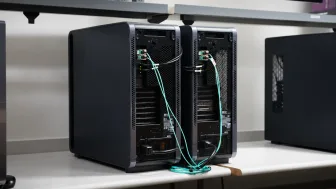
    Players use retired Intel Optane memory to run the 2.8 trillion parameter Kimi K3 model, outputting 1.5 tokens per second

    Users have successfully run the Kimi K3 model with Intel Optane Persistent Memory, which has been discontinued, without a graphics card, achieving 2.8 trillion parameters. The initial generation speed was approximately 0.85 tokens per second, and it increased to 1.50 tokens per second after disabling the DAX function. The 3-bit quantization test only reached 0.75 tokens per second, and generating 50,000 tokens took 18.5 hours.