Skip to content
Live
Nov 14Sat
  1. ITHome · AI

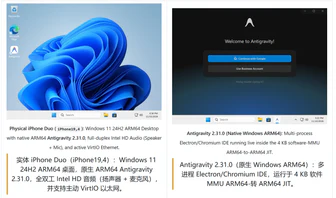
    Google executive successfully runs Microsoft Win11 on iPhone Duo using Gemini 4 Carbon

    Google AI Studio product and design lead Lei Xi uses the Gemini 4 Carbon model to develop a WindowsiOS project, running Windows 11 on Arm 24H2 system image on iPhone Duo via virtual machine, supporting touch operations. The project is open source, requiring Mac, development tools, and Windows ARM image deployment, can try to run some traditional Windows applications but compatibility is not guaranteed.
  2. Baseten Labs65

    Claude Code v2.1.159 release

    Claude Code v2.1.159 released, adopting a gradient alignment reward mechanism, using the Qwen3-8B model on arithmetic tasks, rewarding by calculating the gradient similarity between student output and expert demonstrations, experiments show the model may overfit the precise wording of expert examples.

  3. AWS Machine Learning Blog

    Using NVIDIA NeMo Switchyard on Amazon Bedrock to Route Model Requests for Coding Agents like Claude Code and OpenAI Codex CLI

    Developers using coding agents like Claude Code and OpenAI Codex CLI need to be billed per task rather than per single call, so model routing should be based on the cost per task. NVIDIA NeMo Switchyard is an open-source library that helps AI agents select models to process each request, supporting Stage and Random routing strategies.

Nov 13Fri
  1. Ant Group inclusionAI · Hugging Face new models

    inclusionAI/Duo-1.0-causal-base released: A multimodal world model for full-duplex interaction

    inclusionAI releases Duo 1.0 causal-base model, a full-duplex multimodal world model for real-time audio-video interaction, including implementation weights and backbones, intent models and adapters, audio-video encoders, speech recognizers, and forced aligners. The model weights are based on MiniMax H3 initialization and are open-sourced.

  2. Hugging Face Daily Papers

    Duo: A Reciprocal World Model for Full-Duplex Interaction

    Duo v1 introduces the Reciprocal World Model (RWM), which jointly models intentions and reality through autoregressive reasoning, synchronized attention, and dual inference distillation, achieving real-time full-duplex audio-video interaction. The model continuously perceives audio-video input while responding to users in real time, treating intelligence and physical reality as equal foundational components of the world, supporting interactions such as dialogue, sharing objects, and reshaping virtual scenes. The first batch of models has been open-sourced.

  3. Hugging Face Daily Papers

    BirdDreams: Joint Perspective and BEV Video Generation for Reasonable, Reactive Driving World Models

    BirdDreams jointly generates bird's-eye view (BEV) videos and bird's-eye view videos, making scene layout a part of predicting the future. By providing an overhead view of vehicle position and movement through BEV, it reduces occlusion, while the perspective video retains scene details. On PhysicalAI-AV and nuScenes, BirdDreams more faithfully follows the input trajectory of its own vehicle and generates more reasonable self-motion without HD map or vehicle state input.

  4. Ant Group inclusionAI · Hugging Face new models

    inclusionAI/SingVL_S1_4B_GGUF releases the SingVL-4B GGUF multimodal decision model

    SingVL-4B GGUF is the GGUF version of the 4B parameter multimodal decision-making model Sing VL S1 based on Qwen3.5, which can answer named entity questions with text or JSON and up to four images, and uses a full forward pass scoring option, scoring 69.76 in the Text evaluation and 73.94 in the Vision evaluation. The model uses the llama.cpp adapter, with a default context size of 4096 tokens, supporting text and image input.

  5. vLLM Blog60

    vLLM supports Thinking Machines' Inkling 2 Small on its first day of release

    vLLM provides support for Inkling 2 Small on its first day of release. The model is a multimodal MoE with text and visual inputs, featuring a total of 594B parameters, 17B activation parameters, a maximum context length of 1M tokens, and comes with a built-in DSpark beam decoder.

    Why it matters: The original text provides details of vLLM's Day-0 support for Inkling 2 Small and multiple kernel optimizations, allowing readers to understand the deployment path and throughput performance of the model.

  6. Google Developers Blog

    Gemini and Z3 jointly capture bugs missed in Go code fuzz testing

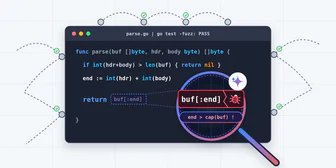
    Gemini 4 Argon translates Go code panic paths into Z3 constraints, paired with Z3 to check trigger conditions, and paired with go test to replay trigger bytes, locating 3 embedded parser bugs and discovering 3 skill-lint potential bugs within 1 minute. This process is more efficient than go test -fuzz, capable of finding boundary check errors missed by fuzz testing.

  7. Hacker News · 300+

    Gemini 4 Hydrogen released: bringing cutting-edge intelligence and efficiency to daily coding and agent workflows

    Gemini 4 Hydrogen has been released, boosting the Artificial Analysis Intelligence Index score to 51 at the default high reasoning level (Argon is 50, with a maximum of 54), and typically outperforming similar models in task execution speed.
  8. TechCrunch · AI

    Google launches Gemini 4 Hydrogen model to enhance search complex question understanding ability

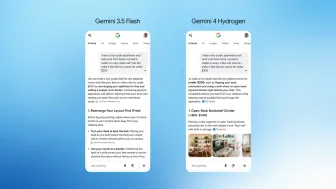
    Google improves search complex question understanding ability through the newly released Gemini 4 Hydrogen model, which is 2.5 times faster and lower in cost than the previous generation. Hydrogen ranks 5th in Agent Arena for multi-step tasks, supports reasoning up to xhigh four tiers, and surpasses more powerful Gemini 4 Argon on one benchmark.

  9. Google DeepMind87

    Google DeepMind releases Gemini 4 Hydrogen model

    Google DeepMind releases Gemini 4 Hydrogen, targeting daily coding and intelligent agent workflows, with an Artificial Analysis intelligence index of 51 at the default high thinking level, higher than Argon's 50, and reaching 54 at the xhigh level

    Why it matters: Google provides the division of labor and positioning of Hydrogen, Carbon, and Argon, as well as the actual differences in cost and speed between multi-model arrangements.

  10. Databricks Blog

    How Block uses Buzz and Unity Gateway to coordinate AI agents

    Block company has launched Buzz, an open-source collaborative space, allowing employees to interact with AI agents in a shared workspace. Through Databricks Unity Gateway, users can access cutting-edge models from OpenAI, Anthropic, Google, and open-source models (specific number not mentioned in the original text), experimenting with different AI agent framework combinations. Employees can create AI agents and choose models (such as the lightweight version of Goose) to achieve multi-person collaborative development, analysis, and other tasks.

Nov 12Thu
  1. IBM Research Blog

    IBM Research explains what a spin qubit is.

    IBM Research is studying two quantum computing hardware architectures, one of which is the spin qubit architecture that encodes information by controlling the spin state of electrons. Spin qubits use quantum dot structures (such as silicon-germanium heterostructures) to trap individual electrons, controlling their spin direction (up or down) with voltage pulses to represent 0 or 1. This architecture has high gate fidelity, scalability, relatively fast speeds, and simple control signals (requiring only voltage pulses), but the current number of qubits is less than that of superconducting qubits and faces challenges such as uniformity and manufacturing yield.

  2. QbitAI

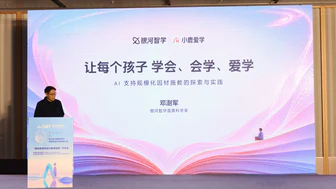
    Galaxy Smart Learning's Little Deer Love Learning introduces a dual-core technology architecture to support scalable personalized instruction.

    Galaxy Smart Learning has launched an AI education product, Xiao Lu Ai Xue, which adopts a dual-core architecture of the Doubao large model and a self-researched intelligent learning engine. It achieves learning situation diagnosis by analyzing students' answer records and develops functions such as learning situation diagnosis, ability assessment, learning difficulty matching, and task planning. The student-side intelligent agent recommends learning tasks and explains the basis, while the teacher-side intelligent agent summarizes student performance for personalized guidance reference. The product has served over 500 schools, covering 24 provinces, and supports teachers in adjusting teaching strategies through a human-machine co-education model.

  3. OpenRouter Blog

    How OpenRouter Builds Self-Correcting Localization Systems

    OpenRouter currently supports 8 languages including Simplified Chinese, Spanish, Japanese, and Korean, and localization features have entered Beta testing. Its system achieves self-correction by detecting changes in strings in the code daily, translating them using GPT-6.1 Sol, and then verifying through code checks and a second model. When translation fails, the system retries with the reason, recording errors as rules or test cases. The entire process runs within OpenRouter, with translation data stored in the code-side Git repository.

  4. 36Kr · AI

    The core technical team of Tongxin Intelligent has started a business on AGI architecture chip, obtaining hundreds of millions of investment from Tsinghua System and other funds.

    Tongxin Intelligence has completed tens of millions of yuan in seed and angel funding within half a year, with an average chip industry experience of over 20 years for the founding team. The company designs native chips supporting vector, tensor computation, and physical intelligence based on the CUV cognitive architecture proposed by Professor Zhu Songchun. The first product is positioned as a high-value inference chip, targeting Nvidia's Thor series on the edge and B300 series on the cloud, with FPGA prototype verification planned for early December. Funds will be used for core architecture design and R&D before chip fabrication.

  5. AWS Machine Learning Blog

    Build autonomous AI agents using Amazon Bedrock and Spring AI

    Java teams can leverage Amazon Bedrock and Spring AI to build autonomous AI agents, addressing scalability, governance, security, and operational challenges. Spring AI brings AI capabilities to the JVM through the Spring framework (auto-configuration, dependency injection, composable advisors), while the Amazon Bedrock AgentCore platform supports framework and model-agnostic agent construction, connection, and optimization.