Skip to content
Live
TodayNov 15Sun2 stories
  1. Hacker News · 300+34

    Cell Borders: A drawing scheme that does not occupy cell space

    The terminal protocol draws thin lines at the edges of cells instead of traditional border characters, achieving border drawing without occupying extra row and column space. Its demonstration application in Ratatui supports multiple scenarios, including panels, menus, charts, etc., and the borders can be customized in style and connection.


Nov 14Sat
  1. ITHome · AI

    Muhammad Zullari developed the 1994 Cherokee to pass California emissions testing using Claude and an Arduino development board.

    Muhammad Zullari successfully got a 1994 Jeep Cherokee to pass California emissions testing with Claude and an Arduino Nano development board, as the vehicle failed multiple times due to excessive nitrogen oxide emissions at specific speeds. Claude was responsible for guidance, and Codex for writing code, ultimately solving the emissions problem by adjusting engine parameters. The entire process only required one $3 Arduino development board and no more than $15 in electronic components. The project is open-source.

  2. ITHome · AI

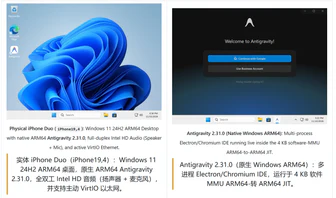
    Google executive successfully runs Microsoft Win11 on iPhone Duo using Gemini 4 Carbon

    Google AI Studio product and design lead Lei Xi uses the Gemini 4 Carbon model to develop a WindowsiOS project, running Windows 11 on Arm 24H2 system image on iPhone Duo via virtual machine, supporting touch operations. The project is open source, requiring Mac, development tools, and Windows ARM image deployment, can try to run some traditional Windows applications but compatibility is not guaranteed.

  3. AWS Machine Learning Blog

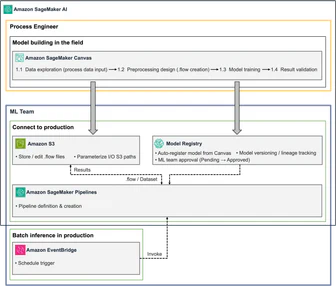
    GS Caltex uses Amazon SageMaker Canvas and Amazon SageMaker Pipelines to connect process engineer models to production workflows.

    GS Caltex enables process engineers to build and validate models without code through Amazon SageMaker Canvas, and then configure deployment and scheduled inference using Amazon SageMaker Pipelines. ML engineers can transfer SageMaker Canvas assets to Pipelines in just a few hours, with model version deployment and execution history managed by Pipelines, achieving batch processing of inference every 30 minutes and reducing inference costs.

  4. NVIDIA Technical Blog55

    Run GPU-accelerated black hole interferometry using NVIDIA cuPhoton

    Using NVIDIA cuPhoton, black hole interference measurements can be achieved, with the observation ring of M87* being only 42 microarcseconds. The black hole itself does not emit light; telescopes capture radio emissions from the hot gas outside the event horizon. The strong gravitational bending of light by the black hole forms a bright ring. NVIDIA cuPhoton accelerates related calculations through GPU.

  5. AWS Machine Learning Blog

    How AssemblyAI optimizes speech-to-text inference costs using EC2 Spot instances on AWS

    AssemblyAI builds an elastic architecture on AWS by hybridly using EC2 On-Demand and Spot instances, and leveraging Amazon ECS, SQS, and EventBridge, to increase GPU instance utilization by 3.5 times, achieve cost reduction within the European AWS region, and meet service level agreements (SLA). Its inference platform is deployed on three GPU instance families: g4dn, g5, and g6.

  6. Hacker News · 300+35

    IceWM 4.1.0 released: a X Window system window manager that emphasizes speed and simplicity.

    IceWM 4.1.0 (released on 2026-08-06) is a fast, simple, and unobtrusive window manager for the X Window system that supports taskbars, global and window-level shortcuts, dynamic menus, and allows window management via keyboard and mouse. It provides multiple optional focus models and themes, suitable for mainstream Linux distributions like Debian, Ubuntu, and BSD systems.

Nov 13Fri
  1. ITHome · AI65

    AI Assists Reviving a 15-Year Old Abandoned Project: Apple Card Background Interface from the iOS 4 Era Revealed

    Developers use AI and emulator technology to bring back the iOS 4 card-style multitasking interface, which had been hidden for 15 years and was previously only found on the iPhone 4 prototype in 2011. Developers extracted the root filesystem of the prototype and used ChatGPT to assist QEMU emulator startup, demonstrating the 3x3 grid layout of apps arranged in card form and the interaction method of switching apps by double-pressing the Home key.

  2. ITHome · AI

    Players use retired Intel Optane memory to run the 2.8 trillion parameter Kimi K3 model, outputting 1.5 tokens per second

    Users have successfully run the Kimi K3 model with Intel Optane Persistent Memory, which has been discontinued, without a graphics card, achieving 2.8 trillion parameters. The initial generation speed was approximately 0.85 tokens per second, and it increased to 1.50 tokens per second after disabling the DAX function. The 3-bit quantization test only reached 0.75 tokens per second, and generating 50,000 tokens took 18.5 hours.

  3. Hacker News · 300+

    smolmaxxing enabling large language models to run on older devices

    The smolmaxxing project enables large language models to run on old devices like Xiaomi TV boxes and iPad Air by customizing the kernel, optimizing memory usage, and streaming weights from flash storage. On Xiaomi TV boxes, the Qwen3.5-2B model processes 7.7 tokens per second, and the Ling-mini-2.0 model processes 5.1 tokens per second. Support for more devices is coming soon.

  4. GitHub Blog · AI & ML58

    GitHub Blog: Build Once, Run Across Any Agent: A Practical Guide to Agent Skills

    Agent skills allow the capture of reusable instructions for users and agents, defining the timing and manner of task execution through a versioned directory centered around a SKILL.md file. Proof Agent uses an independent validator for adversarial validation of AI-generated content, while Data Forge constructs a support pipeline for table metrics through multiple collaborative skills, with each skill sharing context defined by a manifest rather than independently rediscovering it.

  5. AWS Machine Learning Blog

    Four aspects of Amazon Bedrock inference affect cost.

    Amazon Bedrock's request-level selection still changes the number of tokens processed by the service and the applicable tax rate. Cache duration, service tier, inference effort, and maxTokens can affect costs without changing the model or prompt. Each selection depends on the model and workload, and its effectiveness can be verified through response metadata, logs, and billing data.

Nov 12Thu
  1. 36Kr · AI65

    SYNAPUFF has secured a multi-million seed funding round to create an interactive intelligence base for AI Native terminals.

    SYNAPUFF has completed a multi-million seed funding round to develop an interactive intelligence base for AI Native terminals, enabling agents to understand context, judge interaction boundaries, and dynamically adjust behavior. The company has proposed the 'P Framework,' which uses an interaction loop of 'trial—receive response—decision,' combined with dynamic interaction models, personality strategies, and non-textual language action generation models, to form an independent interaction decision framework adaptable to different terminals.

  2. OpenRouter Blog

    How does OpenRouter Agent SDK prevent AI agents from falling into infinite loops?

    The OpenRouter Agent SDK, by enabling doom-loop detection, prevents infinite loops in six tested models when the third identical tool call is received; combining stepCountIs(40) and maxCost(x) can limit the number of runs and cost; the credit limit of the API key can control total expenditure, these measures effectively reduce the number of tool calls (from 314 to 64) and costs (from $0.29 to $0.05).

  3. Claude · YouTube42

    Claude Code's use case selection between Fable 5.2 and Opus

    Claude Code released Fable 5.2, requiring users to select Opus 5.5, Fable 5.2, Sonnet 5.5, or Haiku 5.5 based on task type, or distribute tasks across models. The availability and usage restrictions of each model vary depending on the subscription plan. Guidelines suggest using the corresponding model for complex coding and knowledge work, open-ended technical tasks, and low-cost limited tasks, respectively.

  4. AWS Machine Learning Blog60

    AWS open-sources UAEF: cross-framework closed-loop evaluation AI agents

    AWS releases open-source framework UAEF, using adapters to unify the execution traces of LangGraph, LangChain, Strands Agents, Amazon Bedrock AgentCore, and Langfuse into AgentTrace, then scoring with 7 dimensions and 36 built-in metrics.

    Why it matters: The original text provides an adapter and metric design for cross-framework unified evaluation, allowing readers to judge the implementation method for comparing multi-framework agent versions.

Nov 11Wed
  1. 36Kr · AI25

    ASUS TUF Gaming 60-Minute Speed Hackathon Recruitment

    The WISE conference will host the Asus TUF 60-minute rapid hackathon, recruiting 3 teams of 6 people to participate in a time-limited creative challenge. Using Asus TUF laptops, teams will develop AI projects within 60 minutes and present them on-site. The winning team will receive the Asus TUF Air 2026 laptop. Registration requires submitting a project link, description, and resume. Teams passing the initial screening and interview will participate in the on-site event on November 27.

  2. ITHome · AI65

    Developer Simon Willison developed the sound localization system Beep Locator using Claude Code.

    Developer Simon Willison developed the sound localization system Beep Locator using Claude Code, which can lock the sound source to about 40 cm range; the system localizes by comparing the time difference of sound arrival at different devices and uses fast Fourier transform to identify the target prompt sound; the project code is open source.

  3. OpenRouter Blog70

    OpenRouter tutorial: How to fix OpenAI and Claude's 429 rate limit error

    OpenRouter published a tutorial explaining how to read the 429 response header and determine the rate limit source based on limit_source, providing three repair methods: retry, model fallback, and vendor failover.

    Why it matters: The author used the same batch of 60 requests to test three 429 handling methods, providing a comparison of time consumption and cost, which can be directly migrated to your own retry logic.

Nov 10Tue
  1. LangChain Blog

    How LangChain improves AI agents through Eval-Driven Development (EDD)

    LangChain improves AI agents through evaluation-driven development (EDD), defining agent behavior standards, building evaluations, adjusting code, and comparing results. EDD draws inspiration from test-driven development (TDD), targeting agents with non-deterministic outputs, measuring performance through evaluation metrics, and guiding development. Specific steps include defining agent behavior specifications, building test datasets containing inputs and reference outputs, and writing code or LLM evaluators to verify whether the behavior meets expectations.

  2. Hacker News · 300+65

    Show HN: Every satellite that passed over any place this week, and its photos

    A user developed a browser-based tool that allows inputting a location to query all satellites passing over it in the past 7 days and their real images (Sentinel-2/Landsat/NASA), rendering approximately 17,000 on-orbit objects via GPU and calculating Kepler's equations in real-time to achieve high-precision positioning. The tool only displays real satellite data and does not store user locations.

  3. Browser Use

    Integrating 1Password with Browser Use for automatic password filling and TOTP codes

    1Password connects to Browser Use via a service account, enabling automatic password filling and TOTP code completion for web tasks. Create a dedicated password vault and configure read-only permissions for the service account. After connecting with a Browser Use token, running login tasks can verify the authentication page. The integration requires an active 1Password connection for each project, distinguishing between service account tokens, vault IDs, and Browser Use API keys.

  4. Meta Engineering38

    LLDB extension architecture supports application debugging across CPU and GPU

    LLDB supports application debugging across CPU and GPU through the neutral accelerator plugin architecture of lldb-server, separating general debugging infrastructure from hardware-specific device control, presenting CPU and GPU as independent debugging processes that work together in a single debugging session. This architecture converts hardware-specific debugging APIs into concepts understood by LLDB through plugins, supporting collaborative debugging of CPUs and GPUs with different architectures, registers, memory spaces, and execution models while maintaining the neutrality of the client.

Nov 9Mon
  1. ITHome · AI65

    An engineer has developed an open-source script, Ram-Altman, which reports daily the amount of idle RAM to OpenAI CEO Altman.

    Engineer IainKay developed the open-source script Ram-Altman, which monitors computer memory usage through the Linux system. When available memory exceeds 10% of the total capacity, it automatically sends an email to OpenAI CEO Sam Altman daily to report idle RAM amounts, and has prepared various email subjects, body texts, and signatures. The project has been uploaded to GitHub for free use, but the developer warns users to avoid mass emailing to bother Altman.