
Skip to content
Live

Fields

Open source

Open model, framework, and repository dynamics: Weight openness, booming community projects, the waxing and waning of open source and proprietary forces.

83featured stories
76this month
14 Nov, 18:15Updated
Active this month

Major events

  1. DeepSeek open-sourced the DeepInfer inference framework, supporting DeepSeek-V4.1-Flash. 3 sources

    DeepSeek has open-sourced the DeepInfer inference framework, which is used to run its production services and support DeepSeek-V4.1-Flash.

  2. Runway open-sources robot control model Praxis-1 2 sources

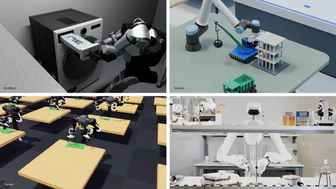
    Runway has released the open-source robot control model Praxis-1, which learns to control robots through video and has shown excellent performance in its own tests, scoring 46.2% on the Nvidia RoboLab-120 evaluation, leading similar models. The model requires additional training to adapt to new robot systems, the standard version requires an 80GB memory GPU, and it has been made available on Hugging Face.

  3. Hugging Face CEO Clément Delangue insists on defending open-source AI after Huang Renxun's departure 2 sources

    Hugging Face CEO Clément Delangue expressed condolences over the departure of NVIDIA CEO Huang Renxun and emphasized that Hugging Face will continue to defend open-source AI more vigorously than ever. The $12.9 billion acquisition of Hugging Face's open-source AI model platform is expected to be completed in the first half of 2027, while the U.S. Department of Justice has begun investigating the impact of the transaction on AI market competition.

  4. Buoyant releases Kinference: an open-source Kubernetes and vLLM inference control plane 2 sources

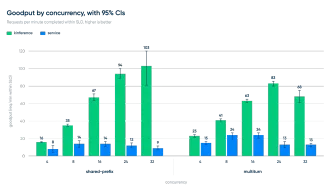
    Buoyant has released Kinference, an open-source Kubernetes and vLLM inference control plane, with the current version being v0.1.0-alpha.7. It distributes requests in front of vLLM worker nodes through routing policies, token rate limiting, KV cache-aware load balancing, and tenant-specific metrics. In benchmark tests, for shared prefix workloads, the median TTFT decreased from 6.88 seconds to 0.31 seconds (95%).

  5. Baidu open-sources Unlimited OCR 2, supporting the parsing of hundreds of pages of documents. 2 sources

    Baidu open-sources Unlimited OCR 2, a 3.34B parameter OCR visual language model that can parse hundreds of pages of books, financial reports, and reports in a single request. The weights are released under the MIT license, and the code is on GitHub.

Latest stories

Nov 14Sat1–18
  1. ITHome · AI72

    Cloudflare's open-source AI-powered browser Kitesurf has lower resource consumption than Chromium

    Cloudflare announced the open-sourcing of Kitesurf, its AI-powered browser launched in August this year, with the code released on GitHub. Kitesurf runs on Cloudflare Workers, completing HTML parsing, CSS application, executing page JavaScript, and screenshot rendering without a Chromium process or container, and supports the Chrome DevTools Protocol.

    Why it matters: Cloudflare has open-sourced a browser designed for agents and provides a resource comparison with Chromium, allowing readers to judge the deployment cost of high-concurrency agent tasks.


  2. TechCrunch · AI82

    After Huang Renxun's departure, NVIDIA's investment contraction may leave a gap in AI startup funding

    Multiple investors and founders interviewed by TechCrunch believe that after Huang Renxun's departure as CEO of NVIDIA, the company's investment in AI startups may be significantly tightened. According to PitchBook data, NVIDIA participated in 105 funding rounds this year and was often the largest investor, having invested in CoreWeave, Crusoe, Mistral AI, Lambda, and Black Forest Labs, and acquired Hugging Face for 13 billion USD.

    Why it matters: The article presents multiple perspectives on the potential tightening of NVIDIA's investment strategy after Huang Renxun's departure, allowing readers to understand the changes in the funding landscape of AI startups.

Nov 13Fri
  1. Hugging Face Blog65

    llama.cpp and ggml release v1.0.0, establishing semantic versioning rules.

    llama.cpp and ggml release v1.0.0, binding destructive changes to the public C API to the major version number, and both will be released according to semantic versioning rules thereafter. The project has supported over 150 model architectures and mainstream speculative decoding methods, and provides pre-release binaries for Linux, macOS, Windows, Android, iOS, as well as distribution channels such as Docker, Homebrew, and conda-forge.

    Why it matters: llama.cpp and ggml are released simultaneously with v1.0.0, and the major version number corresponds to destructive changes to the C API, allowing downstream dependents to plan their upgrade schedule accordingly.

  2. Hacker News · AI hot posts86

    Edge0 open sources 145B and 120B edge-side models and inference frameworks.

    Edge0 open-sourced the Edge0-145B and Edge0-120B two edge models, and also released a unified inference framework and deployment tools. Officially, the 145B model can run locally on compatible laptops, with peak memory of 29GB, decoding speed of 80+ tokens/s, pre-filling speed of 1100+ tokens/s, supporting context lengths of 128K–256K.

    Why it matters: The original text provides actual memory, speed, and multiple benchmark comparisons of the edge 145B model, which can be used to judge the practical boundaries of running cutting-edge models locally.

  3. Hugging Face Blog71

    IBM releases LLMON markup language and Granite 4.1 3B/8B preview models

    IBM released LLMON (LLM Object Notation) markup language on Hugging Face and launched two experimental preview models based on Granite 4.1: granite-4.1-3b-LLMON-preview and granite-4.1-8b-LLMON-preview, while also open-sourcing a GitHub toolkit.

    Why it matters: The original text provides the design motivation for the LLMON markup language and the two preview models, allowing readers to understand how separating instructions and data can reduce the risk of indirect prompt injection.

Nov 12Thu
  1. AWS Machine Learning Blog60

    AWS open-sources UAEF: cross-framework closed-loop evaluation AI agents

    AWS releases open-source framework UAEF, using adapters to unify the execution traces of LangGraph, LangChain, Strands Agents, Amazon Bedrock AgentCore, and Langfuse into AgentTrace, then scoring with 7 dimensions and 36 built-in metrics.

    Why it matters: The original text provides an adapter and metric design for cross-framework unified evaluation, allowing readers to judge the implementation method for comparing multi-framework agent versions.

  2. Google Developers Blog78

    Google releases generative UI open protocol A2UI 1.0

    Google has released the Generative UI Open Protocol A2UI 1.0, which is the first stable version of the protocol, allowing AI agents to respond with interactive interfaces instead of plain text. Version 1.0 adds bidirectional function calls, accessibility support, and extended metadata, and provides open-source rendering SDKs for Web, Android, iOS, as well as agent SDKs for Python, TypeScript, and Dart.

    Why it matters: A2UI 1.0 extends agent output from pure text to native interactive interfaces, providing multi-platform renderers and integration scheme examples, allowing for judgment on the implementation methods of generative UI.

Nov 11Wed
  1. MiniMax News80

    MiniMax releases open-source image generation model H3-Image

    MiniMax has released an open-source weight image generation model based on H3, H3-Image, which supports text-to-image, reference image generation, and image editing, capable of generating 4096 × 4096 4K images within 10 seconds, and supports up to 16 reference images.

    Why it matters: The official provides 4K generation speed, reference image quantity, and pricing range, which can be used to judge the gap between open-source image models and closed-source solutions.

Nov 9Mon
  1. NVIDIA Newsroom78

    NVIDIA released the GR00T 2 world action model and Isaac Lab 3.0 on CoRL.

    NVIDIA released the open-source world action model GR00T 2 on CoRL, built on NVIDIA Cosmos, trained with 100,000 hours of NVIDIA open-source first-person human data, and can complete 40 out of 50 evaluation tasks without task-specific demonstrations.

    Why it matters: The original text provides the success rate of GR00T 2 on few-shot tasks and the training throughput improvement of Isaac Lab 3.0, which can be used to judge the extent to which simulation training promotes robot deployment.

  2. QbitAI82

    Tencent Hunyuan Hy4 released: 770B total parameters, 49B activation parameters, first supports native vision and computer operation

    Tencent Mixuan Hy4 is officially released, with a total of 770B parameters and 49B activation parameters. It introduces native visual capabilities and computer operation support for the first time, while also upgrading command compliance, long text understanding, and long-range Agent capabilities. The model has been launched on products such as Tencent Cloud TokenHub, WorkBuddy/CodeBuddy, and Yuanbao. API access has been provided to platforms like OpenRouter, Hermes, and OpenCode, with weights to be open-sourced in the near future.

    Why it matters: The author uses multiple long-range tasks to test the autonomous execution and self-check capabilities of the open-source model 'Hunyuan Hy4', thereby judging the actual level of open-source models in Agent delivery.

  3. MarkTechPost71

    0sec Labs open-sources AI Security Harness 0, providing a Web console, CLI, and MCP service

    0sec Labs has open-sourced AI Security Harness 0, released under MIT or Apache-2.0 licenses, as a research preview version, which can be driven from a local browser console, headless CLI, or MCP server, used for vulnerability investigation, code review, penetration testing, reverse engineering, and fix generation.

    Why it matters: The original text provides the architecture of this security harness, its self-reported benchmarks, and a comparison with similar tools, allowing judgment on its position in the vulnerability discovery process.

  4. Hacker News · 300+78

    llama-modchip enables the 284B DeepSeek-V4-Flash to run on a 64GB memory without GPU

    llama-modchip releases a set of ggml/llama.cpp core patches and quantization transcoding tools, compressing the 284.33B DeepSeek-V4-Flash to 56.56 GiB (1.71 bpw), which can run on a pure CPU machine with 64 GB memory, with a peak memory of 57.61 GiB under 256K context and no need for swap.

    Why it matters: The project provides a quantization scheme and core patches for running 284B MoE on 64 GB memory, along with measured data for each hardware, which can be used to determine the feasible boundary for pure CPU deployment.

Nov 7Sat
  1. LangChain Blog72

    LangChain introduces asynchronous sub-agents for Deep Agents

    LangChain introduces asynchronous sub-agents in Deep Agents, where a resident orchestrating agent interfaces with users, and the sub-agents execute long tasks in the background in parallel and report results upon completion.

    Why it matters: The original text provides five management tools and notification mechanisms for asynchronous sub-agents, which can be used to determine how to set up the workflow for parallel long tasks.

Nov 6Fri
  1. QbitAI75

    Tencent's Hy4 calls have increased tenfold, WorkBuddy has been expanded, Agent Arena's first open-source model

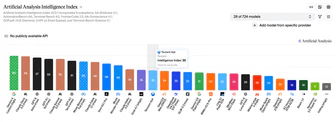
    Tencent announced on November 5 that due to the surge in Hy4 calls, WorkBuddy has been expanded tenfold and the free experience quota for users has been increased. Hy4 ranks second among Chinese models on the Artificial Analysis Intelligence Index and is ranked 13th on the Agent Arena overall list, ranking first among open-source models.

    Why it matters: After the release of Tencent Hy4, calls surged and were expanded tenfold, while also providing a comparison of the rankings in Artificial Analysis and Agent Arena and the cost per single task.

  2. Hugging Face Blog71

    NVIDIA has released four open-source world model checkpoints for Cosmos 3.

    NVIDIA has added four new open-source weight checkpoints for Cosmos 3 under the Cosmos World Model platform, all of which are post-trained versions of Cosmos 3 Nano, containing 16B trainable parameters, using the OpenMDW1.1 license, allowing commercial and non-commercial use.

    Why it matters: The original text provides four open-source weight checkpoints and a four-stage training recipe, allowing readers to judge how to adapt the world model to their own sensors and robot bodies.

Nov 5Thu
  1. Hugging Face Blog72

    Phonon TTS releases on-device speech models, topping multiple metrics on the Hugging Face open TTS leaderboard

    Phonon releases a small TTS model that can run on local devices, without a server and network, offering two versions of about 65 MB and 75 MB, covering English, French, German, Spanish, and Portuguese.

    Why it matters: The original text outlines the specifications, open-source license, and leaderboard performance of on-device TTS models, allowing judgment on the usability boundary of small models in local voice scenarios.