Skip to content
Live
Nov 14Sat
  1. ITHome · AI58

    Huawei's Kirin 9050 series new Malang GPU and AI ISP intelligence disclosed: implements second-generation hardware ray tracing, realizing 200 million pixel fusion photography for the first time.

    The Huawei Kirin 9050 series is equipped with the fourth-generation GPU micro-architecture, offering a 40% performance boost and a 45% reduction in power consumption. The second-generation hardware's ray tracing performance has improved by 78%, supporting BVH, FERT, and AO hardware acceleration units. The new-generation AI ISP integrates a pixel-specific NPU, achieving 200 million pixel fusion photography for the first time, supporting 4K60 video processing, 18EV high dynamic range video, and the full-chain BT.2020 wide color gamut.

Nov 13Fri
  1. ITHome · AI

    Players use retired Intel Optane memory to run the 2.8 trillion parameter Kimi K3 model, outputting 1.5 tokens per second

    Users have successfully run the Kimi K3 model with Intel Optane Persistent Memory, which has been discontinued, without a graphics card, achieving 2.8 trillion parameters. The initial generation speed was approximately 0.85 tokens per second, and it increased to 1.50 tokens per second after disabling the DAX function. The 3-bit quantization test only reached 0.75 tokens per second, and generating 50,000 tokens took 18.5 hours.

  2. Hacker News · AI hot posts86

    Edge0 open sources 145B and 120B edge-side models and inference frameworks.

    Edge0 open-sourced the Edge0-145B and Edge0-120B two edge models, and also released a unified inference framework and deployment tools. Officially, the 145B model can run locally on compatible laptops, with peak memory of 29GB, decoding speed of 80+ tokens/s, pre-filling speed of 1100+ tokens/s, supporting context lengths of 128K–256K.

    Why it matters: The original text provides actual memory, speed, and multiple benchmark comparisons of the edge 145B model, which can be used to judge the practical boundaries of running cutting-edge models locally.

  3. Hacker News · 300+

    smolmaxxing enabling large language models to run on older devices

    The smolmaxxing project enables large language models to run on old devices like Xiaomi TV boxes and iPad Air by customizing the kernel, optimizing memory usage, and streaming weights from flash storage. On Xiaomi TV boxes, the Qwen3.5-2B model processes 7.7 tokens per second, and the Ling-mini-2.0 model processes 5.1 tokens per second. Support for more devices is coming soon.

  4. ITHome · AI

    Alibaba Xiami App returns in AI form after five years: Happy Xiami officially launched, members start at 30 yuan per month

    Alibaba's AI music creation platform, HappyShrimp, has officially launched on iOS and Android platforms, with the App Store version at 0.2.14. The platform supports generating human-vocal songs and pure music based on natural language descriptions, possessing music world knowledge, and provides two modes: smart lyrics and pure music. Standard members can generate 150 songs per month for 30 yuan.

Nov 12Thu
Nov 11Wed
  1. ITHome · AI50

    MediaTek 'claims' the iFlow intelligent temperature control system chip platform: all models are equipped with Genio 420

    MediaTek empowers the launch of ISHO iFlow smart temperature control system and its Pro version, both equipped with the Genio 420 platform, which is based on a 6nm process, offering 7.2 TOPS AI computing power and 16GB LPDDR5X, supporting BCG contactless monitoring function for dual-person independent monitoring, the standard version priced starting from 9999 yuan.

  2. Hacker News · AI hot posts

    Apple's new Mac app Harbor is about to launch, simplifying the running of local AI models.

    Apple's new app Harbor can convert a Mac into a private AI inference server, supporting the local running of open-weight models on Apple Silicon, with data not leaving the hardware or cloud. By connecting multiple Macs via Thunderbolt 5, unified memory can be aggregated, supporting large models and higher concurrency. The app is currently in the private preview stage of the Claris brand and is expected to be released to the public soon.

  3. ITHome · AI

    Claris testing Harbor application: Turning Mac into a local AI server

    Claris is testing the Harbor app, which can turn a single or multiple Apple Silicon Macs into a local AI server to run larger AI models without manual configuration. The app is currently in the early experience phase and has not been made available to the public yet.

  4. TechCrunch · AI

    Google releases two new TPU chips to expand AI hardware portfolio

    Google has released two new TPU chips, TPU 8tx and TPU 8i Max, for AI workloads, expanding its chip portfolio to confidential inference and larger memory capacity. The TPU 8tx was developed in collaboration with AMD, designed specifically for confidential training and running AI models, with hardware-level direct integration of security features; the TPU 8i Max combines two TPU 8i chips, doubling memory capacity, processing power, and bandwidth, supporting AI models to handle a wider range of information.

Nov 10Tue
  1. ITHome · AI65

    Samsung Electronics plans to complete the development of the advanced packaging technology '3D Cube-H' by early next year.

    Samsung Electronics plans to complete the development of advanced packaging technology '3D Cube-H' by early next year. This technology stacks multiple chips vertically through hybrid bonding, with terminal spacing of about 6 μm, much smaller than the 25 μm of traditional TC bonding, aiming to increase connection density, reduce energy consumption, and optimize heat dissipation, primarily targeting ultra-high-performance AI chips.

  2. ITHome · AI65

    Apple's Skimmer module exposed: iOS/macOS 27.3 will localize about 2% of English requests locally

    Apple introduced the Skimmer module in the first developer preview version Beta of iOS/macOS 27.3, with about 2% of English requests routed to local model processing, mainly covering high-frequency commands such as timers and playing music, to reduce latency, save computing power, and protect privacy. Skimmer matches user requests with predefined tool workflows using regular expressions, and after a rule is hit, it can directly execute the operation. The relevant rule file is Enigma..

  3. Berkeley AI Research22

    BAIR at CoRL 2026

    BAIR team presented multiple research achievements at the Robot Learning Conference (CoRL) held from November 9 to 12, 2026, in Austin, Texas, including 33 main conference papers, 4 breakthrough posters, 10 oral presentations, and 7 thematic speeches, among which Professor Negar Mehr will deliver an early career keynote speech. The conference covers topics such as robotic vision-language-action models, embodied agents, fine-grained manipulation alignment, and hindsight reward editing.

Nov 9Mon
Nov 8Sun
  1. QbitAI42

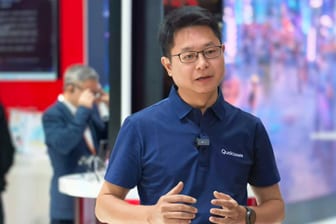
    Qualcomm showcased the edge-side MoE intelligent agent at the CIIE, driving edge-side AI from single-point applications to intelligent agent experiences

    Qualcomm showcased its edge-side MoE intelligent agents at the 9th CIIE, driving edge-side AI from single-point applications to intelligent agent experiences. MoE technology enhances the intelligence level of edge-side models through mixed expert modules, achieving higher complexity task completion in the 2 billion to 3 billion parameter scale. Qualcomm collaborated with Infris AI, Changelong, and Jieyu Xingchen to optimize models, inference, storage, and chip platforms, demonstrating a systematic solution for edge-side AI ecosystem synergy.

  2. ITHome · AI65

    The remastered version of 'The Legend of Zelda: Ocarina of Time' runs on jailbroken PS5 and iPhone

    After the Nintendo 'The Legend of Zelda: Ocarina of Time' remastered version launched on Switch 2 on November 5, developers have successfully run it on jailbroken PS5 and iPhone. The PS5 version is based on the EglantinePS5 project, with a frame rate of about 15-20 FPS under the 12.40 firmware, but there are memory issues and rendering problems, with the patch written by Claude.

Nov 7Sat
  1. QbitAI22

    STEPX Neo Smart Body Phone debuts at CIIE

    The STEPX Neo Smart Body Phone from STEPX Terminal debuts at the CIIE, showcasing ecosystem cooperation experiences with Alipay coupons, Jianying, and Ctrip, equipped with Snapdragon chips and supporting native development tools Step Studio, providing consumer, creation, and travel scenario services through integrated model, software, and hardware collaboration.

  2. Baseten Labs65

    Research shows that on-policy self-distillation (OPSD) is biased and has limited effectiveness

    Research indicates that on-policy self-distillation (OPSD) may still be valuable in specific scenarios, but more research resources should not be invested. OPSD trains through the outputs generated by the student model itself with context prompts, but research shows that this intensive supervision may introduce bias, especially for trained models, making it less effective.

Nov 6Fri
  1. ITHome · AI65

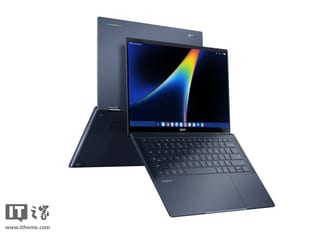
    Google brings November updates to Googlebook: reduces side AI performance usage, up to 6GB memory release

    Google updates Googlebook laptop for November, reducing edge AI memory usage to 3GB-6GB and improving performance for multi-tab and high-load tasks. The update also fixes issues with 2-in-1 device keyboard/trackpad unresponsiveness, Zoom effects crashes, DRM video black screen, and unusable USB microphone, and includes 30 fixes and the November 2026 security patch.

  2. ITHome · AI35

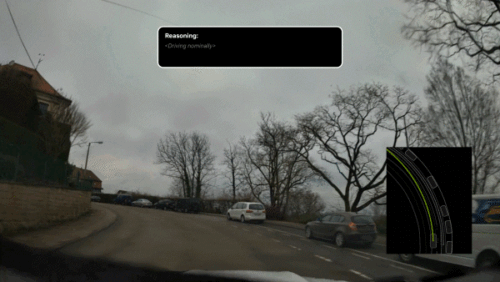
    The 2027 Chery Fengyun T11 model is launched on November 12: roof LiDAR, Falcon 700, end-to-end urban NOA

    The 2027 Chery Fengyun T11 will be launched on November 12, with a new Hesai AT128 LiDAR added to the roof, the assisted driving system upgraded from Falcon 500 to Falcon 700, supporting end-to-end urban NOA. The new car adds a LiDAR at the front of the roof, officially displayed as Hesai AT128, while upgrading the BMC chip, increasing the number of perception units to 27. The Falcon 700 system supports the vehicle passing unprotected intersections and roundabouts, and has parking-to-parking assisted driving capabilities.

  3. Google Research72

    Google Research uses smartwatch sensors to identify signs of hypertension.

    Google Research published a multimodal AI system AI-PPG-ACC-HTN in Nature, which passively identifies hypertension status without wristband calibration, using only PPG and accelerometer data from consumer-grade smartwatches.

    Why it matters: The study passively identifies hypertension using PPG and accelerometer data from smartwatches, providing quantitative results for screening and confirmation in two stages, with 24-hour dynamic blood pressure monitoring as the gold standard.

Nov 5Thu
  1. IBM Research Blog38

    HRL Laboratory's MEMS inertial sensor can rival GPS

    HRL Laboratory develops an inertial measurement unit (IMU) using advanced algorithms, providing an uninterrupted GPS alternative. Its MEMS inertial sensor is the size of a can of soup, with accuracy close to GPS, and solves the long-standing problem of bias drift. Through the AutoCal automatic calibration system, it continuously corrects errors, achieving unlimited navigation support. The IMU uses ASIC and advanced packaging technology to optimize cost and size, making it suitable for light vehicles such as drones.

  2. Hugging Face Blog72

    Phonon TTS releases on-device speech models, topping multiple metrics on the Hugging Face open TTS leaderboard

    Phonon releases a small TTS model that can run on local devices, without a server and network, offering two versions of about 65 MB and 75 MB, covering English, French, German, Spanish, and Portuguese.

    Why it matters: The original text outlines the specifications, open-source license, and leaderboard performance of on-device TTS models, allowing judgment on the usability boundary of small models in local voice scenarios.