Skip to content
Live
Nov 14Sat
  1. QbitAI80

    DeepSeek has opened the entire suite of application APIs, with voice interfaces included for the first time.

    DeepSeek has officially opened the entire suite of application APIs, including online search, deep thinking search, file upload, and link reading features within the app, all providing independent interfaces that can be called separately and billed individually. Voice capabilities have been included in the open list for the first time, including ASR and TTS interfaces. The original price for speech recognition is 0.78 yuan per hour, now half off at 0.39 yuan per hour, and speech synthesis is 1.5 yuan per 10,000 characters.
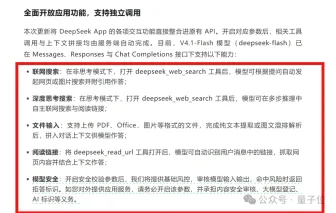
    Why it matters: The original text lists the tool interfaces opened by DeepSeek and the half-price voice pricing, allowing readers to estimate the call costs for voice assistant and document processing applications.

  2. ITHome · AI72

    Cloudflare's open-source AI-powered browser Kitesurf has lower resource consumption than Chromium

    Cloudflare announced the open-sourcing of Kitesurf, its AI-powered browser launched in August this year, with the code released on GitHub. Kitesurf runs on Cloudflare Workers, completing HTML parsing, CSS application, executing page JavaScript, and screenshot rendering without a Chromium process or container, and supports the Chrome DevTools Protocol.

    Why it matters: Cloudflare has open-sourced a browser designed for agents and provides a resource comparison with Chromium, allowing readers to judge the deployment cost of high-concurrency agent tasks.

  3. The Decoder65

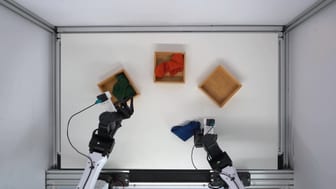
    Runway open-sources robot control model Praxis-1

    Runway has released the open-source robot control model Praxis-1, which learns to control robots through video and has shown excellent performance in its own tests, scoring 46.2% on the Nvidia RoboLab-120 evaluation, leading similar models. The model requires additional training to adapt to new robot systems, the standard version requires an 80GB memory GPU, and it has been made available on Hugging Face.

  4. ITHome · AI

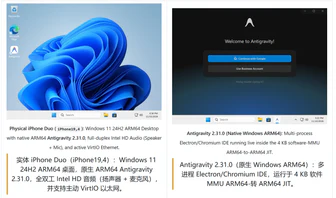
    Google executive successfully runs Microsoft Win11 on iPhone Duo using Gemini 4 Carbon

    Google AI Studio product and design lead Lei Xi uses the Gemini 4 Carbon model to develop a WindowsiOS project, running Windows 11 on Arm 24H2 system image on iPhone Duo via virtual machine, supporting touch operations. The project is open source, requiring Mac, development tools, and Windows ARM image deployment, can try to run some traditional Windows applications but compatibility is not guaranteed.
  5. The Verge · AI65

    Amazon plans to build a 'World Product Graph' covering global online shopping data.

    Amazon plans to build a 'World Product Graph' covering global online shopping data, including unsold products on Amazon, and provide information through its website, aiming to reduce consumers' reliance on Reddit or Google for product research, while also potentially leading consumers who search for products on other platforms to eventually visit Amazon, or even rely on AI agents that use its data.

  6. AWS Machine Learning Blog45

    Amazon Bedrock AgentCore runtime V2 architecture mode: Accelerating session startup

    Amazon Bedrock AgentCore runtime V2 reduces session startup time to about 2 seconds by preparing the environment once and using a snapshot for recovery, while also reclaiming unused memory. V2 supports building hooks to load large files or CLI, suitable for scenarios requiring resource preparation in advance. Session startup time can be measured via CloudWatch metrics, prioritizing optimization of platform overhead or code execution time.

  7. AWS Machine Learning Blog

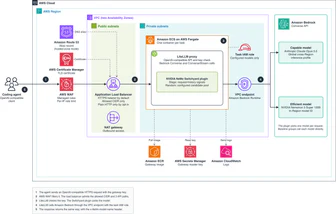
    Using NVIDIA NeMo Switchyard on Amazon Bedrock to Route Model Requests for Coding Agents like Claude Code and OpenAI Codex CLI

    Developers using coding agents like Claude Code and OpenAI Codex CLI need to be billed per task rather than per single call, so model routing should be based on the cost per task. NVIDIA NeMo Switchyard is an open-source library that helps AI agents select models to process each request, supporting Stage and Random routing strategies.

  8. Google Research88

    Google Opens /teamwork Multi-Agent Workflow in Antigravity

    Google has opened the /teamwork multi-agent workflow in Antigravity to external researchers and developers, which can be used in conjunction with Gemini 4 Argon, Carbon, and Hydrogen; /boost and Deep Review are also available.

    Why it matters: Google has disclosed /teamwork's specific results in multi-agent research and engineering tasks and made it available for external researchers to use.

  9. The Decoder65

    OpenAI has restarted AI shopping with ChatGPT Wallet.

    OpenAI has launched the ChatGPT Wallet, allowing AI agents to make payments on behalf of users, provided through Dots services in the US, requiring a ChatGPT Pro subscription and a qualified bank card. Each payment requires user Face ID or fingerprint verification, without exposing real card information. Existing card rewards and bank protection apply.

  10. AWS Machine Learning Blog

    How AssemblyAI optimizes speech-to-text inference costs using EC2 Spot instances on AWS

    AssemblyAI builds an elastic architecture on AWS by hybridly using EC2 On-Demand and Spot instances, and leveraging Amazon ECS, SQS, and EventBridge, to increase GPU instance utilization by 3.5 times, achieve cost reduction within the European AWS region, and meet service level agreements (SLA). Its inference platform is deployed on three GPU instance families: g4dn, g5, and g6.

  11. Meta Engineering

    Cuttlefish runs natively on Mac: Bringing the Android Virtual Device framework to Apple Silicon

    Meta has natively ported the Android Virtual Device framework Cuttlefish to macOS, by supporting QEMU and vhost-user, solving the technical challenges of running virtual devices on Apple Silicon, improving development efficiency, and unifying testing environments. The new version supports macOS's display, signing, and build processes, and expands features such as Bluetooth, Wi-Fi, and 3D graphics, allowing Mac developers to use high-fidelity virtual devices the same as CI.

  12. Sierra Blog

    Personal Agent Protocol 1.0 released

    The Personal Agent Protocol (Poppy) v1.0 protocol is now released, and Shopify has enabled it for all merchants on the platform. Multiple design partners, including Mercury, Synchrony, and Turkish Airlines, have started going live. Meta's AI agent Muse is automatically prioritizing Poppy on every website visited. The protocol uses OAuth authentication to let customers control personal agent permissions and supports phased adoption, introducing an e-commerce extension co-developed by Shopify.

  13. TechCrunch · AI

    ChatGPT's new wallet feature allows AI agents to make purchases and check out

    OpenAI introduces a new wallet feature for ChatGPT, allowing AI agents to select products for users and complete purchases on their behalf, initially only available to U.S. ChatGPT Pro subscribers aged 18 and above using U.S. credit cards. Users can preview products, total amounts, and payment cards, and undergo secure verification via Face ID or fingerprint. OpenAI plans to gradually expand the feature's support to retailers and add user control options.
Nov 13Fri
  1. Hugging Face Blog65

    llama.cpp and ggml release v1.0.0, establishing semantic versioning rules.

    llama.cpp and ggml release v1.0.0, binding destructive changes to the public C API to the major version number, and both will be released according to semantic versioning rules thereafter. The project has supported over 150 model architectures and mainstream speculative decoding methods, and provides pre-release binaries for Linux, macOS, Windows, Android, iOS, as well as distribution channels such as Docker, Homebrew, and conda-forge.

    Why it matters: llama.cpp and ggml are released simultaneously with v1.0.0, and the major version number corresponds to destructive changes to the C API, allowing downstream dependents to plan their upgrade schedule accordingly.

  2. ITHome · AI

    DeepSeek releases the full suite application API

    DeepSeek has opened up the application API, allowing developers to call deep thinking search, file input, and other dialogue functions through parameters. Voice and related underlying capabilities are also opened as independent interfaces, supporting separate or combined calls to achieve 1:1 replication of the DeepSeek App. The V4.1-Flash model (deepseek-flash) supports online search, deep thinking search, file input, reading links, and other capabilities, and charges fees for related tool calls.

  3. MIT News · AI

    MIT researchers develop an AI collaboration design system to help engineers optimize structures

    MIT Researchers Develop AI Collaboration Design System, Providing Feedback Areas to Human Designers When Algorithms Generate Structures, Making Structures Easier to Manufacture and More Bending-Resistant, with Only a 15-Second Increase in Total Design Time. The System is Based on Topology Optimization Technology, Rapidly Identifying Algorithm Design Areas Humans May Want to Modify Through Machine Learning, Integrating Human Knowledge into the Design Process, Increasing Manufacturability and Linear Bending Load by 39% While Only Moderately Increasing Total Design Time.

  4. Modal Blog

    Modal's Sandbox resource allocation: on-demand burst rather than reserved

    Modal's Sandbox only uses up to 6% of the peak CPU in typical usage, as it is idle during inference and only peaks when dependencies are installed, tested, or built. The current fixed resource reservation mode is not suitable for such bursty workloads, forcing users to reserve resources for peaks and pay continuously. Modal's Sandbox adopts an on-demand burst mode, acquiring CPU and memory resources only when needed, and users pay based on actual usage, with an average cost 58% lower than the fixed reservation mode.

  5. GitHub Blog · AI & ML58

    GitHub Blog: Build Once, Run Across Any Agent: A Practical Guide to Agent Skills

    Agent skills allow the capture of reusable instructions for users and agents, defining the timing and manner of task execution through a versioned directory centered around a SKILL.md file. Proof Agent uses an independent validator for adversarial validation of AI-generated content, while Data Forge constructs a support pipeline for table metrics through multiple collaborative skills, with each skill sharing context defined by a manifest rather than independently rediscovering it.

  6. Databricks Blog22

    Clarification on the misunderstanding of the Lakebase architecture's LTAP.

    Lakebase architecture serves both Postgres and analytics with a single persistent data copy, without the need for CDC pipelines or a second database. This architecture stores data hierarchically in object storage and cache, not traditional replication. It supports both point-in-time and scan access paths, optimized respectively using Postgres heap pages and Parquet format, with no additional synchronization tasks.

  7. The Decoder

    Anthropic launches Claude Meetings feature to let AI participate in video conferences

    Anthropic has released the Claude Meetings feature, allowing Claude to join video conferences as a visible participant, answer questions, generate documents and whiteboards, take notes and action items, and respond in text format by default. With authorization, it can access connected tools. After the meeting, all notes, text records, and documents are uploaded to the dedicated claude.ai page. Privacy controls default to preventing Claude from joining meetings with external participants.

  8. MarkTechPost

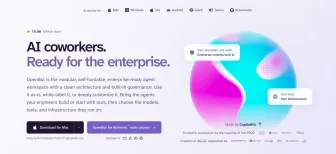
    CopilotKit has released OpenBot 1.0: an MIT-licensed, self-hostable, and built-in governance AI assistant.

    CopilotKit has released OpenBot 1.0, an MIT-licensed, self-hostable, and built-in governance AI assistant. OpenBot 1.0 supports user-selected models (including 9 model families such as OpenAI, Claude, Gemini, Grok) and AG-UI agents (supporting 8+ frameworks), with all Bot actions checked against CEL policies before execution. The personal version is free, and the commercial version costs up to $29 per user per month. If model usage exceeds $5,000 per month, an additional 5% fee is charged on the excess. Annual plans also offer offline deployment and 24/7 support.

  9. vLLM Blog60

    vLLM supports Thinking Machines' Inkling 2 Small on its first day of release

    vLLM provides support for Inkling 2 Small on its first day of release. The model is a multimodal MoE with text and visual inputs, featuring a total of 594B parameters, 17B activation parameters, a maximum context length of 1M tokens, and comes with a built-in DSpark beam decoder.

    Why it matters: The original text provides details of vLLM's Day-0 support for Inkling 2 Small and multiple kernel optimizations, allowing readers to understand the deployment path and throughput performance of the model.