Skip to content
Live

Fields

Data & training

The art of training: dataset construction, synthetic data, pre-training and post-training methods, computing power and training costs.

35featured stories
31this month
13 Nov, 11:32Updated
Active this month

Latest stories

Nov 13Fri1–19
  1. Hacker News · AI hot posts80

    Unemployment Labs reports that the models DeepSeek, Kimi, MiniMax, and Ant have weights with a Blackwell hardware fingerprint.

    Unemployment Labs, by analyzing the random number initialization layout in public model weights, discovered DeepSeek-V4-Flash, DeepSeek-V4-Pro, Kimi K3.

    Why it matters: By reversing the random number layout in the model weights to train the hardware, it provides a reproducible technical evidence path for export control disputes.


  2. Databricks Blog60

    Databricks introduces Lakehouse//RT, aimed at real-time analysis loads for agents.

    Databricks has released the Lakehouse//RT, designed to directly handle high-concurrency real-time queries brought by AI agents on lakehouses, currently in beta. The official claims it can provide latency below 100 milliseconds under 12,000 QPS, and through four paths—high concurrency, rapid execution, small-step scaling, and a single system—ensures that cost growth is slower than query volume growth.

    Why it matters: The original text provides four cost reduction mechanisms and migration data from three customers, allowing judgment on whether the real-time analytics layer is worth replacing.

Nov 11Wed
  1. Databricks Blog66

    Databricks has announced that Genie Ontology is now officially available.

    Databricks announces the official availability of Genie Ontology, where agents continuously learn business context from dashboards, SQL queries, notebooks, and semantic models, and key definitions are managed by humans through Unity Catalog.

    Why it matters: The original text provides pass rates, time consumption, and token comparisons for benchmarks co-built with Turing, allowing judgment on the impact of the enterprise context layer on the accuracy of agents.

  2. Google DeepMind66

    DeepMind releases AlphaGenome 2, predicting DNA variation impacts by cell type

    Google DeepMind releases AlphaGenome 2, a conditional DNA sequence model that can predict the impact of DNA mutations on gene expression for specific cell types or states.

    Why it matters: Officially disclosed the conditional architecture modification and single-cell level evaluation comparison, which can understand how the model localizes the effect of mutation to specific cell types.

Nov 10Tue
  1. Claude · YouTube68

    Claude Mythos 5.2 predicted the complete AAV coat structure

    Claude Mythos 5.2 predicts the complete AAV capsid structure, which is composed of 60 identical protein chains. It writes code for an open-source folding model to handle the overlap grouping of adjacent five chains, then uses the symmetry of the capsid to assemble the 60 chains. On AAV2, its prediction deviates from the experimental structure by about the width of an atom.

    Why it matters: The original text provides specific methods and accuracy of the model in real scientific research tasks, allowing readers to judge its applicable boundary in structural prediction work.

Nov 8Sun
  1. ITHome · AI75

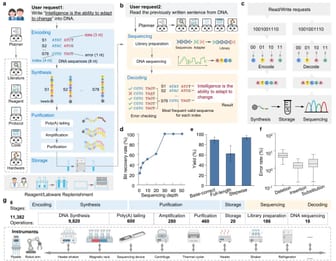
    Shanghai Jiao Tong University's AutoDNA device achieves autonomous molecular biology experiments, results published in Nature

    Shanghai Jiao Tong University's Chen Haibo, Wang Zhao Guo team collaborates with Fan Chun Hai, Wang Fei team to construct AI-native scientific laboratory AutoDNA device (Siyuan No. 1), achieving autonomous molecular biology experiment operations, results published in Nature and featured on the homepage.

    Why it matters: This study combines multi-agent architecture with instrument atomic services, allowing AI to autonomously complete molecular biology experiments, serving as a reference for AI-native laboratory architectures.

  2. The Decoder71

    Alibaba and other teams released Co-Design Bench: coding intelligence agents only fully solve 26.4% of real tasks.

    Researchers from Alibaba and several Asian universities used real user change requests to build the coding intelligence agent benchmark Co-Design Bench. Among the ten tested models, the best-performing GPT-6 Astra only meets about 70% of the task requirements, but only 26.4% of the tasks are completely correct.

    Why it matters: A benchmark display composed of real user requests shows that the strongest model can only fully solve about one-quarter of the tasks, and the score difference for the same model in different environments is nearly 20 percentage points.

Nov 7Sat
  1. The Decoder78

    Nine AI entities attempt autonomous research on open problems at US national laboratories, none reaching expert standards

    A study made Claude Opus 4.8, Claude Opus 5, Claude Fable 5, Claude Opus 5.5, GPT-5.6 Sol, GPT-6 Astra.

    Why it matters: This benchmark uses 15 unpublished research questions to test 9 agents and provides common failure patterns in 135 submissions, which can be used as a reference for evaluating autonomous research capabilities.

  2. The Decoder71

    Google AI detects hypertension using a regular smartwatch without a cuff

    Google Research's AI detects signs of hypertension without blood pressure cuff calibration, using only the pulse and motion sensors already in smartwatches, with related research published in Nature. The neural network learns pulse and heartbeat patterns by comparing short segments from nearly 500,000 hours of sensor data to identify which segments belong to the same person, then averages multi-day data to calculate the probability of hypertension.

    Why it matters: Readers can learn about a smartwatch blood pressure detection study that requires no cuff calibration, and its comparison results with traditional measurements in tests on 196 people.

  3. Anthropic Research62

    Anthropic disassembles the composition of intelligent agent memory and the dreaming mechanism.

    Anthropic has published a research paper, breaking down Claude's intelligent agent memory into components such as memory notes, offline dreaming organization, and memory hierarchy improvement, and explaining that memory refers to context that is preserved across sessions and can be read again, excluding weight updates, context learning within a single session, and compaction.

    Why it matters: Anthropic has disclosed the hierarchical design of agent memory and the dreaming mechanism, providing comparable experimental results using CL-Bench, Pokemon, and internal document corpora.

  4. TechCrunch · AI71

    Ramp data shows AI spending stagnation, as Anthropic's IPO is approaching.

    Ramp's report shows that corporate token spending only increased by 1.5% from August to September, while it grew by 42% month-on-month in July, and token usage is still rising. Ara Kharazian, chief economist at Ramp, believes that the price cuts by OpenAI and Anthropic and corporate discounts make AI usage cheaper, and the top 1% of spending companies are slightly below the monthly per capita peak of $10,000 in summer. Ramp data shows AI spending stagnation, coinciding with Anthropic's upcoming IPO. Ramp's spending data gives a price signal opposite to usage growth, which can be used to observe the tension between model companies' revenue and IPO valuations.

    Why it matters: Ramp's spending data provides a price signal opposite to usage growth, which can be used to observe the tension between model companies' revenue and IPO valuations.

Nov 6Fri
  1. vLLM Blog72

    REINFORCE Zero: Aligned kernel allows asynchronous RL to train stably under lag 64.

    NVIDIA Research and Inferact's REINFORCE Zero proposes to first align rollout with training kernel, then use unclipped token-level importance sampling to correct weight lag, achieving a training step throughput 2.40 times that of synchronous training under 16 GPUs and 12K updates.

    Why it matters: The paper breaks down the gap between asynchronous RL's rollout and training into two items: weight lag and kernel inconsistency, and proposes an alignment-free, no-trimming importance sampling method after alignment.

  2. Google Research72

    Google Research uses smartwatch sensors to identify signs of hypertension.

    Google Research published a multimodal AI system AI-PPG-ACC-HTN in Nature, which passively identifies hypertension status without wristband calibration, using only PPG and accelerometer data from consumer-grade smartwatches.

    Why it matters: The study passively identifies hypertension using PPG and accelerometer data from smartwatches, providing quantitative results for screening and confirmation in two stages, with 24-hour dynamic blood pressure monitoring as the gold standard.

Nov 5Thu
  1. ITHome · AI74

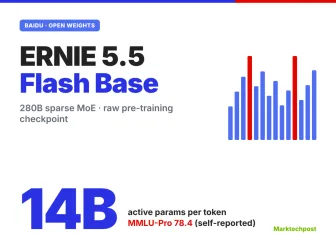
    Baidu Wenxin has open-sourced the ERNIE 5.5 Flash Base base model, with a total parameter of 280B.

    Baidu Wenxin has released ERNIE-5.5-Flash-Base and opened the ERNIE 5.5 Flash pre-trained endpoint weights. This is a sparse MoE language model with a total parameter of 280B and 14B activation per token. It was pre-trained from scratch on 33.5T tokens and supports fine-tuning and inference with a context size of up to 1M tokens.

    Why it matters: The original text provides the parameters, training data size, and open-source weights of the 280B sparse MoE base, allowing readers to judge its adaptability as a fine-tuning starting point.

  2. Hugging Face Blog65

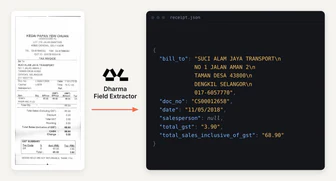
    Dharma-AI releases Dharma Field Extractor: 2B parameter model extracts any document into JSON fields

    Dharma-AI releases Dharma Field Extractor, a 2B parameter model, input document image and optional schema, output typed structured JSON, supports open extraction and schema-directed extraction, missing fields return null.

    Why it matters: The original text provides a comparison of quality and cost on self-built benchmarks, allowing readers to judge the feasibility of the small model specialized route in field extraction tasks.

Nov 4Wed
  1. OpenHands Blog71

    OpenHands and Snowflake introduce a workflow for training models using their own Agent harness

    OpenHands partnered with Snowflake AI Research, allowing developers to directly use the existing OpenHands Agent harness for reinforcement learning and training without rebuilding the harness in the training framework.

    Why it matters: The original text provides specific configuration methods and code locations for directly using the existing Agent harness for RL training, allowing readers to judge whether training and deployment can share a single harness.

Nov 3Tue
  1. QbitAI80

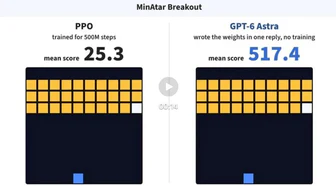
    MIT experiment: GPT-6 Astra directly modifies Qwen3.5 weights, mathematical ability improves by about 6 times

    MIT's experiment allowed GPT-6 Astra to directly read and edit the weights of Qwen3.5-0.8B, changing only 0.016% of the parameters, without training and gradient descent, MATH-500 score improved from 7.9% to 48.1%, and instruction execution ability also increased 3 times.

    Why it matters: MIT experiments show that cutting-edge models can directly read and write the weights of smaller models, providing a reproducible path for performance repair of gradient-free training.

Oct 31Sat
  1. ITHome · AI72

    Microsoft, Google, Oracle, and other five tech giants have pledged to invest more than 3 trillion US dollars in AI infrastructure.

    According to Bloomberg, Alphabet, Meta, Microsoft, Amazon, and Oracle have pledged to invest more than 3 trillion US dollars in data centers and other fields in the coming years, with a total of 1.3 trillion US dollars in lease payment commitments and a total of 1.9 trillion US dollars in other procurement commitments.

    Why it matters: The contract commitments of the five giants in terms of scale and scope are listed together, revealing the capital structure and recovery pressure of AI data center investments.