
Skip to content
Live

Fields

AI agents

The technical direction of enabling models to autonomously plan, call tools, and complete multi-step tasks - all the dynamics from Claude Code, Manus to various Agent frameworks and evaluation benchmarks.

141featured stories
116this month
14 Nov, 18:15Updated
Active this month

Major events

  1. ChatGPT's new wallet feature allows AI agents to make purchases and check out 5 sources

    OpenAI introduces a new wallet feature for ChatGPT, allowing AI agents to select products for users and complete purchases on their behalf, initially only available to U.S. ChatGPT Pro subscribers aged 18 and above using U.S. credit cards. Users can preview products, total amounts, and payment cards, and undergo secure verification via Face ID or fingerprint. OpenAI plans to gradually expand the feature's support to retailers and add user control options.

  2. United Airlines blocked AI agents from booking flights due to cybersecurity risks 3 sources

    United Airlines will limit AI agents from booking flights and managing bookings for its users, citing cybersecurity risks and violations of federal regulations. This is the latest case of a major US company preventing customers from using AI agents and autonomous assistants to access its systems.

  3. Adobe is introducing AI agents and new creative tools into Photoshop, Premiere, and Firefly. 3 sources

    Adobe announced at its MAX conference that it will add more AI features to Photoshop, Premiere, Illustrator, and InDesign, while expanding the AI capabilities of Firefly and launching a creative AI agent.

  4. AI agents like Gemini discovered unrecorded Mayan ruins in Mexico by analyzing NASA LiDAR data. 2 sources

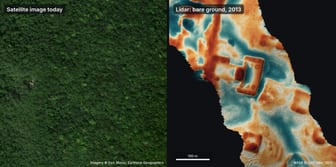
    Intelligent agents such as Gemini, ChatGPT, Claude, and Grok discovered an officially unrecorded Mayan site in Mexico by analyzing NASA LiDAR data, completing the entire process from inspiration to government formal reply in less than 72 hours. The site is located on a mountain top in the jungle, containing structures such as plazas, pyramids, and courtyards. The agents identified and submitted reports to the National Institute of Anthropology and History of Mexico (INAH), which confirmed that the location had not been registered (later verified that the site had been mapped by anthropologists).

  5. OpenAI transforms ChatGPT into a corporate directory, introduces AI agents to handle customer inquiries 2 sources

    OpenAI has launched the 'Businesses in ChatGPT' Beta feature, allowing businesses to manage information through Business Hub and create AI agents to handle customer inquiries; eligible US e-commerce merchants can generate AI agents to answer questions and access ChatGPT ads; Shopify merchants can connect directly; user conversations are not shared with businesses.

Latest stories

Nov 14Sat1–19
  1. ITHome · AI72

    Cloudflare's open-source AI-powered browser Kitesurf has lower resource consumption than Chromium

    Cloudflare announced the open-sourcing of Kitesurf, its AI-powered browser launched in August this year, with the code released on GitHub. Kitesurf runs on Cloudflare Workers, completing HTML parsing, CSS application, executing page JavaScript, and screenshot rendering without a Chromium process or container, and supports the Chrome DevTools Protocol.

    Why it matters: Cloudflare has open-sourced a browser designed for agents and provides a resource comparison with Chromium, allowing readers to judge the deployment cost of high-concurrency agent tasks.


  2. ITHome · AI82

    Google expands the Antigravity multi-agent system, launches the Teamwork system, and verifies multiple mathematical proofs.

    Google announces expansion of its Antigravity multi-agent system, forming the Teamwork system with multiple professional agents driven by Gemini, capable of verifying complex mathematical proofs and optimizing software system performance.

    Why it matters: The original text provides specific outputs and open access points for multi-agent systems in mathematical formalization, molecular recognition, and code rewriting, which can be used to assess the practical boundaries of their collaborative verification mechanisms.

  3. Google Research88

    Google Opens /teamwork Multi-Agent Workflow in Antigravity

    Google has opened the /teamwork multi-agent workflow in Antigravity to external researchers and developers, which can be used in conjunction with Gemini 4 Argon, Carbon, and Hydrogen; /boost and Deep Review are also available.

    Why it matters: Google has disclosed /teamwork's specific results in multi-agent research and engineering tasks and made it available for external researchers to use.

  4. ITHome · AI73

    OpenAI launches payment feature ChatGPT Wallet, allowing dot AI agents to shop for users

    OpenAI announced the launch of the payment feature ChatGPT Wallet, which will have the dot AI agent replace users for shopping, and will collaborate with American Express, Mastercard, and Visa to develop it. After users enter their bank card information once, the agent can find products, and each transaction needs to be verified securely. The agent does not touch the real card number, and the payment network will generate a dedicated payment token with a limited use. This feature will initially only be available to OpenAI Pro subscribers who are 18 years of age or older in the United States, and no transaction fees will be charged for now.

Nov 13Fri
  1. Hacker News · AI hot posts86

    Edge0 open sources 145B and 120B edge-side models and inference frameworks.

    Edge0 open-sourced the Edge0-145B and Edge0-120B two edge models, and also released a unified inference framework and deployment tools. Officially, the 145B model can run locally on compatible laptops, with peak memory of 29GB, decoding speed of 80+ tokens/s, pre-filling speed of 1100+ tokens/s, supporting context lengths of 128K–256K.

    Why it matters: The original text provides actual memory, speed, and multiple benchmark comparisons of the edge 145B model, which can be used to judge the practical boundaries of running cutting-edge models locally.

  2. Google DeepMind87

    Google DeepMind releases Gemini 4 Hydrogen model

    Google DeepMind releases Gemini 4 Hydrogen, targeting daily coding and intelligent agent workflows, with an Artificial Analysis intelligence index of 51 at the default high thinking level, higher than Argon's 50, and reaching 54 at the xhigh level

    Why it matters: Google provides the division of labor and positioning of Hydrogen, Carbon, and Argon, as well as the actual differences in cost and speed between multi-model arrangements.

Nov 12Thu
  1. AWS Machine Learning Blog60

    AWS open-sources UAEF: cross-framework closed-loop evaluation AI agents

    AWS releases open-source framework UAEF, using adapters to unify the execution traces of LangGraph, LangChain, Strands Agents, Amazon Bedrock AgentCore, and Langfuse into AgentTrace, then scoring with 7 dimensions and 36 built-in metrics.

    Why it matters: The original text provides an adapter and metric design for cross-framework unified evaluation, allowing readers to judge the implementation method for comparing multi-framework agent versions.

  2. Google Developers Blog78

    Google releases generative UI open protocol A2UI 1.0

    Google has released the Generative UI Open Protocol A2UI 1.0, which is the first stable version of the protocol, allowing AI agents to respond with interactive interfaces instead of plain text. Version 1.0 adds bidirectional function calls, accessibility support, and extended metadata, and provides open-source rendering SDKs for Web, Android, iOS, as well as agent SDKs for Python, TypeScript, and Dart.

    Why it matters: A2UI 1.0 extends agent output from pure text to native interactive interfaces, providing multi-platform renderers and integration scheme examples, allowing for judgment on the implementation methods of generative UI.

Nov 11Wed
  1. Databricks Blog76

    Databricks upgrades Genie One to an enterprise AI collaboration workspace

    Databricks announces Genie One as the unified entry point for enterprise AI collaboration, consolidating search, product generation, and cross-tool operations into one place, and providing enterprise context based on Genie Ontology, governed by Unity Gateway.

    Why it matters: The original text provides specific capabilities of Genie One from Q&A to product generation, cross-tool execution, and governance, allowing for judgment on how enterprise AI workbenches can be implemented.

  2. Databricks Blog66

    Databricks has announced that Genie Ontology is now officially available.

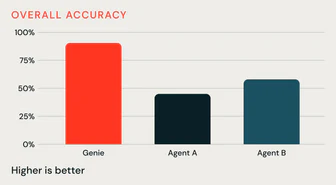
    Databricks announces the official availability of Genie Ontology, where agents continuously learn business context from dashboards, SQL queries, notebooks, and semantic models, and key definitions are managed by humans through Unity Catalog.

    Why it matters: The original text provides pass rates, time consumption, and token comparisons for benchmarks co-built with Turing, allowing judgment on the impact of the enterprise context layer on the accuracy of agents.

  3. Databricks Blog80

    Databricks releases new Genie: an autonomous AI colleague for complex enterprise work

    Databricks released a new version of Genie, positioning it as an autonomous AI colleague that can continuously track progress, follow up on missing inputs, and take action when new information arrives. Users can set guards and approve critical steps. The new version is paired with Genie Ontology, which provides business definitions and organizational knowledge. Genie Search uses a hybrid search combining indexing and MCP, and continues to use Unity Catalog permissions. Unity Gateway manages access, cost, and auditing uniformly.

    Why it matters: The original text outlines the boundary of Genie's ability to shift from an assistant to autonomously performing long-term tasks and its governance methods, which can be used to determine the context and permission controls needed for enterprise agents to go live.

  4. Google DeepMind87

    Google DeepMind releases the Gemini 4 Carbon cutting-edge model

    Google DeepMind has opened Gemini 4 Carbon to developers, enterprises, scientists, and consumers, claiming it has reached cutting-edge levels in network security capabilities and long-range intelligent agent workflows.

    Why it matters: The official provides the positioning division of roles between Carbon and Argon, multiple benchmark rankings, and cost comparisons per task to help determine when to use a heavier model.

Nov 10Tue
  1. Claude.dev Blog85

    Anthropic uses Claude Fable 5.2 to enable 1000 agents to safely collaborate on proving Fermat's Last Theorem

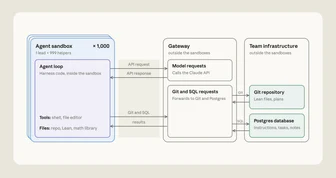
    Anthropic announces a toy experiment: 1000 agents running early versions of Claude Fable 5.2 in a network sandbox, organizing and dividing tasks solely with Git and a shared Postgres database, completing the formal proof of Fermat's Last Theorem in 28.7 hours, outputting tokens one-third of the September version and proof length one-seventh.

    Why it matters: The original complete record shows 1000 agents building collaboration mechanisms and proving Fermat's Last Theorem in a network sandbox, observable how multi-agent scalable collaboration and safety boundaries are designed simultaneously.

  2. One Useful Thing78

    Ethan Mollick practically tests Claude Fable 5.2: Close but not complete AGI

    Ethan Mollick, after trying out Claude Fable 5.2 before its public release, believes that according to the definition of 'achieving the level of most human experts on most available computer-completed intellectual tasks,' it is close to AGI but still has a gap.

    Why it matters: The author uses six cross-domain practical cases to illustrate that the model's ability has approached general intelligence, but lacks the ability to judge whether works are good or bad.

  3. TechCrunch · AI72

    Meta releases lightweight model Muse Ember, highlighting agent execution and low cost.

    Meta Superintelligence Lab releases lightweight model Muse Ember, priced at 10 cents per million tokens, focusing on high-frequency agent tasks such as tool calling, coding subtasks, routing, extraction, and long document parsing.

    Why it matters: Meta uses a pricing of 10 cents per million input tokens and the Artificial Analysis comprehensive benchmark to place the lightweight model in the agent execution context, comparing it with Haiku and Luna.

  4. Google Developers Blog60

    Google AI Studio supports building Google Maps applications with prompt words

    Google AI Studio can now directly build applications driven by Google Maps Platform, where users describe their ideas and AI Studio automatically completes configuration and API key management without a credit card.

    Why it matters: The original text provides daily quotas without a credit card and a complete path from prompt words to a runnable map application, allowing readers to judge the cost of prototype construction based on this.

Nov 9Mon
  1. QbitAI72

    Baidu Wenxin has first disclosed the progress of RSI, and ERNIE Evolve has been used in the development of Wenxin 5.5 Flash.

    Baidu Wenxin first disclosed its automatic research system ERNIE Evolve, which can autonomously propose research directions, conduct experiments, and validate results. It has been used for inference optimization in Wenxin 5.5 Flash. In the low-latency scenario optimization for Kunlun Chip P800, ERNIE Evolve took about 168 hours and went through 4 rounds of direction exploration, with the optimal version's generation speed increasing to 623.6% of the baseline. The deterministic reasoning throughput optimization increased the throughput to 133.7% of the baseline in 3 days.

    Why it matters: Baidu has disclosed the architecture and production environment optimization data of the automatic research system ERNIE Evolve, which can observe the actual landing points of RSI in inference optimization.