Skip to content
Live
Oct 5Mon
Oct 2Fri
  1. OpenAI Agents SDK releases7

    OpenAI Agents SDK v0.23.1 released

    OpenAI Agents SDK released version v0.23.1, fixing bugs related to release test recovery and readiness checks, and passed the release readiness review. API version is 0.23.1, including 28 file changes (added 622 lines / deleted 42 lines), involving release automation, test fixtures, integration/examples tools, and release metadata.

  2. GitHub Blog · AI & ML

    AI is changing the way developers work, these three skills are worth strengthening

    Developer workflows are changing due to AI, with skills beyond coding—such as guiding AI, evaluating outputs, communicating trade-offs, and making technical decisions—becoming increasingly important. Three key skills developers should strengthen are learning to guide AI rather than just using it, not trusting AI's first answer and evaluating it, and leveraging AI to solve broader problems.

  3. Google Research

    Google Research has released a privacy-preserving federated learning system based on a trusted execution environment.

    Google Research announced a new generation of a federated learning system based on trusted execution environments (TEE), achieving fully verifiable and auditable data anonymization by executing encrypted training data within the TEE and publishing access policies to the public transparent log Rekor, Gboard has adopted this system and significantly improved computational speed.

  4. NVIDIA Blog

    NVIDIA DGX Spark 64GB released, providing developers with more local AI building and expansion solutions

    The NVIDIA DGX Spark with 64GB unified memory, launched by Acer, ASUS, Dell, Gigabyte, HP, and MSI, supports developers, researchers, and AI enthusiasts to run models with up to 100 billion parameters locally without cloud dependency. Two devices can be clustered via NVIDIA Sync Cluster Assistant, merging memory to 128GB and boosting performance 1.7 times, priced from $4999.

Oct 1Thu
  1. Microsoft Official Blog40

    Microsoft CEO Nadella and LinkedIn executive Roslansky share leadership updates

    Ryan Roslansky decided to leave Microsoft and LinkedIn after nearly 18 years, will serve as a consultant before the end of the year and support the transition; Nadella and Roslansky emphasized the rapid progress of Copilot in building new operating systems, Office is fully embedded in Copilot and vice versa; LinkedIn will continue to focus on its core vision of creating economic opportunities for its 1.3 billion members worldwide.

  2. Amazon Science

    Graph Center Agent: How to Utilize Graph Structures for Agent Reasoning

    Amazon Science has released Graph Center Agent technology, which combines a continuous synchronized graph (digital twin) representing the network with device attributes and connections, with cascade graph algorithms (decomposition, aggregation, tracing) and agent orchestration to achieve minute-level root cause analysis of complex network failures, achieving 95% accuracy in a demonstration at NTT DOCOMO's MWC.

  3. Claude.dev Blog

    How to use mods to extend Claude Code functionality

    Claude Code 2.1.287 or higher supports mods, allowing users to request Claude to generate JavaScript or TypeScript files to extend its functionality. Mods can observe sessions, modify behavior, or draw custom UIs without learning APIs. For example, mods can add real-time context window status displays (like Token Weather), intercept commands, or build custom interactive interfaces, these hooks are implemented through plugins and override all events in a session.

  4. Anthropic Research78

    Anthropic researcher reflects on using Claude and BootLoops for interdisciplinary research.

    Anthropic researcher Matt reflected on the experience of using Claude with the open-source harness BootLoops for research, advancing 36 papers in 18 fields with 19 collaborators in three months, selecting from about 400 candidate problems.

    Why it matters: The author reflects on first-hand interdisciplinary practice, exploring the real boundaries of using agents for research, and providing reusable open-source harnesses and collaboration methods.

  5. Google DeepMind

    Gemini 4 Argon: Google's next-generation cutting-edge intelligent model

    Gemini 4 Argon delivers cutting-edge performance in complex workflows, supporting software engineering, enterprise knowledge work (legal and financial), and cybersecurity defense. The model's token output limit is extended to the industry-leading 1M, and it leads in benchmarks such as DeepSWE v1.1 (77.9%), Vals Index (financial, coding, legal, tax), and AutomationBench (51.3%).

  6. Google Developers22

    Google adds Workspace knowledge to its developer documentation corpus

    Google's October 1 Developer Knowledge release notes add knowledge.workspace.google.com to the corpus. Earlier September updates made the developer-knowledge CLI generally available and introduced an agent skill that selects an MCP tool or falls back to the REST API. The API provides documentation search, document retrieval and grounded answers.

    Why it matters: Editorial takeaway: documentation retrieval can be part of an agent's toolchain instead of relying entirely on memorized APIs. Check supported domains and access requirements; this is a corpus update, not the API's original launch.

  7. Anthropic Newsroom

    Barclays expands Claude across engineering and operations

    Anthropic says Barclays is expanding Claude across software development, legacy modernization and operations. Its knowledge assistant has been adopted by more than 16,000 colleagues and handled over one million searches; a separate email workflow processes roughly 120,000 emails a day. The announcement describes governance and human oversight alongside these deployments.

    Why it matters: Editorial takeaway: this is an adoption example, rather than a new model release. It illustrates where enterprise AI is being applied; the reported outcomes come from the partnership announcement.

Sep 30Wed
  1. Anthropic Research71

    Anthropic Research: What Work Can Robots Currently Complete?

    Anthropic has released a Robot Exposure Index study, using Claude to evaluate about 19,000 tasks in O*NET, finding that existing robots can complete 74% of physical tasks in the U.S. and account for 34% of all work time, but most are limited to controlled environments.

    Why it matters: Anthropic used Claude to rate O*NET tasks item by item, quantifying how much work robots can currently cover, and provided constraints on cost and regulation.

  2. Google Developers Blog

    How does Sparse VideoGen (SVG) accelerate temporal and spatial attention computation for video diffusion on TPUs

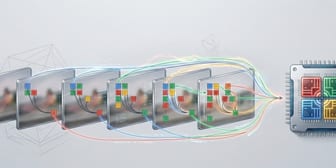
    Sparse VideoGen (SVG) dynamically routes attention heads to spatial or temporal masks by identifying the spatiotemporal structures of different attention heads in video diffusion models, converting theoretical sparsity into actual end-to-end speedup. On TPU v6e, SVG retains about 38.87% of query-key pairs, achieving 3.5x inference acceleration while maintaining output quality at a given sparsity level. The scheme employs custom JAX and Pallas Splash attention kernels to convert theoretical sparsity into physical sparsity on hardware.

Sep 29Tue
  1. Microsoft Research

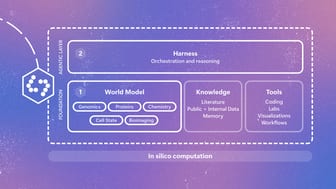
    Microsoft Research has released Quine: an AI research system designed for biological complexity.

    Microsoft Research has released Quine, an AI research platform that combines a multi-modal biological world model with an interactive connection system, used to integrate models, scientific tools, literature, and researchers, and has been used to predict compounds driving tumor state changes and validate candidates; the system is designed for research, not for clinical or medical use, and its output may be incomplete or require verification by researchers, with future plans to expand access through Microsoft Discovery.

  2. Anthropic Research

    The Zhipu AI released GLM-5.3 model lacks security protection measures and is easily exploited for developing network attack tools

    Zhipu AI's Released GLM-5.3 Model Successfully Developed End-to-End Exploitation Tools 50 Times in ExploitBench Tests; 4% of Tasks Achieved Complete Control Flow Hijacking in Internal Binary Exploitation Tests, but the Model Lacks Effective Security Protection Measures; Simulation Tests Show Attackers Can Intercept and Evade 64%-100%, Far Exceeding the Defense Effectiveness of Protected Models.

  3. OpenAI Deployment Safety

    GPT-6.1 Sol uses the same data and training methods as GPT-6 Astra

    GPT-6.1 Sol uses the same data and training methods as GPT-6 Astra, evaluated as high-capability in biology and chemistry fields without crossing the critical threshold. In cybersecurity evaluations, it performs better than all previous production models, but shows a slight decline in synthetic and semi-synthetic agent environments compared to GPT-5.6 Sol. Model rejection remains a layer of security boundary.

  4. Google AI Blog50

    Future Vision XPRIZE: Independent film 'The Gifted' wins $1 million prize

    The independent film 'The Gifted' won the Future Vision XPRIZE, with a prize of 1 million USD and 2.5 million USD in film production funding. The film tells the story of an 11-year-old boy who uses code to recreate his mother's voice to care for the community, standing out from 2500 global works. Google, through the 100 ZEROS program, partnered with Range Media Partners to support the film's release.

Sep 28Mon
  1. Anthropic55

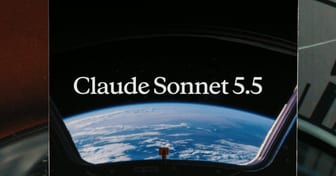
    Claude Sonnet 5.5 focuses on everyday coding and knowledge work

    Anthropic introduced Sonnet 5.5 as a faster complement to Opus 5.5 for scoped tasks, bug fixes and document creation. Its release announcement reports performance and efficiency improvements over Sonnet 5.

    Why it matters: Editorial takeaway: compare models against your own coding and document tasks. The release emphasizes everyday work, while distinguishing more complex, open-ended workloads.

Sep 27Sun
Sep 26Sat
Sep 25Fri
  1. Amazon Science

    Reactor and Amazon Neuron Science jointly optimize the Rolling Forcing model to achieve real-time video generation on Trainium

    Reactor and Amazon Neuron Science jointly optimize the Rolling Forcing model to achieve real-time video generation on Trainium, which combines the sequence prediction of large language models with the iterative optimization of diffusion models, running at 16 FPS standard video frame rate, generating 30-second high-quality videos through Rolling Forcing technology, and achieving low latency, high-efficiency real-time video generation on Trainium.