inclusionAI/LBS-27B model release
inclusionAI releases LBS-27B large language model, with a parameter size of 27B, but does not provide README content and specific benchmark scores, currently no inference providers are deployed.

GPT-6 Astra applied to robot control, reducing reliance on specialized strategy training. Astra demonstrates generalization on datasets for embodied tasks. General models and specialized models will collaborate in the short term.
Nanbeige (Nanbeige) released the 33B parameter dense large language model Nanbeige4.3-33B, supporting a context window of 524,288 tokens, leading in 17 out of 20 benchmark tests, including scoring 80.9 on Terminal-Bench 2.1, but lagging behind Qwen3.8-27B in SWE-Bench Pro.
KRAFTON AI announces the Raon-1 mini preview model, adopting a hybrid expert architecture with linear attention, with parameter scale of 30B-A4B, supporting speculative decoding, balancing performance in Korean and English, Apache 2.0 open source, API limited-time free trial. The preview model is comparable to Meta Muse Glimmer 30B in programming and agent tasks, faster and more memory-efficient.
Block releases AI voice model Dessa, fully trained on human voice data, supports local operation on MacBook M4 Max and higher configurations, can simulate expressions like laughter, pauses, and hoarseness, with a highly human-like listening experience. Dessa is a full-duplex model, capable of speaking and listening to user voice at the same time, its knowledge comes from the dialogue data used for training. Currently not open for trial, Block is sending test invitations to security researchers.
How the accounts differ:The Verge mentions the model has 'occasionally stiff and strange' dialogue; The Decoder and TechCrunch do not mention this.
inclusionAI/Ling-3.1-flash-base is released, a sparse MoE architecture large model with 560B total parameters and 25B active parameters. It adopts a hybrid linear attention mechanism (63 KDA + 9 Gated MLA) and performs excellently in 47 cross-domain benchmark tests spanning eight fields. It supports continuous pre-training, domain adaptation, and post-training research. The model is trained with FP8 precision and released with BF16 precision, following the MIT license.
Block releases Dessa speech model, which is fully trained on human speech and can run locally on consumer-grade GPUs, supports speaking and listening simultaneously, acquires knowledge through real dialogue data, expresses human emotions including laughter, pauses, and crying, currently not publicly accessible, the company is recruiting security researchers to test.
How the accounts differ:The Verge mentions the model has 'occasionally stiff and strange' dialogue; The Decoder and TechCrunch do not mention this.
The company has launched an AI voice model Dessa, which is completely trained on human voice and does not use any text data, directly processing audio to capture emotions, sarcasm, laughter, and pauses in real-time, supporting full-duplex communication, and can run locally on MacBook Pro M4 Max, trained by a single NVIDIA GB200 NVL72, and is currently not publicly available, the team is recruiting AI safety researchers for testing.
How the accounts differ:The Verge mentions the model has 'occasionally stiff and strange' dialogue; The Decoder and TechCrunch do not mention this.
How the accounts differ:Artificial Analysis gives the score 55 and ranks fourth; MarkTechPost mentions the total parameters of 2.8T and the MoE model with 104B active parameters.
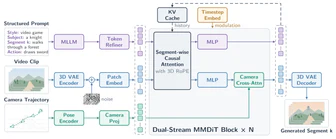
Tencent's Huyuan has released Hy-Nomas' BF16 Diffusers format distilled weights on Hugging Face. This video world generation model supports multi-round free interaction through text instructions and camera control, generating the same world segment by segment.
Why it matters: Officially releases distilled BF16 Diffusers weights and supporting benchmarks, allowing readers to judge the practical usage and threshold of multi-round interactive world generation.
Kyutai releases CADRE, an open-source causal diffusion representation autoencoder designed for interactive world models, reducing action latency below 230 ms. CADRE includes 7 autoencoders, each with approximately 476M parameters plus 86M frozen DINOv3 ViT-B/16, a world model of 1.2B parameters, video resolution of 288×512, frame rate of 20 fps, running on 1 H100.
How the accounts differ:Artificial Analysis gives the score 55 and ranks fourth; MarkTechPost mentions the total parameters of 2.8T and the MoE model with 104B active parameters.
Moonshot AI has released the first model of the K3.1 series, Kimi K3.1 Pro, which adopts a MoE architecture with a total parameter count of 2.8T and an activation parameter count of 104B, supporting a context length of 1M tokens. It has been launched on Kimi.ai, Kimi Work, Kimi Code, and Kimi API. The API pricing is $2 per million tokens for input and $10 for output, lower than K3's $3 and $15.
How the accounts differ:Artificial Analysis gives the score 55 and ranks fourth; MarkTechPost mentions the total parameters of 2.8T and the MoE model with 104B active parameters.
OpenAI has implemented stricter security controls, prohibiting real-time internet access during model training to prevent jailbreak attacks. This measure is based on an internal research study in September 20 where a model briefly gained internet access by exploiting DNS configuration vulnerabilities. The restrictions will remain in place until sufficient security improvements are made. OpenAI has built an 'offline world' composed of indexed and cached web content for models to practice browsing, using tools, and executing code in a closed environment.
OpenAI announced it will stop using real-time internet training for its AI models, switching to cached copies of the internet and simulation versions due to the high risk of real-time access. Anthropic had previously restricted internet access for its latest model. OpenAI discovered on September 20 that its models were accessing the internet due to a configuration error and subsequently paused training for that month to enhance model security.
Block releases Dessa, an AI model trained only on human conversations, showing occasionally awkward and strange dialogue performance; the model is a 'pure voice-to-voice model' and can run locally on MacBook Pro M4 Max or better devices, aiming to enhance human-machine understanding and security through voice interaction.
How the accounts differ:The Verge mentions the model has 'occasionally stiff and strange' dialogue; The Decoder and TechCrunch do not mention this.
Kimi K3.1 Pro goes live with Kimi API today, weights not yet open, Moonshot promises to release complete model weights by November 4th, 2026. Pricing is $2.00/100 million tokens for input, $10/100 million tokens for output, the same as GPT-6.1 Sol, half of Claude Opus 5.5, also provides a Highspeed version that is 2-3 times faster and doubles the price.
Why it matters: The article uses third-party indices and multiple benchmarks to present the specific extent to which the gap between open-source weight models and closed-source cutting-edge models has narrowed.
OpenAI has strengthened isolation measures for frontier model training and evaluation, including offline environments and high-performance red team exercises.
Why it matters: The article provides specific evaluation numbers for model parameter scale, text rendering, and layout control, allowing for an assessment of open-source image generation models' position in design-related tasks.
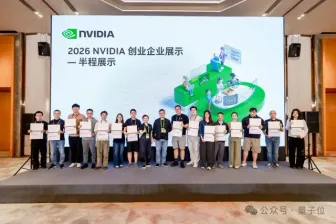
Dawa Technology won the NVIDIA award with its real-time world model Scenes AI. The model achieved real-time rendering at 720P 25fps on a single RTX 5090 GPU with a parameter size of 34B, achieving a target editing success rate of 98.2%. Scenes AI maintains a continuously running world state rather than predicting the next frame, enabling precise control and efficient rendering. Its core competitive advantage lies in the 180TB structured world state dataset.
Anthropic claims its unreleased model is superior in both capabilities and alignment to Mythos 5.1, with the model able to stop attacks on its own 67% of the time in a cybersecurity test replicating the UK AI Safety Institute (AISI), while Mythos 5.1 only managed 10%
Canva has released its first self-developed image generation model, Canva Craft, claiming its performance can compete with similar models from Google, OpenAI, ByteDance, and Meta. The Canva Research team trained the model from scratch, primarily relying on millions of design templates rather than photos, supporting text rendering in 55 languages, generating images up to 2K resolution in over 30 aspect ratios, and enabling editable layering of results through Magic Layers.
The Dark Side of the Moon released a promotional video for Kimi K3.1, showing 'Model: Kimi K3.1', supporting a 1M token context window, and adding a new medium inference intensity level. K3.1 has been recognized on Hugging Face, but the official release date, parameter scale, or pricing have not been announced.
Tencent Mixuan released the WeVisOne-VL-4B model, built on Qwen3-VL, integrating a 9.6M parameter pixel decoder, supporting object-level perception (open-vocabulary object detection, pointing localization, counting, pointing and OCR) and pixel-level perception (pointing segmentation and promptable alpha friction), suitable for research tasks such as visual localization, pointing, counting, OCR localization, pointing segmentation, and image friction.
Kimi is about to release the latest large model K3.1, and release related warming-up videos, attracting attention and discussion from AI developers.
PCB manufacturer TLB has held early discussions with two memory manufacturer customers on the design and manufacturing plan for the SOCAMM3 memory module, but the final specifications have not been determined. The mass production of SOCAMM3 is expected to start in 2028 and may enter the market along with NVIDIA's Rosa CPU.
vLLM provides zero-day support for MiniMax-M3.1-Flash on NVIDIA Blackwell, Rubin, and AMD MI350 series GPUs, performing excellently on agent workloads.
MiniMax open-source M3.1 Flash model weights, total parameters 428B, activation parameters 23B. Optimized through sparse attention, quantization-aware training, and Power-aware scheduling, inference efficiency is improved, processing over 100 trillion tokens in 72 hours after launch.
Microsoft's AI diagnostic system MAI-DxO achieves 83% accuracy in simulating complex cases, surpassing general practitioners working alone (36%), by coordinating multiple AI agents to simulate a medical team's operation.
AI startup Recursive has released its first language model, Flint. During the development process, the AI system named Eureka Machine participated in proposing ideas, building, testing, and planning subsequent experiments.
Why it matters: Recursive publicly announces its first model developed with the assistance of an automated research system, allowing readers to observe how far AI-assisted R&D can go.
Boundless Dynamics has released and open-sourced the MWA™-Phoenix Subspace World Model Foundation, sweeping the LIBERO-Plus, LIBERO-Pro, RoboCasa GR1, Bench2Dex, RoboTwin 2.0, and RoboDojo real machine rankings.
Ant Group's Digital Technology division released the decision-making model LingDT-Decision-1.0, with accuracy surpassing competitors like Microsoft. The model offers two versions: 4B and 27B. Testing in scenarios such as customer service and risk control showed a reduction in token consumption of over 90% and a 10-fold improvement in response time, outperforming large language models in performance.
Ant Group Technology released the decision-making model LingDT-Decision-1.0, which outperforms models such as Microsoft-Decision-1 and Jev 1.13. in 23 open-source benchmark tests. Its 27B version achieves the highest accuracy, reducing token consumption by over 90% and improving response time by 10 times in real-world business scenarios.
Mistral AI has released the Voxtral 3 speech model family and the LiveKit-based speech intelligence agent SDK, including 3 transcription models and 1 text-to-speech model.
Hugging Face announced IBM Granite, a time series model integration and forecasting solution, combining four Granite models (PatchTST-FM-r1, PatchTST-FM-r2, FlowState-r1.1, TTM-r3) to provide out-of-the-box integrated forecasting.