Skip to content
Live
  1. Hacker News · AI hot posts86

    Edge0 open sources 145B and 120B edge-side models and inference frameworks.

    Edge0 open-sourced the Edge0-145B and Edge0-120B two edge models, and also released a unified inference framework and deployment tools. Officially, the 145B model can run locally on compatible laptops, with peak memory of 29GB, decoding speed of 80+ tokens/s, pre-filling speed of 1100+ tokens/s, supporting context lengths of 128K–256K.

    Why it matters: The original text provides actual memory, speed, and multiple benchmark comparisons of the edge 145B model, which can be used to judge the practical boundaries of running cutting-edge models locally.


  2. Hugging Face Blog71

    IBM releases LLMON markup language and Granite 4.1 3B/8B preview models

    IBM released LLMON (LLM Object Notation) markup language on Hugging Face and launched two experimental preview models based on Granite 4.1: granite-4.1-3b-LLMON-preview and granite-4.1-8b-LLMON-preview, while also open-sourcing a GitHub toolkit.

    Why it matters: The original text provides the design motivation for the LLMON markup language and the two preview models, allowing readers to understand how separating instructions and data can reduce the risk of indirect prompt injection.

  3. The Verge · AI82

    Google releases Gemini 4 Hydrogen, capable of breaking down complex problems into multiple parts

    Google has released the Gemini 4 Hydrogen model, claiming it can better answer complex questions that involve multiple parts, spelling errors, or highly specific requirements, and will break down the problem and respond item by item.

    Why it matters: The original text listed the default position and available entries of Gemini 4 Hydrogen in search and Gemini applications, allowing readers to judge its impact on the existing search and Q&A process.

  4. Google DeepMind87

    Google DeepMind releases Gemini 4 Hydrogen model

    Google DeepMind releases Gemini 4 Hydrogen, targeting daily coding and intelligent agent workflows, with an Artificial Analysis intelligence index of 51 at the default high thinking level, higher than Argon's 50, and reaching 54 at the xhigh level

    Why it matters: Google provides the division of labor and positioning of Hydrogen, Carbon, and Argon, as well as the actual differences in cost and speed between multi-model arrangements.

  1. The Decoder78

    Google launches Gemini Decision 1 and Gemini Decisions API, capable of processing 1000 issues at a time

    Google DeepMind launches Gemini Decisions API, targeting yes/no, multiple choice, and scale scoring for closed-form judgments. The underlying model, Gemini Decision 1, can handle up to 1000 independent questions at once, covering text, images, audio, video, and PDF.

    Why it matters: Gemini Decision 1 makes closed-loop judgment an independent API and provides latency, price, and benchmark performance for comparison with recent similar decision models.

  1. Google DeepMind66

    DeepMind releases AlphaGenome 2, predicting DNA variation impacts by cell type

    Google DeepMind releases AlphaGenome 2, a conditional DNA sequence model that can predict the impact of DNA mutations on gene expression for specific cell types or states.

    Why it matters: Officially disclosed the conditional architecture modification and single-cell level evaluation comparison, which can understand how the model localizes the effect of mutation to specific cell types.

  1. MiniMax News80

    MiniMax releases open-source image generation model H3-Image

    MiniMax has released an open-source weight image generation model based on H3, H3-Image, which supports text-to-image, reference image generation, and image editing, capable of generating 4096 × 4096 4K images within 10 seconds, and supports up to 16 reference images.

    Why it matters: The official provides 4K generation speed, reference image quantity, and pricing range, which can be used to judge the gap between open-source image models and closed-source solutions.

  2. Google DeepMind76

    Google DeepMind releases Gemini Robotics 2.5 vision-language-action model

    Google DeepMind released Gemini Robotics 2.5, claiming it is the most capable vision-language-action (VLA) model to date, with a 30% to 100% increase in success rate on 200 tasks compared to previous baselines, and 20% to 30% faster task completion speed.

    Why it matters: Officially disclosed were 200 task evaluations and actual production line test data showing a 96% success rate for Mercedes-Benz, which can be used to judge the extent of VLA model deployment in real industrial scenarios.

  3. Claude · YouTube68

    Claude Mythos 5.2 predicted the complete AAV coat structure

    Claude Mythos 5.2 predicts the complete AAV capsid structure, which is composed of 60 identical protein chains. It writes code for an open-source folding model to handle the overlap grouping of adjacent five chains, then uses the symmetry of the capsid to assemble the 60 chains. On AAV2, its prediction deviates from the experimental structure by about the width of an atom.

    Why it matters: The original text provides specific methods and accuracy of the model in real scientific research tasks, allowing readers to judge its applicable boundary in structural prediction work.

  4. Claude · YouTube75

    Anthropic released Claude Fable 5.2

    Anthropic releases Claude Fable 5.2, designed for the most challenging technical challenges, with improvements in coding, reasoning, and vision, suitable for the most ambitious open-ended technical work. The official recommendation is to use Opus 5.5 for most coding and knowledge tasks, and Fable 5.2 is now available in the Pro, Max, Team, and Enterprise packages.

    Same story · 8 outlets

    How the accounts differ:TechCrunch states the input price of Fable is reduced to $8 per million tokens; others do not mention the price.

    Why it matters: The official statement explains the positioning and applicable scenarios of Fable 5.2, and provides a choice suggestion between Opus 5.5, making it easier to decide which model to use.

  5. TechCrunch · AI72

    Meta releases lightweight model Muse Ember, highlighting agent execution and low cost.

    Meta Superintelligence Lab releases lightweight model Muse Ember, priced at 10 cents per million tokens, focusing on high-frequency agent tasks such as tool calling, coding subtasks, routing, extraction, and long document parsing.

    Why it matters: Meta uses a pricing of 10 cents per million input tokens and the Artificial Analysis comprehensive benchmark to place the lightweight model in the agent execution context, comparing it with Haiku and Luna.

  1. QbitAI82

    Tencent Hunyuan Hy4 released: 770B total parameters, 49B activation parameters, first supports native vision and computer operation

    Tencent Mixuan Hy4 is officially released, with a total of 770B parameters and 49B activation parameters. It introduces native visual capabilities and computer operation support for the first time, while also upgrading command compliance, long text understanding, and long-range Agent capabilities. The model has been launched on products such as Tencent Cloud TokenHub, WorkBuddy/CodeBuddy, and Yuanbao. API access has been provided to platforms like OpenRouter, Hermes, and OpenCode, with weights to be open-sourced in the near future.

    Why it matters: The author uses multiple long-range tasks to test the autonomous execution and self-check capabilities of the open-source model 'Hunyuan Hy4', thereby judging the actual level of open-source models in Agent delivery.

  1. QbitAI71

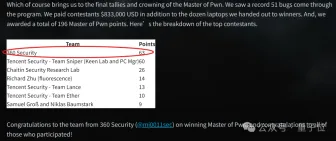
    360 DragonBox tops CyberGym rankings with 99.4% vulnerability reproduction success rate

    360's self-developed AI security offense and defense system, DragonBox, tops the CyberGym rankings with a 99.4% vulnerability reproduction success rate, with independent evaluation success rates of 99.27%, 99.47%, and 99.40% over three rounds.

    Why it matters: The original text provides DragonBox's success rates in the three rounds of CyberGym evaluations and its training routes, allowing readers to judge the approach of large security models combined with intelligent swarm agents.

  2. The Decoder73

    Thinking Machines has released the Inkling 2 Small, claiming it is the strongest Western open-source weight model.

    Thinking Machines releases second-generation model Inkling 2 Small, using MoE architecture, with total parameters of 594B and activation parameters of 17B, supporting text and image input and adjustable thinking depth.

    Why it matters: The original text provides specific comparisons of the new model in terms of intelligence index, agent tasks, and cost, allowing readers to judge the competitive position of open-source weight models accordingly.

  3. ITHome · AI78

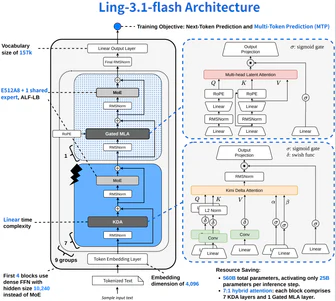
    Ant Group's Baidu Ling-3.2-flash releases a native multimodal model, with three benchmarks surpassing Claude Opus 5

    Ant Media official team releases native multimodal model Ling-3.2-flash, with a total of 560B parameters, 25B activation parameters, and 1M context window, supporting image, text, and video input.

    Why it matters: The original provides three benchmark comparisons and API pricing, allowing readers to judge the capability position and call cost of this multimodal model.

  4. Hugging Face Blog71

    NVIDIA has released four open-source world model checkpoints for Cosmos 3.

    NVIDIA has added four new open-source weight checkpoints for Cosmos 3 under the Cosmos World Model platform, all of which are post-trained versions of Cosmos 3 Nano, containing 16B trainable parameters, using the OpenMDW1.1 license, allowing commercial and non-commercial use.

    Why it matters: The original text provides four open-source weight checkpoints and a four-stage training recipe, allowing readers to judge how to adapt the world model to their own sensors and robot bodies.

  5. OpenAI News75

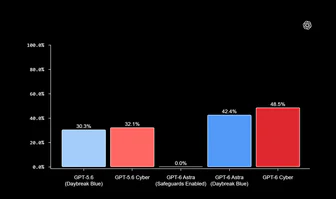
    OpenAI releases GPT-6 Cyber security model

    OpenAI releases GPT-6 Cyber, a security model for discovering exploitable vulnerabilities and developing solutions, trained to keep its behavior within authorized limits.

    Why it matters: OpenAI releases a dedicated model for vulnerability discovery and remediation, emphasizing authorized scope constraints, observable boundaries of security agent capabilities.

  6. Google DeepMind78

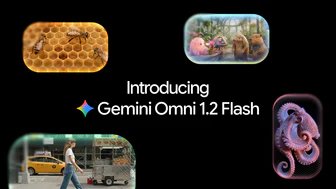
    Google DeepMind has released Gemini Omni 1.2 Flash, supporting 15-second videos and reducing the price by 30%.

    Google DeepMind has released Gemini Omni 1.2 Flash, increasing the native video generation duration from 10 seconds in Omni 1.1 to 15 seconds, and it has been fully opened in the Gemini API and Gemini for business.

    Why it matters: The original text lists specific changes in duration, price, and reference consistency, allowing readers to judge how the cost and workflow of video generation will change.