Live
All AI updates
ITHome · AI ITHome · AISame story · 3 outlets Google's strongest VLA robot model, Gemini Robotics 2.5, debuts, can tie bows, already on the Mercedes production line
Google launches VLA robot model Gemini Robotics 2.5, achieving leaps in dexterity, reliability, and safety, with a success rate of 96% on the Mercedes production line. The model has tested 200 tasks, with a success rate 30%-100% higher than the baseline, a speed increase of 20%-30%, and is compatible with robots like Apptronik Apollo 2, adopting ASIMOV-Jailbreak benchmark to enhance jailbreak resistance to 99.5%.
ITHome · AISame story · 9 outlets Google's strongest model yet, Gemini 4 Carbon, debuts: Focused on complex programming, scientific research, and cybersecurity
Google has released the Gemini 4 Carbon model, which is its most powerful reasoning model to date. The model has a unified context window of 1,048,576 tokens, with a maximum standard synchronous request output of 65,536 tokens, expandable to 1,048,576 tokens via the Long Decode mechanism.
Same story · 9 outlets- Artificial Analysis Articles · Gemini 4 Carbon topped the Artificial Analysis Intelligence Index v5First
- Google DeepMind · Google DeepMind releases the Gemini 4 Carbon cutting-edge model
- MarkTechPost · Google DeepMind released Gemini 4 Carbon, emphasizing network security defense and coding.
- Ars Technica · AI · Google has released Gemini 4 Carbon: a cutting-edge AI model that cannot be used immediately.
 The DecoderSame story · 9 outlets
Google releases the Gemini 4 Carbon model
Google has released the Gemini 4 Carbon model, showing better reasoning performance than Fable 5.2 in the Artificial Analysis test, complementing rather than replacing Gemini 4 Argon, which is more suitable for most software engineering tasks.
Same story · 9 outlets- Artificial Analysis Articles · Gemini 4 Carbon topped the Artificial Analysis Intelligence Index v5First
- Google DeepMind · Google DeepMind releases the Gemini 4 Carbon cutting-edge model
- MarkTechPost · Google DeepMind released Gemini 4 Carbon, emphasizing network security defense and coding.
- Ars Technica · AI · Google has released Gemini 4 Carbon: a cutting-edge AI model that cannot be used immediately.
- The DecoderSame story · 3 outlets
 MiniMax NewsFeaturedSame story · 2 outlets8080
MiniMax releases open-source image generation model H3-Image
MiniMax has released an open-source weight image generation model based on H3, H3-Image, which supports text-to-image, reference image generation, and image editing, capable of generating 4096 × 4096 4K images within 10 seconds, and supports up to 16 reference images.
Same story · 2 outletsWhy it matters: The official provides 4K generation speed, reference image quantity, and pricing range, which can be used to judge the gap between open-source image models and closed-source solutions.
 Google DeepMindFeaturedSame story · 9 outlets8787
Google DeepMind releases the Gemini 4 Carbon cutting-edge model
Google DeepMind has opened Gemini 4 Carbon to developers, enterprises, scientists, and consumers, claiming it has reached cutting-edge levels in network security capabilities and long-range intelligent agent workflows.
Same story · 9 outlets- Artificial Analysis Articles · Gemini 4 Carbon topped the Artificial Analysis Intelligence Index v5First
- Google DeepMind · Google DeepMind releases the Gemini 4 Carbon cutting-edge model
- MarkTechPost · Google DeepMind released Gemini 4 Carbon, emphasizing network security defense and coding.
- Ars Technica · AI · Google has released Gemini 4 Carbon: a cutting-edge AI model that cannot be used immediately.
Why it matters: The official provides the positioning division of roles between Carbon and Argon, multiple benchmark rankings, and cost comparisons per task to help determine when to use a heavier model.
 The Verge · AIFeaturedSame story · 9 outlets8585
Google has publicly released Gemini 4 Carbon and previewed the swarm agent feature.
Google has expanded the limited release of Gemini 4 Carbon to all paid developers and enterprises, calling it its strongest model.
Same story · 9 outlets- Artificial Analysis Articles · Gemini 4 Carbon topped the Artificial Analysis Intelligence Index v5First
- Google DeepMind · Google DeepMind releases the Gemini 4 Carbon cutting-edge model
- MarkTechPost · Google DeepMind released Gemini 4 Carbon, emphasizing network security defense and coding.
- Ars Technica · AI · Google has released Gemini 4 Carbon: a cutting-edge AI model that cannot be used immediately.
 MarkTechPost
Zyphra has released ZONOS3-Mini: an 800M parameter open-source speech synthesis model.
Zyphra has released ZONOS3-Mini, an open-source speech synthesis model with 800M total parameters and 100M active parameters, supporting real-time local deployment and zero-shot voice cloning. The model ranks first in the open model category in Zyphra's self-developed ZTTS2-Eval benchmark test (66.2 points), with the first audio generation on a single H100 GPU taking 80 milliseconds, but the reference audio cloning effect is far lower than the embedded mode.





- Google DeepMindFeaturedSame story · 3 outlets7676
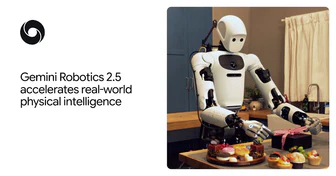
Google DeepMind releases Gemini Robotics 2.5 vision-language-action model
Google DeepMind released Gemini Robotics 2.5, claiming it is the most capable vision-language-action (VLA) model to date, with a 30% to 100% increase in success rate on 200 tasks compared to previous baselines, and 20% to 30% faster task completion speed.
Same story · 3 outletsWhy it matters: Officially disclosed were 200 task evaluations and actual production line test data showing a 96% success rate for Mercedes-Benz, which can be used to judge the extent of VLA model deployment in real industrial scenarios.
 Amazon Science
Mitra-v2: Extended Synthetic Pre-training to Build Table-based Models
Mitra-v2 leads the single-model field in the TabArena benchmark, outperforming Mitra-v1 on 33 datasets and ranking first on ScoringBench.
- MarkTechPostFeaturedSame story · 8 outlets8282
Anthropic released Claude Fable 5.2 and Mythos 5.2: The same model, different safety guards.
Anthropic releases Claude Fable 5.2 and Claude Mythos 5.2, both based on the same underlying model. Fable 5.2 adds a classifier to intercept high-risk cybersecurity tasks and most biology research tasks, while Mythos 5.2 removes these restrictions and requires access through the Cyber Verification Program and Life Sciences Verification Program.
Same story · 8 outlets- Claude · YouTube · Anthropic released Claude Fable 5.2First
- The Verge · AI · Anthropic releases new Claude Fable and Mythos 5.2 models
- Claude · YouTube · Anthropic released Claude Fable 5.2
- TechCrunch · AI · Anthropic releases Mythos 5.2 and Fable 5.2 models, with Fable input price reduced to $8 per million tokens
How the accounts differ:TechCrunch states the input price of Fable is reduced to $8 per million tokens; others do not mention the price.
 404 Media
AI companies restrict users from reverse engineering Claude and Codex
Users of Anthropic's Claude and OpenAI's Codex are encountering account or feature restrictions due to reverse engineering operations, such as fixing IoT devices or removing smart TV ads; OpenAI engineer Tarun Gogineni says these restrictions are mostly accidental, but users are turning to open-source or local models to bypass such restrictions, reflecting that large AI companies tend to protect their own and partners' interests when users use LLMs to circumvent hardware manufacturers' restrictions.
- The DecoderSame story · 8 outlets
Anthropic's Fable 5.2 completes 41% of real freelance tasks, up 38.5% from last year
Anthropic's Fable 5.2 completed 41.3% of real freelance tasks, an increase of 38.5% compared to last year. The model excelled in areas such as 3D modeling, audio editing, and architectural design, successfully completing nearly 50 complex projects that previous AI models could not solve. Its direct predecessor, Fable 5.1, only completed 17.8%, while Opus 5.5 and GPT 6 Astra ranked behind with 21.25% and 20.83% respectively.
Same story · 8 outlets- Claude · YouTube · Anthropic released Claude Fable 5.2First
- The Verge · AI · Anthropic releases new Claude Fable and Mythos 5.2 models
- Claude · YouTube · Anthropic released Claude Fable 5.2
- TechCrunch · AI · Anthropic releases Mythos 5.2 and Fable 5.2 models, with Fable input price reduced to $8 per million tokens
How the accounts differ:TechCrunch states the input price of Fable is reduced to $8 per million tokens; others do not mention the price.
Hacker News · 300+Same story · 4 outlets Meta launches Muse Ember: its smallest and most efficient model
Meta launches Muse Ember, its smallest and most efficient model designed for complex reasoning tasks, outperforming Claude Haiku 5.5 and GPT-6 Luna in smartness-to-cost ratio, with a cost of 0.10 USD per million input tokens and 0.50 USD per million output tokens, supporting a 1M context window and 512K output tokens.
Same story · 4 outlets- Artificial Analysis Articles · Meta's latest model Muse Ember scores 36 on the AI Index, comparable to Claude Haiku 5.5 but with lower costsFirst
- ITHome · AI · Meta launches lightweight AI model Muse Ember: benchmark scores comparable to Claude Haiku 5.5, with a single-task cost of just 1/3
- MarkTechPost · Meta launches Muse Ember: a high-capacity intelligent model with 1M context
 Simon Willison
Meta AI releases Muse Ember: the smallest efficient model
Meta AI releases Muse Ember model, designed for complex reasoning execution and intelligent agent daily tasks such as tool use, coding subtasks, routing, extraction, and long document parsing.
- MarkTechPostSame story · 4 outlets
Meta launches Muse Ember: a high-capacity intelligent model with 1M context
Meta releases Muse Ember, its smallest and most efficient model, designed for repetitive steps in agents. Muse Ember scores 36 on the AA Intelligence Index, matching Claude Haiku 5.5 (max effort), with a cost of about 0.14 USD per task.
Same story · 4 outlets- Artificial Analysis Articles · Meta's latest model Muse Ember scores 36 on the AI Index, comparable to Claude Haiku 5.5 but with lower costsFirst
- Hacker News · 300+ · Meta launches Muse Ember: its smallest and most efficient model
- ITHome · AI · Meta launches lightweight AI model Muse Ember: benchmark scores comparable to Claude Haiku 5.5, with a single-task cost of just 1/3
QbitAI Seedream 5.5 released: Domestic AI models perform excellently in continuous image editing tasks
Seedream 5.5 outperformed GPT-Image 2.6 in high-pressure tasks of continuous image editing for 100 rounds, showing greater stability. The model enhances realism, supports small text and multi-language rendering, transparent image generation and editing, as well as layer splitting and text secondary editing functions. Additionally, Seedream 5.5's API price has dropped to 0.28 yuan per image, with improved speed, maintaining the 'input image + output image' two-stage billing structure, and no text token fees.
ITHome · AISame story · 8 outlets Anthropic released Claude Fable 5.2, surpassing GPT-6 Astra in programming capability and topping multiple benchmarks.
Anthropic released the Claude Fable 5.2 model, achieving 49.1% programming capability in the FrontierCode 2.0 test, surpassing GPT-6 Astra's 42.8%; scoring 74.2% in the Humanity's Last Exam test, leading GPT-6 Astra's 57.2%. The model's output speed has increased by up to 30%, with a 20% cost reduction and API call fees lowered to $3/ million tokens.
Same story · 8 outlets- Claude · YouTube · Anthropic released Claude Fable 5.2First
- The Verge · AI · Anthropic releases new Claude Fable and Mythos 5.2 models
- Claude · YouTube · Anthropic released Claude Fable 5.2
- TechCrunch · AI · Anthropic releases Mythos 5.2 and Fable 5.2 models, with Fable input price reduced to $8 per million tokens
How the accounts differ:TechCrunch states the input price of Fable is reduced to $8 per million tokens; others do not mention the price.
Hacker News · 300+Same story · 8 outlets4040 Claude Fable 5.2 scored 65 in the Artificial Analysis evaluation, which is the highest score so far
Claude Fable 5.2 scored 65 in the Artificial Analysis evaluation, the highest score so far; the model performed excellently in the Intelligence Updated Capability Indexes evaluation.
Same story · 8 outlets- Claude · YouTube · Anthropic released Claude Fable 5.2First
- The Verge · AI · Anthropic releases new Claude Fable and Mythos 5.2 models
- Claude · YouTube · Anthropic released Claude Fable 5.2
- TechCrunch · AI · Anthropic releases Mythos 5.2 and Fable 5.2 models, with Fable input price reduced to $8 per million tokens
How the accounts differ:TechCrunch states the input price of Fable is reduced to $8 per million tokens; others do not mention the price.
ITHome · AISame story · 4 outlets Meta launches lightweight AI model Muse Ember: benchmark scores comparable to Claude Haiku 5.5, with a single-task cost of just 1/3
Muse Ember is Meta's smallest and most efficient AI model, performing comparably to Claude Haiku 5.5 on the Artificial Analysis rankings, but with a single-task cost of only 1/3 and surpassing GPT-6 Luna.
Same story · 4 outlets- Artificial Analysis Articles · Meta's latest model Muse Ember scores 36 on the AI Index, comparable to Claude Haiku 5.5 but with lower costsFirst
- Hacker News · 300+ · Meta launches Muse Ember: its smallest and most efficient model
- MarkTechPost · Meta launches Muse Ember: a high-capacity intelligent model with 1M context
36Kr · AISame story · 8 outlets Anthropic announces new versions of Fable and Mythos models
Anthropic releases Fable 5.2 and Mythos 5.2 models, Fable 5.2 can handle more complex software engineering tasks and coordinate over 1000 AI agents at a lower price; Mythos 5.2 has reduced defenses in cybersecurity and life sciences fields and will be promoted to institutions through a validation program, both models are faster than the old versions.
Same story · 8 outlets- Claude · YouTube · Anthropic released Claude Fable 5.2First
- The Verge · AI · Anthropic releases new Claude Fable and Mythos 5.2 models
- Claude · YouTube · Anthropic released Claude Fable 5.2
- TechCrunch · AI · Anthropic releases Mythos 5.2 and Fable 5.2 models, with Fable input price reduced to $8 per million tokens
How the accounts differ:TechCrunch states the input price of Fable is reduced to $8 per million tokens; others do not mention the price.
ITHome · AISame story · 8 outlets Anthropic has launched the Claude Fable 5.2 and Claude Mythos 5.2 AI models, with a 20% reduction in API call fees.
Anthropic has launched the Claude Fable 5.2 and Claude Mythos 5.2 models, the latter targeting professional institutions. Fable 5.2 has input and output costs per million tokens of $8 and $40, respectively, a 20% reduction from 5.1. Generation speed has been increased by up to 30%, with an optional fast mode that runs 2.5 times faster but at a higher price.
Same story · 8 outlets- Claude · YouTube · Anthropic released Claude Fable 5.2First
- The Verge · AI · Anthropic releases new Claude Fable and Mythos 5.2 models
- Claude · YouTube · Anthropic released Claude Fable 5.2
- TechCrunch · AI · Anthropic releases Mythos 5.2 and Fable 5.2 models, with Fable input price reduced to $8 per million tokens
How the accounts differ:TechCrunch states the input price of Fable is reduced to $8 per million tokens; others do not mention the price.
- The Verge · AISame story · 8 outlets
Anthropic releases new Claude Fable and Mythos 5.2 models
Anthropic releases new Claude Fable 5.2 and Claude Mythos 5.2 models, claiming improvements in coding, reasoning, and vision, with output speeds faster than the 5.1 version.
Same story · 8 outlets- Claude · YouTube · Anthropic released Claude Fable 5.2First
- Claude · YouTube · Anthropic released Claude Fable 5.2
- TechCrunch · AI · Anthropic releases Mythos 5.2 and Fable 5.2 models, with Fable input price reduced to $8 per million tokens
How the accounts differ:TechCrunch states the input price of Fable is reduced to $8 per million tokens; others do not mention the price.
- The DecoderSame story · 8 outlets
Anthropic's Claude Fable 5.2 and Mythos 5.2 reclaim the leading position in AI performance before their IPO.
Anthropic's Claude Fable 5.2 and Mythos 5.2 outperform competitors in multiple benchmarks, including leading GPT-6 and Gemini 4 Carbon by 65 points at the high computational tier of the Artificial Analysis Index v5.
Same story · 8 outlets- Claude · YouTube · Anthropic released Claude Fable 5.2First
- The Verge · AI · Anthropic releases new Claude Fable and Mythos 5.2 models
- Claude · YouTube · Anthropic released Claude Fable 5.2
- TechCrunch · AI · Anthropic releases Mythos 5.2 and Fable 5.2 models, with Fable input price reduced to $8 per million tokens
How the accounts differ:TechCrunch states the input price of Fable is reduced to $8 per million tokens; others do not mention the price.
 Hugging Face Daily Papers
Confucius4-R2T2: A stable prefix streaming speech recognition model for real-time transcription
Confucius4-R2T2 is a stable prefix streaming speech recognition model for real-time applications, which converts a full context ASR model into a streaming model through post-training without architecture modification. Built based on Qwen3-ASR-1.7B, R2T2 achieves near-offline recognition accuracy and low transmission delay, supports configurable streaming block sizes, and demonstrates promising cross-lingual generalization capabilities. This model and implementation have been publicly released.
 Google Developers Blog5858
Google Cloud MaxText supports long-context training on TPUs
Google Cloud releases MaxText v0.2.4, supporting long-context training on TPUs, achieving 70% MFU for sequences of 4 million tokens with the Llama 3.1 8B model on TPU 5p using MaxText Context Parallelism technology, seamlessly scalable to 14 million tokens on TPU 5p and TPU 7
- The DecoderSame story · 2 outlets
Meta releases Muse Ember: An ultra-small, highly efficient model designed for repetitive tasks of AI agents.
Meta releases Muse Ember, its smallest and most efficient AI model to date, designed for handling the repetitive tasks of AI agents, such as calling tools, processing small-scale coding tasks, routing requests, extracting data, and processing long documents.
Same story · 2 outlets  Claude · YouTubeFeaturedSame story · 8 outlets7575
Anthropic released Claude Fable 5.2
Anthropic released Claude Fable 5.2, stating that it has improved in coding, reasoning, and vision, targeting the most complex and open-ended technical work. The official recommendation is to start most coding and knowledge tasks from Opus 5.5, and Fable 5.2 has been launched in the Pro, Max, Team, and Enterprise packages.
Same story · 8 outlets- The Verge · AI · Anthropic releases new Claude Fable and Mythos 5.2 models
- Claude · YouTube · Anthropic released Claude Fable 5.2
- TechCrunch · AI · Anthropic releases Mythos 5.2 and Fable 5.2 models, with Fable input price reduced to $8 per million tokens
How the accounts differ:TechCrunch states the input price of Fable is reduced to $8 per million tokens; others do not mention the price.
- Claude · YouTubeFeatured6868
Claude Mythos 5.2 predicted the complete AAV coat structure
Claude Mythos 5.2 predicts the complete AAV capsid structure, which is composed of 60 identical protein chains. It writes code for an open-source folding model to handle the overlap grouping of adjacent five chains, then uses the symmetry of the capsid to assemble the 60 chains. On AAV2, its prediction deviates from the experimental structure by about the width of an atom.
Why it matters: The original text provides specific methods and accuracy of the model in real scientific research tasks, allowing readers to judge its applicable boundary in structural prediction work.
- Claude · YouTubeFeaturedSame story · 8 outlets7575
Anthropic released Claude Fable 5.2
Anthropic releases Claude Fable 5.2, designed for the most challenging technical challenges, with improvements in coding, reasoning, and vision, suitable for the most ambitious open-ended technical work. The official recommendation is to use Opus 5.5 for most coding and knowledge tasks, and Fable 5.2 is now available in the Pro, Max, Team, and Enterprise packages.
Same story · 8 outlets- Claude · YouTube · Anthropic released Claude Fable 5.2First
- The Verge · AI · Anthropic releases new Claude Fable and Mythos 5.2 models
- TechCrunch · AI · Anthropic releases Mythos 5.2 and Fable 5.2 models, with Fable input price reduced to $8 per million tokens
How the accounts differ:TechCrunch states the input price of Fable is reduced to $8 per million tokens; others do not mention the price.
Why it matters: The official statement explains the positioning and applicable scenarios of Fable 5.2, and provides a choice suggestion between Opus 5.5, making it easier to decide which model to use.
 TechCrunch · AIFeaturedSame story · 8 outlets8282
Anthropic releases Mythos 5.2 and Fable 5.2 models, with Fable input price reduced to $8 per million tokens
Anthropic releases Mythos 5.2 and Fable 5.2, claiming new models have improvements in coding, reasoning, and vision, and communicate more clearly with users. Fable's input price drops from $10 per million tokens to $8, lower than major competitor GPT-6 Astra, with a 30% faster response speed, and can support zero data retention (ZDR) policies through Enterprise Frontier Safeguards.
Same story · 8 outlets- Claude · YouTube · Anthropic released Claude Fable 5.2First
- The Verge · AI · Anthropic releases new Claude Fable and Mythos 5.2 models
- Claude · YouTube · Anthropic released Claude Fable 5.2
How the accounts differ:TechCrunch states the input price of Fable is reduced to $8 per million tokens; others do not mention the price.
- The DecoderFeatured7171
Why it matters: The original text lists three capabilities: multi-round editing stability, native RGBA output, and text rendering, which can be used to determine its position in the design production process.
 Artificial Analysis ArticlesSame story · 4 outlets6666
Meta's latest model Muse Ember scores 36 on the AI Index, comparable to Claude Haiku 5.5 but with lower costs
Muse Ember scores 36, comparable to Claude Haiku 5.5 but with a task cost of only 0.14 USD, two-thirds lower than the latter; its input/output token prices are the same as Claude Haiku 5.5 and GPT-6 Luna, but caching input costs are lower. It scored 68.1% on AutomationBench-AA, comparable to Muse Wonder, but has the lowest knowledge accuracy (21.1%)
Same story · 4 outlets- Hacker News · 300+ · Meta launches Muse Ember: its smallest and most efficient model
- ITHome · AI · Meta launches lightweight AI model Muse Ember: benchmark scores comparable to Claude Haiku 5.5, with a single-task cost of just 1/3
- MarkTechPost · Meta launches Muse Ember: a high-capacity intelligent model with 1M context
- TechCrunch · AIFeaturedSame story · 2 outlets7272
Meta releases lightweight model Muse Ember, highlighting agent execution and low cost.
Meta Superintelligence Lab releases lightweight model Muse Ember, priced at 10 cents per million tokens, focusing on high-frequency agent tasks such as tool calling, coding subtasks, routing, extraction, and long document parsing.
Same story · 2 outletsWhy it matters: Meta uses a pricing of 10 cents per million input tokens and the Artificial Analysis comprehensive benchmark to place the lightweight model in the agent execution context, comparing it with Haiku and Luna.
- MarkTechPost6767
Baidu ERNIE Evolve Automated Research System Surpasses NanoChat and NanoGPT Records
Baidu Launches ERNIE Evolve Automated Research System, Automatically Selects Research Directions, Edits Code, and Runs Experiments Based on Given Codebases, Goals, and Evaluation Criteria, Retaining Only Changes Validated by Hidden Evaluators and Independent Reviewers










QbitAIFeatured8282 Tencent Hunyuan Hy4 released: 770B total parameters, 49B activation parameters, first supports native vision and computer operation
Tencent Mixuan Hy4 is officially released, with a total of 770B parameters and 49B activation parameters. It introduces native visual capabilities and computer operation support for the first time, while also upgrading command compliance, long text understanding, and long-range Agent capabilities. The model has been launched on products such as Tencent Cloud TokenHub, WorkBuddy/CodeBuddy, and Yuanbao. API access has been provided to platforms like OpenRouter, Hermes, and OpenCode, with weights to be open-sourced in the near future.
Why it matters: The author uses multiple long-range tasks to test the autonomous execution and self-check capabilities of the open-source model 'Hunyuan Hy4', thereby judging the actual level of open-source models in Agent delivery.
ITHome · AI5252 Shizuku AI announces the full-duplex model Shizuku-Duplex, laying the foundation for AI companions
Shizuku AI releases the full-duplex model Shizuku-Duplex, supporting intelligent Japanese dialogue and initiating thinking processes without complete inquiries. The model performs best in natural Japanese dialogue and has response quality second only to GPT-Live, adopting a combination of front-end interaction and back-end asynchronous processing architecture, supporting three output methods: audio, text, and actions.