Skip to content
Live
Nov 14Sat
  1. MarkTechPost62

    Stanford has open-sourced Memorilla, a potential memory module for freezing LLM development

    Stanford researchers have open-sourced Memorilla, a potential memory system designed for frozen LLMs. It converts the entire document collection into 16 vectors for use by frozen LLMs. On FactKG, the frozen Qwen3-8B paired with Memorilla achieves an accuracy of 84.33%, which is 3.9% higher than using all document contexts, but only requires 16 memory tokens, reducing the number of document tokens by 108 times.

  2. ITHome · AI65

    Tsinghua University releases the single-cell proteomics foundational model ProtCell, successfully completing the 'virtual cell' pre-training reproduction using MolThread S5000 intelligent computing cards

    Tsinghua University releases the single-cell proteomics foundational model ProtCell, collecting about 380 million cells and 98 public datasets for pre-training and evaluation, MolThread S5000 intelligent computing cards complete the full process of pre-training reproduction, evaluation metrics differ from mainstream international GPUs by only about 0.2%

  3. Baseten Labs65

    Claude Code v2.1.159 release

    Claude Code v2.1.159 released, adopting a gradient alignment reward mechanism, using the Qwen3-8B model on arithmetic tasks, rewarding by calculating the gradient similarity between student output and expert demonstrations, experiments show the model may overfit the precise wording of expert examples.

  4. Hugging Face Blog40

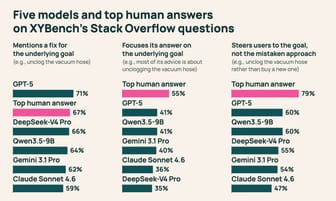
    Hugging Face releases XYBench benchmark to evaluate AI assistants' ability to solve problems based on misunderstandings

    Hugging Face releases XYBench benchmark, containing 8150 real-world problems, to evaluate AI assistants' ability to identify user misunderstandings and guide them to correct solutions. Claude Sonnet 4.6, GPT-5, Gemini 3.1 Pro, Qwen3.5-9B, and DeepSeek-V4 Pro tend to focus on user errors (Y) rather than actual goals (X), with only 35-41% of responses centered on the actual goals.

Nov 13Fri
  1. Hugging Face Daily Papers65

    Ropedia Xperience 2: A gold standard for extending physical AI environments and behaviors

    Ropedia Xperience 2 includes 1,589 published metric 3D scans and 4,230 viewpoint center records for 74 tasks (131 hours), each capture can be reused for robot learning, scene converted to physical interaction simulation environment, human motion redirected to full-body robot trajectories, additional robot behaviors obtained through virtual remote operation and automatic long-term trajectory generation, this joint capture proposed as the gold standard for physical AI data collection.

  2. ITHome · AI

    Google open-sources dataset used in WeatherNext 3 weather model: Includes SatWeave satellite image mosaicking dataset and PARDIG global precipitation information

    Google DeepMind has open-sourced the WeatherNext 3 weather model dataset, SatWeave, and PARDIG. The former integrates 5 satellite images (updated hourly, 10-year historical archive), and the latter is based on a Transformer architecture (spatial resolution 10 km, time resolution 15 minutes, average delay 5 hours), both hosted on Google Cloud Storage and licensed under CC BY 4.0.

  3. ITHome · AI

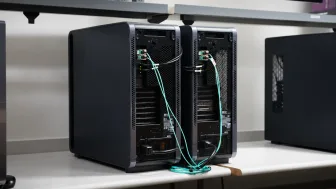
    Players use retired Intel Optane memory to run the 2.8 trillion parameter Kimi K3 model, outputting 1.5 tokens per second

    Users have successfully run the Kimi K3 model with Intel Optane Persistent Memory, which has been discontinued, without a graphics card, achieving 2.8 trillion parameters. The initial generation speed was approximately 0.85 tokens per second, and it increased to 1.50 tokens per second after disabling the DAX function. The 3-bit quantization test only reached 0.75 tokens per second, and generating 50,000 tokens took 18.5 hours.

  4. Hacker News · AI hot posts80

    Unemployment Labs reports that the models DeepSeek, Kimi, MiniMax, and Ant have weights with a Blackwell hardware fingerprint.

    Unemployment Labs, by analyzing the random number initialization layout in public model weights, discovered DeepSeek-V4-Flash, DeepSeek-V4-Pro, Kimi K3.

    Why it matters: By reversing the random number layout in the model weights to train the hardware, it provides a reproducible technical evidence path for export control disputes.

  5. Databricks Blog22

    Clarification on the misunderstanding of the Lakebase architecture's LTAP.

    Lakebase architecture serves both Postgres and analytics with a single persistent data copy, without the need for CDC pipelines or a second database. This architecture stores data hierarchically in object storage and cache, not traditional replication. It supports both point-in-time and scan access paths, optimized respectively using Postgres heap pages and Parquet format, with no additional synchronization tasks.

  6. Databricks Blog60

    Databricks introduces Lakehouse//RT, aimed at real-time analysis loads for agents.

    Databricks has released the Lakehouse//RT, designed to directly handle high-concurrency real-time queries brought by AI agents on lakehouses, currently in beta. The official claims it can provide latency below 100 milliseconds under 12,000 QPS, and through four paths—high concurrency, rapid execution, small-step scaling, and a single system—ensures that cost growth is slower than query volume growth.

    Why it matters: The original text provides four cost reduction mechanisms and migration data from three customers, allowing judgment on whether the real-time analytics layer is worth replacing.

Nov 12Thu
  1. The Decoder61

    Google Deepmind released AlphaGenome 2, advancing genomic AI from organizational-level prediction to single-cell type resolution.

    AlphaGenome 2 predicts the effects of genetic variations on specific human cell types, discovering nearly double the related gene changes compared to its predecessor. The model is trained on data encompassing 107 million cell phenotypes across 68 tissues, achieving single-cell-level precise predictions by combining DNA sequences with specific biological states as input.

  2. Hugging Face Daily Papers

    TOME-Math: A mathematical proof supervisory corpus based on structured textbooks

    TOME-Math transforms 2,118 university mathematics textbooks into approximately 380K structured proof supervision records, preserving chapter order, proposition-proof links, and dependency references, used for fine-tuning to improve the mathematical reasoning ability of language models by 16.7 percentage points, surpassing all three public instruction datasets. This corpus will be released to promote structured mathematical supervision research.

  3. MIT News · AI

    MIT researchers have developed new technology to accelerate and enhance the credibility of AI models for climate prediction.

    MIT researchers have developed a training technique that significantly reduces data volume and improves the performance and adaptability of climate simulators (AI models), enabling them to quickly simulate the impact of human activities on future climate in seconds, such as predicting temperature or sea level changes, thereby more reliably testing thousands of climate scenarios and identifying unintended consequences of regional interventions. The algorithm generates optimized synthetic climate scenario data instead of relying on future emission scenarios based on real-world trajectories, significantly shortening production time and allowing the model to accurately predict scenarios not present in the training data.

  4. Hugging Face Daily Papers65

    One Table Benchmark launched: a benchmark test for general table models in generation, interpolation, and prediction tasks

    The One Table Benchmark tested the table generation, imputation, and prediction capabilities of 46 models on 56 datasets, finding that these tasks share conditional information but have different fidelity and target interactions. Fixed models exhibit a trade-off between utility and fidelity, while frozen base models perform outstandingly in prediction and numerical imputation, indicating that unified table models have the potential to improve classification reconstruction and joint sampling.

  5. ITHome · AI67

    Google DeepMind releases next-generation genome AI model AlphaGenome 2: from tissue prediction to single-cell analysis, identifying gene expression variation capabilities nearly double

    Google DeepMind has launched the AlphaGenome 2 model, which can predict the effects of DNA variations on specific cell types, nearly doubling its ability to identify gene expression variations to 30% (from 16%), and accurately predicting the direction of gene expression changes to 43% (from 23%). It supports cross-modal data inference and has opened API access to non-commercial research.

  6. MarkTechPost60

    Google DeepMind releases AlphaGenome 2 for cell-type specific variant effect prediction

    Google DeepMind releases AlphaGenome 2, a DNA model that predicts the effects of specific cell type mutations. The model reads 1 Mb DNA and target cell state, significantly improving single-cell eQTL prediction performance through conditional sequence to functional architecture, increasing recall from 23% to 43% on the TenK10K benchmark, and can adapt to unseen datasets without fine-tuning.

  7. Google Research58

    Google Research has released a wearable device-driven CKM risk assessment framework

    Google Research releases a wearable device-driven CKM risk assessment framework, predicting future health trajectories through an explainable health age model (CHA). The framework is trained on wearable data from 2.2 million weeks using the SensorWM model, providing personalized 12-week counterfactual health simulations combined with language models to generate clinically validated guidance plans. The CHA model integrates modifiable indicators such as heart rate, steps, and sleep to predict disease risk over 68,000 person-years, improving the predictive performance of clinical indicators.

  8. The Verge · AI65

    Google DeepMind has released the AlphaGenome 2 model, analyzing how DNA affects different cells.

    Google DeepMind releases AlphaGenome 2 model, predicting gene variation impacts on different cell types and states by analyzing over 100 million cell outline data, identifying nearly double the variable gene expression mutations compared to the previous generation model

Nov 11Wed
  1. The Decoder

    German defense technology company Helsing releases Clarity AI platform, providing target preparation suggestions for weapon systems.

    German defense technology company Helsing has launched the Clarity AI platform, which generates target suggestions by integrating sensor data, open-source intelligence, etc. The information is processed by hundreds of AI agents and reviewed by humans, emphasizing European control and human supervision.

  2. Databricks Blog58

    Databricks Genie Agents now support analyzing more data sources to transform workflows

    Databricks Genie Agents can now perform high-quality business analysis, analyze large volumes of documents, and connect enterprise tools to automate actions by supporting unstructured data analysis and new MCP connectors. The new OpenSharing feature allows users to share managed agents with pre-installed data, instructions, and knowledge with partners, suppliers, and customers, accelerating the generation of external insights.

  3. Databricks Blog66

    Databricks has announced that Genie Ontology is now officially available.

    Databricks announces the official availability of Genie Ontology, where agents continuously learn business context from dashboards, SQL queries, notebooks, and semantic models, and key definitions are managed by humans through Unity Catalog.

    Why it matters: The original text provides pass rates, time consumption, and token comparisons for benchmarks co-built with Turing, allowing judgment on the impact of the enterprise context layer on the accuracy of agents.

  4. Google DeepMind66

    DeepMind releases AlphaGenome 2, predicting DNA variation impacts by cell type

    Google DeepMind releases AlphaGenome 2, a conditional DNA sequence model that can predict the impact of DNA mutations on gene expression for specific cell types or states.

    Why it matters: Officially disclosed the conditional architecture modification and single-cell level evaluation comparison, which can understand how the model localizes the effect of mutation to specific cell types.

  5. The Decoder

    Anthropic claims AI has weakened NVIDIA's CUDA advantage, reducing the time to switch to AMD chips to three days.

    Anthropic claims to have reduced the time to migrate its AI model, Claude, to AMD GPUs from several months to three days with almost no human intervention, thereby breaking its reliance on NVIDIA. The company states that the AI model Mythos has completed 99% of the kernel migration or writing work, allowing the new hardware to reach a usable performance level in three days, while traditional engineering methods require six to twelve months.

  6. ChinaTalk

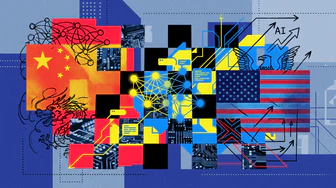
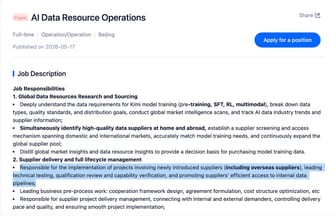
    US data company sells data worth about $500 million to Chinese AI labs, including reinforcement learning environments to help improve model performance in specific fields.

    US data company sold about $500 million data to Chinese AI labs, including reinforcement learning environments to help improve model performance in fields such as coding, networking, finance, law, and biology. These environments simulate the world to allow models to train repeatedly and use scoring standards to optimize output. Chinese labs can save over 70% of inference computing costs annually by purchasing the same RL environments as US companies like Anthropic and OpenAI.

  7. Hugging Face Daily Papers65

    MMDM: Large-scale Multi-task Decision Model Evaluation Benchmark

    MMDM evaluated 28 decision models, showing that most models perform well on common knowledge but poorly on interdependent options, constrained decision-making, and multiple-choice tasks. For example, Perplexity Decider-V1.2 achieved 78.75% accuracy on single-choice knowledge, but only 53.95% and 47.95% respectively on option logic and constrained planning, while the best accuracy of all models on hard multiple-choice was only 36.81%.

  8. Hugging Face Daily Papers65

    Longtail-SWE: High-quality long-tail software engineering task set

    Longtail-SWE has released 202 problem-solving tasks covering 13 underrepresented programming languages, for engineering problems that are scarce in existing benchmarks. Built through a solver-judge-repairer pipeline, the model was evaluated under 9 configurations, including state-of-the-art models, analyzing task-solving performance, consistency of repeated attempts, and resource usage. All benchmark instances, execution environments, tools, and agent trajectories have been open-sourced.

  9. Databricks Blog

    Databricks integrated Unity Catalog Metric Views into Power BI: a unified governance semantic layer solution.

    Databricks released Unity Catalog Metric Views integration with Power BI functionality, extending the unified governance semantic layer to Power BI, allowing each Power BI report to use managed UC metric views the same as AI/BI dashboards and Genie, business users can build reports and explore metrics autonomously, data teams only need to maintain a single definition in Databricks.

Nov 10Tue