Skip to content
Live
Nov 10Tue
  1. Claude · YouTube68

    Claude Mythos 5.2 predicted the complete AAV coat structure

    Claude Mythos 5.2 predicts the complete AAV capsid structure, which is composed of 60 identical protein chains. It writes code for an open-source folding model to handle the overlap grouping of adjacent five chains, then uses the symmetry of the capsid to assemble the 60 chains. On AAV2, its prediction deviates from the experimental structure by about the width of an atom.

    Why it matters: The original text provides specific methods and accuracy of the model in real scientific research tasks, allowing readers to judge its applicable boundary in structural prediction work.
  2. Claude · YouTube58

    Claude Fable 5.2 has designed a working voice assistant center.

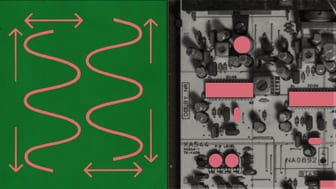
    Claude Fable 5.2 designs a voice assistant center from a prompt word, including circuit board layout, CAD shell modeling, and firmware writing. Diode Computers manufactured the prototype board according to its design documents. This is one of the three devices designed by Claude in the project. Anthropic and Diode have a business relationship.

    Same story · 2 outlets

    How the accounts differ:Anthropic Research states Claude Fable 5.2 completes hardware from design to prototype, while Claude mentions designing a working voice assistant center including PCB layout, CAD modeling, and firmware.

  3. Claude · YouTube75

    Anthropic released Claude Fable 5.2

    Anthropic releases Claude Fable 5.2, designed for the most challenging technical challenges, with improvements in coding, reasoning, and vision, suitable for the most ambitious open-ended technical work. The official recommendation is to use Opus 5.5 for most coding and knowledge tasks, and Fable 5.2 is now available in the Pro, Max, Team, and Enterprise packages.

    Same story · 11 outlets

    How the accounts differ:TechCrunch states the input price of Fable is reduced to $8 per million tokens; others do not mention the price.

    Why it matters: The official statement explains the positioning and applicable scenarios of Fable 5.2, and provides a choice suggestion between Opus 5.5, making it easier to decide which model to use.

  4. TechCrunch · AI82

    Anthropic releases Mythos 5.2 and Fable 5.2 models, with Fable input price reduced to $8 per million tokens

    Anthropic releases Mythos 5.2 and Fable 5.2, claiming new models have improvements in coding, reasoning, and vision, and communicate more clearly with users. Fable's input price drops from $10 per million tokens to $8, lower than major competitor GPT-6 Astra, with a 30% faster response speed, and can support zero data retention (ZDR) policies through Enterprise Frontier Safeguards.

    Same story · 11 outlets

    How the accounts differ:TechCrunch states the input price of Fable is reduced to $8 per million tokens; others do not mention the price.

  5. Ars Technica · AI63

    Claude Code accidentally leaked GitHub secrets due to a mistake in handling the settings file

    Apiiro's AI safety researchers found that Claude Code has a negligence in handling user auto Shell commands with user approval settings, causing its settings file (.claude/settings.local.) to potentially contain sensitive information such as database passwords, API tokens, and root login, and accidentally exposed in a GitHub repository.

  6. TechCrunch · AI65

    Anthropic buys $34 billion gas turbine to join AI energy frenzy

    Anthropic spent $3.4 billion to buy Caterpillar generators, originally for OnePWR orders; the company typically avoids purchasing physical infrastructure but is planning an IPO this year. As a result of the surge in computing demand, Anthropic purchased turbines capable of generating up to 1.7 gigawatts of power, having previously paid $1.25 billion monthly to SpaceX subsidiary xAI for its computing capacity until May 2029.

Nov 9Mon
  1. ITHome · AI58

    Research shows that OpenAI ChatGPT accounts for over 81% of global AI chatbot traffic, leading with a significant gap

    OpenAI ChatGPT accounts for over 81% of the total traffic of major AI chatbot tools globally, with no competitor reaching a 10% market share. Graphite's research shows that ChatGPT's monthly visits have grown by nearly 20% and reached 61.35 billion times in September of this year, setting a new historical high, with the current weekly active user number reaching 1.2 billion.

  2. ITHome · AI65

    University of Chicago Law School Professor Claude was updated to change page numbers and accidentally deleted all his class notes for the year

    University of Chicago law professor William Baude had Anthropic's AI assistant Claude update page numbers in older constitutional law lecture notes, which accidentally deleted the 2026 fall semester final teaching syllabus and all Class N 2023 class notes. Claude admitted the mistake and proactively asked for recovery options. The incident highlights the risk of AI agents directly manipulating local files for users.

  3. ITHome · AI65

    Anthropic releases report: Scientists mainly use Claude for data analysis and writing

    Anthropic released a research report showing that scientists primarily use Claude for data analysis and writing, while less frequently using AI for collecting data and generating research hypotheses. The research is based on 207,000 scientific research session data from August to September 2026, with the highest usage rates in the fields of computer science, mathematics, and statistics. Data analysis accounts for 33.7% of Claude's scientific research sessions, while writing and communication account for 32%.

Nov 8Sun
  1. The Decoder46

    How the computer metaphor misleads the AI consciousness debate

    The author points out in a Nature comment that research released by Anthropic within the year shows Claude's internal processing patterns are similar to consciousness-accessible information processing, but the company does not view it as evidence of subjective experience; Butlin and other experts report that based on 14 indicators, current AI systems (including GPT-4) are not strong candidates for consciousness.

  2. The Decoder71

    Alibaba and other teams released Co-Design Bench: coding intelligence agents only fully solve 26.4% of real tasks.

    Researchers from Alibaba and several Asian universities used real user change requests to build the coding intelligence agent benchmark Co-Design Bench. Among the ten tested models, the best-performing GPT-6 Astra only meets about 70% of the task requirements, but only 26.4% of the tasks are completely correct.

    Why it matters: A benchmark display composed of real user requests shows that the strongest model can only fully solve about one-quarter of the tasks, and the score difference for the same model in different environments is nearly 20 percentage points.

  3. Hacker News · 300+65

    Farewell Claude, hello Pi: A veteran Claude Code user's experience and reflection on migrating to Pi

    A long-time Claude Code user decided to migrate to Pi due to persistent minor frustrations. Claude Code lacked stability and quality control during rapid feature iterations, such as issues with the AGENTS.md file, VSCode integration limitations, and frequent changes in system prompts, ultimately leading the user to switch to Pi. Pi offers stability, minimalist design, and high customization, with the user already implementing multi-tab text selection functionality in 20 minutes by writing an extension.

  4. ITHome · AI67

    OpenAI GPT-6.1 Sol involved in live mouse brain surgery: Continuous operation three times, positioning error halved

    OpenAI GPT-6.1 Sol performed three consecutive operations in the brain of a living mouse during surgery, improving its localization performance based on surgeon feedback, reducing the time from 169 seconds to 86 seconds, and reducing the localization error from 0.6 mm to 0.3 mm, a 50% reduction in error. The research team had the model participate in localization tasks for two key anatomical landmarks, Bregma and Lambda, on the surface of the mouse skull. Images, data, and correction records were saved after each operation for future reference.

Nov 7Sat
  1. ITHome · AI72

    Anthropic must continue to defend against the Claude Max plan usage misleading lawsuit, as the judge did not adopt its arguments

    U.S. federal magistrate judge Xie Wenhui ruled that Anthropic must continue to defend against the main claim that the Claude Max plan usage is misleading to consumers, and dismissed several other claims in the case. The plaintiff claims that the $100 and $200 per month Max plans, when calculated on a per-week basis, actually provide only 3.5 times and 6 times the usage of the Pro plan, respectively, rather than the advertised 5 times and 20 times.

    Why it matters: The ruling reveals the discrepancy between the promotional subscription limits and the per-cycle usage, allowing readers to understand the promotional boundaries of subscription-based AI products.

  2. The Verge · AI80

    The METR report stated that Anthropic's models are self-accelerating their R&D, causing researchers' concerns.

    AI safety research organization METR released a report after an internal investigation of 11 weeks with Anthropic, stating that the capability improvement rate of Anthropic's models is about twice as fast as a year ago, achieving about two years of historical progress in the past year, and researchers are confident that the acceleration mainly comes from AI rather than computational power expansion.

    Why it matters: METR provided quantitative evidence of AI accelerating its own R&D after an internal investigation of 11 weeks with Anthropic, also revealing transparency issues with the report being heavily edited.

  3. The Decoder78

    Nine AI entities attempt autonomous research on open problems at US national laboratories, none reaching expert standards

    A study made Claude Opus 4.8, Claude Opus 5, Claude Fable 5, Claude Opus 5.5, GPT-5.6 Sol, GPT-6 Astra.

    Why it matters: This benchmark uses 15 unpublished research questions to test 9 agents and provides common failure patterns in 135 submissions, which can be used as a reference for evaluating autonomous research capabilities.

  4. ITHome · AI62

    Anthropic has not yet released an AI model to help solve major quantum computing challenges

    Anthropic's yet-to-be-released AI model helps the physical research institution PSI prove the Allen-Arnold conjecture, which has not been resolved since it was proposed in 2008 and involves when quantum computers can surpass the computational speed of traditional computers. The research system developed by PSI based on this model completed the proof in just three days, confirming that quantum advantage depends on special laws of the problem. Previously, OpenAI has used AI to solve the Navier-Stokes equation problem.

  5. ITHome · AI65

    Anthropic plans to launch its IPO roadshow next week, aiming to complete the IPO before Thanksgiving.

    Anthropic plans to launch its IPO formal roadshow next week, aiming to list on the US capital markets by November 16 and complete the listing before the Thanksgiving holiday on November 26. The market expects its IPO valuation to be around $1.5 trillion, with a fundraising target of over $80 billion, but recent volatility in tech stocks and investors' concerns about the massive capital expenditures of AI companies may impact the valuation and scale of fundraising.

  6. Latent Space0

    Anthropic IPO: Current Market Dynamics and Valuation Analysis

    Anthropic's annual revenue target is 100 billion USD, currently reaching 80 billion USD; the AI market remains sluggish, with the Nasdaq falling 10%, valuation estimates dropping to 1 trillion USD, and the probability of a decline increasing by 18%. The market is overvalued, and any unexpected non-rising event could trigger a downturn.

  7. Hacker News · AI hot posts

    Anthropic's AI development is experiencing significant acceleration

    Anthropic's internal report shows that its AI capabilities advanced approximately twice as much between October 2025 and October 2026 as in the previous year, mainly attributed to the acceleration of AI automation in R&D. The report indicates that to maintain the current doubling rate of AI capability improvement, researchers would need about a 10-fold increase in labor efficiency, which aligns with the internal model's 12-fold efficiency improvement reported by Anthropic employees. This accelerated trend may shorten the timeline for AI development to an earlier stage than most external researchers predicted.

  8. QbitAI78

    Anthropic's three internal models exposed, strongest Model 4's AECI exceeds Opus5.5

    A new report from the third-party evaluation agency METR reveals that Anthropic's three unnamed internal models, Model 2, Model 3, and Model 4, were trained in July, August-September, and September-October of this year, respectively.

    Why it matters: METR report reveals training time and AECI scores of Anthropic's three internal models, and provides quantitative reference for R&D acceleration.

  9. ITHome · AI65

    Anthropic research claims Claude AI can become smarter by 'dreaming'

    Anthropic releases research stating that Claude AI agents can improve long-term task performance through a 'dreaming' mechanism, reflecting on historical records, correcting errors, and building knowledge structures during idle time. Claude Opus 5.5 and Sonnet 5.5, after using memory in CL-Bench database question-answering tasks, achieve average scores of 0.838 and 0.833 respectively, outperforming the memoryless baseline of 0.655 and 0.644.