Skip to content
Live
  1. Newcomer82

    NVIDIA's Huang Renxun Resigns, Anthropic IPO and Computing Power Demand Become Focal Points of CVAI Summit

    At the Cerebral Valley AI Summit in San Francisco, AI founders and investors discussed Huang Renxun's resignation from NVIDIA, Anthropic's upcoming IPO, and the continuously rising demand for computing power.
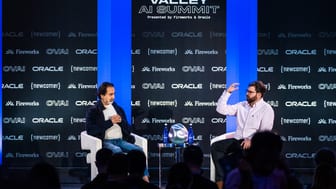
    Why it matters: The article places Huang Renxun's resignation, Anthropic's IPO, and computing power demand at the same conference, showcasing the industry's immediate response to NVIDIA's changes.


  1. Latent Space88

    Huang Renxun Resigns as NVIDIA CEO, Colette Kress Takes Over as Interim CEO

    NVIDIA announced that Huang Renxun resigned from his positions as CEO, President, and Board Member after 33 years in charge, SEC filings show the board accepted the resignation on November 11, and the company announced it on November 12; Colette Kress, who has been CFO since 2013, retains her position and takes over as interim CEO, Harvey Jones becomes the first chairman of the board, and the board has launched a search for a successor.

    Why it matters: NVIDIA's board accepted Huang Renxun's resignation and the CFO temporarily took over, while Anthropic submitted its IPO registration documents, two personnel and capital actions occurred on the same day.

  1. The Decoder85

    Anthropic IPO Secures Sixfold Over-subscription, Expected to Become the Largest Public Offering in History

    According to Bloomberg, Anthropic's IPO order volume reached six times the number of shares available for sale. The company and its co-founders plan to raise up to 644 billion USD through the public offering, and an additional 260 billion USD through private placement, aiming for a valuation of around 1.4 trillion USD.

    Why it matters: The original text provides the over-subscription multiple, funding size, and valuation of Anthropic's IPO, allowing readers to judge the scale of this round of listing in the capital market.

  1. The Decoder80

    Corporate sales drive OpenAI's third-quarter revenue to $10 billion, still lagging behind Anthropic

    According to reports from The Wall Street Journal and The Information, OpenAI's revenue grew by about 50% quarter-on-quarter to $10 billion, while adjusted operating losses increased slightly from $10.1 billion to $10.9 billion.

    Why it matters: Comparing the revenue and loss structure of the two companies in the same quarter can reveal the efficiency difference between the enterprise customer and consumer business routes.

  2. OpenRouter Blog70

    OpenRouter tutorial: How to fix OpenAI and Claude's 429 rate limit error

    OpenRouter published a tutorial explaining how to read the 429 response header and determine the rate limit source based on limit_source, providing three repair methods: retry, model fallback, and vendor failover.

    Why it matters: The author used the same batch of 60 requests to test three 429 handling methods, providing a comparison of time consumption and cost, which can be directly migrated to your own retry logic.

  1. Claude.dev Blog85

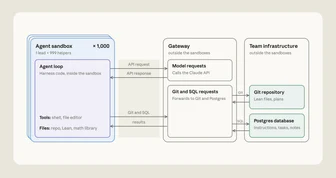
    Anthropic uses Claude Fable 5.2 to enable 1000 agents to safely collaborate on proving Fermat's Last Theorem

    Anthropic announces a toy experiment: 1000 agents running early versions of Claude Fable 5.2 in a network sandbox, organizing and dividing tasks solely with Git and a shared Postgres database, completing the formal proof of Fermat's Last Theorem in 28.7 hours, outputting tokens one-third of the September version and proof length one-seventh.

    Why it matters: The original complete record shows 1000 agents building collaboration mechanisms and proving Fermat's Last Theorem in a network sandbox, observable how multi-agent scalable collaboration and safety boundaries are designed simultaneously.

  2. One Useful Thing78

    Ethan Mollick practically tests Claude Fable 5.2: Close but not complete AGI

    Ethan Mollick, after trying out Claude Fable 5.2 before its public release, believes that according to the definition of 'achieving the level of most human experts on most available computer-completed intellectual tasks,' it is close to AGI but still has a gap.

    Why it matters: The author uses six cross-domain practical cases to illustrate that the model's ability has approached general intelligence, but lacks the ability to judge whether works are good or bad.

  3. Claude · YouTube68

    Claude Mythos 5.2 predicted the complete AAV coat structure

    Claude Mythos 5.2 predicts the complete AAV capsid structure, which is composed of 60 identical protein chains. It writes code for an open-source folding model to handle the overlap grouping of adjacent five chains, then uses the symmetry of the capsid to assemble the 60 chains. On AAV2, its prediction deviates from the experimental structure by about the width of an atom.

    Why it matters: The original text provides specific methods and accuracy of the model in real scientific research tasks, allowing readers to judge its applicable boundary in structural prediction work.

  4. Claude · YouTube75

    Anthropic released Claude Fable 5.2

    Anthropic releases Claude Fable 5.2, designed for the most challenging technical challenges, with improvements in coding, reasoning, and vision, suitable for the most ambitious open-ended technical work. The official recommendation is to use Opus 5.5 for most coding and knowledge tasks, and Fable 5.2 is now available in the Pro, Max, Team, and Enterprise packages.

    Same story · 11 outlets

    How the accounts differ:TechCrunch states the input price of Fable is reduced to $8 per million tokens; others do not mention the price.

    Why it matters: The official statement explains the positioning and applicable scenarios of Fable 5.2, and provides a choice suggestion between Opus 5.5, making it easier to decide which model to use.

  1. ITHome · AI72

    Anthropic must continue to defend against the Claude Max plan usage misleading lawsuit, as the judge did not adopt its arguments

    U.S. federal magistrate judge Xie Wenhui ruled that Anthropic must continue to defend against the main claim that the Claude Max plan usage is misleading to consumers, and dismissed several other claims in the case. The plaintiff claims that the $100 and $200 per month Max plans, when calculated on a per-week basis, actually provide only 3.5 times and 6 times the usage of the Pro plan, respectively, rather than the advertised 5 times and 20 times.

    Why it matters: The ruling reveals the discrepancy between the promotional subscription limits and the per-cycle usage, allowing readers to understand the promotional boundaries of subscription-based AI products.

  2. The Verge · AI80

    The METR report stated that Anthropic's models are self-accelerating their R&D, causing researchers' concerns.

    AI safety research organization METR released a report after an internal investigation of 11 weeks with Anthropic, stating that the capability improvement rate of Anthropic's models is about twice as fast as a year ago, achieving about two years of historical progress in the past year, and researchers are confident that the acceleration mainly comes from AI rather than computational power expansion.

    Why it matters: METR provided quantitative evidence of AI accelerating its own R&D after an internal investigation of 11 weeks with Anthropic, also revealing transparency issues with the report being heavily edited.