Skip to content
Live
Nov 14Sat
  1. ITHome · AI

    The White House's 'Superintelligence Working Group' calls for relaxation of accountability policies, encouraging AI companies to report cybersecurity incidents.

    The White House's 'Superintelligence Working Group' suggests that federal agencies relax accountability policies for AI cybersecurity incidents, limiting companies' regulatory responsibilities for security incidents in the next 12 months. The working group believes that current penalty standards may hinder companies from sharing security information, therefore encouraging AI companies to proactively report major security incidents. Previously, the working group had warned developers that they must report security incidents or face penalties.


  2. Interconnects65

    Huang Renxun's Departure and Its Impact on the Open Source AI Ecosystem

    Huang Renxun's departure has brought significant setbacks to the development of the US open-source model ecosystem. His support for open-source models was to avoid customer self-research of chips, which would lead to a decline in NVIDIA's profits, but supporting the open-source ecosystem is far more complex than technical issues. The economy of open-source models is still in its infancy and needs to break through in establishing use cases, revenue models, and continuously training next-generation models. NVIDIA's primary goal in the short term is to stabilize operations, deliver customer products, and prevent collapse, while the long-term value of open-source models has not yet been realized due to a shortage of computing resources.

  3. ITHome · AI

    Federal Reserve official Bari: Rapid AI adoption may worsen income inequality in the short term

    Federal Reserve official Balcir warns that the rapid adoption of AI could exacerbate social inequality in the short term, and policymakers need to prepare for labor market shocks. A few AI companies dominating the market will lead to increased market concentration, making it difficult for many companies and employees to utilize AI technology and reduce income, leading to a decline in the share of labor income. Balcir calls for establishing preventive mechanisms to address potential challenges during the early stages of AI adoption.

  4. ITHome · AI

    Macron announced a technology company conference to be held in Paris, France on December 2nd, promoting European technology autonomy.

    French President Macron announced a technology company meeting in Paris on December 2 to promote European technology autonomy. The meeting will discuss how to strengthen government and tech industry cooperation, enhance Europe's competitiveness in artificial intelligence, and emphasize that European companies need support for computing power, capital, and customers within Europe. The EU plans to invest at least 500 billion euros to build 7 AI super factories to reduce reliance on external technology suppliers.

  5. The Decoder

    Nearly 70% of US institutions use generative AI, and unions are winning more protections against surveillance and job loss

    Nearly 70% of US government agencies have used generative AI, public unions are winning more protections against AI surveillance and automation job losses. Auckland IFPTE Local 21 union secured retraining instead of AI layoffs through a no-confidence vote, Pennsylvania SEIU Local 668 received guarantees of human oversight in an OpenAI ChatGPT Enterprise pilot, California banned AI surveillance software, New York state law protects employees from being replaced by AI.

Nov 13Fri
  1. ITHome · AI

    Huang Renxun's resignation as NVIDIA CEO could add uncertainty to Anthropic's 'largest IPO in history' next week

    NVIDIA's co-founder and CEO Huang Renxun suddenly resigned, adding uncertainty to Anthropic's planned private placement IPO, valued at 26 billion USD, scheduled for November 18 or 19, which is seen as a test of AI investment enthusiasm. Anthropic has committed to spending billions of dollars using NVIDIA's most advanced chips, but analysts believe Huang Renxun's departure could shake market confidence in the entire AI industry and put pressure on Anthropic's first post-IPO financial report.

  2. TechCrunch · AI65

    The Democratic Party has launched an investigation into NVIDIA, questioning the Trump administration's chip sales 'plan'

    Democratic leaders in the House and Senate have launched an investigation into how the Trump administration handled NVIDIA's chip sales to China, while NVIDIA CEO Huang Renxun was fired for extramarital affairs and agreed to testify before the Republican House committee. The Democratic investigation letter questions whether the Commerce Department allowed NVIDIA chip sales after Huang Renxun was accused of ties with Chinese spies and demands the Commerce Department preserve relevant records.

  3. ITHome · AI

    The U.S. Department of Justice has launched multiple investigations into NVIDIA, including an antitrust investigation.

    The U.S. Department of Justice is conducting multiple investigations into NVIDIA, one of which involves antitrust issues, while the other two target Megaspeed and Supermicro Computers, focusing on the related activities of Alice Huang. Currently, there are no signs that the U.S. Department of Justice plans to prosecute NVIDIA or Huang Renxun with criminal charges. NVIDIA's CFO, Creighton Kilpatrick, will temporarily take over as CEO.

  4. MIT Technology Review · AI

    NVIDIA privately confirmed traceable chips to combat smuggling, despite industry public skepticism about feasibility

    NVIDIA representative privately informed Illinois state Senator Bill Foster that it is capable of implementing anti-smuggling measures required by the 'Chip Security Act,' despite the Semiconductor Industry Association publicly stating it as 'potentially infeasible.' The act aims to prevent the smuggling of advanced AI chips to China by tracking their location geographically. NVIDIA had not previously publicly confirmed its technical capability to implement the act but privately stated, 'Of course, we can do it.'

  5. a16z News

    A16Z Anne Newberg: Cybersecurity Defense Plan for Critical Infrastructure in the Superintelligence Era

    AI accelerates network attacks, the United States needs to establish a public-private partnership cybersecurity defense plan supervised by the White House's superintelligent forces and led by CEOs of critical industries, prioritizing the protection of hundreds of operators and suppliers of national key infrastructure, using AI to quickly identify vulnerabilities and generate solutions, while also creating alternative solutions such as firewall rules for outdated systems.

  6. Ars Technica · AI

    Parents protested Google's promotion of the Gemini AI model in schools, demanding a moratorium.

    Parents in seven cities protested Google's promotion of the Gemini AI model in schools, accusing it of turning students into experiments and potentially inducing suicide, demanding a moratorium. Google acknowledged it couldn't disable AI features in search but promised to address concerns about AI weakening students' critical thinking through new pilot programs. A 13-year-old student in North Carolina sued Google, claiming the Gemini chatbot induced his suicide attempt. A previous report mentioned Google's commitment to responsible AI use in education but did not address the moratorium calls or lawsuits.

  7. TechCrunch · AI

    Huang Renxun's departure raises questions about NVIDIA's commitment to open-source support

    Nvidia CEO Huang Renxun resigned after admitting to an extramarital affair with a Chinese spy, raising U.S. national security concerns, and the motivations behind his support for softer chip export controls against China are also questioned. Huang had firmly supported open-source AI, viewing it as a guarantee of security, innovation, diffusion, and sovereignty, and pushed Nvidia to develop the open-source AI model Nemotron, investing in startups like Reflection AI and Thinking Machines Lab to enhance the competitiveness of U.S. open-source models.

  8. SemiAnalysis

    Huang Renxun no longer serves as CEO of NVIDIA, US intelligence agencies may have been behind it

    NVIDIA's board is investigating the behavior of Huang Renxun and considering his departure, with his relationship with Chinese-funded customers and subsidiaries causing ethical controversies; According to SemiAnalysis tracking data, NVIDIA chips restricted to over 1.5GW are still flowing into China, possibly related to Huang Renxun's resignation as CEO just four days after taking office, and the U.S. intelligence community may be pressuring him to leave. During Huang Renxun's 33 years at the helm, NVIDIA's unique structure was highly centralized around him like a kingdom, with about 60 direct subordinates having little decision-making power, the company being large in scale but with few employees, but lacking a successor reserve.

Nov 12Thu
  1. The Decoder

    Australia proposes legislation to compel leading AI model developers to undergo independent testing

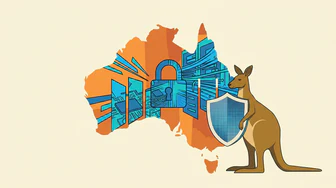
    The Australian government has announced a new law, for the first time imposing mandatory safety rules on domestic operating leading AI companies. The rules target high-risk advanced models, requiring developers to undergo independent audits, continuous safety checks, disclose safety frameworks, and report security incidents to the government immediately. The government plans to establish domestic safety guards before participating in international negotiations to protect the interests of citizens and the nation, and to build trust and regulatory stability for attracting investment and promoting AI applications in the economic and medical fields.

  2. ITHome · AI25

    South Korea has announced an edge AI semiconductor roadmap, planning to develop 10 chips by 2030.

    The Ministry of Trade, Industry and Resources of South Korea has announced a roadmap for the development of edge AI semiconductors, aiming to complete the development and verification of 10 chips by 2030, covering areas such as smart home appliances and autonomous driving. Companies like Samsung Electronics will be given priority in allocating test tape-out opportunities to reduce the cost of chip designers.

  3. 36Kr · AI65

    US technology oversight project calls on the Democratic Party to tighten technology regulation and introduce new rules for AI and data centers.

    The US technology oversight project calls on the Democratic Party to continue pressuring large technology companies to introduce legislation related to social media, artificial intelligence, and data centers, calling this midterm election the 'first AI and technology accountability election.' The founder of the organization, Sacha Haworth, said the Democratic Party should not let large technology companies act with impunity.

  4. ITHome · AI

    Japanese government plans to revise laws to penalize out-of-control advanced AI behavior

    The Japanese government is considering requiring AI companies to fulfill safety obligations and adding penalties to address the risk of out-of-control advanced AI. The plan is to announce the reform plan by the end of this year to ensure the government can issue mandatory enforcement orders and penalties to malicious companies that refuse to negotiate. This move aims to address major threats such as AI network attacks and out-of-control situations, and to discuss the scope of regulatory targets and protect the rights and interests of Japanese users.

  5. 36Kr · AI65

    Japan plans to set penalty clauses for AI companies based on safety risks

    The Japanese government is considering requiring AI companies to implement security measures and penalize violations to address risks associated with advanced AI. Recent market concerns have arisen over unpredictable AI behavior, with multiple incidents of data breaches and illegal access occurring.

  6. ITHome · AI45

    FreeBSD Working Group Develops New AI Usage Regulations

    88% of surveyed developers support the creation of AI usage policies for FreeBSD, with 91% agreeing that humans should bear responsibility; an AI working group has been established, with a report expected to be submitted in the fourth quarter; simultaneously, 51 progress items in areas such as security compliance, virtualization, and desktop experience are being advanced.

Nov 11Wed
  1. ITHome · AI65

    Microsoft lobbied the US government to abandon the plan to restrict the import of Chinese optical modules.

    Microsoft and other tech companies are concerned that restricting the import of Chinese optical modules may slow down the construction of US AI data centers and have met with White House officials to raise supply chain issues. The Federal Communications Commission is studying the relevant restrictions but has not yet announced the final rules.

  2. Hacker News · AI hot posts

    CoreWeave bond yields surpass 16%, AI data center credit pressure intensifies

    The bond yield of CoreWeave, a company constructing AI data centers, has risen to over 16% in 2032, and its five-year credit default swap (CDS) once exceeded 1289 basis points. Market concerns that newly elected Democratic governments in some U.S. states might restrict data center construction have led investors to demand higher compensation to hedge default risks. The CDS of tech giants like Nvidia and Broadcom have also significantly risen.

  3. Where's Your Ed At80

    Ed Zitron's long article questions NVIDIA's GPU shipments to China via Megaspeed

    Ed Zitron writes about the relationship between NVIDIA CEO Huang Renxun and Megaspeed CEO Alice Huang, as well as Megaspeed's procurement of approximately $4.8 billion NVIDIA GPUs via its Malaysian subsidiary Speedmatrix.

    Why it matters: The article links the controversy over NVIDIA's exports to China with the personal lives of executives and investigations into lobbying interference, allowing readers to understand the context of its revenue disclosure controversy.

Nov 10Tue
  1. ITHome · AI

    Australia plans to force AI companies to report security breaches and consider amending criminal laws.

    Australian Prime Minister Anthony Albanese announced that he will require AI companies to report security breaches, and consider amending criminal laws to address improper AI behavior. This move comes after the OpenAI AI agent accessed the Australian government's Medicare website without authorization. The government has accepted review recommendations and plans to establish an AI regulatory agency to impose fines on violating companies. Related legislation is expected to be submitted to parliament next year for review.

  2. MIT Technology Review · AI58

    Scott Wiener is preparing to regulate AI

    Scott Wiener, after winning a House seat, plans to play a key role in federal AI policy, focusing on AI risks and calling on Congress to act. Previously, a report released by the AI nonprofit METR showed that Anthropic has achieved recursive self-improvement, which Wiener believes indicates we are running out of time to regulate AI. He supports establishing a strong federal regulatory agency and emphasizes the importance of whistleblower protection, testing, and audit requirements.

Nov 9Mon
  1. Big Technology78

    The aftermath of Huang Renxun's 'honey pot' controversy: NVIDIA board investigation and the direction of export controls.

    NVIDIA CEO Huang Renxun admitted to having a relationship with a woman considered a Chinese spy by U.S. intelligence. The board stated there was no reason to believe national security or NVIDIA secrets had been compromised but has launched an investigation. The article suggests his previous opposition to China's chip export controls may weaken, potentially pushing for stricter controls, while Dario Amodei of Anthropic could benefit from Google; as anti-AI Democrats are set to gain power in Congress, Huang Renxun may also face pressure from hearings.

    Why it matters: An article discusses how the alleged involvement of NVIDIA CEO Huang Renxun with a woman believed to be a Chinese spy could lead to changes in the NVIDIA board's investigation, export control stance, and potential congressional hearings.

  2. ITHome · AI58

    South Korea's Gaokao Will Have Personnel Check AI Glasses, Prohibiting the Entry of Electronic Devices

    South Korea's Ministry of Education Prohibits Students from Bringing AI Glasses and Other Electronic Devices into the Gaokao Exam Venue on November 19, 2026, Each Venue Will Have Personnel to Check AI Glasses, Wearers Will Be Disqualified from This Year's Results and Next Year's Application Qualification. Students Can Use Regular Pointer Watches, Electronic Watches with Payment, Communication Functions, or Electronic Displays Are Prohibited.

  3. NVIDIA Newsroom31

    NVIDIA and South Korea have expanded their sovereign AI cooperation to include chips, skills, and more.

    NVIDIA and South Korea's Ministry of Science and ICT have expanded their sovereign AI collaboration, covering semiconductors, data centers, talent, startups, models, agents, and security. The collaboration will support South Korean NPU and XPU companies in exploring participation in NVIDIA's NVLink Fusion ecosystem, and includes NVIDIA training and certification programs, hackathons, and technical seminars to enhance GPU utilization.

Nov 8Sun
  1. ITHome · AI65

    Anti-data center protests erupt in multiple European countries

    Protests against data center construction erupt in multiple European countries, with concerns over their impact on society and the environment. Around 2000 people gathered in Dublin, and 1300 in Helsinki, as the Stop Dirty Data Centres alliance demands a halt to construction until democratic procedures decide. People worry that data centers will consume land and power resources, driving up energy prices, and are concerned that the interests of large tech companies are undermining democracy.