Skip to content
Live
Nov 9Mon
Nov 8Sun
  1. MiniMax · Hugging Face new models

    MiniMax-H3-Image-PE provides hint extension functionality

    MiniMax-H3-Image-PE uses prompt expansion (PE) to convert short requests into detailed image descriptions and recommends aspect ratios. It supports two workflows: text-to-image (T2I) and image editing, using fine-tuned FP4 weights from Qwen3.8-27B. The online API can be accessed via platform.minimax.io or platform.minimax.cn, and the documentation provides support in both Chinese and English.

  2. QbitAI42

    Qualcomm showcased the edge-side MoE intelligent agent at the CIIE, driving edge-side AI from single-point applications to intelligent agent experiences

    Qualcomm showcased its edge-side MoE intelligent agents at the 9th CIIE, driving edge-side AI from single-point applications to intelligent agent experiences. MoE technology enhances the intelligence level of edge-side models through mixed expert modules, achieving higher complexity task completion in the 2 billion to 3 billion parameter scale. Qualcomm collaborated with Infris AI, Changelong, and Jieyu Xingchen to optimize models, inference, storage, and chip platforms, demonstrating a systematic solution for edge-side AI ecosystem synergy.

  3. ITHome · AI65

    The Douyin App has integrated Apple's China version Apple Smart, allowing users to quickly check product information using the iPhone camera for AI shooting.

    The Douyin App has integrated Apple's Smart function, allowing users to quickly retrieve information by taking photos of products with their iPhone camera. After taking a photo, users can search for related products on Douyin to view details, historical prices, AI interpretation, and user reviews.

  4. ITHome · AI65

    Sony launched the 'dual-path visual information fusion in-vehicle passenger dizziness detection' technology

    Sony globally launched the 'dual-path visual information fusion in-vehicle passenger dizziness detection' technology at the CIIE, which predicts passenger dizziness levels by analyzing the front road view and rear seat screen content. The evaluation results can be used to remind drivers to reduce hard braking or turning, or to recommend visually less changing content for content platforms. This solution reuses the ADAS front view camera and does not require a new rear seat camera.

  5. Hugging Face Daily Papers65

    VisSearch-Bench evaluates the performance of multimodal agents in long-term visual search

    VisSearch-Bench evaluated the performance of 16 multimodal models on 204 human-written visual search tasks that require integrating visual context with external information, with the results showing that the best system only fully solved 26.47% of the tasks. The benchmark covers 7 major areas, including set-based visual search and sequential visual search, and evaluates task completion and the correctness of reasoning steps through accuracy and process scoring.

Nov 7Sat
  1. ITHome · AI58

    Apple iOS 27.2 introduces SynthID invisible watermark for AI image tools

    Apple introduces SynthID invisible watermark for some Apple Intelligence image tools (iPhoto, Image Magic Wand, and Clean Up, Extend, and Space Reconstruction in Photos) in iOS/iPadOS/macOS 27.2. It is invisible to the human eye but can be read by the SynthID detector. Users can check if an image has a watermark at synthid.com; this technology supports pixel-level annotation of real image data to prove photo authenticity.

  2. Baseten Labs65

    Research shows that on-policy self-distillation (OPSD) is biased and has limited effectiveness

    Research indicates that on-policy self-distillation (OPSD) may still be valuable in specific scenarios, but more research resources should not be invested. OPSD trains through the outputs generated by the student model itself with context prompts, but research shows that this intensive supervision may introduce bias, especially for trained models, making it less effective.

  3. AWS Machine Learning Blog58

    Amazon SageMaker Inference now supports Multi-Instance GPUs to maximize GPU utilization

    Amazon SageMaker Inference now supports GPU partitioning, dividing physical GPUs into independent partitions via NVIDIA Multi-Instance GPUs (MIG), where each partition receives a fixed share of GPU computing units and dedicated memory blocks for isolation. Deploy more models in isolation and choose the appropriate size of GPU units on demand to reduce costs, with a maximum of 7 partitions per GPU, no need to build Kubernetes yourself.

Nov 6Fri
  1. Hugging Face Blog58

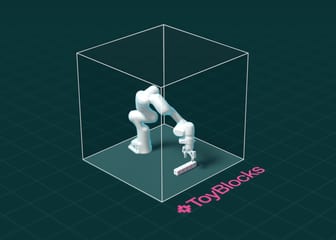
    Hugging Face released ToyBlocks: A controlled world framework for robot learning and evaluation

    Hugging Face released ToyBlocks, a framework for robot learning and evaluation that provides a controlled simulation environment. The framework supports automatically generating tasks and training demonstrations, and includes metrics to measure changes in robot behavior over time, aiming to study how models improve with more training data and how to combine advanced reasoning with precise physical control.

  2. ITHome · AI58

    Pangram officially releases AI image detection model Pangram Image 1.0, with an accuracy rate of 99.96%

    The Pangram Image 1.0 model locates AI-generated content using heatmaps, achieving an accuracy of 99.96% on a test dataset of 1200 photos. This model can resist the effects of compression, scaling, and artificial modifications, with an accuracy of 96.4% still maintained at 256×256 resolution. The simultaneously released Pangram Image Flash 1.0 video detection model achieves an accuracy of 98.7% on the DF26 dataset, leading the second place by 29 percentage points.

  3. ITHome · AI35

    Huawei Mate 90 series phones receive HarmonyOS 7.0.0.111SP15 upgrade, optimizing the shooting effect when paired with the Leica Z10 module camera.

    Huawei has rolled out the HarmonyOS 7.0.0.111 SP15 version upgrade for the Mate 90 series phones today, optimizing the shooting effect when paired with the Leica Z10 module camera, while also improving the overall system stability. The Leica Z10 module camera, code-named 'Vajra', integrates a Redwood sensor, supports soft and hard core AI collaborative focusing, and has an independent optical image stabilization module.

  4. Hugging Face Daily Papers65

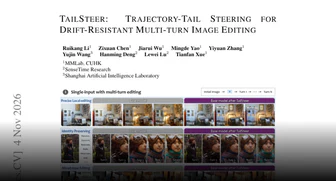
    TailSteer: A trajectory tail guidance training framework for anti-drift multi-round image editing

    TailSteer, by maintaining early denoising dynamics to approach the base model and learning fine deviations in trajectory tails from within the policy through rolling out, significantly reduces accumulated visual drift in multi-round editing while preserving pre-trained generation and editing capabilities. Experiments show that TailSteer can greatly reduce drift on FLUX, SenseNova, and Qwen series models in 15-20 rounds of editing and largely maintains the performance of the base model on large text-to-image and single-image editing benchmarks.

  5. TechCrunch · AI65

    Meta launches the Muse AI model video chat feature.

    Meta announces that its consumer AI agent Muse's voice and video chat features Muse Realtime Avatar and Muse Realtime Voice are now available to all users in the United States. Users can engage in real-time conversations by interacting with the cute animated avatar Jolly, which can be customized according to user preferences and uses subtle expressions and gestures that match the mood of the conversation.

    Same story · 2 outlets

    How the accounts differ:The Verge mentions the voice mode is available in iOS and will soon apply to Meta's AI glasses and upcoming Muse Charm device; TechCrunch does not mention these details.

  6. The Verge · AI65

    Meta Muse AI agent adds voice mode and dynamic emotive avatar

    Meta allows users to have real-time voice conversations with the Muse AI agent, CEO Mark Zuckerberg announces the feature has been rolled out to some users. In the iOS app, the Muse agent's avatar animates in real-time based on the conversation content. Users can adjust the voice tone by asking the agent or browsing the avatar settings options. This voice mode has now launched in the US region and will soon be applied to Meta's AI glasses and the upcoming Muse Charm device.

    Same story · 2 outlets

    How the accounts differ:The Verge mentions the voice mode is available in iOS and will soon apply to Meta's AI glasses and upcoming Muse Charm device; TechCrunch does not mention these details.

  7. Microsoft Research

    PDD Kit officially validated full-stack web applications written by AI intelligent agents

    The PDD Kit translates user intent into formal specifications and verifies whether the code written by the agent for each input conforms to these specifications, supplemented by testing. The team officially validated the Rust-written Pet Store login logic using the Chopin environment on GitHub Next with the PDD Kit, and the Verus tool discovered and fixed existing bugs, proving no login bugs under the specification.

Nov 5Thu
  1. Hugging Face Daily Papers65

    EmoReward: A self-evolving reward calibration mechanism for emotional video generation

    EmoReward adapts multi-reward weight allocation by extracting evidence reliability from reward trajectories collected during actual training runs to calibrate reward weights for emotional video generation. This mechanism first evaluates specific grounding cues based on emotional prompts, then scores videos during the generation phase using heterogeneous signal primitives, and calibrates their contributions through reflective reward gating.

  2. Hugging Face Daily Papers65

    The NEO-VLA framework eliminates fixed visual encoders to enhance the robustness of action strategies

    NEO-VLA framework eliminates fixed visual encoders by allowing action strategies to directly access deep visual representations in the network, achieving stronger robustness in various manipulation scenarios and distribution shifts. The framework uses lightweight convolutional layers to tokenize images and allows visual representations to evolve together with language in the backbone network, enabling action experts to obtain information from different depths of instruction-conditioned visual representations. Layer exploration experiments show that action key signals often reach their peak before the final visual representation is formed.

  3. MarkTechPost70

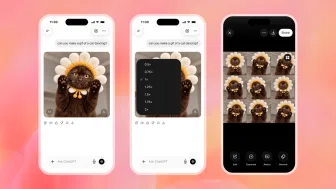
    OpenAI releases GPT-Image-2.6 Flare and Sunburst, adding GIF and SVG export and 6-second API generation

    OpenAI launches Images 2.6 on ChatGPT, Codex, and API, offering GPT-Image-2.6 Flare and Sunburst models, with the official claim that generation speed is 50% faster than the previous version

  4. MarkTechPost

    Google AI Research releases Agile Deliberation framework for gray-area image classification

    Google AI Research releases Agile Deliberation framework, which transforms fuzzy concepts into structured definitions through human-in-the-loop, for gray-area image classification. The framework is based on Gemini 2.5 Pro and Gemini 2.5 Flash API, requiring no fine-tuning, with an average F1 score 10.5 points higher than zero-shot Gemini 2.5 Flash, reaching 0.59 in paid scenarios.

    Same story · 2 outlets

    How the accounts differ:Google Research mentions user experiments reducing fatigue and anxiety; MarkTechPost focuses on F1 score improvements.

  5. MIT News · AI

    MIT researchers have developed the UQ-DAAAM system, enhancing the accuracy of robotic memory.

    The UQ-DAAAM system can identify and correct errors in robotic memory descriptions, quantifying uncertainty by comparing multi-view images and optimizing object descriptions, thereby improving the accuracy of robots' perception of objects, locations, and time. The current correction success rate is approximately 92%, with an accuracy improvement of 5%. The system employs LLM to integrate multi-view descriptions and uses heuristic rules to select the best supplementary images, significantly reducing computational load without rerunning VLM.

  6. QbitAI78

    GPT-Image-2.6 is fully launched, supporting direct GIF and SVG output

    OpenAI's GPT-Image-2.6 has been fully launched on ChatGPT, Codex, and API, available to both free and paid users, with overall generation time reduced by 50%, producing images in as fast as 6 seconds.

  7. OpenAI News62

    OpenAI launches Images 2.6, enabling faster image generation and GIF creation support

    OpenAI has released Images 2.6, bringing faster image generation, GIF creation, more precise editing, and new API controls. This version covers three access points: ChatGPT, Codex, and API.

    Why it matters: The original text lists four changes: image generation speed improvement, GIF creation, more precise editing, and API control, which can be used to judge the boundary of image capabilities for ChatGPT, Codex, and API.