Skip to content
Live
Nov 1Sun
  1. MarkTechPost58

    Nace AI open-sources Drex Max v1: a 27B decision model that can run locally on Apple Silicon

    Nace AI open-sources its most powerful decision model, Drex Max v1, which can run locally on Apple Silicon hardware. The model includes bf16 weights, Q8_0 GGUF format, affine Q4 checkpoints, and llama.cpp/Ollama branches, scoring 67.52 on the public decision index 0.4, surpassing Drex v2.0 (61.25), and achieving a 97.3 skill score on InfographicVQA.

  2. 36Kr · AI58

    NVIDIA discloses next-generation CPO technology OOI, prototype samples are ready

    NVIDIA demonstrates next-generation co-packaged optics technology OOI, integrating the optical engine onto the GPU silicon interposer, bringing the photoelectric conversion stage closer to the chip core, prototype samples are ready. This solution replaces the current organic packaging substrate with a larger area interposer, currently in the research stage, and has no commercialization timeline.

  3. Hacker News · AI hot posts

    GPT-5.6 Sol completed a Factorio run in peaceful mode.

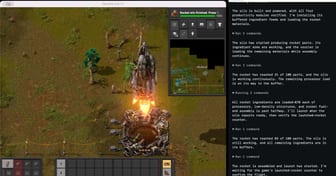
    GPT-5.6 Sol completed a Factorio run in peaceful mode (no biters) in Codex with low thinking levels, taking 13.5 hours of game time. The run used a game manager, allowing Sol/Codex to interact with the game through a small library (Python instead of Bash this time), and the model programmed the game according to GUI rules. Observing the run showed that Sol exceeded expectations in some aspects but also exposed clear weaknesses.

  4. Databricks Blog58

    Databricks Lakebase branching helps CI/CD: experience from 100 PR databases

    Databricks Lakebase reduces the creation time of each PR branch to seconds with its copy-on-write database branching feature, supporting up to 100 concurrent branches, with each branch having independent read/write, compatible with standard Postgres, and supports large JSONB/LOB columns, meeting Snorkel AI's needs for fast, secure, and low-cost testing of production data in CI/CD processes.

  5. Latent Space42

    How Arca uses Claude to support long-term financial work

    Arca stated at the AI Engineers' New York Summit that its agents primarily handle background work, but human advisors retain final decision-making authority. Agents only analyze and propose solutions, with transactions executed by humans. Agent tasks can last up to ten days, and the company has developed an internal memory system to track task progress and responsibility allocation. They use models from Anthropic and OpenAI, automatically selecting models based on internal benchmarks via a custom harness. In terms of security, agent operations are strictly limited, involving no client risk, and they use sandbox computing and additional measures to handle sensitive data.

Oct 31Sat
  1. ITHome · AI65

    Arrowmax in Hong Kong launched the AI Electric Screwdriver S1, claiming it to be the world's first.

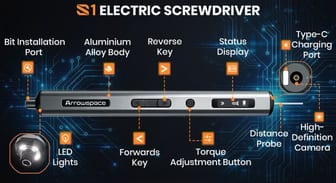
    Arrowmax launched the AI Electric Screwdriver S1 on Kickstarter, claiming it to be the world's first, with a starting price of $80 and an estimated shipping date of April 2027. The S1 uses a camera and AI model to identify screw types and sizes, and automatically selects bits and adjusts torque, with all training samples collected in-house. The single unit starts at $80, and the kit has an early bird price starting at $129.

  2. QbitAI58

    New Chipway releases X7 Ultra chip: World's first model guided design, NPU computing power reaches 700 TOPS with 98.7% utilization

    New Chip Voyage releases the X7 Ultra chip, describing its performance for the first time using 'large model computing power'. The NPU computing power reaches 700 TOPS with a utilization of 98.7%, the quantized model output similarity to the FP32 benchmark model exceeds 99.99%, memory bandwidth consumption is reduced by 80%, and energy efficiency is improved by 100%. This chip is designed specifically for mass production of intelligent driving large models, featuring a super-large core NPU architecture and a dedicated computing engine, paired with AI toolchain optimization to support kilowire-level LiDAR processing and camera latency jitter optimization. It is equipped with an Arm v9 automotive-grade CPU and meets ASIL-B/ASIL-D safety standards.

  3. Hugging Face Daily Papers55

    VibeGame Framework: A prompt-based game development system using an AI-native engine and a self-evolving team of adversarial intelligences.

    VibeGame Framework constructs complete 2D games from natural language prompts using an AI-native engine and eight specialized adversarial intelligence teams, supporting interactive validation and reusable self-evolving components. On the GameCraft-Bench subset, VibeGame's P2G (Prompt-to-Game) version surpasses multiple AI agent solutions like GPT-6.1-Sol with the same underlying model.

  4. ITHome · AI65

    Microsoft released Windows App SDK 2.6.4 to improve the Win11 native framework WinUI experience

    Microsoft released Windows App SDK 2.6.4 to improve the Win11 native application framework WinUI experience, avoid memory usage issues of 'webshell' applications, enhance application stability and compatibility, and strengthen AI capabilities. This version simplifies Language Model API access, upgrades ONNX Runtime to 1.27.1, fixes text control crashes, and includes reliability and diagnostic improvements covering WinUI 3, application lifecycle, etc.

  5. OpenRouter Blog42

    OpenRouter: Open weight models usage ratio reaches 72%, with a significant cost difference from proprietary models

    Open weight models on OpenRouter accounted for 72% of the top 50% model tokens by the end of September, an increase of 455% from October 2025; while proprietary models also saw usage grow nearly tenfold, the cost per million tokens input for open models is only about a quarter of that of proprietary models; due to fierce competition, open models like DeepSeek V4.1 Flash and GLM-5.3 Flash are priced lower, but the top proprietary model, Claude Opus 5.5, still leads by 11 points in AI analysis intelligence index.

  6. NVIDIA Technical Blog65

    Running AI models in edge application development using a few commands

    Developers are building next-generation intelligent agents at the edge for monitoring driver attention and cabin conditions, helping robots understand environmental planning tasks, and coordinating machine clusters on production lines. These physical AI applications require models for perception, reasoning, and action that run within strict memory, power consumption, and latency budgets.

  7. NVIDIA Technical Blog65

    Building controllable specialized agents using NVIDIA NemoClaw

    Developers use NVIDIA NemoClaw to build autonomous agents, a framework that includes models, executors, and domain-specific tools, and supports secure deployment. NemoClaw provides policy enforcement runtime, optimization, and observability tools to ensure the reliability and security of agents when accessing real enterprise systems and data.

Oct 30Fri
  1. Hugging Face Daily Papers60

    Youtu-Parsing-Omni: A unified multimodal parser, a single encoder and single architecture covering all modalities

    Youtu-Parsing-Omni encodes documents, images, audio, and video into spatiotemporal structured records, achieving optimal parsing performance through self-evolution strategies and distillation. Single-modal encoders share weights and integrate cross-modal information, a single architecture unifies outputs for ten parsing tasks. The 5B parameter version achieved top scores of 96.96 and 75.08 on OmniDocBench v1.6 and OmniParsingBench, with code and weights open-sourced.

  2. Hugging Face Daily Papers31

    SpecSlot: A role-coupled tokenization method for generating Transformers in pixel space

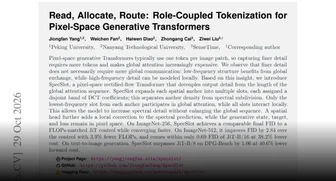
    SpecSlot improves pixel space generation Transformer by using local spectral slots and limiting global attention without increasing computational cost, enhancing image details. SpecSlot expands each spatial anchor to multiple slots, assigning each slot a different DCT coefficient band, which separates anchor density and spectral refinement; only the low-frequency slots of each anchor participate in global attention, while all slots perform local interactions.

  3. Microsoft Research40

    Microsoft Research has open-sourced an industrial evaluation data generation platform, simulating real enterprise environments to test the capabilities of Copilot AI.

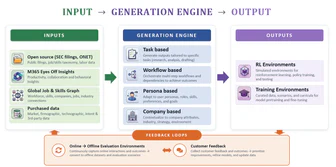
    Microsoft Research has open-sourced an industrial evaluation data generation platform that simulates real business processes by creating synthetic enterprise environments based on O*NET occupational data, online job postings, and SEC filings to test Copilot AI, ensuring the evaluation does not involve customer data and complies with security and privacy standards. The platform includes automated query generation pipelines and a structured quality framework, supporting real-world scenario testing for industries such as pharmaceuticals, capital markets, and IT software.

  4. Ant Group inclusionAI · Hugging Face new models38

    inclusionAI/ZwZ2-9B-GGUF GGUF format weights release

    inclusionAI releases ZwZ2-9B GGUF format weights, belonging to the Zooming without Zooming v2 project, including language models (FP16, Q8_0, Q4_K_M) and visual encoders and projectors (mmproj, FP16, Q8_0, Q4_K_M), requiring pairing with llama.cpp Qwen3.5 multimodal support for use, supporting CLI inference and Web Chat deployment.

  5. MarkTechPost59

    Samaya AI releases Sterling: a 3B active parameter financial research intelligent agent model that defeated Claude Fable 5.1 on FrontierFinance and reduced costs by 11 times

    Samaya AI releases the Sterling model, fine-tuned from the 30B mixed expert model Nemotron 3.5 Lightning, with 3B active parameters. In the FrontierFinance benchmark test, Sterling scored 58.9%, higher than Claude Fable 5.1's 55.9%, and the cost per question is only $0.61 (Fable 5.1 is $6.89).

  6. Hugging Face Daily Papers42

    WorkFactory: Transforming Professional Intent into Executable Tasks through Information Planning and Repair to Achieve Scalable Agent Training

    WorkFactory builds coherent professional tasks through information planning and repair, producing the WorkPilot model, enhancing expert-level agent performance in professional work benchmarks. The framework starts from professional intent, constructs information support graphs to guide task instantiation, and identifies support failures and guides repairs through execution detection while preserving expected work.

  7. Hugging Face Daily Papers65

    LOWN: Certificate-guided visual routing for efficient diffusion visual language models

    LOWN adapts to skip image processing during diffusion visual language model decoding, reducing computational load while maintaining accuracy when predictions are consistent. Since visual markers account for 89-97% of input in the studied benchmarks, most decoding computations are used for repetitive processing of the same images.

  8. ITHome · AI74

    Qwenputer Launched: Embedding the RISC-V CPU instruction set into the model, AI arithmetic no longer relies on external tools

    Developer Divyansh Agrawal released the experimental model Qwenputer on October 22, built based on Alibaba's Qwen3.5-4B, which implements 32-bit RISC-V CPU and memory functions inside the neural network, allowing program execution and precise calculations without calling external tools like Python.

    Why it matters: Developers compiled the RISC-V instruction set into the Qwen3.5-4B weights, demonstrating with specific benchmark numbers the improvement in computational precision within the model and the trade-offs in volume and speed.

  9. MarkTechPost58

    Edge0 has released the 0.6B parameter voice cloning TTS model Audio8-TTS-Realistic

    Edge0 releases the open-source text-to-speech model Audio8-TTS-Realistic, with 0.6B parameters supporting zero-shot voice cloning for 23 languages, achieving an average error rate of 4.86% in the CV3 benchmark test, surpassing Qwen3-TTS-1.7B and VoxCPM2, but lower than the 4B-level Higgs TTS 3. The model employs a dual autoregressive architecture, including a slow branch with 24 layers and width 896, and a fast parallel prediction branch with 4 layers, trained using a learned realism critic.