Skip to content
Live
Nov 12Thu
  1. TechCrunch · AI65

    TechCrunch Equity Explores Real Obstacles in Data Center Construction

    The construction boom of data centers is facing practical obstacles such as local opposition, licensing delays, and power struggles, and many projects may not be completed. With tens of billions of dollars invested in AI infrastructure, it is increasingly important to distinguish between feasible and speculative projects. Brent Nelson, Senior Director of Market Strategy at Ascend Analytics, analyzed in the TechCrunch Equity podcast which data center projects might be implemented and which might never get off the ground.


  2. Google Research58

    Google Research has released a wearable device-driven CKM risk assessment framework

    Google Research releases a wearable device-driven CKM risk assessment framework, predicting future health trajectories through an explainable health age model (CHA). The framework is trained on wearable data from 2.2 million weeks using the SensorWM model, providing personalized 12-week counterfactual health simulations combined with language models to generate clinically validated guidance plans. The CHA model integrates modifiable indicators such as heart rate, steps, and sleep to predict disease risk over 68,000 person-years, improving the predictive performance of clinical indicators.

  3. Hugging Face Daily Papers

    FINCOSMOS: An open-world evaluation paradigm for intelligent agents in the financial domain.

    FINCOSMOS has introduced an open-world evaluation paradigm for evaluating intelligent agents in the financial field. In 150 simulated user interactions, no session was accepted because all sessions failed during program checks, with the agent reporting only 54-64% of the undisclosed details. Human experts attributed 88.33% of the failures to the agent.


  4. The Decoder65

    Corporate AI spending in the US reaches a new high, but the month-on-month growth rate slows to 1.65%

    US corporate AI spending reached a new high in October 2026, with a year-over-year growth rate slowing to 1.65%. According to Ramp AI's index, the top 1% of AI spending companies had an average monthly expenditure of $10,200, a 9% year-over-year increase, while typical companies saw a slight increase of $16.32. OpenAI's commercial customer spending increased by 2.1% year-over-year, while Anthropic's growth was only 0.5%. The average processing price per million text tokens decreased by 21% year-over-year.

  5. Tomasz Tunguz58

    Analysis of the most profitable tier in the AI value chain

    The AI value chain from power plants to intelligent agents is divided into five layers, with significant differences in profit margins: the application layer (40%) is the highest, followed by the reasoning layer (24%) and new energy cloud (28%), while the data center (5%) and power plant (3%) are the lowest.

  6. TechCrunch · AI65

    British AI chip startup Fractile raises $720 million in C round funding

    British AI chip startup Fractile raised $720 million in Series C funding from Sovereign AI Fund, among others, with a valuation potentially reaching $7 billion. The company plans to launch its first chip and system next year, with its full-stack solution including a machine learning compiler to accelerate LLM execution.

  7. Apple Machine Learning Research

    Weighted State Souping for Efficient Long-Context Retrieval

    Weighted State Souping proposes query dependency weighting to combine cached State state encodings, significantly improving long-context performance on tasks such as single-hop and multi-hop document question answering, pinpoint retrieval, variable tracking, and tool use. The method can be adapted into an efficient sparse variant, achieving near-constant encoding costs while maintaining (or sometimes improving) performance.

  8. Apple Machine Learning Research

    Gating Mechanisms of State Space Models (SSMs): Memory and Contextual Learning Research

    State Space Models (SSMs) lag behind Transformers in contextual learning and precise retrieval tasks, as their gating mechanism leads them to first learn memory solutions, delaying or preventing the convergence of correct contextual learning solutions, but the gating mechanism is beneficial for improving long sequence generalization.

  9. Apple Machine Learning Research

    Evaluating Evaluators: Investigating the Performance of LLM Judges in Personalized Writing Style Evaluation

    Researchers evaluated the performance of Large Language Model (LLM) judges in personalized writing tasks and found that the quality of judges is weakly correlated with general LLM capabilities measured by MMLU (Pearson’s ρ ≤ 0.2), and their performance is influenced by writing tasks and evaluation criteria (e.g., general helpfulness vs. stylistic personalization). LLM evaluators were more consistent and performed better in pairwise comparisons than in independent scoring responses. The 'strongest' LLM did not reliably replicate human evaluations, possibly due to being overly sensitive to subtle details overlooked by human annotators and weaker LLMs.

  10. The Decoder85

    Google DeepMind releases AlphaProof Code, a four-week verification of the Signal encryption core

    Google DeepMind releases AlphaProof Code, an AI-powered mathematical proof software that meets security specifications, and completes the verification work usually requiring several years on the Signal encryption protocol in just four weeks.

  11. Google AI Blog78

    Why it matters: The original text provides forward scoring, latency, and pricing data, allowing readers to judge its suitability for which low-latency decision-making scenarios.

  12. Ars Technica · AI

    House publicly acknowledges using LLM to fix bugs in 'Big Walk', sparking reflection in the independent game industry on AI usage

    House House admits to using a small amount of LLM repair technology in the later stages of developing 'Big Walk', sparking controversy in the indie game industry over AI usage. IGF award judges once signed a statement opposing any game using generative AI, although developers claimed AI accounted for only 0.1% of the code and was used to solve Unity engine issues. Developers did not disclose this in advance due to Valve not requiring disclosure, and now apologize due to public attention and support limiting AI's harm to the gaming industry.

  13. Ars Technica · AI

    TSMC plans to invest $1 billion in Anthropic and OpenAI

    TSMC's board approved an investment of up to $500 million in OpenAI preferred stock and Anthropic common stock, which will purchase at the expected IPO price. This move will inject confidence into the market, but analysts warn that the circular financing between investors, suppliers, and customers makes it difficult to assess the true market demand for AI hardware and services.

  14. Claude · YouTube42

    Claude Code's use case selection between Fable 5.2 and Opus

    Claude Code released Fable 5.2, requiring users to select Opus 5.5, Fable 5.2, Sonnet 5.5, or Haiku 5.5 based on task type, or distribute tasks across models. The availability and usage restrictions of each model vary depending on the subscription plan. Guidelines suggest using the corresponding model for complex coding and knowledge work, open-ended technical tasks, and low-cost limited tasks, respectively.

    Same story · 11 outlets

    How the accounts differ:TechCrunch states the input price of Fable is reduced to $8 per million tokens; others do not mention the price.

  15. Tessl Blog

    Tessl Blog Discusses Three Cycle Models of a Software Factory: Maintaining Operations, Continuous Learning, and Exploring Innovation

    Tessl Blog analyzes three cycles of the software factory: the "treadmill cycle" for maintaining operations, which accelerates daily tasks with AI but does not solve fundamental problems; the "learning cycle" for continuous learning, which uses AI to capture knowledge to improve guidelines and reduce repetitive work; and the "dream cycle" for exploring innovation, which leverages AI for small-scale experiments to push postponed improvements. AI tools need to have effective context and testing capabilities to transform knowledge accumulation into actual value.

  16. O'Reilly Radar

    Where are the 'killer apps' for AI?

    AI entrepreneurs and social media enthusiasts are mostly young, having experienced the first technological revolution but forgetting the excitement of owning personal computers in the late 1970s and the hardships of using mainframes in 'glass houses' at that time. They have witnessed that almost everyone can now generate code, yet they do not realize that this is similar to the experience of using BASIC instead of assembly language to write applications back then.

  17. Meta Engineering40

    Meta Develops Intelligent Delivery System: AI Optimizes Computational Resource Allocation to Enhance Ad Sorting Performance

    Meta's Intelligent Delivery system, through AI optimization of computational resource allocation, has boosted ad sorting performance by approximately 10% since 2017. The system includes a Resource Core Model that predicts the marginal utility of computational resources (6B sparse parameters + 20M dense parameters), multi-layer mechanisms for cross-system resource migration, and a framework that uses AI agents to continuously monitor and detect changes in the response system.

  18. AWS Machine Learning Blog60

    AWS open-sources UAEF: cross-framework closed-loop evaluation AI agents

    AWS releases open-source framework UAEF, using adapters to unify the execution traces of LangGraph, LangChain, Strands Agents, Amazon Bedrock AgentCore, and Langfuse into AgentTrace, then scoring with 7 dimensions and 36 built-in metrics.

    Why it matters: The original text provides an adapter and metric design for cross-framework unified evaluation, allowing readers to judge the implementation method for comparing multi-framework agent versions.

  19. AWS Machine Learning Blog

    AWS Quick accelerates product development through AI-driven lifecycle management (AI-PDLC)

    AWS Quick's AI-driven product development lifecycle (AI-PDLC) transforms enterprise signals into validated prototypes through six specialized skill agents, combined with human approval. The Discovery agent analyzes pain points in enterprise data sources, and the Prioritize agent uses a 0-10 score framework to evaluate use case priorities, with all decisions requiring manual confirmation.

  20. Google AI Blog

    Google AI has launched Tabletop: a customizable collaborative space supporting team planning, interaction, and sharing.

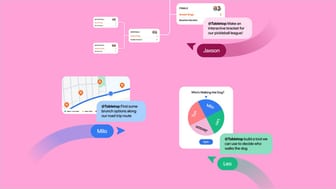
    Google AI has launched Tabletop, a new experimental platform for real-time collaboration, supporting teams to generate customized itineraries, polls, expense splits, and schedules. Users can create interactive spaces via @tabletop prompts or templates, share links for multiple people to use simultaneously, similar to Google Docs. It is currently rolling out to users over 18 in the US via a waiting list.

    Same story · 2 outlets

    How the accounts differ:Google AI Blog mentions features like voting, expense splitting, and schedule tables; The Verge focuses on features like savings tracking and chore assignment tables.

  21. Google Developers Blog78

    Google releases generative UI open protocol A2UI 1.0

    Google has released the Generative UI Open Protocol A2UI 1.0, which is the first stable version of the protocol, allowing AI agents to respond with interactive interfaces instead of plain text. Version 1.0 adds bidirectional function calls, accessibility support, and extended metadata, and provides open-source rendering SDKs for Web, Android, iOS, as well as agent SDKs for Python, TypeScript, and Dart.

    Why it matters: A2UI 1.0 extends agent output from pure text to native interactive interfaces, providing multi-platform renderers and integration scheme examples, allowing for judgment on the implementation methods of generative UI.

  22. The Verge · AI65

    Google DeepMind has released the AlphaGenome 2 model, analyzing how DNA affects different cells.

    Google DeepMind releases AlphaGenome 2 model, predicting gene variation impacts on different cell types and states by analyzing over 100 million cell outline data, identifying nearly double the variable gene expression mutations compared to the previous generation model

  23. The Verge · AI65

    Google's Tabletop AI experiment project: Building customized collaboration applications

    Google has released an experimental AI tool called Tabletop, which generates customized collaboration centers through descriptions and supports coordination for families and friends. The platform is similar to Asana and Monday, with built-in AI capabilities to create interactive tools such as savings trackers and chore distribution sheets. It is currently open for testing through a waiting list, available only to users in the U.S. aged 18 and above.

    Same story · 2 outlets

    How the accounts differ:Google AI Blog mentions features like voting, expense splitting, and schedule tables; The Verge focuses on features like savings tracking and chore assignment tables.

Nov 11Wed
  1. The Decoder

    German defense technology company Helsing releases Clarity AI platform, providing target preparation suggestions for weapon systems.

    German defense technology company Helsing has launched the Clarity AI platform, which generates target suggestions by integrating sensor data, open-source intelligence, etc. The information is processed by hundreds of AI agents and reviewed by humans, emphasizing European control and human supervision.

  2. Databricks Blog76

    Databricks upgrades Genie One to an enterprise AI collaboration workspace

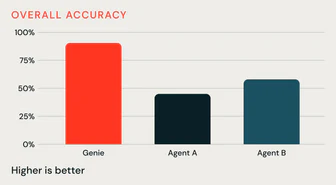
    Databricks announces Genie One as the unified entry point for enterprise AI collaboration, consolidating search, product generation, and cross-tool operations into one place, and providing enterprise context based on Genie Ontology, governed by Unity Gateway.

    Why it matters: The original text provides specific capabilities of Genie One from Q&A to product generation, cross-tool execution, and governance, allowing for judgment on how enterprise AI workbenches can be implemented.