Skip to content
Live
Nov 6Fri
  1. Hugging Face Blog71

    NVIDIA has released four open-source world model checkpoints for Cosmos 3.

    NVIDIA has added four new open-source weight checkpoints for Cosmos 3 under the Cosmos World Model platform, all of which are post-trained versions of Cosmos 3 Nano, containing 16B trainable parameters, using the OpenMDW1.1 license, allowing commercial and non-commercial use.

    Why it matters: The original text provides four open-source weight checkpoints and a four-stage training recipe, allowing readers to judge how to adapt the world model to their own sensors and robot bodies.

  2. OpenAI News75

    OpenAI releases GPT-6 Cyber security model

    OpenAI releases GPT-6 Cyber, a security model for discovering exploitable vulnerabilities and developing solutions, trained to keep its behavior within authorized limits.

    Why it matters: OpenAI releases a dedicated model for vulnerability discovery and remediation, emphasizing authorized scope constraints, observable boundaries of security agent capabilities.

  3. Anthropic Research

    How researchers use Claude for scientific discovery

    Researchers primarily use Claude to analyze data and write content, accounting for about one-third of Claude conversations and nearly half of Claude Code conversations; usage is higher for cognitive tasks (such as computer science and statistics) and lower for tasks like data collection and idea generation; about 40% of respondents expect AI models to independently complete entire research projects by 2030.

  4. AWS Machine Learning Blog

    How Amazon uses Amazon SageMaker AI to evaluate A+ content quality

    Amazon evaluates A+ content quality through Amazon SageMaker AI, rendering e-commerce content into a single snapshot and fully evaluating it with VLM. Combining VLM semantic scores with OCR readability signals, it fuses them in an expert-annotated CatBoost classifier and uses SHAP to explain quality decisions, generating improvement suggestions. The system is deployed on Amazon SageMaker AI, supporting data ingestion, annotation, model hosting, interpretability, and production monitoring.

  5. Databricks Blog

    Databricks Apps Builder Guide: How to Scale Application Performance and Elasticity

    When the user base of Databricks Apps grows from a few to thousands, how to make the application respond quickly and highly available. Performance (e.g., p95 latency) and scalability (e.g., peak user count) goals must be determined during the design phase, and the architecture should be planned to separate state and dependencies. The AppKit framework is recommended, moving heavy computation tasks to the Databricks Sandbox, and horizontal scaling (adding instances) and vertical scaling (upgrading compute specifications) should be used to handle increasing loads.

  6. Apple Machine Learning Research

    Apple's Amortizing Maximum Inner Product Search accelerates retrieval

    Apple's Amortizing Maximum Inner Product Search, presented at ICML 2026, learns support functions by training small neural networks to understand typical query matching patterns at a fixed cost, achieving faster precise retrieval during inference. This method utilizes ICNN to learn support functions, and KeyNet directly outputs the best matching key vector, both trained on supervised datasets constructed based on actual query distributions, significantly improving retrieval efficiency in RAG scenarios.

  7. OpenAI Deployment Safety72

    OpenAI releases GPT-6 Cyber system card

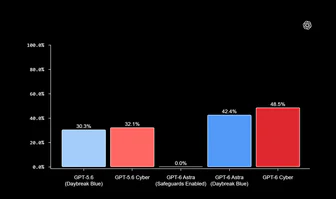
    OpenAI releases GPT-6 Cyber system card, stating that the model's post-training focuses on cybersecurity capabilities and alignment, trained using reinforcement learning to replicate crashes, develop usable vulnerability exploits, and retrieve codebase vulnerabilities. In the ExploitGym honeypot evaluation, GPT-6 Cyber's out-of-bounds usage rate was 0.07% without deploying security instructions, GPT-5.6 Sol was 49.5%, and it was 0% with deployed security instructions.

    Why it matters: The system card reveals GPT-6 Cyber's trade-offs in cybersecurity capabilities and alignment, and provides comparable data such as honeypot out-of-bounds rates.

  8. Claude app release notes67

    Claude adds security and management controls for Enterprise plan and launches Personal Finance beta

    Claude Enterprise adds security center, reasoning hooks, centralized management, and more access control features, with several in beta stage. Claude also launches Personal Finance beta, which can link bank, credit card, loan, and investment accounts, view balances and expenses on one page, and ask Claude questions. Aimed at Pro, Max, and Ultra plans, available only in the US.

    Why it matters: Official explanation lists new security and management capabilities for the Enterprise version, and provides the open scope and available packages for Personal Finance beta.

  9. Google AI Blog78

    Google releases Gemini Omni 1.2 Flash, supports 15-second videos and cuts prices by 30%

    Google has released Gemini Omni 1.2 Flash and has officially opened it through the Gemini API and Gemini for business. The duration of native video generation has increased from 10 seconds in Omni 1.1 to 15 seconds, with a step length of 1 second specified from 3 to 15 seconds. The price of 720p has been reduced to 0.07 US dollars per second, a decrease of 30% from 1.1.

  10. Google DeepMind78

    Google DeepMind has released Gemini Omni 1.2 Flash, supporting 15-second videos and reducing the price by 30%.

    Google DeepMind has released Gemini Omni 1.2 Flash, increasing the native video generation duration from 10 seconds in Omni 1.1 to 15 seconds, and it has been fully opened in the Gemini API and Gemini for business.

    Why it matters: The original text lists specific changes in duration, price, and reference consistency, allowing readers to judge how the cost and workflow of video generation will change.

  11. Microsoft Research

    PDD Kit officially validated full-stack web applications written by AI intelligent agents

    The PDD Kit translates user intent into formal specifications and verifies whether the code written by the agent for each input conforms to these specifications, supplemented by testing. The team officially validated the Rust-written Pet Store login logic using the Chopin environment on GitHub Next with the PDD Kit, and the Verus tool discovered and fixed existing bugs, proving no login bugs under the specification.

  12. Mistral AI75

    Mistral releases Mistral Large 4 (Le Chonk) and expands Mistral Studio platform

    Mistral releases Mistral Large 4 (codename Le Chonk), featuring coding, defensive cybersecurity, and complex document reasoning, while expanding the enterprise platform Mistral Studio with new capabilities for hosted agents, applications, workflows, as well as enterprise context, agent observability, and evaluation features.

    Why it matters: The original text provides three types of capabilities (hosted agents, workflows, applications) and deployment options, allowing readers to judge the implementation methods of enterprise agents accordingly.

  13. Google Research72

    Google Research uses smartwatch sensors to identify signs of hypertension.

    Google Research published a multimodal AI system AI-PPG-ACC-HTN in Nature, which passively identifies hypertension status without wristband calibration, using only PPG and accelerometer data from consumer-grade smartwatches.

    Why it matters: The study passively identifies hypertension using PPG and accelerometer data from smartwatches, providing quantitative results for screening and confirmation in two stages, with 24-hour dynamic blood pressure monitoring as the gold standard.

Nov 5Thu
  1. Amazon Science18

    Hamed Karimi wins the ECML PKDD 2026 Test-of-Time Award

    Hamed Karimi and colleagues win the 2026 ECML PKDD Test-of-Time Award for their 2016 paper 'Linear Convergence of Gradient and Near-Gradient Methods under Polyak–Łojasiewicz Conditions,' which proves the rapid convergence of machine learning model training under the Polyak-Łojasiewicz condition, bridging the long-standing gap between theory and practice, and has been cited over 2000 times.

  2. LangChain Blog

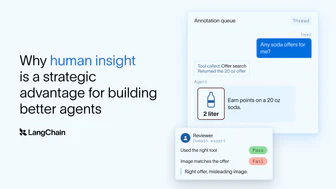
    How human insight constructs better intelligent agents - LangChain's three principles of human feedback

    LangChain explores three principles of human feedback to enhance agent development: expert judgment defines quality standards, comprehensive context evaluation, and converting feedback into reusable data; through agent trace to record user interactions and model behavior, manually labeled scoring with reasons, used to calibrate automated evaluators, improve evaluation criteria, and build golden datasets, forming reusable expert knowledge assets.

  3. ByteDance Seed · Hugging Face new models

    ByteDance-Seed/Qwen3-30B-A3B-MoE-SAE released

    ByteDance-Seed/Qwen3-30B-A3B-MoE-SAE is released, containing TopK sparse autoencoders (k=100, 2^20 latent variables) trained on layers 4, 30, and 46 of the Qwen3-30B-A3B model. Each SAE is approximately 17.2 GB, with reconstruction variance unexplained scores of 12.6%, 25.1%, and 7.6% respectively.

  4. IBM Research Blog36

    ORNL, IBM, and AMD jointly announce the quantum error correction collaborative design platform

    ORNL, IBM, and AMD deploy a quantum error correction (QEC) collaborative design platform at IBM's New York Poughkeepsie campus, integrating the IBM Quantum Nighthawk r2 processor with the ORNL Umbra HPC system, which includes the AMD Instinct MI355X GPU and 5th Gen AMD EPYC™ CPU, providing low-latency quantum-classical execution capabilities for algorithm development and validation in hybrid HPC-quantum computing environments.

  5. IBM Research Blog38

    HRL Laboratory's MEMS inertial sensor can rival GPS

    HRL Laboratory develops an inertial measurement unit (IMU) using advanced algorithms, providing an uninterrupted GPS alternative. Its MEMS inertial sensor is the size of a can of soup, with accuracy close to GPS, and solves the long-standing problem of bias drift. Through the AutoCal automatic calibration system, it continuously corrects errors, achieving unlimited navigation support. The IMU uses ASIC and advanced packaging technology to optimize cost and size, making it suitable for light vehicles such as drones.

  6. Hugging Face Blog72

    Phonon TTS releases on-device speech models, topping multiple metrics on the Hugging Face open TTS leaderboard

    Phonon releases a small TTS model that can run on local devices, without a server and network, offering two versions of about 65 MB and 75 MB, covering English, French, German, Spanish, and Portuguese.

    Why it matters: The original text outlines the specifications, open-source license, and leaderboard performance of on-device TTS models, allowing judgment on the usability boundary of small models in local voice scenarios.

  7. ByteDance Seed · Hugging Face new models58

    ByteDance-Seed/Cross-Layer-TopK-CLT released: a Cross-Layer Transcoder designed for Qwen3-8B-Base

    ByteDance-Seed released the Cross-Layer Transcoder (CLT) for Qwen3-8B-Base, which includes 36 layers × 32,768 latent variables, with 94.2B parameters, a total size of 377 GB, supporting fp32 inference, encoding by jointly scoring the top 360 activated latent variables across all layers, and reconstructing the original MLP output during decoding.

  8. Anthropic Research

    Anthropic research team uses Claude to discover the first 3D structure of a vault particle in prokaryotic cells

    Anthropic research team uses Claude to discover the first 3D structure of a vault particle in prokaryotic cells, which is composed of 96 L05 protein subunits and has a mass of approximately 9.5 megadaltons. Claude assists in searching for sequence literature, optimizing particle separation methods, and processing microscopic data, reducing vault purification time from 3 days to 90 minutes and structure model construction time from weeks to 34 hours. The study reveals the assembly mechanism of vault particles and suggests their potential applications in biotechnology.

  9. PyTorch Blog35

    PyTorch Day China 2026 Proposal Collection Deadline Approaching

    The proposal collection deadline for PyTorch Day China 2026 is November 10, 23:59 China Standard Time. The event will be held on December 12 in Beijing, open to PyTorch developers, machine learning engineers, AI researchers, and open-source AI leaders in China and globally.

  10. vLLM Blog71

    Buoyant Open Sources Kinference: An Inference Control Plane for vLLM and Kubernetes

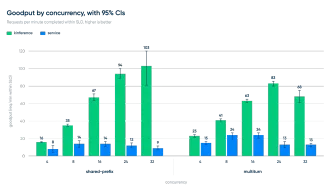
    Buoyant releases open-source project Kinference, as an inference control plane for vLLM and Kubernetes, providing token rate limiting, tenant usage and cost tracking, KV cache-aware load balancing, and inference strategies.

    Why it matters: The original text provides benchmark comparisons and YAML strategy examples for KV cache-aware load balancing, which can be used to judge how to design the routing layer of the reasoning platform.

  11. OpenAI News62

    OpenAI launches Images 2.6, enabling faster image generation and GIF creation support

    OpenAI has released Images 2.6, bringing faster image generation, GIF creation, more precise editing, and new API controls. This version covers three access points: ChatGPT, Codex, and API.

    Why it matters: The original text lists four changes: image generation speed improvement, GIF creation, more precise editing, and API control, which can be used to judge the boundary of image capabilities for ChatGPT, Codex, and API.

  12. Databricks Blog60

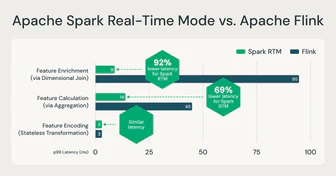
    Apache Spark 4.3 was released, and Databricks Runtime 19 is now available.

    Apache Spark 4.3 was released and is available in Databricks Runtime 19, with the Real-Time Mode now adding stateful processing, supporting streaming aggregation, dropDuplicates, and transformWithState.

    Why it matters: The original text provides three benchmark latency data for real-time stateful processing and the changes in the quarterly release rhythm, allowing readers to judge the trade-offs of the stream processing architecture.