Skip to content
Live
Oct 21Wed
  1. OpenAI Alignment Blog50

    OpenAI introduces the complementary metric g-mean² to enhance model monitorability evaluation

    OpenAI has introduced the complementary metric g-mean² to improve model monitorability evaluation. g-mean² calculates TPR and TNR through behavioral labels and monitoring predictions, but cannot solve the problems of mixed differences in different model tasks and deployment risks. The new metric includes a paired matching metric for aligned shared instances and a post-control integrated metric simulating monitoring rejection of outputs, to more comprehensively evaluate model deployment risks.


Oct 19Mon
  1. IBM Research Blog22

    Coursera's new course 'AI Data Stream Architecture: From Principles to Practice' teaches the principles of modern accelerator operation

    Coursera's new course 'AI Data Stream Architecture: From Principles to Practice' teaches engineers how to work across GPUs, TPUs, Cerebras WSE, Groq LPU, and IBM Spyre accelerators. The course is taught by Kaoutar El Maghraoui, a senior research scientist at IBM Research, covering execution models, compilation, memory systems, debugging, and performance modeling through six courses and hands-on experiments, emphasizing how different architectures affect model performance and the key role of compiler optimization.

Oct 17Sat
Oct 16Fri
  1. Meta Engineering

    Meta How to Build Forum Applications with Native AI Engineering

    Meta uses AI agents to participate in the construction of engineering processes for Forum applications, viewing AI as a participant in the engineering process rather than an auxiliary tool. This experiment measures success by production-ready outcomes rather than lines of code, using a Human-On-The-Loop model to allow AI to autonomously execute planning, implementation, testing, and validation, with engineers responsible for setting goals, supervision, and acceptance.

  2. Microsoft AI News

    Microsoft AI has released an 80 billion parameter MoE large model MAI-Base-2.

    Microsoft AI has completed the pre-training of a new MoE large model MAI-Base-2, with 80 billion active parameters and 2.8 trillion total parameters, surpassing all open-source models in internal evaluations. The model is 4-12 times more efficient in pre-training FLOPs than the strongest open-source base model DeepSeek-V4-Pro-Base and is used to train larger models. Microsoft plans to license the model weights through Foundry using organic data pre-training and full-stack control.

  3. Microsoft Research

    Magnetar achieves provable general computation

    Magnetar proves that programs written in Rust, Go, or C are, on average, 10 to 39 times faster than the fastest comparable systems, and achieves security solely by relying on standard hash functions, solving the three major challenges of zero-knowledge proofs: efficiency, generality, and usability. It significantly reduces proof overhead by leveraging repetitive computations and early termination of the proof process, making proof generation as routine as running a program, and can be used in scenarios such as AI agent behavior verification and financial transaction validation.

Oct 15Thu
  1. OpenAI Agents SDK releases27

    OpenAI Agents SDK v0.24.0 has been released: adding MCP annotations and tool exception formatting support.

    OpenAI Agents SDK v0.24.0 has been released, adding MCP annotations for exposing support to conversion tools and a feature for formatting exceptions of running range tools. It has fixed the API limit issue for batch OpenAI dialogue session writes and optimized the automatic compression delay for pending approvals. The version includes 15,444 lines of new code and 1,412 lines of deleted code, with main improvements in tool execution and fault recovery, persistent RunState and session history, sandbox security, tracking, examples, dependencies, and release metadata.

  2. OpenAI Deployment Safety

    GPT-Live-1.1 System Information Card

    GPT-Live-1.1 and GPT-Live-1.1 Quip are trained on a diverse dataset including public internet information, third-party collaboration data, and user-generated content, employing advanced data filtering processes to reduce personal information and using secure classifiers to prevent harmful content. The performance metric comparison value is based on the latest version data of published models.

  3. Google Developers Blog

    How to evaluate AI agents: Beyond sensory checks.

    Evaluating AI agents cannot rely solely on perception checks, as agents may fall into retry loops or produce hallucinatory responses that still appear normal, leading to soaring cloud costs and token usage. A repeatable evaluation process should be established, starting with defining key user journeys (CUJ), using simulated user testing, and employing multiple layers of checks such as unit tests, deterministic metrics, LLMs as judges for scoring standards, and integration tests. Combining manual review tracking with automated validation can detect latent regressions early in development and expand the evaluation framework as agent capabilities grow.

  4. Apple Machine Learning Research

    MLX and RDMA implement local and distributed large language model inference on Mac Studio

    On a cluster of four Mac Studio machines, Muse Spark Open (816B parameters) generates at a speed of over 36 tokens/second. The Mac Studio M5 Ultra version offers 4.6x faster inference speed (TTFT) and 1.6x faster tokens/second compared to the M3 Ultra, benefiting from the GPU neural accelerator and 1.2 TB/s memory bandwidth.

Oct 14Wed
  1. Apple Machine Learning Research27

    Whisper-small performs excellently on the Code-Switching Detection task

    Whisper-small achieved an average F1 score of 0.798 across 14 language pairs in the CS-FLEURS benchmark test, surpassing CNN's 0.776 and HuBERT's linear baseline's 0.751. The method detects language switching directly from speech by identifying the language-selective hidden state dimension in pre-trained speech encoders, and only requires a small amount of code to convert the dataset to fine-tune decision rules.

  2. IBM Research Blog38

    IBM will launch the 7-nanometer nanoscale stacking technology early research and development process design kit (PDK) in the first quarter of 2027.

    IBM announced that it will launch an early research and development process design kit (PDK) for 7-nanometer nanoscale stacking technology in the first quarter of 2027, to help semiconductor companies evaluate the technology before large-scale adoption. The kit will provide a standard cell library for logic functions and SRAM design examples, supporting layout and routing, early module-level layout, and density and power performance evaluation. Nanoscale stacking technology achieves 3D layout at the transistor level for the first time on logic wafer technology by stacking transistors vertically rather than placing them side by side, which is significantly different from current nanosheet transistor architectures.

Oct 13Tue
  1. IBM Research Blog58

    IBM Research uses an open-source agent factory to achieve 52-fold acceleration in quantum error correction chip design with a cost of $26

    IBM Research uses an open-source agent factory to optimize quantum error correction hardware, achieving 52x acceleration with a cost of about $26; with the same budget, a closed-source cutting-edge model configuration costs $299 (11.5x higher) but provides 204x acceleration, with the open-source configuration achieving hardware optimization with a smaller area; the agent factory assigns tasks to parallel working agents through a coordinator, combining code modification with hardware effect evaluation, exploring various architectural possibilities.

  2. LangChain Blog

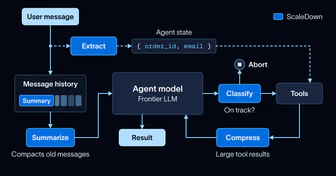
    How ScaleDown optimizes context management for long-running agents through compression and extraction techniques

    ScaleDown optimizes context management for long-running agents through compression and extraction techniques, its model is 41 times cheaper and 2.7 times faster than general models like GPT-5.5 in benchmark tests. ScaleDown provides four models: Summarize, Compress, Extract, and Classify, respectively for summarization, compression, extraction, and classification, supporting up to 1M tokens of input, and supporting image and PDF input.

  3. Google Developers Blog

    Gemini 4 Argon optimized the performance of a 200,000-line Python codebase

    Gemini 4 Argon has been running for 11 hours without human intervention, proposing 6 optimization suggestions by analyzing the ADK Python repository with 205,000 lines of code. Ultimately, 2 of them were adopted and deployed, reducing the memory session preparation time by about 40% and increasing the cold package import speed by 21%. The model followed the repository maintainer's guidelines during the optimization process and ran all 16,892 unit tests.

  4. GitHub Blog · AI & ML

    GitHub Copilot Application Introduction: How to Teach Copilot to Understand Your Codebase

    GitHub Copilot can allow users to convey project rules, encapsulate repeatable processes, provide professional guidance, and connect external tools to improve collaboration efficiency through custom instructions, proxy skills, custom agents, and the Model Context Protocol (MCP) server. Custom instructions define code standards, proxy skills encapsulate repetitive tasks, custom agents handle complex work, and MCP servers extend Copilot functionality.

  5. Microsoft Research

    Microsoft Research open-sources multi-modal model StudentSim for simulating student learning behavior

    Microsoft Research has open-sourced the multimodal model StudentSim for simulating student learning behavior. It is trained on publicly anonymized learning records to create a personalized student simulator that outperforms benchmarks in areas such as chess, English writing, and mathematics. It provides early feedback signals for AI tutoring systems but is not intended to replace teachers or classroom teaching.

Oct 12Mon
  1. Microsoft Official Blog

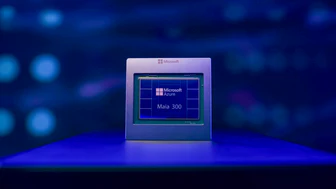
    Microsoft expands the Azure Maia system to multi-gigawatt deployment

    Microsoft is expanding the Azure Maia system to multi-gigawatt deployment, Maia 200 has entered production, and Maia 300 will be launched in 2027. Maia 200 is serving Microsoft's production workloads, including Microsoft Copilot, and supports the MAI team in developing next-generation models. GitHub Copilot and Microsoft Foundry will be launched by the end of this year.

Oct 9Fri