Skip to content
Live
Nov 4Wed
  1. Hugging Face Blog50

    StateBench: Testing how language models track state changes in long documents

    StateBench is a long-context state tracking benchmark that tests how language models maintain tracking changes in entity information within long documents. The benchmark includes four difficulty levels, ranging from simple immutable assignments to complex dependency assignments. It found that cyclic and hybrid models generalize better than Transformers on direct training tasks, but cutting-edge models like Gemini 3.8 Flash, Claude Opus 5.5, and GPT-6 Sol still fail in complex state tracking with long inputs.


  2. Microsoft Research

    Microsoft Research researcher Mike Walker shares insights on the hacker mindset and cybersecurity

    Microsoft Research researcher Mike Walker believes that understanding rules is the core of the hacker mindset, and he has achieved success in the field of cybersecurity due to his research on rules, including the development of the first all-machine hacking competition. He emphasizes that effective security depends on trust and contextual understanding, and believes that whenever a security system requires user trust, trust becomes valuable.

  3. AWS Machine Learning Blog38

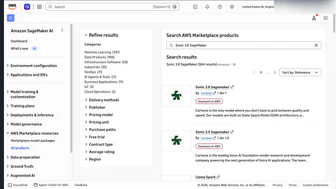
    How does Cartesia build ultra-low latency speech AI applications on AWS?

    Cartesia uses state space models (SSM) designed for real-time speech AI and AWS infrastructure to achieve sub-100ms text-to-speech and speech-to-text, supporting voice cloning for 44 languages, suitable for scenarios such as virtual assistants and customer service centers. The Sonic model generates the first audio byte in about 90ms, and the Ink model has native turn detection and noise robustness. The API interface supports real-time streaming output.

  4. AWS Machine Learning Blog32

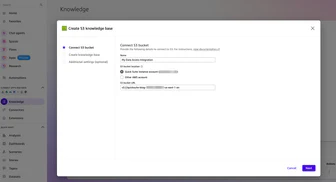
    Amazon Quick integrates structured and unstructured data.

    Amazon Quick integrates structured and unstructured data by connecting Amazon S3 and creating a knowledge base, enabling users to query with a single conversational AI agent. This solution includes a data layer (unstructured content stored in S3 and structured data as semantic datasets), a workspace layer (integrating data types into a single workspace), and an agent layer (custom chat agents linked to the workspace and returning combined responses).

  5. NVIDIA Newsroom38

    How AI is reshaping the work of semiconductor wafer factories - engineers accelerating decision-making due to it

    AI is changing the way semiconductor wafer factories work, accelerating decision-making for engineers. NVIDIA's cuDSS library accelerates COMSOL's multiphysics simulation 10 times, Applied Materials' Ginestra platform simulation 10 times, ACE+ platform 35 times, and Siemens' Calibre lithography software simulation 17 times. NVIDIA's PhysicsNeMo framework enables Lam Research to predict plasma behavior at the millisecond level, replacing full simulations that took days.

    Same story · 2 outlets

    How the accounts differ:NVIDIA Blog states ZEISS SMT achieved a 4x speedup with COMSOL for EUV lithography plasma simulation; NVIDIA Newsroom mentions a 10x speedup for COMSOL with cuDSS.

  6. Hugging Face Blog62

    The same model with a different harness: Comparing CUGA, Hermes, and Deep Agents on AppWorld.

    The IBM team compared CUGA, Hermes, and Deep Agents using the same open-source weight model GLM-5.3-flash on 90 tasks in AppWorld, with pass rates of 81.1%, 46.7%, and 30.0%, respectively, and 20, 8, and 2 scenarios where all three variants passed.

    Why it matters: With the same model but a different harness, the task completion rate increased from 30% to 81%, and reproducible configurations and evaluation links were provided in the text.

Nov 3Tue
  1. Ai2 Blog

    StateBench: Benchmark for testing large language models to track changes in long document states

    StateBench is a benchmark for testing large language models' ability to track entity state changes in long documents, including four difficulty levels: R-trivial, non-periodic, solvable, and general finite. Research finds that recurrent and hybrid models generalize far better than Transformers when directly trained on these tasks, while cutting-edge models like Gemini 3.8 Flash, Claude Opus 5.5, and GPT-6 Sol still struggle with more complex state tracking issues when input lengths vary.

  2. Hugging Face Blog

    Transformers Model Integration Contracts Released: Hugging Face Launches Model Integration Contracts Standard

    Transformers supports over 750 model types, its test suite includes 88,000+ CPU tests and 200,000+ GPU tests. Hugging Face releases Model Integration Contracts (MIC) standard, including compressed models (such as a 66 MB weight UMT5 fix), runnable examples (such as SmolLM text generation), and human review baselines.
  3. Anthropic Research62

    Anthropic has released the verifiable reasoning system FlashProve, generating proofs at approximately 110 tokens/second on a single H100.

    Anthropic announced the verifiable reasoning prototype FlashProve, using zkSNARK to prove that the response indeed comes from the committed model weights. For the 400B parameter Llama 4 Maverick (4-bit quantization), a single H100 generates proofs at approximately 110 tokens/second, with proofs for each 1,024 token request being about 19 MB, and verification on a 24-core CPU taking about 17 seconds.

    Why it matters: Anthropic has released the measured data and Lean formal proof of the verifiable reasoning prototype FlashProve, allowing for a cross-comparison with existing zkML solutions.

  4. Claude Code releases15

    Claude Code v2.1.317 released

    Claude Code v2.1.317 released, new /schedule task connector warning, network call email address check, SDK callback failure block, desktop settings load notification, sub-agent tool call no response prompt.

  5. LangChain Blog38

    LangChain points out new challenges in late 2026 for agent context engineering

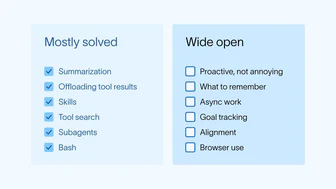
    LangChain points out new challenges for agent context engineering in late 2026, including how to proactively notify users without being annoying, agent memory management, asynchronous task processing, goal tracking and alignment, and browser usage, among other difficulties. These challenges involve how agents balance notification frequency when running in the background, decide on memory content, coordinate asynchronous tools and sub-agents, break down and iterate on goals, and prevent agents from over-optimizing goals.

  6. PyTorch Blog34

    Ray announces the Special Interest Group (SIG) for Accelerators

    Ray announces the Special Interest Group (SIG) for Accelerators, aiming to unite hardware vendors, Ray contributors, and application developers to create a neutral accelerator support roadmap. Initial focus will be on developing test infrastructure, hardware awareness capabilities, and network transmission, prioritizing shared hardware access, reproducible development and testing environments, and broader CI coverage.

  7. AWS Machine Learning Blog38

    How Circle K leverages Amazon Bedrock to reduce DevOps incident investigation time to under 15 minutes

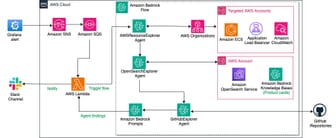
    Circle K builds an automated incident investigation system using Amazon Bedrock, reducing the average investigation time to under 15 minutes with a reduction of 67-75%. The system utilizes Amazon Bedrock Flows and AgentCore, enabling specialized agents to autonomously analyze incidents through parallel execution, and sending structured summaries in real-time to Slack, allowing engineers to take immediate action while avoiding repetitive log queries, health checks, and manual manual searches.

  8. AWS Machine Learning Blog43

    Use knowledge distillation to build efficient intelligent agents on Amazon SageMaker AI

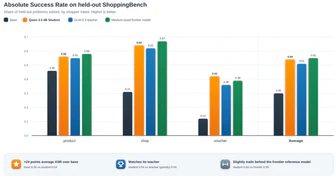
    Use knowledge distillation to fine-tune the shopping assistant on Amazon SageMaker AI, by transferring the behavior of cutting-edge models to small models through sequence-level knowledge distillation (SeqKD), generating reasoning trajectories for task-solving and using them for supervised fine-tuning to achieve efficient low-cost inference. SeqKD only requires the text output of the teacher model, without weights or logits, and is suitable for scenarios where access to the teacher model's internal information is not available, such as API models, and can evaluate the performance of student models through benchmark tests.

Nov 2Mon
  1. Moonshot AI · Hugging Face new models

    Kimi K3.1 Pro Released: Open-Weight Multimodal AI Model

    Kimi K3.1 Pro is an open-source multimodal AI model by Moonshot AI, with 2.8T parameters, 104B activation parameters, and a context window of 1M tokens, demonstrating excellent performance in areas such as coding, 3D creation, and financial research. Compared to Kimi K3, it adopts Gated DSA layers to improve long text processing efficiency and has outperformed competitors like Claude Fable 5.1 and GPT-6 Astra in benchmarks such as Terminal-Bench 4.0.