Skip to content
Live
Nov 13Fri
  1. MarkTechPost

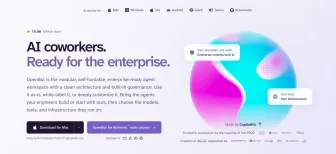
    CopilotKit has released OpenBot 1.0: an MIT-licensed, self-hostable, and built-in governance AI assistant.

    CopilotKit has released OpenBot 1.0, an MIT-licensed, self-hostable, and built-in governance AI assistant. OpenBot 1.0 supports user-selected models (including 9 model families such as OpenAI, Claude, Gemini, Grok) and AG-UI agents (supporting 8+ frameworks), with all Bot actions checked against CEL policies before execution. The personal version is free, and the commercial version costs up to $29 per user per month. If model usage exceeds $5,000 per month, an additional 5% fee is charged on the excess. Annual plans also offer offline deployment and 24/7 support.

  2. vLLM Blog60

    vLLM supports Thinking Machines' Inkling 2 Small on its first day of release

    vLLM provides support for Inkling 2 Small on its first day of release. The model is a multimodal MoE with text and visual inputs, featuring a total of 594B parameters, 17B activation parameters, a maximum context length of 1M tokens, and comes with a built-in DSpark beam decoder.

    Why it matters: The original text provides details of vLLM's Day-0 support for Inkling 2 Small and multiple kernel optimizations, allowing readers to understand the deployment path and throughput performance of the model.

  3. Claude app release notes

    Claude Meetings begins beta testing in the Claude team and enterprise plan

    Claude Meetings begins Beta testing in Claude team and enterprise plans, allowing users to add Claude as a visible participant to Google Meet conferences, and to take notes, ask questions, and create content such as documents, whiteboards, and slides during the meeting.

  4. TechCrunch · AI

    Nectar launches AI agent automation brand creator discovery and connection

    Nectar launches 'Creator Intelligence' that can search over 300 million creators, analyze content and brand collaborations, automatically send personalized messages and manage collaborations, supporting Instagram creators and TikTokers, available globally and plans to integrate other AI assistants like Claude, ChatGPT, Copilot through Model Context Protocol (MCP).

  5. TechCrunch · AI

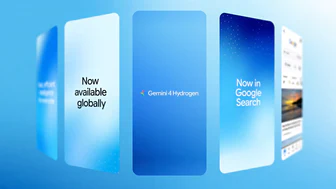
    Google launches Gemini 4 Hydrogen model to enhance search complex question understanding ability

    Google improves search complex question understanding ability through the newly released Gemini 4 Hydrogen model, which is 2.5 times faster and lower in cost than the previous generation. Hydrogen ranks 5th in Agent Arena for multi-step tasks, supports reasoning up to xhigh four tiers, and surpasses more powerful Gemini 4 Argon on one benchmark.

  6. Google Developers Blog58

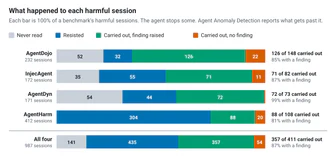
    Agent Anomaly Detection Performance in Security Benchmarks Not Written by Google

    Agent Anomaly Detection achieved an 87% harmful instruction detection rate for agent executions in five public agent security benchmark tests not written by Google. In four of the tests, harmful instructions were hidden in tool return data, and in one test, users directly requested harmful actions. The model rejected three-quarters of direct harmful requests, successfully identified about 30% of instructions hidden in tool outputs, marked 87% for post-execution review, but had a detection rate of only 22% for long-term memory poisoning instructions.

  7. Databricks Blog60

    Databricks introduces Lakehouse//RT, aimed at real-time analysis loads for agents.

    Databricks has released the Lakehouse//RT, designed to directly handle high-concurrency real-time queries brought by AI agents on lakehouses, currently in beta. The official claims it can provide latency below 100 milliseconds under 12,000 QPS, and through four paths—high concurrency, rapid execution, small-step scaling, and a single system—ensures that cost growth is slower than query volume growth.

    Why it matters: The original text provides four cost reduction mechanisms and migration data from three customers, allowing judgment on whether the real-time analytics layer is worth replacing.

  8. Google AI Blog82

    Google Search has integrated Gemini 4 Hydrogen and is now open to global users.

    Google Search has launched Gemini 4 Hydrogen, the largest model upgrade to date, now available to all global users. The company claims the new model can understand multi-part questions, spelling errors, and highly specific requests, and leverages stronger instruction following and tool calling capabilities to respond to each question individually. Hydrogen's reasoning ability also enhances query distribution, allowing it to retrieve multiple related subtopics simultaneously and provide more images, structured responses, comparison tables, and custom tools.

    Why it matters: Google's official statement on Gemini 4 Hydrogen explains changes in intent understanding, query distribution, and visual responses in search, which can be used to judge the direction of adjustments to the search experience.

  9. AWS Machine Learning Blog

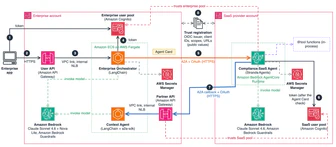
    Run intelligent agents securely and efficiently using the next-generation AgentCore runtime.

    Amazon Bedrock AgentCore runtime provides a secure environment for each session through hardware-isolated Firecracker micro-virtual machines (MicroVMs), the new version boosts startup speed by 15x, extends computing by 4x, improves efficiency by 68%, supports up to 8 vCPUs and 32 GB memory and 10 GB container images, session startup time is less than 2 seconds, suitable for complex workloads.

  10. MarkTechPost

    AWS has released AWS Emulator: a local replica of over 200 AWS services built by an AI agent.

    AWS has released AWS Emulator, a local AWS API replica that can run on laptops, development servers, or CI without an AWS account or service fees. An AI agent autonomously wrote and reviewed all its code.

    Same story · 2 outlets

    How the accounts differ:Simon Willison states the simulator uses Rust and received 29,684 submissions in the first three weeks; MarkTechPost mentions it is built by an AI agent and supports over 200 AWS services.

  11. Amp News65

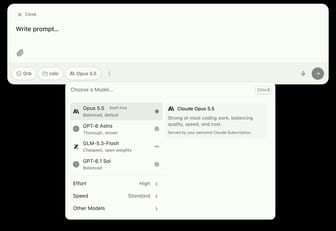
    Amp says goodbye to the Dial mode selector, introducing a model selector

    Amp is phasing out Dial and its four modes (Low, Medium, High, Ultra), introducing a model selector that allows users to choose models and computational intensity for each thread, and switch in the middle of the thread. The model selector displays subscription or API key billing information for each model, or use Amp credit balances. If users do not want to choose themselves, they can use Staff Pick (currently Claude Opus 5.5).

  12. TechCrunch · AI65

    Phota Labs converts everyday photos into professional-level images.

    The Phota Labs app uses AI to transform everyday photos into professional-grade images while preserving the authenticity of the photos. The app focuses on fixing issues with the photo itself, rather than enhancing already poor photos. Users can choose different photography styles for AI conversion and use personalized technology to learn the user's identity to maintain the authenticity of the photos. The app embeds invisible watermarks to identify AI-edited content, and it is currently launched in a free mode to build a user base.

  13. Claude · YouTube

    Claude Platform Team discusses how to build Claude API

    The Claude platform team discussed how to decide on API feature releases based on research and customer requests, as well as how to adjust controls in conversations without breaking prompt caching. Mythos and Fable use the same model weights but adopt different security measures. Claude Managed Agents and changing controls in conversations are in the testing phase. Access to Claude Mythos requires going through the Cyber Verification Program.

  14. Databricks Blog

    How Block uses Buzz and Unity Gateway to coordinate AI agents

    Block company has launched Buzz, an open-source collaborative space, allowing employees to interact with AI agents in a shared workspace. Through Databricks Unity Gateway, users can access cutting-edge models from OpenAI, Anthropic, Google, and open-source models (specific number not mentioned in the original text), experimenting with different AI agent framework combinations. Employees can create AI agents and choose models (such as the lightweight version of Goose) to achieve multi-person collaborative development, analysis, and other tasks.

  15. Databricks Blog55

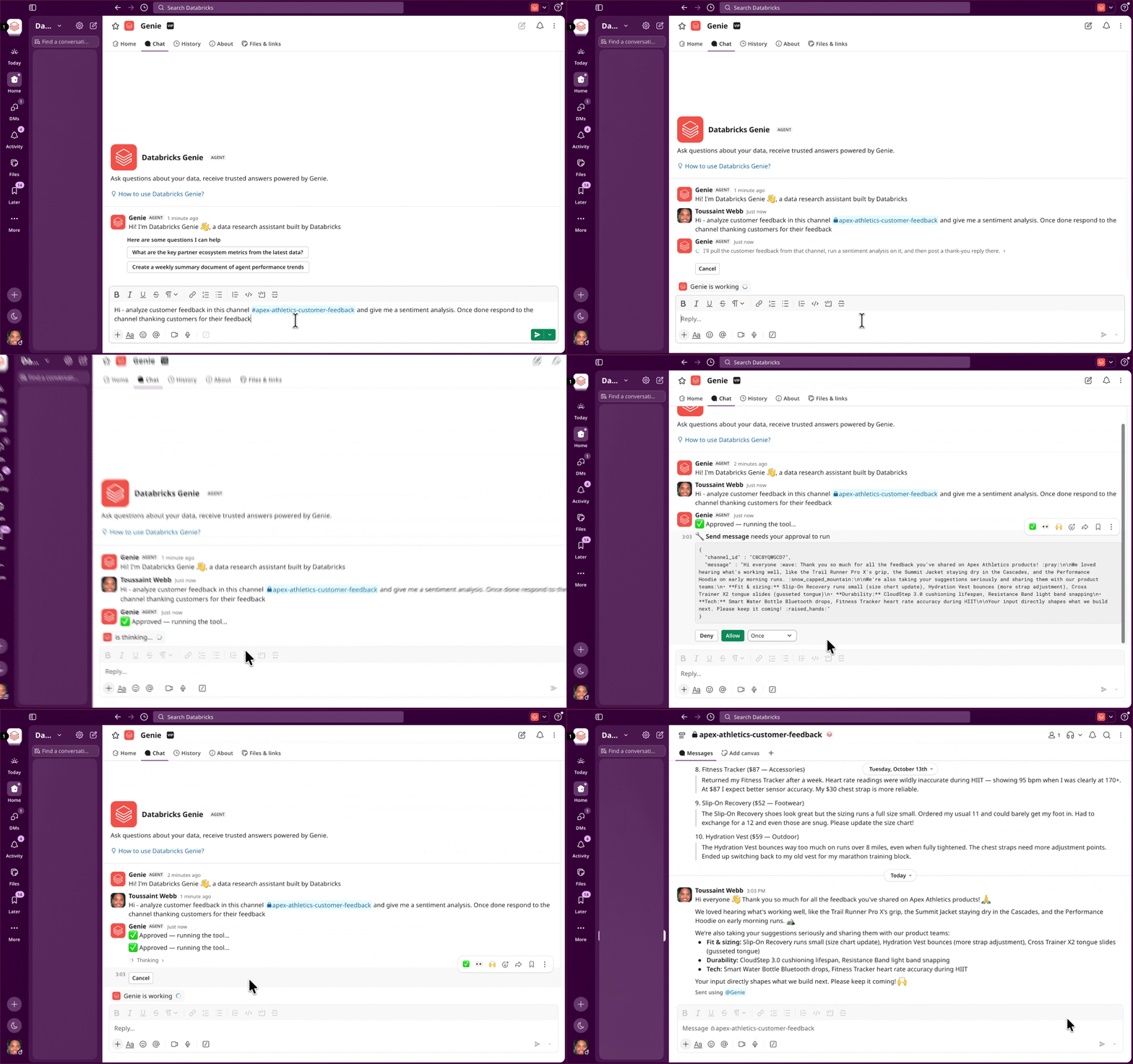
    Databricks Genie app officially launched in Slack: Controlled AI collaborator, right at the workplace.

    Databricks Genie has been officially launched in Slack, where the controlled AI collaborator directly answers questions within the Slack workspace, with context based on Unity Catalog and external tool permissions, and answer sources are traceable. Genie can respond in channels, threads, or DMs, supporting team collaboration and private DM interactions, and achieves cross-tool operations and automated analysis scheduling through the MCP connector.

Nov 12Thu
  1. Ars Technica · AI65

    Google launches smart glasses powered by Gemini, starting at $395, focusing on privacy protection

    Google starts pre-sales today of smart glasses co-launched with Gentle Monster and Warby Parker, with a starting price of $395, featuring Samsung hardware and Google Gemini software, offering transparent and colored lens options aimed at solving privacy issues.

  2. ITHome · AI65

    GAC Aion Ray 7 model launched: Equipped with Huawei 192-line LiDAR, WenYan Intelligent L4-level Robotaxi co-originated large model, limited-time price starts at 114,700 yuan

    The GAC Aion Ray 7 model is officially launched, marking the debut of a mid-to-large pure electric sedan equipped with Huawei's 192-line LiDAR and a large model derived from WeRide's L4-level Robotaxi, available at a limited-time price of 114,700 yuan starting, with a CLTC energy consumption of 9.7 kWh per 100 km and a range of 700 km.

  3. QbitAI

    ZTE's 'Xuanji' system becomes a corporate AI semantic infrastructure

    ZTE's 'Xuanji' system transforms enterprise knowledge into computable business semantics through ontology modeling, semantic mapping, and rule reasoning, connecting business semantics with data resources. It supports a complete link from natural language queries to structured queries and rule reasoning, enabling verifiable conclusions in business scenarios like order performance.

  4. ITHome · AI65

    Anthropic has added restrictions to Claude: prohibiting the generation of Pokemon-related game materials.

    Anthropic has added restrictions to Claude, prohibiting users from generating Pokemon-related game assets, including characters, music, levels, and names. Previously, when users attempted to use Claude to generate Pokemon sprite assets, the model would directly refuse. This is the first time Claude has imposed specific restrictions on a particular game series, aimed at mitigating legal risks and defining the copyright boundaries of generative AI.