
Why it matters: The article provides specific evaluation numbers for model parameter scale, text rendering, and layout control, allowing for an assessment of open-source image generation models' position in design-related tasks.
Live
Open source · Page 4
QbitAIFeatured7272
 Hugging Face BlogFeatured6666
Microsoft and Hugging Face use ThinkingBox database validation for RL reward training agents
Microsoft and Hugging Face release ThinkingBox-Training, directly using ThinkingBox's deterministic verification of database final states as reinforcement learning rewards, training Qwen3.8-27B for 50 steps with GRPO
Why it matters: Microsoft and Hugging Face directly use database final state verification as reinforcement learning rewards and have publicly released task filtering and training code, which can be transferred to other stateful intelligent agent training
 Anthropic NewsroomFeatured7171
Anthropic has donated the Agent Skills standard to the Agentic AI Foundation
Anthropic announced that it is donating the Agent Skills open standard to the Linux Foundation's Agentic AI Foundation (AAIF), a foundation co-founded by Anthropic, Block, and OpenAI. Anthropic had previously donated MCP to it.
Why it matters: The original text explains the adoption scale and governance transfer of Agent Skills, allowing readers to judge who will maintain this intelligent agent skills standard in the future.
 The DecoderFeatured7474
Recursive releases its first model developed in collaboration with Eureka Machine
AI startup Recursive has released its first language model, Flint. During the development process, the AI system named Eureka Machine participated in proposing ideas, building, testing, and planning subsequent experiments.
Why it matters: Recursive publicly announces its first model developed with the assistance of an automated research system, allowing readers to observe how far AI-assisted R&D can go.
 Tencent Hunyuan · Hugging Face new modelsFeatured7272
Tencent Mixuan open-sourced the real-time simultaneous translation model Hy-SimulMT-30B-A3B
Tencent Mixuan has released and open-sourced the real-time simultaneous translation model Hy-SimulMT-30B-A3B, supporting bidirectional Chinese-English voice-to-voice translation, capable of continuously outputting translated text and speech during speech, and supporting real-time voice cloning.
Why it matters: The official provides a comparison of latency and quality for real-time simultaneous translation, and opens up multiple quantitative versions and inference deployment scripts, which can be used to evaluate the deployment cost.

 NVIDIA BlogFeatured6262
NVIDIA expands its family of open models to cover language, robotics, biology, and quantum computing
NVIDIA expands its family of open models to cover language, robotics, biology, and quantum computing, including the new Nemotron 3.5 Super VL and Nemotron 3.5 Bolt.
Why it matters: NVIDIA has rolled out open models across four lines: language, robotics, biology, and quantum, allowing readers to judge the coverage of its open-source ecosystem based on this.
- NVIDIA BlogFeatured6262
NVIDIA expands Agent Toolkit to enable enterprise agents to access company data
NVIDIA expands its open-source Agent Toolkit, adding components such as Agent Knowledge Foundation, the OpenShell secure runtime, and the NemoClaw blueprint, enabling enterprises to customize and govern agents with their own data.
Why it matters: The original article lists the new components of Agent Toolkit and details of deployments at multiple enterprises, showing how enterprise agents connect to their own data and are constrained by the runtime.
 vLLM BlogFeatured6060
vLLM supported the Recursive Flint model on the first day.
vLLM announced support on the day Flint was released, with both NVFP4 and BF16 checkpoints capable of running on a single GPU, decoding approximately 500 tokens/s per request on a single GB200 with a context of 100,000 tokens.
Why it matters: The original text provided Flint's day-0 support on vLLM, single-card throughput data, and the step-by-step kernel optimization process, allowing readers to judge the engineering trade-offs of small-batch inference based on this.
- Hugging Face BlogFeatured6666
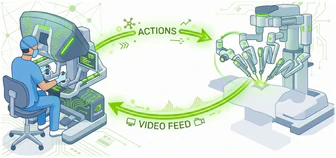
NVIDIA has released the Cosmos3-H-Dreams surgical generative simulation model.
NVIDIA has released Cosmos3-H-Dreams, extending interactive generative simulation to clinical gallbladder removal scenarios, capable of generating surgical scenes in real-time based on instrument movements.
Why it matters: The original text explains the migration path from desktop stitching to clinical cholecystectomy scenarios, as well as the trade-off between quality and delay between four-step and two-step distillation checkpoints.


- Hugging Face BlogFeatured6262
PyTorch 2.15 brings FP8 and faster LLM decoding to the MPS backend.
The Hugging Face PyTorch team introduces updates to the MPS backend in PyTorch 2.15, adding the tensor torch.float8_e4m3fn and F.scaled_mm, with FP8 tensors occupying half the space of BF16.
Why it matters: The original text provides specific numbers for the MPS backend in FP8, MoE decoding, and memory usage, which can be used to judge the actual changes in running models locally on Mac.
 Anthropic ResearchFeatured7878
Anthropic researcher reflects on using Claude and BootLoops for interdisciplinary research.
Anthropic researcher Matt reflected on the experience of using Claude with the open-source harness BootLoops for research, advancing 36 papers in 18 fields with 19 collaborators in three months, selecting from about 400 candidate problems.
Why it matters: The author reflects on first-hand interdisciplinary practice, exploring the real boundaries of using agents for research, and providing reusable open-source harnesses and collaboration methods.

 LangChain BlogFeatured7171
How to build paid media agents with LangChain
LangChain publicly shares its construction method for paid media intelligence agents, which run on Slack, summarize ad platform and warehouse data weekly, and generate reports. Paid media increased from contributing 0 to 20% of the marketing pipeline within 6 months, and the cost per qualified lead decreased by 30% from June to August.
Why it matters: LangChain publicly shares the complete engineering details of its paid media intelligence agents, including context hierarchy, on-demand tool discovery, and sub-agent isolation, which can serve as a reference for building long-running intelligent agents.
 Liquid AI BlogFeatured7171
Liquid AI releases edge-side visual language model LFM2.5-VL-3B
Liquid AI releases LFM2.5-VL-3B, an upgraded 3.1B edge-side visual language model based on its predecessor LFM2-VL-3B, now available on Hugging Face and Playground
Why it matters: The original text provides 28 benchmark items, edge-side, and GPU throughput data, which can be used to compare with similar-sized competitors to determine the actual position of this 3B visual model.
- Liquid AI BlogFeatured7171
Liquid AI releases edge AI agent model LFM2.5-2.6B
Liquid AI has released LFM2.5-2.6B, which is an intelligent agent model that runs entirely on the device and can complete planning, tool calls, and multi-step tasks. Both the base and fine-tuned versions are now available on Hugging Face.
Why it matters: The original text provides the complete training process for the edge AI agent model and multi-benchmark comparisons, allowing you to judge the actual position of small models running AI agents locally.