Skip to content
Live

Data & training · Page 2

Oct 31Sat21–35
  1. ITHome · AI72

    AI demand pushes up storage chip profits, with the quarterly operating profit and total net profit of the top five storage giants first exceeding those of the top five U.S. tech giants.

    According to Nikkei Asia, the surge in demand for storage chips driven by the AI investment boom has led to combined operating profits of 320 trillion yen for the five storage chip manufacturers - Kioxia, Samsung, SK Hynix, Micron, and SanDisk in the last quarter, which is 10 times the figure for the same period last year and has exceeded the combined approximately 250 trillion yen of the five technology companies - Alphabet, Microsoft, Amazon, Meta, and Apple.

    Why it matters: AI investment boosts storage chip demand, with the total profits of five storage manufacturers exceeding those of the top five U.S. tech companies, allowing readers to observe the profit shift in the computing power industry chain.

Oct 30Fri
  1. QbitAI75

    The domestically developed open-source OXR tops three document parsing benchmarks with 1.3B parameters.

    The SoMark team has open-sourced the 1.3B document parsing model OXR, ranking first on three benchmarks: OmniDocBench (97.18), olmOCR-Bench (87.84), and DocParsingBench (87.76).

    Why it matters: 1.3B model trained with RSI ranks first in three document parsing rankings, and provides engineering trade-offs between plug-in architecture and free API.

Oct 26Mon
  1. QbitAI78

    Rockchip Matrix, in collaboration with CUHK and CMU, has open-sourced EdgeRock-4B, reducing KV Cache by 99.1%.

    Rockchip Technology's Rockchip Matrix, in collaboration with CUHK and CMU, has released and open-sourced EdgeRock-4B, with a fixed KV Cache of 72MiB under 256K context, reducing the source model Qwen3.5-4B by 99.1%.

    Why it matters: The original provides a comparison of throughput under fixed memory, which can be used to judge the trend of GPU memory costs for long-context reasoning.

  2. ITHome · AI72

    Musk confirmed that SpaceX has completed a 400 billion dollar debt financing for purchasing GPUs.

    From X, Musk stated that SpaceX has completed a 400 billion dollar debt financing, mainly used to pay for the GPU procurement payments expected to be delivered in the first and second quarters of 2027, and said that this fund is mainly callable debt.

    Why it matters: 400 billion dollars in debt financing and GPU delivery times show the scale of capital demand under the AI computing power race.

Oct 25Sun
  1. The Decoder78

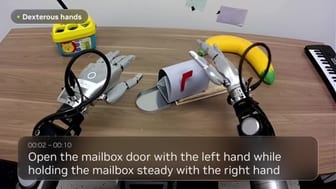
    Nvidia's open-source robot video annotation engine Flora claims to be 125 times cheaper than GPT-6 Astra.

    Nvidia's open-source data engine Flora, used for robot video annotation, claims to label one hour of video for about 0.72 USD, while GPT-6 Astra is about 88.50 USD. Flora consists of three fine-tuned Qwen3.5 models, each responsible for action segmentation, context-aware description, and reward scoring, covering three types of labels: action description, step-by-step scoring, and task success or failure judgment.

    Why it matters: The original text provides Flora's three types of annotation capabilities, cost estimates, and item-by-item comparison with GPT-6 Astra, allowing readers to judge the boundary of open-source alternatives for robot video annotation.

  2. The Decoder72

    OpenMobile-2, an open-source smartphone AI model, claims to be comparable to proprietary models.

    Researchers from Nanjing University and institutions like SenseTime have released OpenMobile-2, which includes two AI models based on Qwen3.5 (9B) and Qwen3.6 (27B), and has publicly disclosed the training environment, data, and reproduction instructions.

    Why it matters: Research fixed the training data size while only increasing the number of applications, observing an improvement in success rates for unseen applications, providing a reproducible path for data construction of mobile agents.

Oct 24Sat
  1. vLLM Blog62

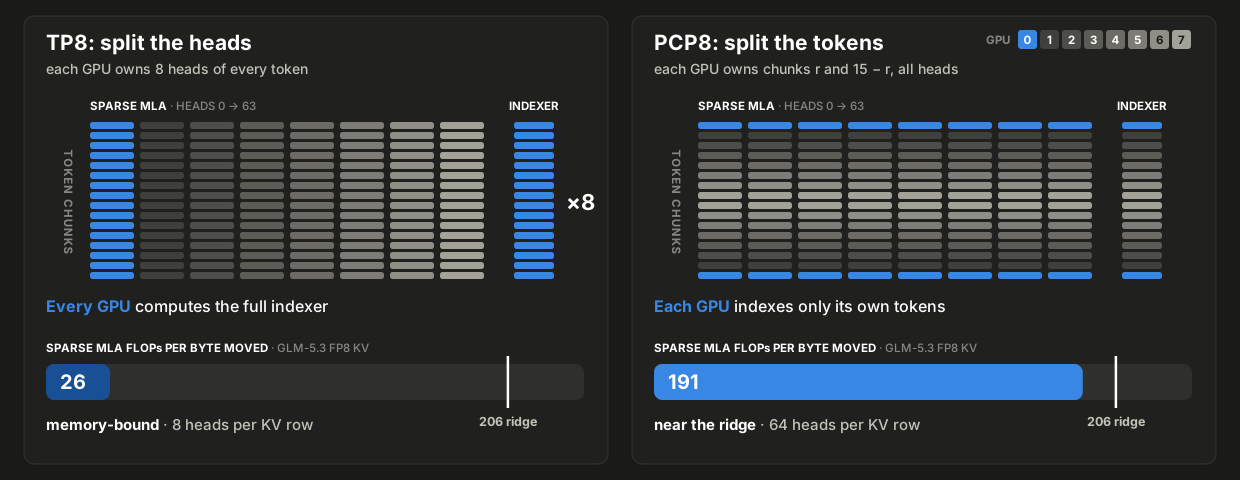
    vLLM provides an in-depth explanation of the optimization of PCP, DCP, and Hybrid HiSparse for GLM-5.3 on 16 H200s

    vLLM team releases the second part of GLM-5.3 optimization, deploying on 16 H200s with 1 pre-filled node and 1 decoding node, using PCP to split pre-fill by token and DCP to split KV cache by token, allowing 1M context to fit into the pre-fill node

    Why it matters: The vLLM team has dissected how PCP, DCP, and Hybrid HiSparse can be combined on 16 H200s, allowing readers to understand the memory and pre-fetch bottlenecks of long-context deployment.

Oct 23Fri
  1. ITHome · AI71

    OpenAI, in collaboration with PerturbAI, used thousands of AI agents to analyze mouse brain cell data in 32 minutes

    OpenAI, in collaboration with PerturbAI and Scripps Research Institute, used thousands of AI agents to analyze the entire mouse brain's CRISPR map in 32 minutes, the team estimates it would take humans months to a year to complete the same work.

    Why it matters: The original text provides a blind comparison between distributed agents and single agents, as well as the difference in citation counts in the literature, allowing readers to judge the division of labor in multi-agent architecture in scientific research and analysis.

  2. Hugging Face Blog66

    Microsoft and Hugging Face use ThinkingBox database validation for RL reward training agents

    Microsoft and Hugging Face release ThinkingBox-Training, directly using ThinkingBox's deterministic verification of database final states as reinforcement learning rewards, training Qwen3.8-27B for 50 steps with GRPO

    Why it matters: Microsoft and Hugging Face directly use database final state verification as reinforcement learning rewards and have publicly released task filtering and training code, which can be transferred to other stateful intelligent agent training

  3. Databricks Blog60

    Databricks Talks AI Billing: How to Reduce the Unit Cost of Coding Agents by 90%

    Databricks executive Patrick reviews the process where the cost of AI coding agents increased exponentially after the company fully adopted them, and then reduced the unit cost by up to 90% by controlling the layer. He mentions that shifting traffic to cheaper new models contributed to more than 50% of the reduction, and Smart Router reduced the average task cost by more than 30% while maintaining near the quality of the most expensive model. This internal solution was later productized as Unity Gateway, which is now used by thousands of customers.

    Why it matters: Databricks executive reviews the process of its own AI coding costs from out of control to reducing the unit cost by 90%, providing migratable practices for gateways, routing, and self-built evaluations.

Oct 22Thu
  1. Hugging Face Blog78

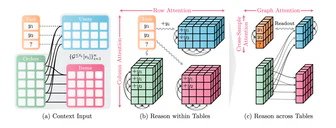
    NVIDIA releases Kumo Relational relational foundation model, capable of prediction without training

    NVIDIA releases pre-trained relational foundation model Kumo Relational, enabling direct prediction on enterprise databases without task-specific training, feature engineering, or table flattening. The model outperforms supervised relational deep learning and expert feature engineering gradient boosting trees on 41 tasks across 15 databases, achieving an MRR 8% higher than AutoGluon ensemble on the SAP SALT benchmark.

    Why it matters: The original provides a comparison result of pre-trained relation models on 41 tasks and an open-source entry, allowing readers to judge whether it can replace the existing XGBoost pipeline.

Sep 30Wed
  1. Anthropic Research71

    Anthropic Research: What Work Can Robots Currently Complete?

    Anthropic has released a Robot Exposure Index study, using Claude to evaluate about 19,000 tasks in O*NET, finding that existing robots can complete 74% of physical tasks in the U.S. and account for 34% of all work time, but most are limited to controlled environments.

    Why it matters: Anthropic used Claude to rate O*NET tasks item by item, quantifying how much work robots can currently cover, and provided constraints on cost and regulation.

Sep 23Wed
  1. Anthropic Research80

    Claude autonomously discovers a new enzyme system with CRISPR-like repetitive sequences.

    Anthropic has established a life science research team and built its own laboratory, allowing the Claude intelligent entity to autonomously search in DNA sequence databases and discover a new enzyme system ART (array-associated reverse transcriptases) related to DNA repetitive sequences.

    Why it matters: Anthropic's self-built lab enables Claude to autonomously screen DNA databases and discover a new enzyme system similar to CRISPR, demonstrating the specific process of AI-driven hypothesis generation.

Aug 18Tue
  1. Anthropic Research78

    How does Claude accelerate protein design and analysis chemistry?

    Anthropic announced two experimental results: Claude (Mythos Preview and Opus 4.8) designed protein binders for 15 targets, successfully covering 14, with a hit rate of 35.1% in single-target mode, higher than the common 10-15% in current protein design activities.

    Why it matters: Anthropic announced Claude's experimental results in protein design and analysis chemistry, providing wet lab validation data and prompts.

Jun 16Tue