Skip to content
Live
TodayNov 15Sun1 story
  1. Hacker News · 300+34

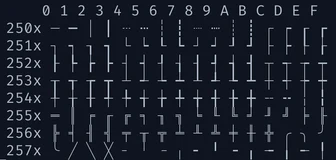
    Cell Borders: A drawing scheme that does not occupy cell space

    The terminal protocol draws thin lines at the edges of cells instead of traditional border characters, achieving border drawing without occupying extra row and column space. Its demonstration application in Ratatui supports multiple scenarios, including panels, menus, charts, etc., and the borders can be customized in style and connection.

Nov 14Sat
  1. ITHome · AI

    Muhammad Zullari developed the 1994 Cherokee to pass California emissions testing using Claude and an Arduino development board.

    Muhammad Zullari successfully got a 1994 Jeep Cherokee to pass California emissions testing with Claude and an Arduino Nano development board, as the vehicle failed multiple times due to excessive nitrogen oxide emissions at specific speeds. Claude was responsible for guidance, and Codex for writing code, ultimately solving the emissions problem by adjusting engine parameters. The entire process only required one $3 Arduino development board and no more than $15 in electronic components. The project is open-source.

  2. MarkTechPost62

    Stanford has open-sourced Memorilla, a potential memory module for freezing LLM development

    Stanford researchers have open-sourced Memorilla, a potential memory system designed for frozen LLMs. It converts the entire document collection into 16 vectors for use by frozen LLMs. On FactKG, the frozen Qwen3-8B paired with Memorilla achieves an accuracy of 84.33%, which is 3.9% higher than using all document contexts, but only requires 16 memory tokens, reducing the number of document tokens by 108 times.

  3. ITHome · AI72

    Cloudflare's open-source AI-powered browser Kitesurf has lower resource consumption than Chromium

    Cloudflare announced the open-sourcing of Kitesurf, its AI-powered browser launched in August this year, with the code released on GitHub. Kitesurf runs on Cloudflare Workers, completing HTML parsing, CSS application, executing page JavaScript, and screenshot rendering without a Chromium process or container, and supports the Chrome DevTools Protocol.

    Why it matters: Cloudflare has open-sourced a browser designed for agents and provides a resource comparison with Chromium, allowing readers to judge the deployment cost of high-concurrency agent tasks.

  4. The Decoder65

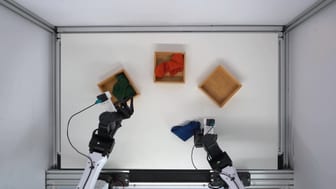
    Runway open-sources robot control model Praxis-1

    Runway has released the open-source robot control model Praxis-1, which learns to control robots through video and has shown excellent performance in its own tests, scoring 46.2% on the Nvidia RoboLab-120 evaluation, leading similar models. The model requires additional training to adapt to new robot systems, the standard version requires an 80GB memory GPU, and it has been made available on Hugging Face.

  5. ITHome · AI58

    Huawei's Kirin 9050 series new Malang GPU and AI ISP intelligence disclosed: implements second-generation hardware ray tracing, realizing 200 million pixel fusion photography for the first time.

    The Huawei Kirin 9050 series is equipped with the fourth-generation GPU micro-architecture, offering a 40% performance boost and a 45% reduction in power consumption. The second-generation hardware's ray tracing performance has improved by 78%, supporting BVH, FERT, and AO hardware acceleration units. The new-generation AI ISP integrates a pixel-specific NPU, achieving 200 million pixel fusion photography for the first time, supporting 4K60 video processing, 18EV high dynamic range video, and the full-chain BT.2020 wide color gamut.

  6. ITHome · AI65

    Tsinghua University releases the single-cell proteomics foundational model ProtCell, successfully completing the 'virtual cell' pre-training reproduction using MolThread S5000 intelligent computing cards

    Tsinghua University releases the single-cell proteomics foundational model ProtCell, collecting about 380 million cells and 98 public datasets for pre-training and evaluation, MolThread S5000 intelligent computing cards complete the full process of pre-training reproduction, evaluation metrics differ from mainstream international GPUs by only about 0.2%

  7. ITHome · AI

    Google executive successfully runs Microsoft Win11 on iPhone Duo using Gemini 4 Carbon

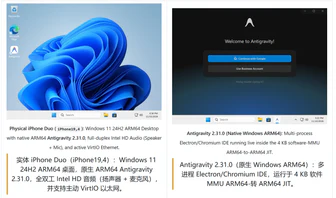
    Google AI Studio product and design lead Lei Xi uses the Gemini 4 Carbon model to develop a WindowsiOS project, running Windows 11 on Arm 24H2 system image on iPhone Duo via virtual machine, supporting touch operations. The project is open source, requiring Mac, development tools, and Windows ARM image deployment, can try to run some traditional Windows applications but compatibility is not guaranteed.

  8. Hugging Face Daily Papers

    Test-Time Baking (TTB) released: A strategy for efficiently rendering decoder-only large-view synthesis models

    Test-Time Baking (TTB) strategy enhances the fidelity of new-view decoding for large-view synthesis models (LVSMs) by baking global scene information from cross-view attention into lightweight MLPs, while maintaining Test-Time Training efficiency. It achieves up to 23x rendering speed improvement with quality comparable to current state-of-the-art techniques on multiple benchmarks.

  9. Baseten Labs65

    Claude Code v2.1.159 release

    Claude Code v2.1.159 released, adopting a gradient alignment reward mechanism, using the Qwen3-8B model on arithmetic tasks, rewarding by calculating the gradient similarity between student output and expert demonstrations, experiments show the model may overfit the precise wording of expert examples.

  10. ITHome · AI62

    llama.cpp 1.0.0 released: supports over 150 model architectures, significantly improving the ability to run large models locally.

    llama.cpp version 1.0.0 has been released, supporting over 150 model architectures, marking API/ABI incompatible changes with the major version number; the ggml underlying engine has been enhanced, supporting dynamic loading of multiple hardware backends, improving the performance of locally deployed large models.

  11. TechCrunch · AI82

    After Huang Renxun's departure, NVIDIA's investment contraction may leave a gap in AI startup funding

    Multiple investors and founders interviewed by TechCrunch believe that after Huang Renxun's departure as CEO of NVIDIA, the company's investment in AI startups may be significantly tightened. According to PitchBook data, NVIDIA participated in 105 funding rounds this year and was often the largest investor, having invested in CoreWeave, Crusoe, Mistral AI, Lambda, and Black Forest Labs, and acquired Hugging Face for 13 billion USD.

    Why it matters: The article presents multiple perspectives on the potential tightening of NVIDIA's investment strategy after Huang Renxun's departure, allowing readers to understand the changes in the funding landscape of AI startups.

  12. AWS Machine Learning Blog

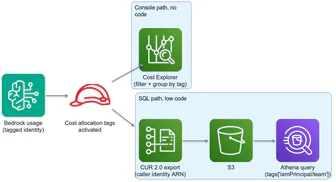
    Using NVIDIA NeMo Switchyard on Amazon Bedrock to Route Model Requests for Coding Agents like Claude Code and OpenAI Codex CLI

    Developers using coding agents like Claude Code and OpenAI Codex CLI need to be billed per task rather than per single call, so model routing should be based on the cost per task. NVIDIA NeMo Switchyard is an open-source library that helps AI agents select models to process each request, supporting Stage and Random routing strategies.

  13. NVIDIA Technical Blog55

    Run GPU-accelerated black hole interferometry using NVIDIA cuPhoton

    Using NVIDIA cuPhoton, black hole interference measurements can be achieved, with the observation ring of M87* being only 42 microarcseconds. The black hole itself does not emit light; telescopes capture radio emissions from the hot gas outside the event horizon. The strong gravitational bending of light by the black hole forms a bright ring. NVIDIA cuPhoton accelerates related calculations through GPU.

  14. AWS Machine Learning Blog

    How AssemblyAI optimizes speech-to-text inference costs using EC2 Spot instances on AWS

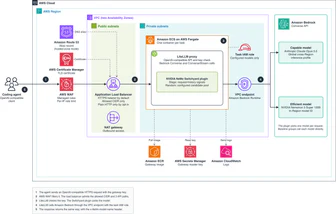
    AssemblyAI builds an elastic architecture on AWS by hybridly using EC2 On-Demand and Spot instances, and leveraging Amazon ECS, SQS, and EventBridge, to increase GPU instance utilization by 3.5 times, achieve cost reduction within the European AWS region, and meet service level agreements (SLA). Its inference platform is deployed on three GPU instance families: g4dn, g5, and g6.

  15. Ai2 Blog40

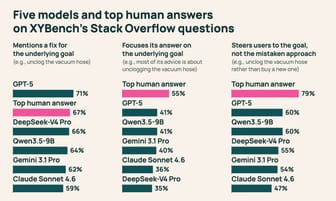
    XYBench: Benchmark test to solve the problems behind the questions

    XYBench released, including 8K+ problem tests to evaluate how AI assistants handle requests based on misunderstandings; Claude Sonnet 4.6, GPT-5, Gemini 3.1 Pro, Qwen3.5-9B, and DeepSeek-V4 Pro often focus on the original incorrect method rather than the user's actual goal in the test.

    Same story · 2 outlets

    How the accounts differ:Ai2 Blog states the benchmark includes 8K+ problems, while Hugging Face Blog mentions 8150 problems.

  16. Meta Engineering

    Cuttlefish runs natively on Mac: Bringing the Android Virtual Device framework to Apple Silicon

    Meta has natively ported the Android Virtual Device framework Cuttlefish to macOS, by supporting QEMU and vhost-user, solving the technical challenges of running virtual devices on Apple Silicon, improving development efficiency, and unifying testing environments. The new version supports macOS's display, signing, and build processes, and expands features such as Bluetooth, Wi-Fi, and 3D graphics, allowing Mac developers to use high-fidelity virtual devices the same as CI.

  17. Sierra Blog

    Personal Agent Protocol 1.0 released

    The Personal Agent Protocol (Poppy) v1.0 protocol is now released, and Shopify has enabled it for all merchants on the platform. Multiple design partners, including Mercury, Synchrony, and Turkish Airlines, have started going live. Meta's AI agent Muse is automatically prioritizing Poppy on every website visited. The protocol uses OAuth authentication to let customers control personal agent permissions and supports phased adoption, introducing an e-commerce extension co-developed by Shopify.

  18. Hugging Face Blog40

    Hugging Face releases XYBench benchmark to evaluate AI assistants' ability to solve problems based on misunderstandings

    Hugging Face releases XYBench benchmark, containing 8150 real-world problems, to evaluate AI assistants' ability to identify user misunderstandings and guide them to correct solutions. Claude Sonnet 4.6, GPT-5, Gemini 3.1 Pro, Qwen3.5-9B, and DeepSeek-V4 Pro tend to focus on user errors (Y) rather than actual goals (X), with only 35-41% of responses centered on the actual goals.

    Same story · 2 outlets

    How the accounts differ:Ai2 Blog states the benchmark includes 8K+ problems, while Hugging Face Blog mentions 8150 problems.

  19. Hacker News · 300+35

    IceWM 4.1.0 released: a X Window system window manager that emphasizes speed and simplicity.

    IceWM 4.1.0 (released on 2026-08-06) is a fast, simple, and unobtrusive window manager for the X Window system that supports taskbars, global and window-level shortcuts, dynamic menus, and allows window management via keyboard and mouse. It provides multiple optional focus models and themes, suitable for mainstream Linux distributions like Debian, Ubuntu, and BSD systems.

Nov 13Fri
  1. Hugging Face Daily Papers65

    Ropedia Xperience 2: A gold standard for extending physical AI environments and behaviors

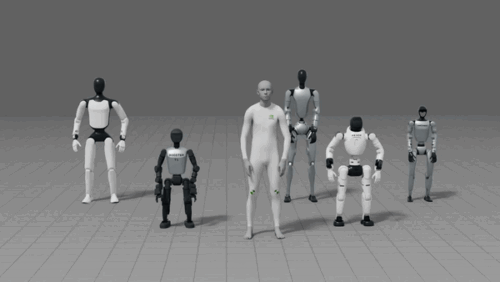
    Ropedia Xperience 2 includes 1,589 published metric 3D scans and 4,230 viewpoint center records for 74 tasks (131 hours), each capture can be reused for robot learning, scene converted to physical interaction simulation environment, human motion redirected to full-body robot trajectories, additional robot behaviors obtained through virtual remote operation and automatic long-term trajectory generation, this joint capture proposed as the gold standard for physical AI data collection.

  2. Hugging Face Blog65

    llama.cpp and ggml release v1.0.0, establishing semantic versioning rules.

    llama.cpp and ggml release v1.0.0, binding destructive changes to the public C API to the major version number, and both will be released according to semantic versioning rules thereafter. The project has supported over 150 model architectures and mainstream speculative decoding methods, and provides pre-release binaries for Linux, macOS, Windows, Android, iOS, as well as distribution channels such as Docker, Homebrew, and conda-forge.

    Why it matters: llama.cpp and ggml are released simultaneously with v1.0.0, and the major version number corresponds to destructive changes to the C API, allowing downstream dependents to plan their upgrade schedule accordingly.