Skip to content
Live
Nov 14Sat
  1. AWS Machine Learning Blog

    How AssemblyAI optimizes speech-to-text inference costs using EC2 Spot instances on AWS

    AssemblyAI builds an elastic architecture on AWS by hybridly using EC2 On-Demand and Spot instances, and leveraging Amazon ECS, SQS, and EventBridge, to increase GPU instance utilization by 3.5 times, achieve cost reduction within the European AWS region, and meet service level agreements (SLA). Its inference platform is deployed on three GPU instance families: g4dn, g5, and g6.

Nov 13Fri
  1. Hacker News · 300+

    ZigZag: An open-source visual embroidery editor that supports AI intelligent agent collaboration creation

    ZigZag is a visual embroidery editor written in Rust, supporting the MCP protocol for AI agents to collaborate on design, converting SVG to embroidery stitches, and exporting multiple formats such as PES, DST. It is compatible with Brother Skitch (PP1) and supports Bluetooth transmission, offering various embroidery types and planning functions like Tatami, Satin, Stitch, and is available for download on Mac and Windows platforms.

  2. Google Developers Blog

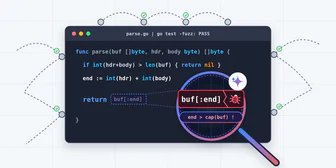
    Gemini and Z3 jointly capture bugs missed in Go code fuzz testing

    Gemini 4 Argon translates Go code panic paths into Z3 constraints, paired with Z3 to check trigger conditions, and paired with go test to replay trigger bytes, locating 3 embedded parser bugs and discovering 3 skill-lint potential bugs within 1 minute. This process is more efficient than go test -fuzz, capable of finding boundary check errors missed by fuzz testing.

Nov 12Thu
  1. OpenRouter Blog

    How to Benchmark LLM with OpenRouter

    Running the same tasks on OpenRouter, GPT-6.1 Sol passed 180/180 tests in 60 synthetic tasks, DeepSeek had the lowest cost passing 157/180 times, but the correlation with the public ranking is low (Spearman correlation coefficient 0.109). Need to check the number of task repetitions, the number of answers, and billing verification.

  2. Google Developers Blog78

    Google releases generative UI open protocol A2UI 1.0

    Google has released the Generative UI Open Protocol A2UI 1.0, which is the first stable version of the protocol, allowing AI agents to respond with interactive interfaces instead of plain text. Version 1.0 adds bidirectional function calls, accessibility support, and extended metadata, and provides open-source rendering SDKs for Web, Android, iOS, as well as agent SDKs for Python, TypeScript, and Dart.

    Why it matters: A2UI 1.0 extends agent output from pure text to native interactive interfaces, providing multi-platform renderers and integration scheme examples, allowing for judgment on the implementation methods of generative UI.

Nov 11Wed
  1. Databricks Blog76

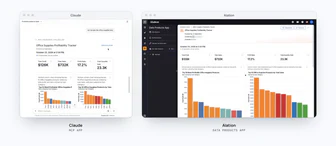
    Databricks upgrades Genie One to an enterprise AI collaboration workspace

    Databricks announces Genie One as the unified entry point for enterprise AI collaboration, consolidating search, product generation, and cross-tool operations into one place, and providing enterprise context based on Genie Ontology, governed by Unity Gateway.

    Why it matters: The original text provides specific capabilities of Genie One from Q&A to product generation, cross-tool execution, and governance, allowing for judgment on how enterprise AI workbenches can be implemented.

  2. Databricks Blog80

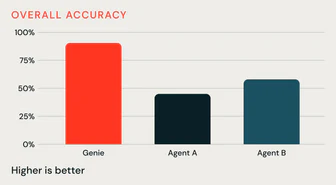
    Databricks releases new Genie: an autonomous AI colleague for complex enterprise work

    Databricks released a new version of Genie, positioning it as an autonomous AI colleague that can continuously track progress, follow up on missing inputs, and take action when new information arrives. Users can set guards and approve critical steps. The new version is paired with Genie Ontology, which provides business definitions and organizational knowledge. Genie Search uses a hybrid search combining indexing and MCP, and continues to use Unity Catalog permissions. Unity Gateway manages access, cost, and auditing uniformly.

    Why it matters: The original text outlines the boundary of Genie's ability to shift from an assistant to autonomously performing long-term tasks and its governance methods, which can be used to determine the context and permission controls needed for enterprise agents to go live.

  3. Ant Group inclusionAI · Hugging Face new models

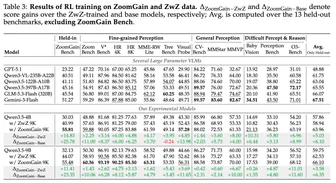
    inclusionAI/ZoomGain-4B released: A fine-grained visual supervision model based on global-to-local visual perception gaps

    inclusionAI has released the ZoomGain-4B large language model, achieving a score of 61.08 on ZoomGainBench and performing excellently on multiple fine-grained perception and general perception benchmark tests; the model is built with supervision based on the global-to-local visual perception gap mined from global image details, supporting English and Chinese Q&A, and can be downloaded via Hugging Face.

  4. Hugging Face Daily Papers65

    Infrathon: A benchmark for language intelligent agents used in long-term AI infrastructure optimization in the real world.

    Infrathon conducted 150 long-term AI infrastructure optimization task evaluations on six models, consuming a total of 10,000 GPU hours, and found that the model rankings changed with the evaluation duration. 135 tasks achieved further optimization in the latter half of the budget, and Claude Opus 5.5 increased the KV cache compression rate from 6.82% to 19.86%, exceeding human design baselines. Analysis shows that task violations, unreliable testing, and premature completion are the main obstacles to continuous optimization.

  5. OpenRouter Blog

    LLM Quantization: The Impact of fp8 and fp4 on Quality and Price

    Testing on OpenRouter, fp8, fp4, and fp16 showed no precision differences in 240 scoring tasks, with all six endpoint scores ranging from 98.3% to 99.2%. Lower precision is generally cheaper, but there were 7 models where fp8 was more expensive than fp16, and 7 models where 4-bit was more expensive than 8-bit. The fp4 endpoint performed the worst among 40 workflows without multiplication tasks, but the difference might be due to chance.

  6. Mastra Blog

    Mastra FDE released: Pre-deployment engineering plan for AI engineers

    Mastra FDE is a pre-deployment engineering plan for all teams building AI agents. By deploying engineers familiar with Mastra at a cost lower than hiring one senior AI engineer, it assists teams from the first week in architecture design to production deployment, and provides regular 1:1 communication, consulting, or proactive development support. It also includes access to a Slack channel with founders and engineers, quick response, roadmap insights, customized training, and the full suite of Mastra Enterprise features.
Nov 10Tue
  1. The Verge · AI

    Adobe is fully committed to AI

    Adobe announced that it will introduce chatbots and AI agents as the next-generation design assistants, even automating creative workflows and repetitive tasks. At the Adobe Max conference in Miami, Adobe introduced a feature that allows third-party AI agents to access and modify Creative Cloud projects, new features for the Firefly AI assistant, and the ability of AI agents to perform repetitive tasks in the background.

  2. AWS Machine Learning Blog38

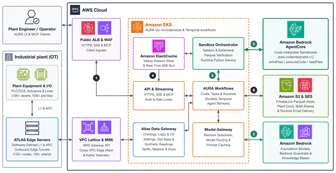
    CrossnoKaye on How to Achieve Industrial Physical AI with Amazon Bedrock AgentCore

    CrossnoKaye achieves industrial physical AI on Amazon Bedrock AgentCore through its ATLAS platform and AURA agent, improving production efficiency by 11-17% and reducing energy consumption by 21%. AURA leverages AgentCore's code interpreter capabilities to run Python workloads in isolated micro VMs to verify numerical calculations, while achieving closed-loop control through edge clusters and cloud optimization systems.

  3. Google Developers Blog60

    Google AI Studio supports building Google Maps applications with prompt words

    Google AI Studio can now directly build applications driven by Google Maps Platform, where users describe their ideas and AI Studio automatically completes configuration and API key management without a credit card.

    Why it matters: The original text provides daily quotas without a credit card and a complete path from prompt words to a runnable map application, allowing readers to judge the cost of prototype construction based on this.

Nov 9Mon
  1. QbitAI72

    Qianwen Office 2.0 released, introducing the Team Agent feature supporting collaboration between multiple people and Agents.

    Qianwen Office released version 2.0 on November 9, introducing the 'Collaboration' feature supporting multiple people and Agents, and launching capabilities such as 'Human-Machine Co-Creation,' 'Data Space,' 'Auto Tasks,' and 'Tri-Platform Connectivity,' all features are fully launched in the client.

    Why it matters: Qwen Office 2.0 integrates Agents into team collaboration scenarios, providing specific implementation cases like Yintai Department Store, allowing observation of the path from individual assistants to team collaboration for office Agents.

  2. MarkTechPost71

    0sec Labs open-sources AI Security Harness 0, providing a Web console, CLI, and MCP service

    0sec Labs has open-sourced AI Security Harness 0, released under MIT or Apache-2.0 licenses, as a research preview version, which can be driven from a local browser console, headless CLI, or MCP server, used for vulnerability investigation, code review, penetration testing, reverse engineering, and fix generation.

    Why it matters: The original text provides the architecture of this security harness, its self-reported benchmarks, and a comparison with similar tools, allowing judgment on its position in the vulnerability discovery process.

Nov 8Sun
  1. QbitAI42

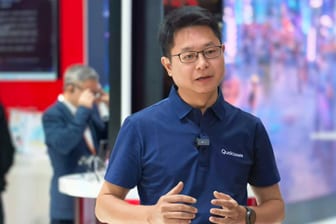
    Qualcomm showcased the edge-side MoE intelligent agent at the CIIE, driving edge-side AI from single-point applications to intelligent agent experiences

    Qualcomm showcased its edge-side MoE intelligent agents at the 9th CIIE, driving edge-side AI from single-point applications to intelligent agent experiences. MoE technology enhances the intelligence level of edge-side models through mixed expert modules, achieving higher complexity task completion in the 2 billion to 3 billion parameter scale. Qualcomm collaborated with Infris AI, Changelong, and Jieyu Xingchen to optimize models, inference, storage, and chip platforms, demonstrating a systematic solution for edge-side AI ecosystem synergy.

Nov 7Sat
  1. Hugging Face Daily Papers65

    Drex open-source decision model released

    Drex open-source decision model returns the probability distribution of user options without autoregressive decoding, using supervised fine-tuning, RLAF, and consistency loss to improve accuracy, robustness, and latency. Its 35B parameter Max version achieves an industry-leading score of 67.52 on Decision Index 0.4.1, with a response time only 9% of GPT-6 Sol and 5% of Claude Opus 5.5.

Nov 6Fri
  1. Mistral AI75

    Mistral releases Mistral Large 4 (Le Chonk) and expands Mistral Studio platform

    Mistral releases Mistral Large 4 (codename Le Chonk), featuring coding, defensive cybersecurity, and complex document reasoning, while expanding the enterprise platform Mistral Studio with new capabilities for hosted agents, applications, workflows, as well as enterprise context, agent observability, and evaluation features.

    Why it matters: The original text provides three types of capabilities (hosted agents, workflows, applications) and deployment options, allowing readers to judge the implementation methods of enterprise agents accordingly.

Nov 5Thu
  1. Hugging Face Daily Papers

    StreamDuo: A live commentator and a research agent for unseen new games

    StreamDuo pairs a trainable commentator with a frozen research agent that searches for game wiki entries to improve cross-game live commentary without training specifically for the target game. StreamDuo was trained on Baldur's Gate 3 and tested on ten unseen new games, increasing entity recall from 0.082 to 0.116, reducing source game leakage from 9.9% to 1.0%, and achieving the best timing, highest evaluation vitality, and overall quality in the live model.

  2. Cognition Blog

    SWE-2 Flash Released: A Low-Cost Intelligent Coding Model in the US

    SWE-2 Flash introduces a mid-training stage before reinforcement learning for the first time, significantly outperforming the baseline model Inkling-Small. Terminal-Bench 4.0 scores increased from 0.9% to 20.0%, and FrontierCode 2.0 improved from 3.2% to 24.0%, surpassing all US open-source models. This model is available in Devin Desktop and CLI, priced at one-fifth of SWE-2 and three times faster.

  3. Google Research

    Agile Deliberation: How AI Assists Humans in Defining Subjective Concept Boundaries

    The Agile Deliberation framework assists humans in defining the boundaries of subjective concepts through iterative dialogue, transforming fuzzy ideas into precise AI instruction blueprints. The framework is divided into two stages: concept definition and concept iteration, which processes fuzzy images through direct feedback. In 18 user experiments of 1.5 hours each, it significantly reduces user fatigue and anxiety, making AI model performance superior to standard baselines.

Nov 4Wed
  1. The Verge · AI75

    Apple has opened up Siri AI capabilities to third-party apps in iOS 27.3

    Apple has opened up new Siri AI capabilities to developers with iOS 27.3, allowing third-party apps to access personal context, natural language prompts, and screen awareness to complete tasks. This update was released in Developer Preview form and adds app skills that can be created by developers, combining multiple tasks into a single action.

    Why it matters: The original text listed the specific interaction methods for Siri AI to access third-party applications, and readers can judge which cross-application operations the voice assistant can perform based on this.

  2. Google DeepMind75

    Google Antigravity launches cheminformatics skills, completing drug discovery process in one hour

    Google DeepMind releases a set of cheminformatics skills (Cheminformatics Skills) for Google Antigravity, based on RDKit and integrated with ChEMBL and PubChem, where language models are responsible for process orchestration and scientific reasoning, and deterministic chemical tools perform molecular calculations.

    Why it matters: The original text provides a complete process of cheminformatics skills in real lung cancer drug cases, which can be used to determine the division of labor for intelligent agents in scientific research workflows.

Nov 3Tue
  1. Hugging Face Daily Papers65

    When Latent Prediction Error Supports Physical Anomaly Claims - Research on Video World Models

    Research shows that the latent prediction error in video world models reflects appearance and motion rather than reliable measurements of physical anomalies. Comparisons of latent prediction, masked pixel reconstruction, and simple visual statistics on the IntPhys2 benchmark show that appearance is easy to decode, and V-JEPA2 only slightly reveals whether an event is possible.