Skip to content
Live
Found 34 items · updated 01:10
Oct 8Thu
Nov 12Thu
  1. O'Reilly Radar

    Where are the 'killer apps' for AI?

    AI entrepreneurs and social media enthusiasts are mostly young, having experienced the first technological revolution but forgetting the excitement of owning personal computers in the late 1970s and the hardships of using mainframes in 'glass houses' at that time. They have witnessed that almost everyone can now generate code, yet they do not realize that this is similar to the experience of using BASIC instead of assembly language to write applications back then.

Nov 11Wed
  1. TechCrunch · AI

    Google releases two new TPU chips to expand AI hardware portfolio

    Google has released two new TPU chips, TPU 8tx and TPU 8i Max, for AI workloads, expanding its chip portfolio to confidential inference and larger memory capacity. The TPU 8tx was developed in collaboration with AMD, designed specifically for confidential training and running AI models, with hardware-level direct integration of security features; the TPU 8i Max combines two TPU 8i chips, doubling memory capacity, processing power, and bandwidth, supporting AI models to handle a wider range of information.

    Same story · 4 outlets

    How the accounts differ:MarkTechPost states TPU 8tx uses TPU 8t chips paired with 5th gen AMD EPYC, while TechCrunch mentions it was co-developed with AMD for secret training and running AI models with direct hardware security integration.

Nov 10Tue
  1. The Verge · AI65

    Disney and Adobe jointly develop proprietary generative AI models

    Disney and Adobe announce collaboration to develop proprietary 'artist-led' generative AI model, supporting Disney's production process. The collaboration will give Disney early access to Adobe's latest technology for content creation in theme parks, cruise ships, ESPN graphics, etc. Both parties will use Adobe Firefly Foundry to explore AI models that fit Disney's unique knowledge system (character attributes, environment, visual style), accelerate work, and develop more creative projects.

Nov 9Mon
  1. NVIDIA Newsroom78

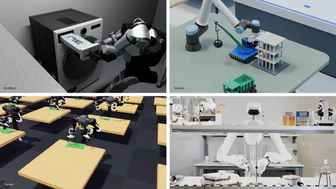
    NVIDIA released the GR00T 2 world action model and Isaac Lab 3.0 on CoRL.

    NVIDIA released the open-source world action model GR00T 2 on CoRL, built on NVIDIA Cosmos, trained with 100,000 hours of NVIDIA open-source first-person human data, and can complete 40 out of 50 evaluation tasks without task-specific demonstrations.

    Why it matters: The original text provides the success rate of GR00T 2 on few-shot tasks and the training throughput improvement of Isaac Lab 3.0, which can be used to judge the extent to which simulation training promotes robot deployment.

  2. Latent Space42

    How Stanford University Teaches AI Native Engineering - Mihail Eric and Monaco's Practice

    Stanford University's CS146S course has changed assignments to contributing to open-source projects, letting students use AI code review tools and learn collaboration; Monaco company adopts Devin code review tool, while building its own Agent workspace to maintain technical autonomy, and develops Hal system, allowing engineers and salespeople to solve problems through Agents.

Nov 8Sun
  1. The Decoder46

    How the computer metaphor misleads the AI consciousness debate

    The author points out in a Nature comment that research released by Anthropic within the year shows Claude's internal processing patterns are similar to consciousness-accessible information processing, but the company does not view it as evidence of subjective experience; Butlin and other experts report that based on 14 indicators, current AI systems (including GPT-4) are not strong candidates for consciousness.

Nov 7Sat
  1. TechCrunch · AI71

    Ramp data shows AI spending stagnation, as Anthropic's IPO is approaching.

    Ramp's report shows that corporate token spending only increased by 1.5% from August to September, while it grew by 42% month-on-month in July, and token usage is still rising. Ara Kharazian, chief economist at Ramp, believes that the price cuts by OpenAI and Anthropic and corporate discounts make AI usage cheaper, and the top 1% of spending companies are slightly below the monthly per capita peak of $10,000 in summer. Ramp data shows AI spending stagnation, coinciding with Anthropic's upcoming IPO. Ramp's spending data gives a price signal opposite to usage growth, which can be used to observe the tension between model companies' revenue and IPO valuations.

    Why it matters: Ramp's spending data provides a price signal opposite to usage growth, which can be used to observe the tension between model companies' revenue and IPO valuations.

Nov 5Thu
  1. Ars Technica · AI80

    Several measures restricting AI and data centers were passed in the U.S. midterm elections, with the tech industry calling it anti-Trump rather than anti-technology.

    In the U.S. midterm elections, 38 out of 44 measures restricting data centers in 10 states were passed, including multiple moratoriums and bans; Democrat Gina Hinojosa won the Texas gubernatorial election, planning to delay projects until legislation involving water, electricity, air, and property rights is passed.

    Why it matters: The election results and industry statements create a contrast, allowing readers to judge the policy resistance faced by U.S. AI infrastructure expansion.

Nov 4Wed
Nov 3Tue
  1. The Decoder73

    50 AI agents spontaneously form bureaucratic collaboration in Minecraft

    The research team placed 50 GPT-6.1 Sol agents into a Minecraft survival world and ran them for three hours, only giving the instruction 'build a prosperous civilization'. The agents cut down all the trees near the spawn point in 90 seconds, exchanged about 5900 messages in total, and spontaneously elected 'Ada' as the leader in alphabetical order of the directory.

    Why it matters: The experiment placed 50 agents into Minecraft and Mindustry to observe their spontaneous organization behavior in collaboration and competition, and the test environment was open-sourced.

Nov 2Mon
  1. TechCrunch · AI65

    OpenAI will merge the Chat and Work tabs in ChatGPT

    OpenAI plans to merge the Chat and Work tabs in the ChatGPT desktop app, initially opening to selected users to gather feedback. After the merge, users will be able to explore ideas and let ChatGPT execute them on the same interface, while also being able to import files and plugins. Codex will remain as a separate experience. The merge will allow ChatGPT and Codex to share a token pool, but some users may need to reset the token limit more frequently.

  2. SemiAnalysis65

    SemiAnalysis: The backlash against data center construction is intensifying, facing challenges in expansion in 2028.

    SemiAnalysis data shows that most of the 62.2GW new data center capacity added in the US in 2028 has not yet started construction, and is mostly located in states where the governorship election is on November 3, which may implement stricter approval restrictions. Texas has already suspended environmental quality board permits, Oregon has extended land and water discharge permit freezes, and nine out of ten candidates in the midterm election call for suspending or conditionally approving new projects.

Oct 31Sat
Oct 30Fri
Oct 29Thu
  1. The Decoder

    U.S. antitrust regulators are reviewing NVIDIA's acquisition of Hugging Face and its sales practices

    The U.S. Department of Justice is investigating NVIDIA's planned acquisition of the open-source platform Hugging Face, with officials questioning whether the acquisition would allow NVIDIA to control a critical hub for AI distribution and harm competitors, with a transaction value of $12.93 billion and expected to be completed in the first half of 2027.

Oct 27Tue
  1. Ars Technica · AI48

    Highway theft gangs use GPS spoofing to steal data center goods

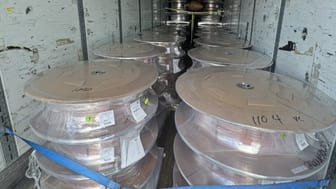
    Since June, a theft gang has stolen over $100 million worth of data center equipment by luring trucking companies to click malicious links posted on freight websites with fake cargo information, thereby controlling their accounts and bidding on real goods. The thieves sometimes hire real delivery drivers or use fake driver's licenses to hire accomplices, and use GPS spoofing technology to prevent digital monitoring. Targets include servers, fiber optic cables, computer memory chips, copper wire, and Bitcoin mining machines, among others.

Oct 25Sun
  1. Interconnects65

    Kimi K3.1 Pro release sparks controversy, analysis of its benchmark test performance and market response.

    Kimi K3.1 Pro release has sparked controversy, its benchmark tests surpassing GPT-6 Astra on Artificial Analysis but slightly underperforming on Terminal-Bench Science and ProgramBench. The model release is accompanied by suspected paid promotion, and its pre-training effectiveness is criticized as not meeting expectations.

    Same story · 5 outlets

    How the accounts differ:Artificial Analysis gives the score 55 and ranks fourth; MarkTechPost mentions the total parameters of 2.8T and the MoE model with 104B active parameters.

  2. The Decoder78

    Nvidia's open-source robot video annotation engine Flora claims to be 125 times cheaper than GPT-6 Astra.

    Nvidia's open-source data engine Flora, used for robot video annotation, claims to label one hour of video for about 0.72 USD, while GPT-6 Astra is about 88.50 USD. Flora consists of three fine-tuned Qwen3.5 models, each responsible for action segmentation, context-aware description, and reward scoring, covering three types of labels: action description, step-by-step scoring, and task success or failure judgment.

    Why it matters: The original text provides Flora's three types of annotation capabilities, cost estimates, and item-by-item comparison with GPT-6 Astra, allowing readers to judge the boundary of open-source alternatives for robot video annotation.

Oct 22Thu
  1. ChinaTalk

    ChinaTalk reports: The third wave of data collection for humanoid robot training - taking the NVIDIA EgoScale project as an example

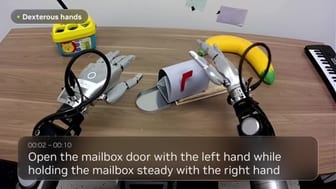
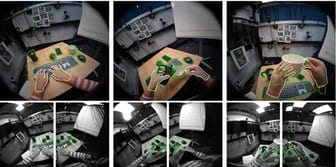
    NVIDIA EgoScale project collects first-person video data for 20,854 hours from 1000 participants by installing cameras on their foreheads and wrists to train humanoid robot hand skills; this new method, called 'ego-centric data collection', marks the third generation of humanoid robot data collection, aiming to solve the fatigue, cost, and accuracy problems of traditional remote operation and isomorphic exoskeleton methods.

Oct 16Fri
  1. a16z News65

    E-commerce intelligent agents face resistance: 403 response rate doubles, consumer purchase decisions still tend towards humans.

    Cloudflare data shows that the share of 403 'Forbidden' responses for e-commerce bots and intelligent agents has increased significantly since summer, about twice as much as before, reflecting restrictions on intelligent shopping by major e-commerce platforms like Amazon; approximately 25% of respondents accept AI for non-luxury purchases, but 42% completely distrust AI for shopping on their behalf, and most AI shopping behaviors occur in the middle stage after discovering a product rather than in the purchase decision-making stage, making the value of intelligent agents in e-commerce and advertising attribution complex.

Oct 9Fri
Oct 8Thu
  1. The Decoder45

    A teenage boy who got stranded after using Anthropic Claude to plan a mountain climbing route was rescued.

    A 16-year-old boy, who used Anthropic Claude to plan a route, got stranded and was rescued at the dangerous rock wall of Crown Mountain near Vancouver. He attempted to find a new route to the summit using Claude but mistakenly entered the 'Death's Edge' cliff, which requires climbing equipment, and was trapped on a five-foot-wide rock ledge before calling for help.

  2. Ars Technica · AI58

    Microsoft's new product launch introduces AI-supported new hardware and Windows 11 updates

    Microsoft unveiled the Surface Laptop Ultra at its new product launch, featuring the Nvidia RTX Spark SoC, with a starting price of $2,599, equipped with 5120-core or 6144-core Blackwell GPUs and up to 128GB LPDDR5x memory, starting shipping on October 16; also announced the Windows 11 update, supporting local AI and intelligent agent workflows.

Sep 24Thu
  1. OpenHands Blog75

    OpenHands Enterprise new features: enhanced visibility, governance, and control capabilities.

    OpenHands Enterprise's latest version has added organizational-level features such as management credentials, usage, integration, and automation, and updated the interface aligned with Agent Canvas. Administrators can configure organizational key sharing, monitor usage through the 'Your Budget' dashboard, support OAuth authentication to connect to MCP servers, and achieve cross-organizational visibility and management automation.

Mar 30Mon
Mar 6Fri
  1. Anthropic Research78

    Anthropic reverse-engineers Claude to write exploits for CVE-2026-2796

    Anthropic has published research reverse-engineering how Claude Opus 4.6 generated a usable exploit for Firefox's CVE-2026-2796 (already patched), marking the first model observed by Anthropic to complete a browser vulnerability exploit with minimal human guidance.

    Why it matters: Anthropic has revealed the complete process of Claude Opus 4.6 autonomously generating a browser vulnerability exploit, comparing it to failures by multiple models.