Skip to content
Live
Oct 29Thu
  1. ITHome · AI

    Apple's first Touch MacBook Pro is released, featuring up to 128GB unified memory capable of locally running AI models with billions of parameters.

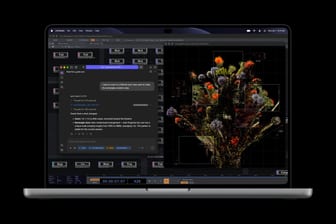
    Apple released its first touchscreen MacBook Pro equipped with a PROLED XDR display, featuring the M5 Max chip version with up to 128GB unified memory, capable of locally running large language models with billions of parameters, supporting applications like LM Studio, starting at 22,999 yuan.

  2. Hugging Face Daily Papers

    EvidenceConnect framework and Zooming without Zooming v2 model released

    The EvidenceConnect framework generates comparative, aggregated, or chained visual evidence queries by synthesizing image region thumbnails, enhancing the evidence connection capability of VLMs. The ZwZ2 model is trained based on this framework, without targeting any downstream benchmarks but improving fine-grained and spatial perception, and achieving progress in embodied spatial reasoning, multimodal long-context understanding, multimodal agent tasks, and general visual reasoning

Oct 28Wed
  1. Hugging Face Daily Papers

    Decomposition Vector Quantization Technology Enhances Discrete Visual Token Quality

    Decomposition Vector Quantization Technology enhances discrete visual token quality by using parallel codebooks on complementary feature views, enabling it to match continuous representations in multimodal understanding. Models trained on industrial-grade multimodal data outperform UniAR and Emu3-Chat by 22.8% and 59.2% on average across nine metrics, making it the first discrete representation model capable of competing with strong continuous representation models like Qwen3-VL.

  2. MarkTechPost77

    Google DeepMind Releases Genie 4 Real-Time World Model, Natively Generating Audio

    Google DeepMind released the research preview version of Genie 4, which can generate explorable worlds from text and image prompts in real-time and natively generate environmental sounds, music, and character dialogues. The model introduces Gemini as a planner in the simulation loop, with Gemini 3.8 Flash disassembling goals, checking frames, and replanning, while Gemini Omni anchors the appearance and behavior of the world.

    Same story · 7 outlets

    How the accounts differ:The Verge states the model supports up to two minutes of scenes, while Ars Technica and TechCrunch mention improvements in physics and character simulation but do not specify the scene duration.

  3. Hugging Face Daily Papers

    The Trinity framework: Capability-driven recursive self-improving multi-modal agents

    The Trinity framework improves multi-modal agent performance by organizing tasks into capability trees, generating simulated training worlds, routing professional Harness modules, and recursively refining multi-modal agents, achieving a mean performance improvement of 34 and 26 points on 28 training benchmarks and 18 unseen benchmarks, including two real-world embodied tasks.

  4. Hugging Face Daily Papers

    PDRVLA: A Visual-Language-Action Model Integrating Physical Dynamics Representation

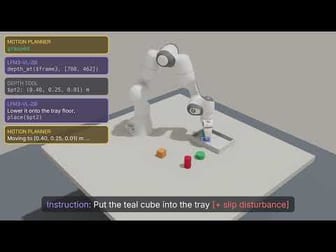
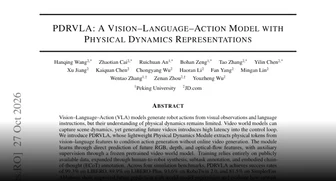
    PDRVLA improves robot action generation by integrating a lightweight physical dynamics module that predicts future visual features under the supervision of a physical world model, avoiding latency caused by online video generation. PDRVLA achieves success rates of 99.3% (LIBERO), 89.9% (LIBERO-Plus), 93.6% (RoboTwin~2.0), and 81.5% (SimplerEnv) on four simulation benchmarks.

  5. QbitAI

    Ants AI Open-sources Ling-3.1-flash-1019, helping Personal Agent move towards real tasks

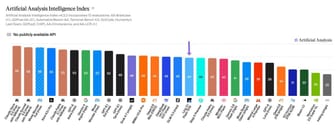
    Ant Group's Baoling large model has open-sourced Ling-3.1-flash-1019, scoring 1524 Elo in the intelligence index AA-Briefcase, an increase of 3 points compared to the previous version; the basic model Ling-3.1-flash-base adopts a hybrid linear MoE architecture.

  6. Hugging Face Daily Papers65

    CodeCap-Bench: Can executable code serve as high-quality video subtitles?

    CodeCap-Bench demonstrates that code captions outperform natural language captions in terms of reasoning accuracy and reconstruction fidelity on video question answering and reconstruction tasks. The benchmark includes 323 structured 2D content videos, covering five categories. Evaluation finds that mainstream closed-source MLLMs perform well in code caption generation but struggle to capture complex temporal dynamics, while open-source models have a significant gap.

  7. Hugging Face Daily Papers65

    ThinkWorld model enhances dynamic reasoning ability through world imagination

    The ThinkWorld model enhances robot generalization by representing actions as dynamic chains and learning from unlabeled human videos using world imagination. This VLA framework represents each action reasoning as a dynamic reasoning chain (CoD), combining reinforcement learning with world imagination to reinforce reasoning, allowing unlabeled videos to provide direct supervision for state transitions, achieving a shared reasoning space for human and robot experiences. Experiments prove its effective implementation of human-robot transfer and generalization to unseen tasks and environments on both simulation and real robots.

  8. Hugging Face Daily Papers

    ChronoReplay training framework enhances the spatiotemporal reasoning ability of streaming visual language models.

    ChronoReplay training framework organizes heterogeneous spatiotemporal supervision into time-ordered interaction segments, preserves specific task answer formats, and balances learning from different supervision signals, enabling a single model to learn complementary spatiotemporal capabilities while maintaining temporal consistency. It achieves improvements on OVO-S-Bench, OST-Bench, and UCS-Bench benchmarks, with a 13.41-point increase on OST-Bench, while optimizing streaming inference performance through adaptive frame selection.

  9. Hugging Face Daily Papers

    Hy-Nomas: A Video World Model for Free-Form Interactive World Generation

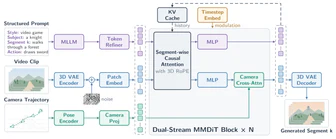
    Hy-Nomas is an 8B parameter diffusion model that supports free-form text instructions and camera control across multi-round interactions. It follows multi-round text and camera instructions by combining causal attention with structured video descriptions, outperforming existing world models in human evaluations. The model weights, code, and benchmarks are open-sourced.

  10. ITHome · AI82

    Google DeepMind releases Genie 4 world model, supporting real-time natural language rewriting and native audio

    Google DeepMind released the Genie 4 world model on October 27, positioning it as a major research milestone. Users can change weather, camera angles, characters, and objects in real-time using natural language commands instead of regenerating a video.

    Same story · 7 outlets

    How the accounts differ:The Verge states the model supports up to two minutes of scenes, while Ars Technica and TechCrunch mention improvements in physics and character simulation but do not specify the scene duration.

  11. ITHome · AI77

    Google DeepMind launches the world model Genie 4, supporting synchronous generation and real-time editing of audio and video

    Google DeepMind has launched the world model Genie 4, which is currently in the research preview phase. It can generate interactive virtual worlds and modify scenes by inputting prompts during runtime, as well as generate real-time audio synchronized with the visuals. Compared to the previous Genie 3, Genie 4 has improved visual realism and supports real-time adjustments of weather, camera angles, and adding or deleting characters and objects. It can maintain a continuous scene for up to two minutes, twice as long as the previous generation.

    Same story · 7 outlets

    How the accounts differ:The Verge states the model supports up to two minutes of scenes, while Ars Technica and TechCrunch mention improvements in physics and character simulation but do not specify the scene duration.

  12. Ollama releases

    Liquid AI releases LFM3 small model family and d1 decision model v0.40.12

    Liquid AI releases the LFM3 small model family, including the 1.7B parameter lfm3 text model (256K token context), lfm3-vl supporting image understanding, lfm3-audio with 18 language speech processing capabilities, and the general model lfm3-omni for local agents and structured output; the d1 decision model is upgraded to 2B parameters, supporting text, image, and audio decision-making, with some models supporting Apple hardware.

  13. QbitAI

    Yinqi has also achieved end-to-end for 4D radar

    Qianli Technology has launched an AI 4D millimeter-wave radar, equipped with a 10 TOPS NPU, supporting local AI perception and satellite architecture parallel output, achieving end-to-end AI processing from antenna design to point cloud output. The radar's point cloud density is enhanced 10 times, detection range is increased by 40%, ghost shadow elimination rate reaches 95%, and spatial angular resolution is improved 12 times. It provides three working modes: edge-side, satellite architecture, and compatible, to adapt to different functional levels and platform requirements.

  14. The Decoder

    DeepMind Genie 4 Released: Exploring the Frontier of Modern Intelligent Agent Design

    DeepMind has released Genie 4, the company's first real-time voice-generating instant world model, where users can move scenes with the keyboard and guide events with text prompts. Genie 4 is built on the video model Gemini Omni and is planned and simulated in the background by the Gemini large model family, supporting background sound effects, character dialogues, and real-time interaction. It is currently only available to selected testers and will be opened to Google AI Ultra subscribers in the future, integrating SynthID watermarking to mark AI-generated content.

    Same story · 7 outlets

    How the accounts differ:The Verge states the model supports up to two minutes of scenes, while Ars Technica and TechCrunch mention improvements in physics and character simulation but do not specify the scene duration.

  15. The Verge · AI

    Google Genie 4 World Model Released: Supports More Realistic Interactive Experience

    Google releases Genie 4 world model, supporting more realistic interactive experiences. The model adopts the Gemini 3.8 Flash architecture, capable of updating experiences in real-time via natural language, generating audio, and supporting scenes up to two minutes long (an improvement over Genie 3's one minute).

    Same story · 7 outlets

    How the accounts differ:The Verge states the model supports up to two minutes of scenes, while Ars Technica and TechCrunch mention improvements in physics and character simulation but do not specify the scene duration.

  16. Hugging Face Blog76

    Liquid AI releases LFM3 series: Same 2B backbone derived text, visual, audio, multimodal and decision models

    Liquid AI releases the new generation Liquid Foundation Models, LFM3, deriving six 2B-level models from the shared backbone LFM3-1.7B-Base, covering text, vision, audio, multimodal, and decision, all open weights on Hugging Face.

    Why it matters: Liquid AI derives six modality models from the same 2B-level backbone and provides single-card fine-tuning and edge deployment paths, which can be used to judge the specialization route for small models.

  17. Google Research58

    Google Research introduces a sleep framework: a new method for LLMs to acquire knowledge through continuous learning

    Google Research proposes a sleep framework that enables LLMs to achieve continuous learning through alternating active (awake) and sleep phases; the sleep phase utilizes the MoE and Hope architectures for parameter expansion and knowledge distillation, integrating short-term memory into long-term parameters, supporting the retention of long-context knowledge up to 10M tokens and enhancing complex reasoning capabilities.

  18. Ars Technica · AI78

    DeepMind releases Genie 4 world model, claims physics and character simulation are more realistic

    Google DeepMind announced the Genie 4 world model, claiming it outperforms Genie 3 in almost every aspect, with more realistic physics simulations and character representations. Some improvements come from Google's updated Gemini model.

    Same story · 7 outlets

    How the accounts differ:The Verge states the model supports up to two minutes of scenes, while Ars Technica and TechCrunch mention improvements in physics and character simulation but do not specify the scene duration.

  19. TechCrunch · AI72

    Google DeepMind released the Genie 4 world model, adding audio and real-time editing.

    Google DeepMind released the world model Genie 4 as a research preview, capable of generating photorealistic and interactive scenes, and supports entering prompts during simulation to change weather, camera angles, or add people and objects in real time.

    Same story · 7 outlets

    How the accounts differ:The Verge states the model supports up to two minutes of scenes, while Ars Technica and TechCrunch mention improvements in physics and character simulation but do not specify the scene duration.

  20. Google DeepMind84

    Google DeepMind releases world model Genie 4

    Google DeepMind releases world model Genie 4, which can generate interactive simulated worlds with native audio in real-time, and change weather, camera angles, and scene elements in real-time with text prompts. Genie 4 natively generates environmental sounds and voice conversations for the first time, with characters able to converse in real-time and respond to scene events; Gemini 3.8 Flash acts as a guiding intelligence in the loop, breaking down goals into steps and verifying frame by frame.

    Same story · 7 outlets

    How the accounts differ:The Verge states the model supports up to two minutes of scenes, while Ars Technica and TechCrunch mention improvements in physics and character simulation but do not specify the scene duration.

    Why it matters: The official disclosure of three capabilities—native audio, real-time text control, and Gemini-guided reasoning—can be used to judge the position of the world model in robotics and content preview.

Oct 27Tue
  1. NVIDIA Technical Blog65

    3 methods to improve MoE inference performance on NVIDIA DGX Spark

    Inclusion AI found that decoding is the memory bottleneck when evaluating Ling-3.0-flash with a batch size of 1 on NVIDIA DGX Spark, where MoE computation and output layer projection increase execution time. MoE computation and output layer projection are bottlenecks.

    Same story · 2 outlets

    How the accounts differ:NVIDIA Technical Blog states decoding is the memory bottleneck due to MoE computation and output layer projection, while MarkTechPost highlights the 42.5% throughput increase and 3.5x speedup due to new MoE backend, FP8 output layer, and speculative decoding.

  2. Hugging Face Daily Papers65

    AV-FABLE: Audio-Visual Tampering Forensic Benchmark for Long Videos

    AV-FABLE introduces an audio-visual benchmark for sparse tampering in long videos, demonstrating that frozen audio-visual large language models' perceptual features contain forensic evidence that the best recovery is achieved by separating time decoders rather than language outputs. Local AI tampering in long videos often affects brief events that impact the authenticity of other content, making video-level classification insufficient for forensic analysis.

  3. IBM Research Blog38

    IBM researchers use l-couplers to connect two IBM Quantum Nighthawk processors

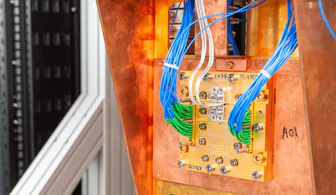
    IBM researchers use four meter-scale l-couplers to connect two IBM Quantum Nighthawk processors, achieving 99% quantum state transfer fidelity, demonstrating reliable quantum information transfer between processors. This new inter-chip connection design is compatible with IBM Quantum Nighthawk and can be scaled to IBM Quantum Starling and more advanced quantum computers.

  4. Ant Group inclusionAI · Hugging Face new models58

    inclusionAI/Ling-3.1-flash-1019 released: 560B parameter large language model inference ability improved.

    inclusionAI/Ling-3.1-flash-1019 released, 560B parameter size, 25B active parameters/Token, 1M context window, improved reasoning ability, AA-Briefcase score 1524 Elo, AutomationBench-AA 68%, Artificial Analysis Intelligence Index v4.3.2 44 points. Supports SGLang and vLLM inference.