Skip to content
Live
Nov 10Tue
  1. The Verge · AI65

    Apple offers a one-time purchase option of $49.99 to extend the use of AI features in Logic Pro

    Apple offers a one-time purchase option of $49.99 to extend the use of AI features in Logic Pro, which allows users to continue using Apple Intelligence features limited by reliance on OpenAI or Google Gemini cloud AI models.

  2. Claude.dev Blog

    Which Claude model should Anthropic use? Fable, Opus, Sonnet, or Haiku?

    Anthropic has launched four Claude models for users to choose from: Claude Haiku 5.5, Claude Sonnet 5.5, Claude Opus 5.5, and Claude Fable 5.2.

    Same story · 6 outlets

    How the accounts differ:TechCrunch states the input price of Fable is reduced to $8 per million tokens; others do not mention the price.

  3. Hugging Face Daily Papers

    Confucius4-R2T2: A stable prefix streaming speech recognition model for real-time transcription

    Confucius4-R2T2 is a stable prefix streaming speech recognition model for real-time applications, which converts a full context ASR model into a streaming model through post-training without architecture modification. Built based on Qwen3-ASR-1.7B, R2T2 achieves near-offline recognition accuracy and low transmission delay, supports configurable streaming block sizes, and demonstrates promising cross-lingual generalization capabilities. This model and implementation have been publicly released.

  4. AWS Machine Learning Blog

    Anthropic launched Claude Fable 5.2 and Claude Mythos 5.2 on AWS

    Anthropic Launches Claude Fable 5.2 and Claude Mythos 5.2 on AWS, Fable 5.2 is its most powerful general model for coding and scientific fields, supporting unsupervised operation for days; Mythos 5.2 is provided through a validation program and performs more reliably in cybersecurity and life science fields.

    Same story · 6 outlets

    How the accounts differ:TechCrunch states the input price of Fable is reduced to $8 per million tokens; others do not mention the price.

  5. One Useful Thing78

    Ethan Mollick practically tests Claude Fable 5.2: Close but not complete AGI

    Ethan Mollick, after trying out Claude Fable 5.2 before its public release, believes that according to the definition of 'achieving the level of most human experts on most available computer-completed intellectual tasks,' it is close to AGI but still has a gap.

    Why it matters: The author uses six cross-domain practical cases to illustrate that the model's ability has approached general intelligence, but lacks the ability to judge whether works are good or bad.

  6. Claude · YouTube75

    Anthropic released Claude Fable 5.2

    Anthropic released Claude Fable 5.2, stating that it has improved in coding, reasoning, and vision, targeting the most complex and open-ended technical work. The official recommendation is to start most coding and knowledge tasks from Opus 5.5, and Fable 5.2 has been launched in the Pro, Max, Team, and Enterprise packages.

    Same story · 6 outlets

    How the accounts differ:TechCrunch states the input price of Fable is reduced to $8 per million tokens; others do not mention the price.

  7. Claude · YouTube68

    Claude Mythos 5.2 predicted the complete AAV coat structure

    Claude Mythos 5.2 predicts the complete AAV capsid structure, which is composed of 60 identical protein chains. It writes code for an open-source folding model to handle the overlap grouping of adjacent five chains, then uses the symmetry of the capsid to assemble the 60 chains. On AAV2, its prediction deviates from the experimental structure by about the width of an atom.

    Why it matters: The original text provides specific methods and accuracy of the model in real scientific research tasks, allowing readers to judge its applicable boundary in structural prediction work.

  8. Claude · YouTube75

    Anthropic released Claude Fable 5.2

    Anthropic releases Claude Fable 5.2, designed for the most challenging technical challenges, with improvements in coding, reasoning, and vision, suitable for the most ambitious open-ended technical work. The official recommendation is to use Opus 5.5 for most coding and knowledge tasks, and Fable 5.2 is now available in the Pro, Max, Team, and Enterprise packages.

    Same story · 6 outlets

    How the accounts differ:TechCrunch states the input price of Fable is reduced to $8 per million tokens; others do not mention the price.

    Why it matters: The official statement explains the positioning and applicable scenarios of Fable 5.2, and provides a choice suggestion between Opus 5.5, making it easier to decide which model to use.

  9. TechCrunch · AI82

    Anthropic releases Mythos 5.2 and Fable 5.2 models, with Fable input price reduced to $8 per million tokens

    Anthropic releases Mythos 5.2 and Fable 5.2, claiming new models have improvements in coding, reasoning, and vision, and communicate more clearly with users. Fable's input price drops from $10 per million tokens to $8, lower than major competitor GPT-6 Astra, with a 30% faster response speed, and can support zero data retention (ZDR) policies through Enterprise Frontier Safeguards.

    Same story · 6 outlets

    How the accounts differ:TechCrunch states the input price of Fable is reduced to $8 per million tokens; others do not mention the price.

  10. AWS Machine Learning Blog38

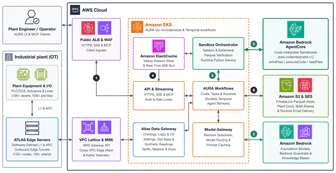
    CrossnoKaye on How to Achieve Industrial Physical AI with Amazon Bedrock AgentCore

    CrossnoKaye achieves industrial physical AI on Amazon Bedrock AgentCore through its ATLAS platform and AURA agent, improving production efficiency by 11-17% and reducing energy consumption by 21%. AURA leverages AgentCore's code interpreter capabilities to run Python workloads in isolated micro VMs to verify numerical calculations, while achieving closed-loop control through edge clusters and cloud optimization systems.

  11. Epoch AI

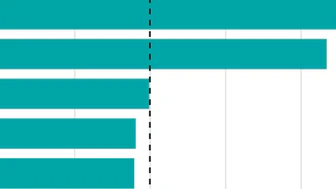
    How is Inference Performance Index (IPI) Measured for Inference Capability

    Nvidia GB300 offers a 25-fold improvement in capability compared to H100 for intelligent agent inference tasks, far exceeding the 2.5-fold increase in 8-bit FLOP/s. The IPI index measures inference capability by comparing the number of requests a chip can handle simultaneously under various output speed requirements. GB300 is set as the baseline value of 1, and chips scoring 1 can serve twice as many users under the same conditions. IPI version 1 combines results from four representative models, using GB300 as the reference benchmark.

  12. Comfy Blog65

    ComfyUI v0.44 introduces multiple quality improvement features

    ComfyUI v0.44 introduces multiple quality improvement features, including the new Branch Node and Stack LoRAs Node, simplifying model selection and stacking processes. Templates and models can now automatically download sample inputs for users to run directly. Additionally, the new export feature allows users to download multiple output files at once, improving work efficiency.
  13. MarkTechPost67

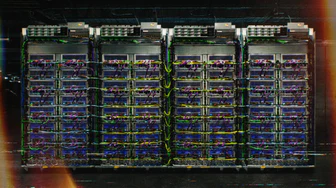
    Google has launched the TPU 8i Max and TPU 8tx: a dual-chip TPU and a confidential TPU

    Google releases TPU 8i Max and TPU 8tx, TPU 8i Max integrates 2 TPU 8i chips into 1 package, doubling performance; TPU 8tx uses TPU 8t chips paired with the 5th generation AMD EPYC host to achieve confidential inference, reducing latency by 2 times.

    Same story · 4 outlets

    How the accounts differ:MarkTechPost states TPU 8tx uses TPU 8t chips paired with 5th gen AMD EPYC, while TechCrunch mentions it was co-developed with AMD for secret training and running AI models with direct hardware security integration.

  14. Meta Engineering38

    LLDB extension architecture supports application debugging across CPU and GPU

    LLDB supports application debugging across CPU and GPU through the neutral accelerator plugin architecture of lldb-server, separating general debugging infrastructure from hardware-specific device control, presenting CPU and GPU as independent debugging processes that work together in a single debugging session. This architecture converts hardware-specific debugging APIs into concepts understood by LLDB through plugins, supporting collaborative debugging of CPUs and GPUs with different architectures, registers, memory spaces, and execution models while maintaining the neutrality of the client.

Nov 9Mon
  1. QbitAI72

    Baidu Wenxin has first disclosed the progress of RSI, and ERNIE Evolve has been used in the development of Wenxin 5.5 Flash.

    Baidu Wenxin first disclosed its automatic research system ERNIE Evolve, which can autonomously propose research directions, conduct experiments, and validate results. It has been used for inference optimization in Wenxin 5.5 Flash. In the low-latency scenario optimization for Kunlun Chip P800, ERNIE Evolve took about 168 hours and went through 4 rounds of direction exploration, with the optimal version's generation speed increasing to 623.6% of the baseline. The deterministic reasoning throughput optimization increased the throughput to 133.7% of the baseline in 3 days.

    Why it matters: Baidu has disclosed the architecture and production environment optimization data of the automatic research system ERNIE Evolve, which can observe the actual landing points of RSI in inference optimization.

  2. Hugging Face Daily Papers34

    LowRAM: A runtime method for low-rank keys and amortized values for composable KV cache compression

    LowRAM compresses keys using low-rank decomposition and uses small head networks to predict key values, while retaining residual correction for the most difficult-to-reconstruct markers, achieving 4x value cache compression with near-lossless performance. Selective reconstruction can increase peak decoding throughput by 5x for 262K context under 4x KV compression. Combining quantization and eviction, LowRAM pushes compression to 26.9x while retaining 94.5% of baseline performance.

  3. The Decoder58

    Google launched four TPU variants within a year, intensifying competition with NVIDIA

    Google released two new systems, TPU 8tx and TPU 8i Max, targeting confidential computing and high-memory demand applications, delivering a total of four TPU systems within the year. The new systems are based on existing chips, achieving rapid iteration through different packaging, networking, and memory configurations. Data in TPU 8tx remains encrypted during processing, while TPU 8i Max doubles computing power, memory, and bandwidth within a single rack, significantly improving data center performance per square meter.

    Same story · 4 outlets

    How the accounts differ:MarkTechPost states TPU 8tx uses TPU 8t chips paired with 5th gen AMD EPYC, while TechCrunch mentions it was co-developed with AMD for secret training and running AI models with direct hardware security integration.

  4. ITHome · AI67

    Google expands its TPU chip lineup with the launch of two new products, 8tx/8i Max, to challenge NVIDIA

    Google launches two new products, TPU 8tx and TPU 8i Max, targeting confidential computing and ultra-long context window AI applications, aiming to challenge NVIDIA's position in the AI chip market. TPU 8tx works with AMD chips, TPU 8i Max integrates two chips to provide stronger computing power. Both products are expected to launch next year.

    Same story · 4 outlets

    How the accounts differ:MarkTechPost states TPU 8tx uses TPU 8t chips paired with 5th gen AMD EPYC, while TechCrunch mentions it was co-developed with AMD for secret training and running AI models with direct hardware security integration.

  5. Hugging Face Blog45

    HOPE Advanced Pruning Method Released

    The HOPE method achieves better pruning effects in mixed expert language models by considering the second-order interactions between experts. It improves performance by 6.1% over the next best method on the agentic coding task at a 50% pruning rate. This method is validated on models like Qwen3.5-122B, where each MoE layer has 256 experts. After pruning, it can reduce memory usage by about 250 GB and is compatible with quantization.

  6. Hugging Face Daily Papers31

    Deep dive into intelligent agent evolution: What are we overlooking?

    Agent evolution enhances performance through recursive self-improvement (RSI) without updating model weights, but a high baseline score does not always lead to reliable, efficient, and transferable improvements. The study evaluated the performance of four methods on general and coding tasks, finding that all sixteen evolved agents gained new task capabilities but lost some old capabilities. One general task agent improved reliability by 5.2 points but lost ten old tasks. EvoAudit achieved the best performance through analysis, mutation, and gating mechanisms.

  7. QbitAI47

    Ji Yuan Law Release NeoHorse-1.5-Flash Preview, Agent model RSI enters the second round of iteration

    Ji Yuan Law Release Agent Native Model NeoHorse-1.5-Flash Preview, based on Qwen3.8-Flash training, 180B total parameters, 6B activation parameters, score improvement in Agents' Last Exam, Natural Language to Repository and other evaluations. This model iterates through recursive self-improvement (RSI) and combines the OpenSquilla platform to achieve differential diagnosis of multiple models and online learning, now open for limited internal testing.

  8. Hacker News · AI hot posts65

    How do I cope with AI job fatigue brought by Claude Code and Codex?

    When working with Claude Code or Codex from the terminal, users often experience mental exhaustion due to multi-threaded task processing. The author manages tasks in git by organizing work in a way similar to a priority queue, with each task being a markdown file and its status as a git snapshot. The AI agent processes new tasks in a loop, runs tests, and performs browser checks, but cannot make decisions and requires the user to handle them in the 'Owner Inbox' by viewing tasks with the Claude tool on a single page, closing them after completion to process one task at a time.

  9. NVIDIA Newsroom32

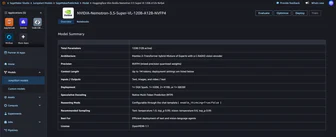
    NVIDIA has released an optimized deployment solution for South Korea's leading open-source models, Dynamo.

    NVIDIA has released an optimized deployment solution for South Korea's leading open-source models, Dynamo, supporting SK Telecom A.X K2, LG AI Research K-EXAONE 2.0, Upstage Solar Open 2, and Motif Technologies Motif-3, achieving up to 2x performance improvement through optimized multi-GPU coordination and communication, accelerating model production deployment.

  10. MIT News · AI38

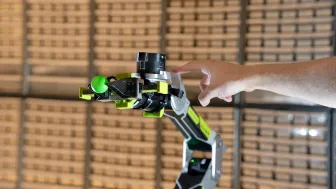
    MIT develops FLEX platform to help robots understand natural language instructions

    The FLEX platform developed by researchers from MIT and New York University enables robots to infer deep meaning from natural language instructions, enhancing their motion planning capabilities. The platform uses GPT-4o to analyze instruction patterns, allowing robots to avoid electronic devices such as laptops and phones in virtual scenarios without explicit instructions. The entire process takes about five seconds, aiming to help robots understand the underlying intent behind human instructions.

  11. MIT News · AI52

    WorldParticle: A single AI model simulates the behavior of multiple materials

    The WorldParticle model can simulate various material behaviors, from sliding sand to folded proteins, by decomposing objects into thousands or millions of three-dimensional particles and using neural networks to predict their motion without needing to write specific equations for each material and process. The model offers higher accuracy than numerical simulation methods in simulating deformable objects, granular materials, and proteins, and can optimize computational efficiency through hybrid techniques.