Skip to content
Live
Nov 10Tue
  1. Anthropic Research

    Anthropic tested the capabilities of Claude Fable 5.2 in real electronic design.

    Anthropic partnered with Diode Computers to test the ability of Claude Fable 5.2 to design electronic devices, a model capable of completing electronic hardware from design to prototyping.
    Same story · 2 outlets

    How the accounts differ:Anthropic Research states Claude Fable 5.2 completes hardware from design to prototype, while Claude mentions designing a working voice assistant center including PCB layout, CAD modeling, and firmware.

  2. LangChain Deep Agents releases15

    LangChain Deep Agents 0.7.35 released

    LangChain Deep Agents 0.7.35 released, fixing bugs such as preserving the parent agent's prompt cache prefix for child agents, retaining symbolic link names in virtual file system results, marking `read_file` media and Nemotron nudge as harness notifications, etc.

  3. Ollama releases15

    Ripple Preview v0.40.16 released

    Ripple Preview is a 65B dense model designed for smart coding. Recursive Intelligence released version 0.40.16, while Qwen3.8 Flash Next reduced memory usage by about 27 GiB on Apple Silicon chips. Claude always routes to the selected model, and /v1/responses support truncation, no longer defaulting to silent truncation.

  4. ITHome · AI

    Anthropic has launched the Claude Fable 5.2 and Claude Mythos 5.2 AI models, with a 20% reduction in API call fees.

    Anthropic has launched the Claude Fable 5.2 and Claude Mythos 5.2 models, the latter targeting professional institutions. Fable 5.2 has input and output costs per million tokens of $8 and $40, respectively, a 20% reduction from 5.1. Generation speed has been increased by up to 30%, with an optional fast mode that runs 2.5 times faster but at a higher price.

  5. Hugging Face Daily Papers

    Confucius4-R2T2: A stable prefix streaming speech recognition model for real-time transcription

    Confucius4-R2T2 is a stable prefix streaming speech recognition model for real-time applications, which converts a full context ASR model into a streaming model through post-training without architecture modification. Built based on Qwen3-ASR-1.7B, R2T2 achieves near-offline recognition accuracy and low transmission delay, supports configurable streaming block sizes, and demonstrates promising cross-lingual generalization capabilities. This model and implementation have been publicly released.

  6. Google Research

    Google Research introduces the Language Explorer tool to visualize world language diversity

    Google Research launches Language Explorer online platform, presenting global language diversity through visualization and data. The tool integrates the open-source LinguaMeta dataset, supporting 1,000 languages, aimed at helping researchers, educators, and enthusiasts explore language differences. The platform has been showcased as an interactive installation at the new exhibition at the Berlin Communication Museum and offers an online version for public access.

  7. Claude · YouTube58

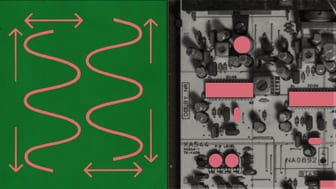
    Claude Fable 5.2 has designed a working voice assistant center.

    Claude Fable 5.2 designs a voice assistant center from a prompt word, including circuit board layout, CAD shell modeling, and firmware writing. Diode Computers manufactured the prototype board according to its design documents. This is one of the three devices designed by Claude in the project. Anthropic and Diode have a business relationship.

    Same story · 2 outlets

    How the accounts differ:Anthropic Research states Claude Fable 5.2 completes hardware from design to prototype, while Claude mentions designing a working voice assistant center including PCB layout, CAD modeling, and firmware.
  8. Epoch AI

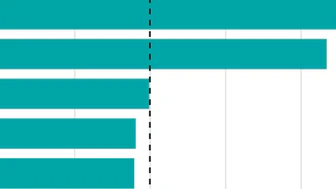
    How is Inference Performance Index (IPI) Measured for Inference Capability

    Nvidia GB300 offers a 25-fold improvement in capability compared to H100 for intelligent agent inference tasks, far exceeding the 2.5-fold increase in 8-bit FLOP/s. The IPI index measures inference capability by comparing the number of requests a chip can handle simultaneously under various output speed requirements. GB300 is set as the baseline value of 1, and chips scoring 1 can serve twice as many users under the same conditions. IPI version 1 combines results from four representative models, using GB300 as the reference benchmark.

  9. Latent Space58

    Frontier Labs purchased Handshake AI data for in-depth analysis.

    Frontier Labs' AI training business reached $1 billion in revenue within a year. Handshake AI demonstrated its intelligent agent evaluation environments in finance, biology, and coding, including bank email processing, brain tumor tissue image recognition, and file access simulation tasks. VIALS, as a benchmark in the biology field, tests the model's ability to understand scientific images.

  10. Meta Engineering38

    LLDB extension architecture supports application debugging across CPU and GPU

    LLDB supports application debugging across CPU and GPU through the neutral accelerator plugin architecture of lldb-server, separating general debugging infrastructure from hardware-specific device control, presenting CPU and GPU as independent debugging processes that work together in a single debugging session. This architecture converts hardware-specific debugging APIs into concepts understood by LLDB through plugins, supporting collaborative debugging of CPUs and GPUs with different architectures, registers, memory spaces, and execution models while maintaining the neutrality of the client.

Nov 9Mon
  1. NVIDIA Newsroom78

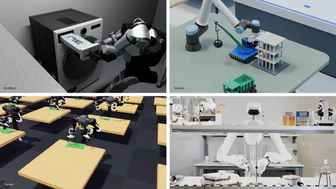
    NVIDIA released the GR00T 2 world action model and Isaac Lab 3.0 on CoRL.

    NVIDIA released the open-source world action model GR00T 2 on CoRL, built on NVIDIA Cosmos, trained with 100,000 hours of NVIDIA open-source first-person human data, and can complete 40 out of 50 evaluation tasks without task-specific demonstrations.

    Why it matters: The original text provides the success rate of GR00T 2 on few-shot tasks and the training throughput improvement of Isaac Lab 3.0, which can be used to judge the extent to which simulation training promotes robot deployment.

  2. Hugging Face Daily Papers34

    LowRAM: A runtime method for low-rank keys and amortized values for composable KV cache compression

    LowRAM compresses keys using low-rank decomposition and uses small head networks to predict key values, while retaining residual correction for the most difficult-to-reconstruct markers, achieving 4x value cache compression with near-lossless performance. Selective reconstruction can increase peak decoding throughput by 5x for 262K context under 4x KV compression. Combining quantization and eviction, LowRAM pushes compression to 26.9x while retaining 94.5% of baseline performance.

  3. QbitAI82

    Tencent Hunyuan Hy4 released: 770B total parameters, 49B activation parameters, first supports native vision and computer operation

    Tencent Mixuan Hy4 is officially released, with a total of 770B parameters and 49B activation parameters. It introduces native visual capabilities and computer operation support for the first time, while also upgrading command compliance, long text understanding, and long-range Agent capabilities. The model has been launched on products such as Tencent Cloud TokenHub, WorkBuddy/CodeBuddy, and Yuanbao. API access has been provided to platforms like OpenRouter, Hermes, and OpenCode, with weights to be open-sourced in the near future.

    Why it matters: The author uses multiple long-range tasks to test the autonomous execution and self-check capabilities of the open-source model 'Hunyuan Hy4', thereby judging the actual level of open-source models in Agent delivery.

  4. Hugging Face Daily Papers31

    Deep dive into intelligent agent evolution: What are we overlooking?

    Agent evolution enhances performance through recursive self-improvement (RSI) without updating model weights, but a high baseline score does not always lead to reliable, efficient, and transferable improvements. The study evaluated the performance of four methods on general and coding tasks, finding that all sixteen evolved agents gained new task capabilities but lost some old capabilities. One general task agent improved reliability by 5.2 points but lost ten old tasks. EvoAudit achieved the best performance through analysis, mutation, and gating mechanisms.

  5. MarkTechPost71

    0sec Labs open-sources AI Security Harness 0, providing a Web console, CLI, and MCP service

    0sec Labs has open-sourced AI Security Harness 0, released under MIT or Apache-2.0 licenses, as a research preview version, which can be driven from a local browser console, headless CLI, or MCP server, used for vulnerability investigation, code review, penetration testing, reverse engineering, and fix generation.

    Why it matters: The original text provides the architecture of this security harness, its self-reported benchmarks, and a comparison with similar tools, allowing judgment on its position in the vulnerability discovery process.

  6. QbitAI47

    Ji Yuan Law Release NeoHorse-1.5-Flash Preview, Agent model RSI enters the second round of iteration

    Ji Yuan Law Release Agent Native Model NeoHorse-1.5-Flash Preview, based on Qwen3.8-Flash training, 180B total parameters, 6B activation parameters, score improvement in Agents' Last Exam, Natural Language to Repository and other evaluations. This model iterates through recursive self-improvement (RSI) and combines the OpenSquilla platform to achieve differential diagnosis of multiple models and online learning, now open for limited internal testing.

  7. ITHome · AI65

    An engineer has developed an open-source script, Ram-Altman, which reports daily the amount of idle RAM to OpenAI CEO Altman.

    Engineer IainKay developed the open-source script Ram-Altman, which monitors computer memory usage through the Linux system. When available memory exceeds 10% of the total capacity, it automatically sends an email to OpenAI CEO Sam Altman daily to report idle RAM amounts, and has prepared various email subjects, body texts, and signatures. The project has been uploaded to GitHub for free use, but the developer warns users to avoid mass emailing to bother Altman.

  8. NVIDIA Newsroom32

    NVIDIA has released an optimized deployment solution for South Korea's leading open-source models, Dynamo.

    NVIDIA has released an optimized deployment solution for South Korea's leading open-source models, Dynamo, supporting SK Telecom A.X K2, LG AI Research K-EXAONE 2.0, Upstage Solar Open 2, and Motif Technologies Motif-3, achieving up to 2x performance improvement through optimized multi-GPU coordination and communication, accelerating model production deployment.

  9. MIT News · AI38

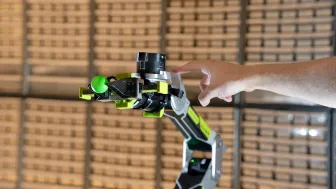
    MIT develops FLEX platform to help robots understand natural language instructions

    The FLEX platform developed by researchers from MIT and New York University enables robots to infer deep meaning from natural language instructions, enhancing their motion planning capabilities. The platform uses GPT-4o to analyze instruction patterns, allowing robots to avoid electronic devices such as laptops and phones in virtual scenarios without explicit instructions. The entire process takes about five seconds, aiming to help robots understand the underlying intent behind human instructions.