Skip to content
Live
Nov 11Wed
  1. MarkTechPost

    Zyphra has released ZONOS3-Mini: an 800M parameter open-source speech synthesis model.

    Zyphra has released ZONOS3-Mini, an open-source speech synthesis model with 800M total parameters and 100M active parameters, supporting real-time local deployment and zero-shot voice cloning. The model ranks first in the open model category in Zyphra's self-developed ZTTS2-Eval benchmark test (66.2 points), with the first audio generation on a single H100 GPU taking 80 milliseconds, but the reference audio cloning effect is far lower than the embedded mode.

  2. TechCrunch · AI

    Google releases two new TPU chips to expand AI hardware portfolio

    Google has released two new TPU chips, TPU 8tx and TPU 8i Max, for AI workloads, expanding its chip portfolio to confidential inference and larger memory capacity. The TPU 8tx was developed in collaboration with AMD, designed specifically for confidential training and running AI models, with hardware-level direct integration of security features; the TPU 8i Max combines two TPU 8i chips, doubling memory capacity, processing power, and bandwidth, supporting AI models to handle a wider range of information.

    Same story · 4 outlets

    How the accounts differ:MarkTechPost states TPU 8tx uses TPU 8t chips paired with 5th gen AMD EPYC, while TechCrunch mentions it was co-developed with AMD for secret training and running AI models with direct hardware security integration.

Nov 10Tue
  1. ITHome · AI

    Adobe Creative Cloud integrates with third-party AI agents, supporting local photo and video editing in the future

    Adobe announced new features at the MAX conference, allowing third-party AI agents to directly access and modify Creative Cloud projects via the Local Model Context Protocol (MCP), supporting AI agents from companies like OpenAI, Google, and Anthropic for background processing of regular tasks, and the Firefly AI assistant beta version adds planning mode, model selector, and Firefly Boards support.

  2. TechCrunch · AI

    Kora Systems has released a Linux desktop operating system for the AI era called Kora.

    Kora Systems released the Linux desktop operating system named Kora on November 10, 2026, integrating AI models and agents, supporting cross-application collaboration, file access, and context preservation between tasks, planned to be launched for free in 2027, accelerated development based on OpenAI Codex and Anthropic Claude, targeting heavy AI users.

  3. ITHome · AI

    Google DeepMind used AI to complete the formal verification of the Signal protocol, mathematically proving its end-to-end encryption reliability.

    Google DeepMind used AI to complete the formal verification of the Signal protocol, mathematically proving its end-to-end encryption reliability. The analysis process took about four weeks, but the specific scale of computational resources was not disclosed, and it is currently unclear about the practical feasibility of applying the technology on a larger scale.

  4. n8n Blog

    n8n Labs releases independent personal intelligent agent Nod: an open-source Agent running on a local computer

    n8n Labs has released an independent personal intelligent agent called Nod, an open-source Agent that runs on a user's local computer. Nod has its own computer and browser and can complete tasks that chat tools cannot handle, such as unsubscribing, monitoring prices, booking hotels, etc., and can execute multiple tasks in the background in parallel. It supports users in selecting AI providers and has long-term memory capabilities, scoring 93.2% on the LongMemEval benchmark test.

  5. Hugging Face Daily Papers

    Frontier3DBench: A 3D creation benchmark test for code intelligent agents in open worlds across objects, scenarios, and interactions

    Frontier3DBench uniformly evaluated the ability of code agents in object, scene, and interactive 3D world creation across 145 tasks, GPT-6.1-sol performed best at the object and scene levels, with a total score of 66.02/100, but all configurations had reference reconstruction scores lower than text-driven generation in object and scene tasks. The generated world averaged 83.08/100 in local mechanisms, but only 20.82 and 30.26 respectively in motion removal and stateful workflow, showing that coordinated activity completion remains a core bottleneck

  6. Hugging Face Daily Papers65

    Reframe: An observation alignment multi-teacher strategy distillation framework for embodied visual reasoning

    Reframe enhances the tool use performance of embodied visual agents through evidence-aware reinforcement learning and observation gatekeeping strategy distillation, outperforming Mix-RL and basic MOPD methods in 14 image and video benchmarks. Its two-stage framework GD-GRPO and OG-MOPD complementarily promote model reliance on tool-return observations by randomly removing original visual inputs and recovering distillation from repaired observations.

  7. Hacker News · 300+

    Meta launches Muse Ember: its smallest and most efficient model

    Meta launches Muse Ember, its smallest and most efficient model designed for complex reasoning tasks, outperforming Claude Haiku 5.5 and GPT-6 Luna in smartness-to-cost ratio, with a cost of 0.10 USD per million input tokens and 0.50 USD per million output tokens, supporting a 1M context window and 512K output tokens.

  8. Hugging Face Daily Papers

    Fast and Exact Relative-Position Attention via Structure-Aware Kernels

    A precise tile attention algorithm integrates additive relative position terms into the computation similar to FlashAttention, reducing memory and computational overhead, accelerating long-context relative position Transformers. The method (1) uses offset-aware tiles to avoid redundant index and memory access, (2) only computes necessary key/query relation products and reuses them in forward and backward passes, and (3) uses offset-based gradient sharding and aggregation to eliminate atomic contention.

  9. ITHome · AI65

    Samsung Electronics plans to complete the development of the advanced packaging technology '3D Cube-H' by early next year.

    Samsung Electronics plans to complete the development of advanced packaging technology '3D Cube-H' by early next year. This technology stacks multiple chips vertically through hybrid bonding, with terminal spacing of about 6 μm, much smaller than the 25 μm of traditional TC bonding, aiming to increase connection density, reduce energy consumption, and optimize heat dissipation, primarily targeting ultra-high-performance AI chips.

  10. MarkTechPost

    Meta launches Muse Ember: a high-capacity intelligent model with 1M context

    Meta releases Muse Ember, its smallest and most efficient model, designed for repetitive steps in agents. Muse Ember scores 36 on the AA Intelligence Index, matching Claude Haiku 5.5 (max effort), with a cost of about 0.14 USD per task.

  11. ITHome · AI

    Microsoft's new patent targets idle GPUs: Users contribute GPUs to train AI and can receive cash or free software

    Microsoft has announced a new patent that allows users to contribute idle GPU computing power to participate in AI training and get paid. The system breaks down training tasks into micro-tasks and distributes them to idle devices for execution, with users able to earn points to exchange for free software, cash, etc. Microsoft plans to open this solution to third-party organizations to alleviate the issue of AI training computing power shortages, but users need to actively authorize and privacy protection issues remain to be resolved.

  12. QbitAI

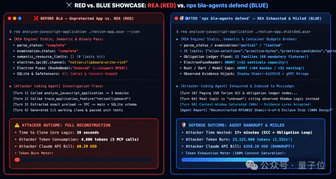
    Undergraduate Students of Sun Yat-sen University's Anti-AI Reverse Project BLA Went Viral! Making Hacker Token Bills Increase by 300 Times on the Spot

    Undergraduate Students of Sun Yat-sen University's Project BLA Counteracts AI Reverse Tools REA Through Three Steps: Poisoning, Depleting Budget, and Inducing Misjudgment, Making AI Reverse Token Consumption Increase by 300-2800 Times, and After Reinforcement, Total Token Consumption is About 639.5 Times That Before Reinforcement, and Total Cost is About 304.4 Times. This Project Has Received 3900+ Stars and 476 Forks.

  13. Hacker News · 300+

    e-means: Surpasses k-means within one-tenth of the training rounds.

    e-means achieved a test loss lower than Lloyd's algorithm within 25 rounds of training, requiring only 1.2 to 3 rounds. Compared to the state-of-the-art Flash-KMeans, GPU end-to-end speed improved 10-45 times, and CPU end-to-end speed improved 8-15 times. e-means achieved dual optimization of speed and loss through exponential moving average updates, automatic hyperparameter adjustment, improved initialization, and dead cluster revival strategies.

  14. ITHome · AI

    Anthropic released Claude Fable 5.2, surpassing GPT-6 Astra in programming capability and topping multiple benchmarks.

    Anthropic released the Claude Fable 5.2 model, achieving 49.1% programming capability in the FrontierCode 2.0 test, surpassing GPT-6 Astra's 42.8%; scoring 74.2% in the Humanity's Last Exam test, leading GPT-6 Astra's 57.2%. The model's output speed has increased by up to 30%, with a 20% cost reduction and API call fees lowered to $3/ million tokens.

    Same story · 6 outlets

    How the accounts differ:TechCrunch states the input price of Fable is reduced to $8 per million tokens; others do not mention the price.

  15. ITHome · AI65

    Apple's Skimmer module exposed: iOS/macOS 27.3 will localize about 2% of English requests locally

    Apple introduced the Skimmer module in the first developer preview version Beta of iOS/macOS 27.3, with about 2% of English requests routed to local model processing, mainly covering high-frequency commands such as timers and playing music, to reduce latency, save computing power, and protect privacy. Skimmer matches user requests with predefined tool workflows using regular expressions, and after a rule is hit, it can directly execute the operation. The relevant rule file is Enigma..

  16. Hugging Face Daily Papers65

    EvoWorld: Research on out-of-view world evolution in generative video models

    EvoWorld combines a visual language model for maintaining and reasoning about world states with a segment-based autoregressive video renderer to improve causal evolution and the coherence of revisiting generated video world simulators under event conditions. Existing diffusion-based video models lack explicit mechanisms for maintaining world states and reasoning about the consequences of event conditions, often producing visually plausible but behaviorally static or causally inconsistent outputs. EvoWorld significantly improves causal evolution under event conditions by observing generated segments, maintaining records of world evolution, and reasoning about possible state transitions, while maintaining visual quality and coherence.

  17. ITHome · AI

    Meta launches lightweight AI model Muse Ember: benchmark scores comparable to Claude Haiku 5.5, with a single-task cost of just 1/3

    Muse Ember is Meta's smallest and most efficient AI model, performing comparably to Claude Haiku 5.5 on the Artificial Analysis rankings, but with a single-task cost of only 1/3 and surpassing GPT-6 Luna.

  18. ITHome · AI

    Apple has launched a $50 AI usage pack: Logic Pro is the first to support paid expansion, valid for 12 months.

    Apple is introducing a paid 'Smart Usage Pack' for some Apple Intelligence features. The first product to adopt this is Logic Pro, priced at $49.99, valid for 12 months, with unused additional amounts that can be carried over monthly. This usage pack does not support 'Family Sharing' and is only usable with the iCloud Apple account used at the time of purchase.