Skip to content
Live
Oct 28Wed
  1. LangChain Blog71

    How to Set Up Design Intelligent Agents with LangChain Content Studio

    LangChain introduces the internal design of its intelligent agent Content Studio, which can generate videos, social media graphics, UI diagrams, and presentations in Slack with a single prompt word, with all materials generated by code.
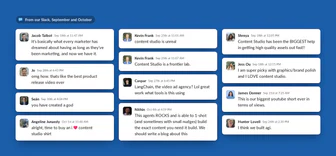
    Why it matters: LangChain has disclosed the complete setup process of its design agent Content Studio, including skills, wiki, inspection gates, and the division of labor between asynchronous sub-agents, which can serve as a reference for building vertical agents.

  2. Pragmatic Engineer

    OpenAI Sevbot and AI SRE are developing a status analysis

    OpenAI is developing the Sevbot AI SRE tool, while ING Bank is building its own AI SRE system. AI SRE primarily investigates incidents through Slack, but there is controversy over whether code should be modified directly. Enterprises generally adopt a multi-agent architecture, combining knowledge graphs with memory layers to improve investigation effectiveness. At the same time, it is necessary to verify accuracy through adversarial agents and multi-model combinations, and optimize model routing and prompts to balance speed and cost.

Oct 27Tue
  1. Databricks Blog22

    How is Databricks Free Edition used for teaching?

    Databricks Free Edition allows teachers and students to run full data or AI courses in the browser for free, without a cloud contract or license management, suitable for students and educators worldwide. The platform offers features such as collaborative notebooks, Spark, Delta Lake, Lakeflow, Databricks SQL, and Genie code assistant, supporting courses from introductory programming to AI projects. Skills are applied directly to industry-standard tools, with no conversion costs between production environments and teaching sandboxes.

  2. Claude · YouTube50

    How Anthropic engineers use Claude Docs

    Anthropic engineer Doug shares how to use Claude Docs in stand-ups and release reviews. Claude collaborates in documents, automatically extracting data, validating arguments, and responding to questions in comments. The tool is designed for team collaboration, supporting real-time analysis within the document.

  3. Google AI Blog45

    Google AI Quests series 'Summit' released: guiding students to explore neuroscience of brain mapping

    Google AI Quests Series Course 3 'Summit' released, gamifying learning neuroscience, guiding students to scan and map brain neurons to understand memory loss mechanisms. The course includes data cleaning and model testing tasks, emphasizing that AI needs human supervision and critical thinking. The course is inspired by Google AI's decade-long Connectome Project research, upon completion, students will understand real-world groundbreaking achievements, such as the complete fruit fly brain map.

Oct 26Mon
  1. 36Kr · AI50

    WISE2026 'World Coffee & Industry Matchmaking' Call for Specific Business Questions and Technical Partners

    The WISE2026 Business King Conference will host the 'World Coffee & Industry Matchmaking' event, inviting companies to submit specific business questions for targeted exchanges with technical partners. The event will have demand-side participants as 'table leaders' for rotating matchmaking with technical partners, pre-matching intentions, focusing on AI applications and embodied intelligence on-site, and is expected to collect needs and facilitate over 100 rounds of matchmaking.

  2. Hamel Husain50

    How to create an effective AI evaluation dashboard for stakeholders

    Dashboards should explain changes, potential causes, and next steps through narrative and custom data visualization, rather than letting readers judge the importance themselves; AI makes building custom visualizations feasible, benefiting stakeholders more from the visualization and analysis of specific trends.

  3. Simon Willison65

    Seam Cutter

    Simon Willison has developed a tool called Seam Cutter that can create horizontal or vertical cutting lines in images and slide the sides to crop a specific area from the middle of the image. The tool is designed to address the need to crop specific parts in the middle when using Tailor to stitch multiple screenshots into a long image (e.g., removing irrelevant prompt words).

  4. ITHome · AI65

    A custom firmware was made by netizens for the Sony A7C II, directly unlocking FL2/FL3 and Fujifilm X-series filters

    User 'QAQLeonard' has created a custom firmware for the Sony A7C II, unlocking FL2 and FL3 film modes, supporting import of external LUTs, Fujifilm NC, Ricoh GR direct color tones and creative appearances, electronic shutter sound, and vertical display, etc. A7C II Tools has released version 3.0, the first version with a formal graphical interface.

Oct 25Sun
  1. vLLM Blog60

    vLLM serves DeepSeek-V4.1-Flash on GB300 NVL72: performance matches DeepInfer and extends to the entire rack

    The vLLM team used P/D separation and Wide-EP to serve DeepSeek-V4.1-Flash on a single NVIDIA GB300 NVL72 rack, achieving 954K tokens/s per GPU and 196 tokens/s for single-user P90 on SemiAnalysis AgentX, which is 7.9 times the early single-node results.

    Why it matters: The vLLM team has released per-item optimization and measured data for serving DeepSeek-V4.1-Flash on GB300 NVL72, which can be compared with DeepSeek's own engine DeepInfer.

Oct 24Sat
  1. vLLM Blog62

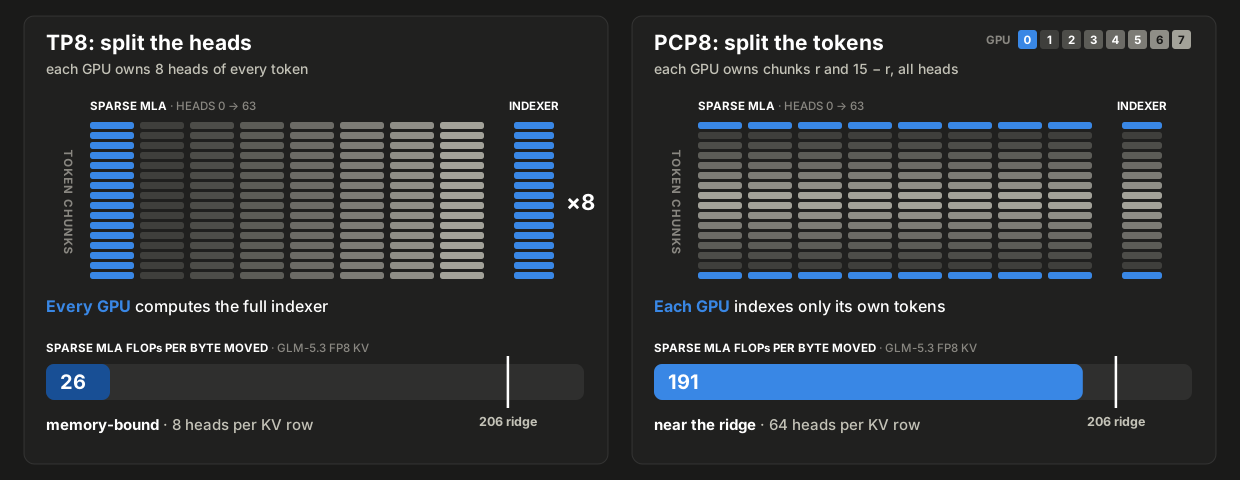
    vLLM provides an in-depth explanation of the optimization of PCP, DCP, and Hybrid HiSparse for GLM-5.3 on 16 H200s

    vLLM team releases the second part of GLM-5.3 optimization, deploying on 16 H200s with 1 pre-filled node and 1 decoding node, using PCP to split pre-fill by token and DCP to split KV cache by token, allowing 1M context to fit into the pre-fill node

    Why it matters: The vLLM team has dissected how PCP, DCP, and Hybrid HiSparse can be combined on 16 H200s, allowing readers to understand the memory and pre-fetch bottlenecks of long-context deployment.

  2. AWS Machine Learning Blog

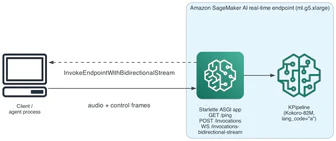
    Use AWS CDK custom resources to orchestrate SageMaker AI endpoint auto-scaling.

    Use AWS CDK custom resources to automatically orchestrate SageMaker AI endpoint updates with auto-scaling, without manual intervention. Through three custom resources (decommission, update, register scalable targets, attach extension policies) achieve explicit dependency order, ensuring endpoint configuration and auto-scaling parameters are synchronized in a single deployment. The deployment stack includes three custom resources, two Step Functions state machines, and twelve Lambda functions.

Oct 23Fri
  1. ITHome · AI70

    Wccftech reports that the unofficial PC port of 'Bloodborne' has achieved 1080p at 220 FPS on an RTX 4070 graphics card

    The non-official PC port of 'Bloodborne' by Super Medo supports NVIDIA DLSS Frame Generation technology on the RTX 4070 graphics card, achieving stable performance above 220 FPS at 1080p resolution, which is over 7 times better than the original console version; with native 4K resolution enabled and DLAA, the average frame rate is about 40 FPS, and with DLSS 3 Frame Generation in quality mode, it exceeds 100 FPS, while in performance mode, it reaches about 130 FPS.

  2. MIT Technology Review · AI

    EXL explores the design principles of enterprise-level AI service frameworks

    EXL research finds that a company's AI competitive advantage depends more on the engineering systems around the model rather than the model itself; business load constraints should be defined first, then select appropriate models and service architectures, rather than doing the opposite; reliable, cost-effective, and large-scale AI application delivery needs to be achieved by measuring bottlenecks, targeted optimization, and building scalable architectures.

  3. Databricks Blog60

    Databricks Talks AI Billing: How to Reduce the Unit Cost of Coding Agents by 90%

    Databricks executive Patrick reviews the process where the cost of AI coding agents increased exponentially after the company fully adopted them, and then reduced the unit cost by up to 90% by controlling the layer. He mentions that shifting traffic to cheaper new models contributed to more than 50% of the reduction, and Smart Router reduced the average task cost by more than 30% while maintaining near the quality of the most expensive model. This internal solution was later productized as Unity Gateway, which is now used by thousands of customers.

    Why it matters: Databricks executive reviews the process of its own AI coding costs from out of control to reducing the unit cost by 90%, providing migratable practices for gateways, routing, and self-built evaluations.

  4. AWS Machine Learning Blog34

    How Rescale uses Strands Agents and AI-DLC to build intelligent AI routing agents

    Rescale utilizes Strands Agents and the AI-DLC framework to set up intelligent routing agents on AWS in five days and deploy them in production within weeks. The agent classifies end-to-end test failures at night by calling Claude Opus 4.8, retrieves historical failure patterns from the knowledge base, queries MCP logs for runtime evidence, and generates remediation reports containing file references, function names, and recommended fixes for engineers to review.

  5. n8n Blog

    How does n8n manage stateful and stateless contexts in AI agent construction?

    n8n allows engineering teams to choose between stateful or stateless architectures in AI agent construction based on requirements. Stateful architectures achieve continuity by retaining information across requests or sessions but require additional infrastructure management for state; stateless architectures improve scalability and fault tolerance by processing each request independently. Stateful systems are suitable for scenarios that depend on previous interactions (such as conversations, multi-step processes), while stateless systems are more adaptable for applications like REST APIs that require rapid scalability and simple maintenance.

Oct 22Thu
  1. MarkTechPost55

    Cactus Whistle 16.9 MB Speech Model Performance Evaluation on CPU: Comparison Results with Whisper Base

    The Cactus Whistle speech model transcribes seven languages on the CPU with a 16.9 MB file size and returns word timestamps and probabilities. Tests show it outperforms Whisper Base on its test-other dataset, but there is no significant difference from beam search, with the speed advantage shrinking as audio length increases. Additionally, it tested 30-second window audio processing, streaming latency, timestamps, keyword bias, other languages, noise, embedding, and speech-to-tool calling features.