Skip to content
Live
Nov 12Thu
  1. Google Research58

    Google Research has released a wearable device-driven CKM risk assessment framework

    Google Research releases a wearable device-driven CKM risk assessment framework, predicting future health trajectories through an explainable health age model (CHA). The framework is trained on wearable data from 2.2 million weeks using the SensorWM model, providing personalized 12-week counterfactual health simulations combined with language models to generate clinically validated guidance plans. The CHA model integrates modifiable indicators such as heart rate, steps, and sleep to predict disease risk over 68,000 person-years, improving the predictive performance of clinical indicators.

  2. Hugging Face Daily Papers

    FINCOSMOS: An open-world evaluation paradigm for intelligent agents in the financial domain.

    FINCOSMOS has introduced an open-world evaluation paradigm for evaluating intelligent agents in the financial field. In 150 simulated user interactions, no session was accepted because all sessions failed during program checks, with the agent reporting only 54-64% of the undisclosed details. Human experts attributed 88.33% of the failures to the agent.

  3. Meta Engineering40

    Meta Develops Intelligent Delivery System: AI Optimizes Computational Resource Allocation to Enhance Ad Sorting Performance

    Meta's Intelligent Delivery system, through AI optimization of computational resource allocation, has boosted ad sorting performance by approximately 10% since 2017. The system includes a Resource Core Model that predicts the marginal utility of computational resources (6B sparse parameters + 20M dense parameters), multi-layer mechanisms for cross-system resource migration, and a framework that uses AI agents to continuously monitor and detect changes in the response system.

  4. AWS Machine Learning Blog60

    AWS open-sources UAEF: cross-framework closed-loop evaluation AI agents

    AWS releases open-source framework UAEF, using adapters to unify the execution traces of LangGraph, LangChain, Strands Agents, Amazon Bedrock AgentCore, and Langfuse into AgentTrace, then scoring with 7 dimensions and 36 built-in metrics.

    Why it matters: The original text provides an adapter and metric design for cross-framework unified evaluation, allowing readers to judge the implementation method for comparing multi-framework agent versions.

  5. AWS Machine Learning Blog

    AWS Quick accelerates product development through AI-driven lifecycle management (AI-PDLC)

    AWS Quick's AI-driven product development lifecycle (AI-PDLC) transforms enterprise signals into validated prototypes through six specialized skill agents, combined with human approval. The Discovery agent analyzes pain points in enterprise data sources, and the Prioritize agent uses a 0-10 score framework to evaluate use case priorities, with all decisions requiring manual confirmation.

  6. Google AI Blog

    Google AI has launched Tabletop: a customizable collaborative space supporting team planning, interaction, and sharing.

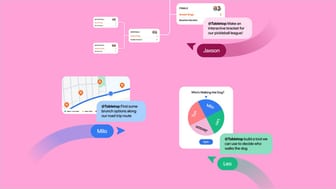
    Google AI has launched Tabletop, a new experimental platform for real-time collaboration, supporting teams to generate customized itineraries, polls, expense splits, and schedules. Users can create interactive spaces via @tabletop prompts or templates, share links for multiple people to use simultaneously, similar to Google Docs. It is currently rolling out to users over 18 in the US via a waiting list.

  7. Google Developers Blog78

    Google releases generative UI open protocol A2UI 1.0

    Google has released the Generative UI Open Protocol A2UI 1.0, which is the first stable version of the protocol, allowing AI agents to respond with interactive interfaces instead of plain text. Version 1.0 adds bidirectional function calls, accessibility support, and extended metadata, and provides open-source rendering SDKs for Web, Android, iOS, as well as agent SDKs for Python, TypeScript, and Dart.

    Why it matters: A2UI 1.0 extends agent output from pure text to native interactive interfaces, providing multi-platform renderers and integration scheme examples, allowing for judgment on the implementation methods of generative UI.

Nov 11Wed
  1. Databricks Blog58

    Databricks Genie Ontology's enterprise context layer brings business understanding to ChatGPT, Claude, Microsoft Copilot Cowork, and Grok Bot

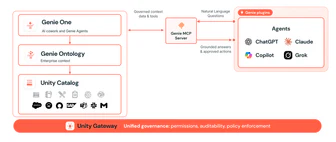
    Databricks releases Genie Ontology, an enterprise context layer, combining managed definitions with continuous learning of organizational knowledge to provide business understanding capabilities for AI agents. Genie plugins support ChatGPT, Claude, Microsoft Copilot Cowork, and Grok Bot, enabling teams to maintain business context in Databricks and use it across multiple agents.

  2. The Decoder

    Anthropic claims AI has weakened NVIDIA's CUDA advantage, reducing the time to switch to AMD chips to three days.

    Anthropic claims to have reduced the time to migrate its AI model, Claude, to AMD GPUs from several months to three days with almost no human intervention, thereby breaking its reliance on NVIDIA. The company states that the AI model Mythos has completed 99% of the kernel migration or writing work, allowing the new hardware to reach a usable performance level in three days, while traditional engineering methods require six to twelve months.

  3. ITHome · AI

    Adobe announces four AI experimental projects: transforming photos into 3D scenes in seconds, and designing AI characters through chat.

    Adobe announced four AI experimental projects: Project Screen Test designs AI characters through dialogue; Project Sight Span converts photos into explorable 3D scenes; Project Sound Bender allows free adjustment of video sound effects; Project Rinse Repeat automatically replicates editing operations.

  4. The Verge · AI

    Adobe experimental AI tool: makes photos explorable, AI characters can converse, editing like copy and paste

    Adobe has launched experimental AI tools Project Screen Test to design AI characters through dialogue and generate audition animations; Project Sight Span converts photos into explorable 3D environments; Project Sound Bender allows users to customize sound effects like a color wheel; Project Rinse Repeat can replicate edits and apply them automatically to other objects in the same image

  5. Hacker News · AI hot posts

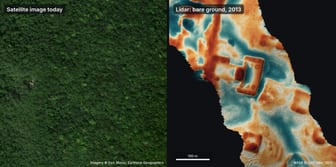
    Google SWE uses 48 AI agents to analyze NASA radar data, discovering unreported Mayan pyramids in Mexico within 72 hours

    Google SWE uses 48 AI agents to analyze NASA radar data, discovering unreported Mayan pyramids in Mexico within 72 hours; the agents process 1,200 km² of radar images, identifying suspected pyramids, plazas, and reservoir structures with right angles and sharp corners, which have been confirmed by the National Institute of Anthropology and History of Mexico as not being in the registered records.

  6. Mastra Blog

    Mastra launches MCP Tasks feature to run background long tasks

    Mastra allows users to use tasks to run long tool calls in the background via MCPServer and MCPClient. The agent can poll the server until the task is completed and obtain the results; the agent is blocked during the tool call. The task feature enables the agent to respond to user requests while performing slow or expensive computations, for example, the agent runs a 30-day warehouse report in the background while continuously answering questions.

  7. Google AI Blog

    Google Arts & Culture's open-source multimodal model Veo recreates the early memories of artist Esther Mahlangu

    Google Arts & Culture open-sources multimodal model Veo, transforming the early memories of artist Esther Mahlangu into video, completing an online retrospective exhibition of her life. The model is based on 45 stories and archival materials, generating images and converting them into video to present key memories such as her 10th birthday discovery of her painting talent.

  8. Ant Group inclusionAI · Hugging Face new models

    inclusionAI/ZoomGain-4B released: A fine-grained visual supervision model based on global-to-local visual perception gaps

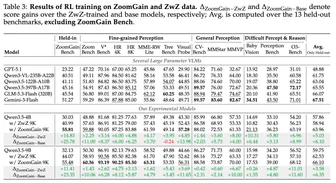
    inclusionAI has released the ZoomGain-4B large language model, achieving a score of 61.08 on ZoomGainBench and performing excellently on multiple fine-grained perception and general perception benchmark tests; the model is built with supervision based on the global-to-local visual perception gap mined from global image details, supporting English and Chinese Q&A, and can be downloaded via Hugging Face.

  9. Ant Group inclusionAI · Hugging Face new models

    inclusionAI/ZoomGain-4B-GGUF released: Multimodal model supporting image input

    inclusionAI/ZoomGain-4B-GGUF is a 175B parameter multimodal model supporting image input, using FP16, Q8_0, and Q4_K_M precision quantization. The model includes a language model and mmproj visual encoder/projector, converted to GGUF format via llama.cpp. It provides llama-mtmd-cli for command-line inference and llama-server for network chat functionality.

  10. Ant Group inclusionAI · Hugging Face new models

    inclusionAI/ZoomGain-9B-GGUF Released GGUF Format Weights

    The GGUF format weights for inclusionAI/ZoomGain-9B have been released, converted using llama.cpp, with the language model in FP16, Q8_0, Q4_K_M. The visual encoder and projector (mmproj) also adopt this quantization scheme. Both the language model and mmproj files need to be provided for image input, supporting CLI inference (llama-mtmd-cli) and Web Chat (llama-server) deployment.

  11. Hugging Face Daily Papers

    InfraRSI: Utilizing recursive self-improvement training infrastructure

    InfraRSI transforms open-ended human instructions into validated training optimization through a five-stage workflow, achieving up to 2.75x acceleration in four single-node and multi-node dense as well as Mixture-of-Experts (MoE) LLM workloads, and increasing the average model FLOPs utilization (MFU) from 17.4% to 30.0%, surpassing existing tuners and coding agents.

  12. Hugging Face Daily Papers

    World In-Context Learning for Agentic Robot Manipulation

    World In-Context Learning (WICL) method freezes the model, practices tasks in simulators, and writes feedback into the context rather than weights, enabling robots to learn operational skills from a single demonstration. RoboScript implements WICL, achieving an 83.4% success rate on 50 tasks in RoboTwin 2.0 with no gradient updates from a single demonstration, surpassing the strongest training strategy by over 20 points, and supports cross-visual distribution generalization, improvement through reflection, base model extension, and cross-platform memory migration.


  13. Hacker News · AI hot posts

    Apple's new Mac app Harbor is about to launch, simplifying the running of local AI models.

    Apple's new app Harbor can convert a Mac into a private AI inference server, supporting the local running of open-weight models on Apple Silicon, with data not leaving the hardware or cloud. By connecting multiple Macs via Thunderbolt 5, unified memory can be aggregated, supporting large models and higher concurrency. The app is currently in the private preview stage of the Claris brand and is expected to be released to the public soon.