Skip to content
Live
Nov 10Tue
  1. Berkeley AI Research22

    BAIR at CoRL 2026

    BAIR team presented multiple research achievements at the Robot Learning Conference (CoRL) held from November 9 to 12, 2026, in Austin, Texas, including 33 main conference papers, 4 breakthrough posters, 10 oral presentations, and 7 thematic speeches, among which Professor Negar Mehr will deliver an early career keynote speech. The conference covers topics such as robotic vision-language-action models, embodied agents, fine-grained manipulation alignment, and hindsight reward editing.


  2. Latent Space58

    Frontier Labs purchased Handshake AI data for in-depth analysis.

    Frontier Labs' AI training business reached $1 billion in revenue within a year. Handshake AI demonstrated its intelligent agent evaluation environments in finance, biology, and coding, including bank email processing, brain tumor tissue image recognition, and file access simulation tasks. VIALS, as a benchmark in the biology field, tests the model's ability to understand scientific images.

  3. Meta Engineering38

    LLDB extension architecture supports application debugging across CPU and GPU

    LLDB supports application debugging across CPU and GPU through the neutral accelerator plugin architecture of lldb-server, separating general debugging infrastructure from hardware-specific device control, presenting CPU and GPU as independent debugging processes that work together in a single debugging session. This architecture converts hardware-specific debugging APIs into concepts understood by LLDB through plugins, supporting collaborative debugging of CPUs and GPUs with different architectures, registers, memory spaces, and execution models while maintaining the neutrality of the client.

Nov 9Mon
  1. ITHome · AI67

    Google expands its TPU chip lineup with the launch of two new products, 8tx/8i Max, to challenge NVIDIA

    Google launches two new products, TPU 8tx and TPU 8i Max, targeting confidential computing and ultra-long context window AI applications, aiming to challenge NVIDIA's position in the AI chip market. TPU 8tx works with AMD chips, TPU 8i Max integrates two chips to provide stronger computing power. Both products are expected to launch next year.

  2. QbitAI82

    Tencent Hunyuan Hy4 released: 770B total parameters, 49B activation parameters, first supports native vision and computer operation

    Tencent Mixuan Hy4 is officially released, with a total of 770B parameters and 49B activation parameters. It introduces native visual capabilities and computer operation support for the first time, while also upgrading command compliance, long text understanding, and long-range Agent capabilities. The model has been launched on products such as Tencent Cloud TokenHub, WorkBuddy/CodeBuddy, and Yuanbao. API access has been provided to platforms like OpenRouter, Hermes, and OpenCode, with weights to be open-sourced in the near future.

    Why it matters: The author uses multiple long-range tasks to test the autonomous execution and self-check capabilities of the open-source model 'Hunyuan Hy4', thereby judging the actual level of open-source models in Agent delivery.

  3. MIT News · AI38

    MIT develops FLEX platform to help robots understand natural language instructions

    The FLEX platform developed by researchers from MIT and New York University enables robots to infer deep meaning from natural language instructions, enhancing their motion planning capabilities. The platform uses GPT-4o to analyze instruction patterns, allowing robots to avoid electronic devices such as laptops and phones in virtual scenarios without explicit instructions. The entire process takes about five seconds, aiming to help robots understand the underlying intent behind human instructions.

  4. MIT News · AI52

    WorldParticle: A single AI model simulates the behavior of multiple materials

    The WorldParticle model can simulate various material behaviors, from sliding sand to folded proteins, by decomposing objects into thousands or millions of three-dimensional particles and using neural networks to predict their motion without needing to write specific equations for each material and process. The model offers higher accuracy than numerical simulation methods in simulating deformable objects, granular materials, and proteins, and can optimize computational efficiency through hybrid techniques.

Nov 8Sun
  1. QbitAI42

    Qualcomm showcased the edge-side MoE intelligent agent at the CIIE, driving edge-side AI from single-point applications to intelligent agent experiences

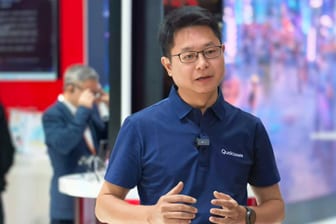
    Qualcomm showcased its edge-side MoE intelligent agents at the 9th CIIE, driving edge-side AI from single-point applications to intelligent agent experiences. MoE technology enhances the intelligence level of edge-side models through mixed expert modules, achieving higher complexity task completion in the 2 billion to 3 billion parameter scale. Qualcomm collaborated with Infris AI, Changelong, and Jieyu Xingchen to optimize models, inference, storage, and chip platforms, demonstrating a systematic solution for edge-side AI ecosystem synergy.

  2. ITHome · AI67

    OpenAI GPT-6.1 Sol involved in live mouse brain surgery: Continuous operation three times, positioning error halved

    OpenAI GPT-6.1 Sol performed three consecutive operations in the brain of a living mouse during surgery, improving its localization performance based on surgeon feedback, reducing the time from 169 seconds to 86 seconds, and reducing the localization error from 0.6 mm to 0.3 mm, a 50% reduction in error. The research team had the model participate in localization tasks for two key anatomical landmarks, Bregma and Lambda, on the surface of the mouse skull. Images, data, and correction records were saved after each operation for future reference.

  3. OpenAI Agents SDK releases22

    OpenAI Agents SDK v0.24.0-alpha.7 released

    OpenAI Agents SDK v0.24.0-alpha.7 released, supports classic workflows and native execution, adds voice and managed tools, introduces persistent session storage and context control. The new version defaults to strict mode execution, requiring updates to existing environments; bundled model default inference strength is increased to medium.

  4. ITHome · AI65

    Sony launched the 'dual-path visual information fusion in-vehicle passenger dizziness detection' technology

    Sony globally launched the 'dual-path visual information fusion in-vehicle passenger dizziness detection' technology at the CIIE, which predicts passenger dizziness levels by analyzing the front road view and rear seat screen content. The evaluation results can be used to remind drivers to reduce hard braking or turning, or to recommend visually less changing content for content platforms. This solution reuses the ADAS front view camera and does not require a new rear seat camera.

  5. ITHome · AI65

    The remastered version of 'The Legend of Zelda: Ocarina of Time' runs on jailbroken PS5 and iPhone

    After the Nintendo 'The Legend of Zelda: Ocarina of Time' remastered version launched on Switch 2 on November 5, developers have successfully run it on jailbroken PS5 and iPhone. The PS5 version is based on the EglantinePS5 project, with a frame rate of about 15-20 FPS under the 12.40 firmware, but there are memory issues and rendering problems, with the patch written by Claude.

  6. Hugging Face Daily Papers65

    VisSearch-Bench evaluates the performance of multimodal agents in long-term visual search

    VisSearch-Bench evaluated the performance of 16 multimodal models on 204 human-written visual search tasks that require integrating visual context with external information, with the results showing that the best system only fully solved 26.47% of the tasks. The benchmark covers 7 major areas, including set-based visual search and sequential visual search, and evaluates task completion and the correctness of reasoning steps through accuracy and process scoring.

Nov 7Sat
  1. ITHome · AI70

    Google's AI-PPG-ACC-HTN study published in Nature: Using consumer-grade smartwatches to detect hypertension without a cuff

    Google has released a multimodal AI system, AI-PPG-ACC-HTN, which does not require wristband calibration and passively detects persistent hypertension using a standard consumer-grade smartwatch. The results were published in Nature. The study included 196 participants across 5 clinical centers, using 24-hour ambulatory blood pressure monitoring as a reference. Initial screening showed a specificity of 90.0%, a positive predictive value of 80.6%, and a sensitivity of 65.8%. Diagnostic testing showed a positive predictive value of 96.7%, a specificity of 90.9%, and a sensitivity of 78.4%.

    Same story — showing the featured version《Google Research uses smartwatch sensors to identify signs of hypertension.》

  2. Baseten Labs65

    Research shows that on-policy self-distillation (OPSD) is biased and has limited effectiveness

    Research indicates that on-policy self-distillation (OPSD) may still be valuable in specific scenarios, but more research resources should not be invested. OPSD trains through the outputs generated by the student model itself with context prompts, but research shows that this intensive supervision may introduce bias, especially for trained models, making it less effective.

  3. AWS Machine Learning Blog42

    AWS releases serverless MCP server for accessing AI agent data lake on Amazon ECS Fargate

    AWS launches serverless Model Context Protocol (MCP) server on Amazon ECS Fargate to address integration challenges of LLM agents accessing corporate data lakes in AI applications. The server achieves metadata-driven, configurable data lake access without the need to write integration code for each dataset, and supports elastic scaling in multi-tenant environments.

  4. AWS Machine Learning Blog58

    Amazon SageMaker Inference now supports Multi-Instance GPUs to maximize GPU utilization

    Amazon SageMaker Inference now supports GPU partitioning, dividing physical GPUs into independent partitions via NVIDIA Multi-Instance GPUs (MIG), where each partition receives a fixed share of GPU computing units and dedicated memory blocks for isolation. Deploy more models in isolation and choose the appropriate size of GPU units on demand to reduce costs, with a maximum of 7 partitions per GPU, no need to build Kubernetes yourself.

  5. Mastra Blog38

    Mastra agents now support receiving doorbell events via Ring signals.

    Mastra agents can use Ring signals to receive doorbell events, with each event arriving at the agent thread as a notification signal with configurable priority. Agents can retrieve snapshots or video clips from the Ring API and decide on actions when someone presses the doorbell, such as security agents detecting human motion, viewing snapshots, and marking visits requiring urgent attention, or delivery assistants notifying package delivery.

  6. AWS Machine Learning Blog38

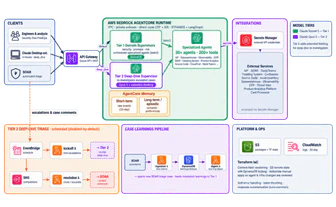
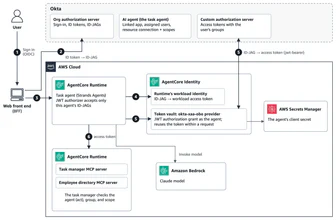
    Greenlight Financial builds an autonomous secure operations center solution based on Amazon Bedrock AgentCore

    Greenlight Financial autonomously processes over 90% of 4,000 security risk cases each month. Its solution, Luna, runs on Amazon Bedrock AgentCore, which includes over 30 specialized agents. Through AgentCore's runtime and memory support for hierarchical multi-agent systems, it achieves second-level security event triage in seconds without human intervention.

Nov 6Fri
  1. Hugging Face Blog58

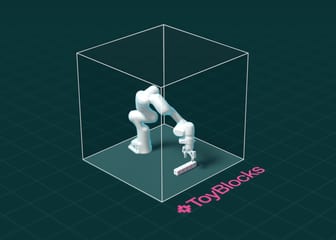
    Hugging Face released ToyBlocks: A controlled world framework for robot learning and evaluation

    Hugging Face released ToyBlocks, a framework for robot learning and evaluation that provides a controlled simulation environment. The framework supports automatically generating tasks and training demonstrations, and includes metrics to measure changes in robot behavior over time, aiming to study how models improve with more training data and how to combine advanced reasoning with precise physical control.

  2. The Decoder73

    Thinking Machines has released the Inkling 2 Small, claiming it is the strongest Western open-source weight model.

    Thinking Machines releases second-generation model Inkling 2 Small, using MoE architecture, with total parameters of 594B and activation parameters of 17B, supporting text and image input and adjustable thinking depth.

    Why it matters: The original text provides specific comparisons of the new model in terms of intelligence index, agent tasks, and cost, allowing readers to judge the competitive position of open-source weight models accordingly.

  3. 36Kr · AI

    Midea's Whole-Home Intelligent Anchoring A2A: Home appliance interconnection is moving from 'interface docking' to 'Agent dialogue'

    Dr. Shang Zhe, General Manager of Midea's Whole-Home Intelligent, pointed out that the industry's bottleneck lies in heterogeneous device data silos, interaction effect gaps, and deployment barriers. Traditional API connection solutions are difficult to popularize due to the exponential increase in costs. Midea's self-developed family intelligence body MevoX achieves cross-brand collaboration by enabling AI Agents to directly communicate. It has completed vehicle-home integration with Chery iCAR, supports fuzzy intent reasoning and long-term memory, and has connected with ecological partners such as Huawei and BYD. As the first home appliance company to achieve A2A collaboration of family intelligence bodies, Midea is driving the industry to shift from hardware scale to Agent reasoning and cross-ecosystem collaboration efficiency competition.

  4. MarkTechPost71

    Thinking Machines has released the Inkling 2 Small: a MoE model with 594B total parameters and 17B activations.

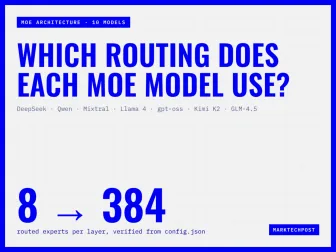
    Thinking Machines Lab released the first model of the second-generation Inkling, Inkling 2 Small, a sparse MoE with 594B total parameters and 17B activation parameters, supporting text and image input and variable inference strength, with a context of 1M tokens.

  5. ITHome · AI72

    Meta launches real-time voice chat and virtual avatar features for AI assistant Muse

    Meta announces the launch of real-time voice chat and virtual avatar features for its personal AI assistant Muse, rolling out first to users in the United States, covering mobile, web, and Mac apps. The feature is supported by two models, Muse Realtime Voice and Muse Realtime Avatar, capable of streaming vertical videos at a resolution of 448×768 and 25 frames per second. The delay from the user finishing speaking to receiving the first audiovisual response is approximately 870 milliseconds.

    Why it matters: The original text provides the latency, resolution, and interaction methods for real-time voice and virtual avatars, allowing readers to judge the maturity of such face-to-face intelligent agent interactions.

  6. ITHome · AI

    World Labs has launched the Frameboy project: real-time exploration of AI-generated worlds on the web.

    World Labs has introduced the Frameboy project, allowing users to explore AI-generated worlds based on its Atlas model in real-time via web, with support for cloud GPU streaming up to 15 frames per second. Users can click on different 'game cartridges' to select and explore simulated worlds, with controls implemented through touchscreens or keyboards.

  7. MarkTechPost72

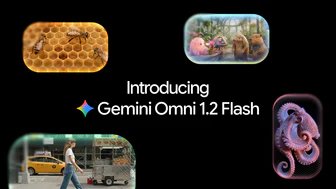
    Google releases Gemini Omni 1.2 Flash, supporting 15-second videos, priced at $0.07 per second for 720p

    Google releases video generation and editing model Gemini Omni 1.2 Flash, natively supporting up to 15-second clips, with 720p video pricing at $0.07 per second, a reduction of about 30% compared to Omni 1.1 Flash

  8. ITHome · AI78

    Ant Group's Baidu Ling-3.2-flash releases a native multimodal model, with three benchmarks surpassing Claude Opus 5

    Ant Media official team releases native multimodal model Ling-3.2-flash, with a total of 560B parameters, 25B activation parameters, and 1M context window, supporting image, text, and video input.

    Why it matters: The original provides three benchmark comparisons and API pricing, allowing readers to judge the capability position and call cost of this multimodal model.