Skip to content
Live
Nov 11Wed
  1. Mastra Blog65

    Mastra Platform introduces a $25 starting plan.

    Mastra Platform introduces a $25 starting plan, increasing the limits for computing, data, and observability events, including a small dedicated server. The free tier has been renamed to Free, and the Starter plan includes server computing resources. All plans have updated resource limits, and the Server Always-On project will be migrated to a medium project size.


  2. Databricks Blog

    Databricks integrated Unity Catalog Metric Views into Power BI: a unified governance semantic layer solution.

    Databricks released Unity Catalog Metric Views integration with Power BI functionality, extending the unified governance semantic layer to Power BI, allowing each Power BI report to use managed UC metric views the same as AI/BI dashboards and Genie, business users can build reports and explore metrics autonomously, data teams only need to maintain a single definition in Databricks.

  3. Claude · YouTube

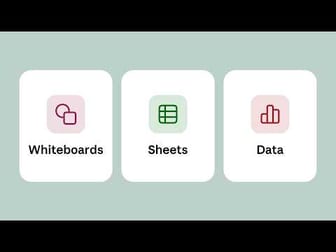
    Claude is launching whiteboard, spreadsheet, and data analysis features.

    Claude Whiteboards and Claude Sheets enter beta, Claude Dashboards officially launch as Claude Data

    Same story · 2 outlets

    How the accounts differ:The Verge states Claude Data is open to all paid users, while TechCrunch and The Decoder do not mention this.

  4. LangChain Blog

    Workday how to build an AI intelligent agent platform with LangGraph and LangSmith

    Workday has utilized LangGraph for agent orchestration and LangSmith for tracking and evaluation, reducing prototype development time from 5 months to within 1 day with a 4-person team by 2025 and supporting production environment deployment. Its Python SDK 'Workday LangChain' encapsulates LangChain core components and routes through internal services (including LLM gateway, RAG retrieval) while meeting enterprise-level security and compliance requirements.

  5. AWS Machine Learning Blog

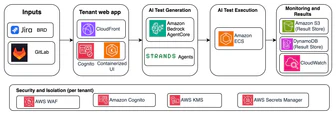
    How TCS uses Amazon Bedrock AgentCore to build an agentic test orchestrator

    TCS has built an Agentic test orchestrator for BFSI clients, transforming requirements into executable controlled tests through Amazon Bedrock AgentCore, breaking down tests into dedicated tasks and executing them using their respective agents, tools, and validation rules, while meeting project-specific context, API, and browser UI testing, tenant-level security isolation, and repeatable test path requirements, significantly improving test throughput and allowing engineers to focus on risk analysis and exploratory testing.

  6. n8n Blog62

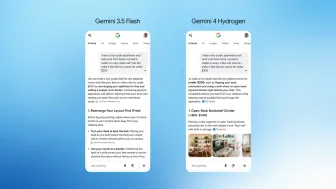
    Google Gemini 4 Carbon is released in n8n, enhancing the security, reliability, and efficiency of agents and workflows

    Google Gemini 4 Carbon has officially launched on n8n, being Google's strongest model, scoring 53.9% on AutomationBench. It significantly improves in security (SEC-bench Pro 88.2%, ExploitGym 54.8%, CWE-bench 71.0%), long task processing (internal testing lasting several days), and reasoning, and has zero vulnerability to Gray Swan prompt injection attacks (0.0%).

  7. Factory News

    Secure Factory: Connecting Security Discovery, Remediation, and Validation into a Continuous Workflow

    Security Factory connects the signal, classification, and remediation three stages to help engineering teams transform security discoveries into test fixes. It integrates existing tools and contextual information, automatically coordinates investigation tasks, generates a risk-prioritized remediation list based on validation, and simplifies the entire process from discovery to remediation.

  8. Amp News65

    Amp launches new deployment tool Boxes: small, cheap, and permanently running computing units

    Amp launches Boxes, a permanently running, small, and affordable computer where users can deploy software built with Amp, with the smallest model priced at $18 per month, supporting the operation of any application and equipped with an AI agent to manage deployed applications and production data. Users can create, deploy applications, and control the power on/off of Boxes via the agent as needed, supporting minute-by-minute billing and default continuous operation.

  9. MarkTechPost

    Zyphra has released ZONOS3-Mini: an 800M parameter open-source speech synthesis model.

    Zyphra has released ZONOS3-Mini, an open-source speech synthesis model with 800M total parameters and 100M active parameters, supporting real-time local deployment and zero-shot voice cloning. The model ranks first in the open model category in Zyphra's self-developed ZTTS2-Eval benchmark test (66.2 points), with the first audio generation on a single H100 GPU taking 80 milliseconds, but the reference audio cloning effect is far lower than the embedded mode.

  10. Mastra Blog

    Mastra FDE released: Pre-deployment engineering plan for AI engineers

    Mastra FDE is a pre-deployment engineering plan for all teams building AI agents. By deploying engineers familiar with Mastra at a cost lower than hiring one senior AI engineer, it assists teams from the first week in architecture design to production deployment, and provides regular 1:1 communication, consulting, or proactive development support. It also includes access to a Slack channel with founders and engineers, quick response, roadmap insights, customized training, and the full suite of Mastra Enterprise features.

  11. TechCrunch · AI

    Google releases two new TPU chips to expand AI hardware portfolio

    Google has released two new TPU chips, TPU 8tx and TPU 8i Max, for AI workloads, expanding its chip portfolio to confidential inference and larger memory capacity. The TPU 8tx was developed in collaboration with AMD, designed specifically for confidential training and running AI models, with hardware-level direct integration of security features; the TPU 8i Max combines two TPU 8i chips, doubling memory capacity, processing power, and bandwidth, supporting AI models to handle a wider range of information.

    Same story · 4 outlets

    How the accounts differ:MarkTechPost states TPU 8tx uses TPU 8t chips paired with 5th gen AMD EPYC, while TechCrunch mentions it was co-developed with AMD for secret training and running AI models with direct hardware security integration.

Nov 10Tue
  1. The Verge · AI

    Adobe is fully committed to AI

    Adobe announced that it will introduce chatbots and AI agents as the next-generation design assistants, even automating creative workflows and repetitive tasks. At the Adobe Max conference in Miami, Adobe introduced a feature that allows third-party AI agents to access and modify Creative Cloud projects, new features for the Firefly AI assistant, and the ability of AI agents to perform repetitive tasks in the background.

    Same story · 3 outlets

    How the accounts differ:The Verge states Adobe will automate creative workflows and repetitive tasks; TechCrunch only mentions injecting AI features into products.

  2. ITHome · AI

    Adobe Creative Cloud integrates with third-party AI agents, supporting local photo and video editing in the future

    Adobe announced new features at the MAX conference, allowing third-party AI agents to directly access and modify Creative Cloud projects via the Local Model Context Protocol (MCP), supporting AI agents from companies like OpenAI, Google, and Anthropic for background processing of regular tasks, and the Firefly AI assistant beta version adds planning mode, model selector, and Firefly Boards support.

    Same story · 3 outlets

    How the accounts differ:The Verge states Adobe will automate creative workflows and repetitive tasks; TechCrunch only mentions injecting AI features into products.

  3. TechCrunch · AI

    Kora Systems has released a Linux desktop operating system for the AI era called Kora.

    Kora Systems released the Linux desktop operating system named Kora on November 10, 2026, integrating AI models and agents, supporting cross-application collaboration, file access, and context preservation between tasks, planned to be launched for free in 2027, accelerated development based on OpenAI Codex and Anthropic Claude, targeting heavy AI users.

  4. TechCrunch · AI

    Adobe is introducing AI agents and new creative tools into Photoshop, Premiere, and Firefly.

    Adobe announced at its MAX conference that it will add more AI features to Photoshop, Premiere, Illustrator, and InDesign, while expanding the AI capabilities of Firefly and launching a creative AI agent.

    Same story · 3 outlets

    How the accounts differ:The Verge states Adobe will automate creative workflows and repetitive tasks; TechCrunch only mentions injecting AI features into products.

  5. n8n Blog

    n8n Labs releases independent personal intelligent agent Nod: an open-source Agent running on a local computer

    n8n Labs has released an independent personal intelligent agent called Nod, an open-source Agent that runs on a user's local computer. Nod has its own computer and browser and can complete tasks that chat tools cannot handle, such as unsubscribing, monitoring prices, booking hotels, etc., and can execute multiple tasks in the background in parallel. It supports users in selecting AI providers and has long-term memory capabilities, scoring 93.2% on the LongMemEval benchmark test.

  6. Hacker News · 300+65

    Show HN: Every satellite that passed over any place this week, and its photos

    A user developed a browser-based tool that allows inputting a location to query all satellites passing over it in the past 7 days and their real images (Sentinel-2/Landsat/NASA), rendering approximately 17,000 on-orbit objects via GPU and calculating Kepler's equations in real-time to achieve high-precision positioning. The tool only displays real satellite data and does not store user locations.

  7. Hugging Face Daily Papers

    ReproBridge: Building reproducibility for machine learning research artifacts

    ReproBridge enhances the success rate of machine learning experiment replication through standardized design (refined codebase, environment setup, experiment launchers, and replication guides), increasing the average replication rate of four models from 76.4% to 92.6% on ReproBridge-Bench. Refined artifacts reduce the average downstream API cost by 19.7%, narrow the success rate gap between models to 3.9 percentage points, and achieve a success rate above 90% for all models. Removing code or environment components significantly reduces replication effectiveness.

  8. ITHome · AI65

    Samsung Electronics plans to complete the development of the advanced packaging technology '3D Cube-H' by early next year.

    Samsung Electronics plans to complete the development of advanced packaging technology '3D Cube-H' by early next year. This technology stacks multiple chips vertically through hybrid bonding, with terminal spacing of about 6 μm, much smaller than the 25 μm of traditional TC bonding, aiming to increase connection density, reduce energy consumption, and optimize heat dissipation, primarily targeting ultra-high-performance AI chips.

  9. ITHome · AI

    Microsoft's new patent targets idle GPUs: Users contribute GPUs to train AI and can receive cash or free software

    Microsoft has announced a new patent that allows users to contribute idle GPU computing power to participate in AI training and get paid. The system breaks down training tasks into micro-tasks and distributes them to idle devices for execution, with users able to earn points to exchange for free software, cash, etc. Microsoft plans to open this solution to third-party organizations to alleviate the issue of AI training computing power shortages, but users need to actively authorize and privacy protection issues remain to be resolved.