Skip to content
Live
Oct 24Sat
  1. QbitAI

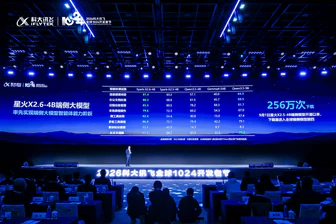
    iFlytek launched the Xingchen TaaS platform for the first time, making Tokens truly productive for thousands of industries.

    iFlytek released the Xingchen TaaS platform, which transforms Token consumption into business value such as simultaneous interpretation translation and digital employees through intermediate capabilities like model scheduling and intelligent agent engines. It provides solutions for industries such as enterprise services, finance, and healthcare, ensuring that Tokens are not wasted. The Spark X2.6 edge model is open-sourced, with an expanded context window to 1 million Tokens and an edge-cloud routing accuracy of 96.1%.
Oct 23Fri
  1. Tessl Blog38

    Who should own the keys when writing code through an agent?

    The amount and speed of code generated by the agent make manual review a bottleneck; the team needs to use tools as a substitute; the agent is only responsible for writing code without deployment permissions, deployment is controlled by pipelines; all data read by the agent is considered untrusted, the pipeline must ensure security through hash verification and short-term identity, and continuously monitor permission changes.

  2. 36Kr · AI75

    Yuzhu Wang Xingxing: Physical AI will break through in the next two to three years, very afraid of wasting every day.

    Wang Xingxing, founder of Yuzhu, stated at the 2026 World Physics AI Conference that physical AI may achieve major breakthroughs in the next one to three years. He believes that general large models like GPT-6 Astra can directly control robots to complete some tasks, although there are still shortcomings in perceiving real environmental changes and correcting operational errors.

Oct 22Thu
  1. 36Kr · AI65

    Chenjing Technology empowers steel plants with physical AI for intelligent inspections.

    Chenjing Technology showcased its physical AI inspection solution for the steel industry at the 2026 Yushu Technology Partner Ecosystem Conference, based on a general quadruped robot to achieve autonomous navigation, obstacle avoidance, equipment data collection, and hazard identification and early warning, replacing high-risk, repetitive manual inspections. The solution has been implemented in multiple steel plants, verifying the feasibility of model and real machine alignment in industrial scenarios.

  2. ITHome · AI

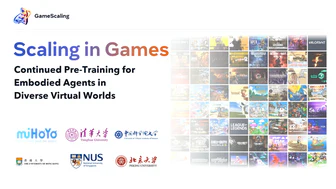
    MiHoYo, in collaboration with Tsinghua and Peking Universities, has released the open-source GameScaling game model, covering parameter scales from 0.8B to 27B.

    MiHoYo, in collaboration with Tsinghua and Peking Universities, has released the open-source GameScaling game model, covering parameter scales from 0.8B to 27B. This series of 8 models is based on the Qwen3.5 visual language model for continued pre-training, with training data involving games such as Minecraft and Doom. The model generates subsequent instructions based on game screens and operation records, supporting real-time game interaction. There are two versions for each of the 4 parameter scales: S1 and S3, and they are licensed under Apache 2.0.

  3. Hugging Face Daily Papers65

    Hugging Face Daily Papers: Research on continuous pre-training of embodied agents in diverse virtual worlds

    Research has improved the learning ability of embodied agents in virtual worlds through continuous pre-training (CPT) across three dimensions: data scale, diversity, and model size, but there are limitations in long-distance world generalization. The study tested 120 configurations covering parameters from 0.8B to 27B, data budgets from 50 to 1600 hours, and five data mixtures. It was found that increasing data volume improves internal performance, diversity enhances related world transfer, and larger model sizes improve data efficiency but result in worse long-distance generalization.

Oct 21Wed
  1. NVIDIA Blog58

    NVIDIA European partners expand computing capabilities, building sovereign, open, and secure AI agent cloud ecosystems.

    NVIDIA European partners are expanding regional computing capabilities to support model training and inference, helping developers build agentic and physical AI applications. Nscale achieves 37% more GPUs and 50% higher inference throughput using the NVIDIA DSX platform, Crusoe develops a liquid-cooled AI factory for low-latency inference, and Nebius adopts the NVIDIA Groq 3 LPX to accelerate sensitive applications.

  2. QbitAI65

    Motubrain team from Shengshu Technology will live stream the entire process of Physical AI training, lasting for half a month.

    The Motubrain team from Shengshu Technology has launched a live stream of the 2.0 training process, lasting for half a month to showcase the training process of embodied models. The live stream covers four stages: pre-training, post-training, Agent task execution, and RSI exploration, opening the process from model training to capability iteration to the public. This move aims to enhance the transparency of Physical AI R&D and share research experiences in large-scale training and cross-task generalization.

  3. Hugging Face Blog66

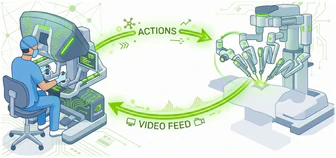
    NVIDIA has released the Cosmos3-H-Dreams surgical generative simulation model.

    NVIDIA has released Cosmos3-H-Dreams, extending interactive generative simulation to clinical gallbladder removal scenarios, capable of generating surgical scenes in real-time based on instrument movements.

    Why it matters: The original text explains the migration path from desktop stitching to clinical cholecystectomy scenarios, as well as the trade-off between quality and delay between four-step and two-step distillation checkpoints.

Oct 20Tue
  1. Tessl Blog75

    From Standalone Coding Tools to Development Platforms: How Trust Affects the Adoption of AI Code Assistants

    Engineering teams' trust in AI code assistants determines their scope of use, ranging from viewing code differences to full authorization for merging. Trust is built through rapid validation mechanisms. Development platform costs increase with the intensity of AI agent work, with about 80% of the budget consumed by 20% of heavy users, requiring an evaluation of the effective cost per unit of work. Successful teams start with auxiliary tasks and gradually expand the scope of AI, rather than applying it directly to core systems.

  2. AI as Normal Technology75

    New paper: Rising trend in AI agent evaluation

    Researchers have proposed 33 trends in the rise of AI agent evaluation, pointing out that evaluating agents is more complex than evaluating models, requiring attention to the entire behavioral trajectory rather than just results, and emphasizing that the scope of evaluation needs to be expanded to laboratories, specific use cases, and real-world environments, while calling for more interdisciplinary evaluators to participate and ensure their independence.

Oct 19Mon
Oct 18Sun
  1. NVIDIA Blog

    NVIDIA RTX Spark laptops are officially launched, featuring Blackwell RTX GPUs and an AI platform.

    NVIDIA RTX Spark laptops are now available, equipped with Blackwell RTX GPUs, up to 128GB unified memory, and the full NVIDIA AI platform, starting at $2399. They are launched by ASUS, Dell, HP, Lenovo, Microsoft, and MSI, bringing powerful local AI, content creation, and gaming capabilities to portable devices. NVIDIA held global launch events, including one in Berlin, where founder Jensen Huang made a surprise appearance.

Oct 16Fri
  1. Meta Engineering

    Meta How to Build Forum Applications with Native AI Engineering

    Meta uses AI agents to participate in the construction of engineering processes for Forum applications, viewing AI as a participant in the engineering process rather than an auxiliary tool. This experiment measures success by production-ready outcomes rather than lines of code, using a Human-On-The-Loop model to allow AI to autonomously execute planning, implementation, testing, and validation, with engineers responsible for setting goals, supervision, and acceptance.

Oct 15Thu
Oct 8Thu
  1. NVIDIA Blog

    NVIDIA and Microsoft team up to usher in a new era of AI agents for Windows PCs: RTX Spark and local AI calculator

    NVIDIA and Microsoft collaborate to launch RTX Spark laptops and Windows AI agent infrastructure, supporting local running of 125B parameter Qwen 3.8 Flash Next models; Microsoft releases MXC operating system-level container to ensure agent secure operation, pre-orders for RTX Spark open today, paired with Grace Blackwell chip, offering up to 20 PFLOPS inference performance.

Oct 7Wed
  1. AWS Machine Learning Blog

    AWS has launched an automated value model, redefining the business case for agent automation.

    AWS has proposed an automated value model, redefining the business case for agent automation. Traditional RPA investment return models overlook the value of agent automation in exception handling, decision quality, process adaptability, and value realization. Enterprises need to consider the redeployment value of released labor time or the reduction in cash costs, as well as the cost of exception correction, to build a credible business case.

Oct 3Sat
  1. Baseten Blog

    MetaInfer skill toolbox: An inference engine optimizer built solely with knowledge achieves 50-90% faster engine performance.

    MetaInfer's skill toolbox constructs custom inference engines using only knowledge, making the Qwen-3.6-35B-A3B model 90% faster than vLLM 0.25.1 in single-stream decoding speed, and TTFT improves 2.33 times. This framework does not require model fine-tuning or dedicated adapters, enabling LLMs to achieve highly optimized inference engines for specific deployments by defining constraints and optimization goals.

Sep 30Wed
  1. Anthropic Research71

    Anthropic Research: What Work Can Robots Currently Complete?

    Anthropic has released a Robot Exposure Index study, using Claude to evaluate about 19,000 tasks in O*NET, finding that existing robots can complete 74% of physical tasks in the U.S. and account for 34% of all work time, but most are limited to controlled environments.

    Why it matters: Anthropic used Claude to rate O*NET tasks item by item, quantifying how much work robots can currently cover, and provided constraints on cost and regulation.

Sep 25Fri
Sep 24Thu
  1. Microsoft Research

    Microsoft Research explores the advantages of offloading physical AI reasoning to edge or cloud GPUs.

    Offloading physical AI reasoning to edge or cloud GPUs can significantly improve robot task success rates, support larger models, and extend battery life. In mobile operation tasks, offloading reasoning enhances robot response speed and accuracy, increases battery endurance, and reduces costs. Microsoft Research has developed a Kubernetes-based toolkit to support distributed reasoning deployment on robots, edge devices, and the cloud.

Jul 27Mon
  1. Meta AI Blog

    Meta AI's DINOv3 and SAM models help the University of Pittsburgh reshape assistive robots

    Meta AI's DINOv3 and SAM models achieve real-time perception in edge computing, supporting the University of Pittsburgh's RAMMP project development of assistive robots, interacting through natural language and image data to reduce user cognitive load, already integrated in prototypes with automatic door button detection, cup recognition, and navigation assistance features, and plans to add voice and touch input support.

Jun 30Tue
  1. Cognition Blog

    The Cognition team has launched Devin Fusion: achieving cutting-edge performance at 60% lower cost.

    Devin Fusion maintains cutting-edge and Fable 5-level performance at 60% lower cost on the new coding benchmark FrontierCode, primarily through a dual-agents architecture that runs cutting-edge models in parallel with cost-effective 'assistant' models. This architecture avoids benchmark overfitting and enhances task generality through dynamic in-session routing and deeply tuned interaction patterns, showing the most significant efficiency improvement in implementation-oriented sessions. Users can try the preview version via app.devin.ai/signup.

Jun 10Wed
Apr 3Fri
Jan 9Fri
Jun 23Mon