Skip to content
Live
Nov 6Fri
  1. Hugging Face Blog58

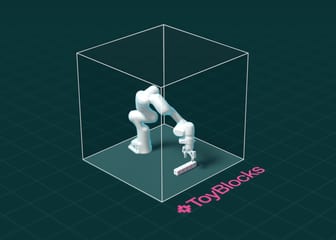
    Hugging Face released ToyBlocks: A controlled world framework for robot learning and evaluation

    Hugging Face released ToyBlocks, a framework for robot learning and evaluation that provides a controlled simulation environment. The framework supports automatically generating tasks and training demonstrations, and includes metrics to measure changes in robot behavior over time, aiming to study how models improve with more training data and how to combine advanced reasoning with precise physical control.

  2. Hugging Face Blog

    Hugging Face Open ASR Leaderboard adds Egyptian and Nigerian English datasets

    Hugging Face Open ASR leaderboard adds Liva AI private datasets for Egyptian English and Nigerian English, containing 1.34 hours and 1.55 hours of dialogue speech, to enhance the representativeness and reliability of ASR evaluation. The leaderboard now supports more detailed accent classification based on the Kachru three-circle model, covering groups such as US and non-US, inner circle and outer circle/extended circle.

  3. Google Research72

    Google Research uses smartwatch sensors to identify signs of hypertension.

    Google Research published a multimodal AI system AI-PPG-ACC-HTN in Nature, which passively identifies hypertension status without wristband calibration, using only PPG and accelerometer data from consumer-grade smartwatches.

    Why it matters: The study passively identifies hypertension using PPG and accelerometer data from smartwatches, providing quantitative results for screening and confirmation in two stages, with 24-hour dynamic blood pressure monitoring as the gold standard.

Nov 5Thu
  1. IBM Research Blog36

    ORNL, IBM, and AMD jointly announce the quantum error correction collaborative design platform

    ORNL, IBM, and AMD deploy a quantum error correction (QEC) collaborative design platform at IBM's New York Poughkeepsie campus, integrating the IBM Quantum Nighthawk r2 processor with the ORNL Umbra HPC system, which includes the AMD Instinct MI355X GPU and 5th Gen AMD EPYC™ CPU, providing low-latency quantum-classical execution capabilities for algorithm development and validation in hybrid HPC-quantum computing environments.

  2. Hugging Face Daily Papers

    PyRUA-DataFarm: Using LLM agents as low-cost robot data collection proxies

    PyRUA-DataFarm automates robot demonstration generation by simulating tasks and rendering photorealistic video at a cost lower than teleoperation. On five real robot tasks, a strategy trained only with farm data performs comparably to a strategy trained with an equivalent number of teleoperation demonstrations (success rate 93% vs 84% in 100 trials), and shows better performance on unseen new scenarios (success rate 87% vs 46%).

  3. ITHome · AI74

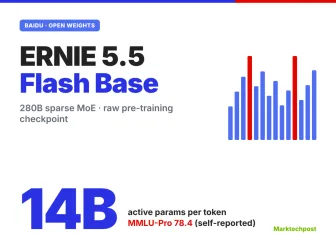
    Baidu Wenxin has open-sourced the ERNIE 5.5 Flash Base base model, with a total parameter of 280B.

    Baidu Wenxin has released ERNIE-5.5-Flash-Base and opened the ERNIE 5.5 Flash pre-trained endpoint weights. This is a sparse MoE language model with a total parameter of 280B and 14B activation per token. It was pre-trained from scratch on 33.5T tokens and supports fine-tuning and inference with a context size of up to 1M tokens.

    Same story · 3 outlets

    Why it matters: The original text provides the parameters, training data size, and open-source weights of the 280B sparse MoE base, allowing readers to judge its adaptability as a fine-tuning starting point.

  4. Hugging Face Daily Papers65

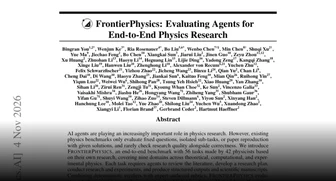
    FrontierPhysics: Evaluating Agents for End-to-End Physics Research

    FrontierPhysics is an end-to-end benchmark containing 56 expert-designed physics tasks, evaluating agents' abilities in literature review, research planning, experimentation, and paper writing, using deterministic validators and expert scoring criteria. Among 22 models and 26 configurations, no configuration passed more than 46 times out of 168 tests, with manual review showing the main weaknesses lay in insufficient rigorous reasoning and limited expert intuition, rather than physics knowledge or execution errors.

  5. Hugging Face Daily Papers65

    GameVerse: A minute-level game dataset for long-term interaction world modeling

    GameVerse includes 69.7K minute-level game clips covering 1,655 hours, 349.6 million frames, far exceeding existing datasets. Through unified scene consistency segmentation, quality filtering, camera pose estimation, and event-driven annotation, it significantly improves the reasoning duration of long-term interaction world models.

  6. ITHome · AI

    NVIDIA releases CUDA Toolkit 13.5: Officially supports Vera Rubin and upgrades multi-GPU communication.

    NVIDIA releases CUDA Toolkit 13.5, officially supporting the next-generation AI computing platform Vera Rubin and deploying for enterprise production environments. Updates and upgrades include GPU resource scheduling, multi-GPU communication, mathematical computing libraries, and performance analysis tools, optimizing cuBLAS for low-precision matrix operations on NVFP4 and MXFP8 to improve training and inference throughput.

  7. Hugging Face Daily Papers

    WebHarbor: Provides 153 executable website environments for GUI agents

    WebHarbor provides 153 executable, containerized web environments for stable evaluation and reinforcement learning training of GUI agents, supporting strong generalization across multi-step and post-authentication tasks. The suite includes 3,518 tasks, covering multi-step and post-authentication workflows, surpassing existing ones. The Qwen 4B-level GUI agent trained via reinforcement learning in WebHarbor demonstrates competitive performance with leading open-source GUI agents on four benchmarks, with code and data publicly available.

  8. Hugging Face Blog65

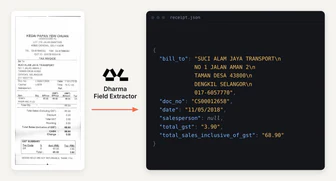
    Dharma-AI releases Dharma Field Extractor: 2B parameter model extracts any document into JSON fields

    Dharma-AI releases Dharma Field Extractor, a 2B parameter model, input document image and optional schema, output typed structured JSON, supports open extraction and schema-directed extraction, missing fields return null.

    Why it matters: The original text provides a comparison of quality and cost on self-built benchmarks, allowing readers to judge the feasibility of the small model specialized route in field extraction tasks.

Nov 4Wed
  1. Hugging Face Daily Papers34

    LoCo: A local preference learning method for reasoning compression

    LoCo teaches reasoning models when to stop reasoning through local preference learning, significantly reducing output length in mathematical and code tasks while maintaining or improving accuracy. The method reduces completion length by 41.7%--45.4% on mathematical tasks and 23.4%--36.3% on code tasks, while maintaining or improving accuracy, and achieves the best AUC on all code benchmarks. LoCo's code and models will be publicly released.

  2. Hugging Face Daily Papers65

    VidUEU-Agent: An intelligent agent for data management in multimodal understanding, editing, and unification tasks.

    The VidUEU-Agent framework solves the problem of scarce high-quality multimodal instruction data and high annotation costs in multimodal model development by automatically constructing instruction data from raw videos. The framework adopts a four-stage data construction process, combining visual language models and visual tools for evidence-based data synthesis, and utilizes downstream training feedback for autonomous iteration.

  3. Hugging Face Daily Papers38

    YANAMI: A Large-Scale Multimodal Dataset and Benchmark for Multi-Round State Interaction

    YANAMI introduces a large-scale multimodal dialogue dataset and benchmark that requires models to track and implement evolving dialogue states across rounds, revealing that current unified multimodal models still struggle with this task. YANAMI-400K contains 400,000 multimodal dialogue rounds across 4 scenarios, requiring models to continuously track, store, and revise evolving multimodal dialogue states across rounds; YANAMI-Bench contains 400 multimodal rounds for system evaluation of multimodal state interaction, jointly evaluating dialogue state understanding and visual implementation.

  4. Hugging Face Daily Papers62

    Axion 1.0: An open-source foundation model for agents, simplifying implementation

    Axion 1.0 achieves competitive agent performance through a three-stage training process (two lightweight supervised fine-tuning + reinforcement learning) using fully open-source data and training pipelines. The model employs model-aware data construction and verifiable task generation, without specialized mid-training, direct preference optimization, or policy-intrinsic distillation, demonstrating excellent performance in multiple multi-agent benchmarks, comparable to leading commercial models in some tests, and openly sharing the complete development process to promote open-agent research.

  5. OpenHands Blog71

    OpenHands and Snowflake introduce a workflow for training models using their own Agent harness

    OpenHands partnered with Snowflake AI Research, allowing developers to directly use the existing OpenHands Agent harness for reinforcement learning and training without rebuilding the harness in the training framework.

    Why it matters: The original text provides specific configuration methods and code locations for directly using the existing Agent harness for RL training, allowing readers to judge whether training and deployment can share a single harness.