Skip to content
Live
Oct 2Fri
Oct 1Thu
  1. Amazon Science

    Graph Center Agent: How to Utilize Graph Structures for Agent Reasoning

    Amazon Science has released Graph Center Agent technology, which combines a continuous synchronized graph (digital twin) representing the network with device attributes and connections, with cascade graph algorithms (decomposition, aggregation, tracing) and agent orchestration to achieve minute-level root cause analysis of complex network failures, achieving 95% accuracy in a demonstration at NTT DOCOMO's MWC.

  2. Google DeepMind

    Gemini 4 Argon: Google's next-generation cutting-edge intelligent model

    Gemini 4 Argon delivers cutting-edge performance in complex workflows, supporting software engineering, enterprise knowledge work (legal and financial), and cybersecurity defense. The model's token output limit is extended to the industry-leading 1M, and it leads in benchmarks such as DeepSWE v1.1 (77.9%), Vals Index (financial, coding, legal, tax), and AutomationBench (51.3%).

Sep 30Wed
  1. Google Developers Blog

    How does Sparse VideoGen (SVG) accelerate temporal and spatial attention computation for video diffusion on TPUs

    Sparse VideoGen (SVG) dynamically routes attention heads to spatial or temporal masks by identifying the spatiotemporal structures of different attention heads in video diffusion models, converting theoretical sparsity into actual end-to-end speedup. On TPU v6e, SVG retains about 38.87% of query-key pairs, achieving 3.5x inference acceleration while maintaining output quality at a given sparsity level. The scheme employs custom JAX and Pallas Splash attention kernels to convert theoretical sparsity into physical sparsity on hardware.

  2. Baseten Blog

    Baseten collaborates with OpenAI to release an open-source model integration solution.

    Baseten collaborates with OpenAI to integrate support for open-source models into the agentic workflows of OpenAI customers, enabling organizations to optimize agentic workflows across open and closed models and route tasks to the best model. Baseten provides features such as Day zero model access, full-stack performance optimization, multi-cloud capacity and reliability, developer experience, and enterprise governance to support fast and reliable inference and seamless integration into enterprise toolchains.

Sep 29Tue
  1. Microsoft Research

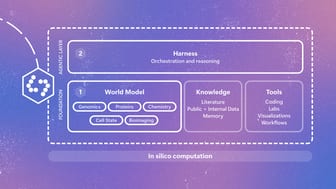
    Microsoft Research has released Quine: an AI research system designed for biological complexity.

    Microsoft Research has released Quine, an AI research platform that combines a multi-modal biological world model with an interactive connection system, used to integrate models, scientific tools, literature, and researchers, and has been used to predict compounds driving tumor state changes and validate candidates; the system is designed for research, not for clinical or medical use, and its output may be incomplete or require verification by researchers, with future plans to expand access through Microsoft Discovery.

Sep 28Mon
Sep 27Sun
Sep 25Fri
  1. Amazon Science

    Reactor and Amazon Neuron Science jointly optimize the Rolling Forcing model to achieve real-time video generation on Trainium

    Reactor and Amazon Neuron Science jointly optimize the Rolling Forcing model to achieve real-time video generation on Trainium, which combines the sequence prediction of large language models with the iterative optimization of diffusion models, running at 16 FPS standard video frame rate, generating 30-second high-quality videos through Rolling Forcing technology, and achieving low latency, high-efficiency real-time video generation on Trainium.

  2. OpenClaw Blog75

    Microsoft contributes upstream improvements to the OpenClaw project based on Autopilot

    Microsoft's released Autopilot personal agent based on OpenClaw, Microsoft and OpenClaw Foundation collaborate to enhance its enterprise-level runtime capabilities, has opened the preview to the first batch of customers. Microsoft improves OpenClaw through upstream contributions, including enhancing agent security configuration checks, building native Windows experience, improving interaction reliability, and optimizing background task processing and database recovery response.

  3. Baseten Blog75

    LangChain fine-tunes on Baseten Loops via LangSmith tracing

    LangChain announced the launch of the LangSmith fine-tuning feature at the Interrupt 26 conference in New York today. The feature is based on the open-source CLI smithtune, which reads LangSmith traces to generate supervised fine-tuning datasets and trains them on Baseten Loops, finally deploying them to Baseten's dedicated inference service. The CLI uses the user's Baseten API key, and training and inference costs are charged to the Baseten account.

  4. GitHub Blog · AI & ML

    GitHub Security Lab Taskflow Agent implements automated fuzzing

    GitHub Security Lab Taskflow Agent automates the fuzzing process for C/C++ projects using LLM, completing entry point identification, build system analysis, test case generation, AFL++ execution, coverage analysis, and vulnerability report writing without manual intervention. The Agent uses the Claude Sonnet 5 model and manages state via an SQLite database to achieve iterative coverage improvement, doubling the time budget for each iteration until coverage growth stagnates.

Sep 24Thu
  1. Anthropic Research

    Project Swap: The performance and challenges of agents in market transactions

    In the Project Swap experiment, 201 Anthropic employees conducted book trades through the Claude agent, with 61% of the agents accurately matching employee preferences. The agents performed well in the trades, but their efficiency was limited by insufficient information. The experiment showed that model performance had a greater impact on the negotiation results of the agents than instructions, with most participants satisfied with the books they received from the trades and willing to pay about one-third of their annual budget for Claude to handle the trades.

  2. Microsoft Research

    Microsoft Research explores the advantages of offloading physical AI reasoning to edge or cloud GPUs.

    Offloading physical AI reasoning to edge or cloud GPUs can significantly improve robot task success rates, support larger models, and extend battery life. In mobile operation tasks, offloading reasoning enhances robot response speed and accuracy, increases battery endurance, and reduces costs. Microsoft Research has developed a Kubernetes-based toolkit to support distributed reasoning deployment on robots, edge devices, and the cloud.

  3. Google DeepMind

    Google DeepMind introduces Private AI Compute, achieving cross-device private persistent memory.

    Google DeepMind introduces Private AI Compute, a new architecture that achieves cross-device AI persistent memory through cloud-based encrypted storage and device key management, ensuring data privacy. The architecture temporarily decrypts user data in a cloud-isolated environment to process requests and immediately encrypts and stores new contexts, while the device holds the decryption keys. Users can verify the authenticity of server software and audit security protocols, supporting AI in maintaining device-level privacy standards even when processing complex tasks efficiently in the cloud.

Sep 23Wed
  1. Together AI Blog

    How to train your own Jev model for $17

    Together AI released a guide on how to fine-tune the Jev classification model using the Qwen3.5 4B model and a Hugging Face dataset of 38,340 items, with a training cost of about $17 and a duration of about 25 minutes; after deployment, it can be used for inference via an API endpoint (e.g., ENDPOINT_NAME), suitable for scenarios such as intent recognition for e-commerce customers.

  2. OpenHands Blog

    What is an AI dark factory? Software engineering insights learned from unmanned manufacturing.

    AI Dark Factory refers to AI agents autonomously completing software development, with humans only setting goals and constraints. Its core principle originates from unmanned manufacturing, i.e., achieving automation through standardized inputs, deterministic verification, and continuous monitoring, rather than relying on model intelligence improvement. Engineering needs to refactor processes around automation, taking repeatable environments, executable acceptance criteria, and execution records as the foundation. Currently, it is mainly applicable to boundary-defined repetitive tasks.

Sep 22Tue
  1. OpenHands Blog

    How to Self-Host AI Models: Complete Setup Guide

    Self-hosted AI models allow organizations to directly control the reasoning runtime environment, deployed model weights, and service operation methods, suitable for scenarios involving sensitive data, pursuing cost-effectiveness under continuous utilization, model customization, and controlling the model lifecycle. By deploying open-source weight model checkpoints on local workstations, private servers, or controlled cloud infrastructure, and using reasoning runtime service models such as vLLM, Ollama, or llama.cpp, applications can call self-hosted endpoints just like calling managed model APIs.

Sep 21Mon
  1. OpenHands Blog

    What is model-agnostic in AI? A practical guide

    Model-agnostic AI reduces direct dependency of applications and workflows on a single model, handling differences in authentication, request formats, model identifiers, etc. between different providers through an abstraction layer. OpenHands's model evaluation shows no single best model, its workflow supports use of different models for planning, implementation, debugging, and review, making model selection a continuous workload decision rather than a one-time vendor choice.

Sep 20Sun
  1. StepFun · Hugging Face new models

    Step-5-Preview-BF16 model release by Jieyue Xingchen

    Jieyue Xingchen releases flagship model Step-5-Preview-BF16, with 600B total parameters, 27B active parameters, supporting up to 1M context windows, excels in software engineering, professional knowledge work, and financial fields, capable of processing text, images, and video, deployable via OpenAI-compatible API or offline generation.

  2. StepFun · Hugging Face new models

    Jieyue Xingchen Step-5-Preview model release: Sparse MoE architecture with 600B parameters

    Step-5-Preview, the flagship model from Jieyue Xingchen, adopts a sparse MoE architecture with 600B total parameters and 27B active parameters, supporting up to 1M tokens in context, and excels in software engineering, professional knowledge, and financial tasks, demonstrating outstanding performance in the DeepSWE v1.1 benchmark. The model can be deployed via OpenAI-compatible APIs using vLLM or SGLang, or used for offline generation with Transformers.

Sep 19Sat
  1. Hamel Husain75

    How to debug LLM evaluators to align with human reviewers?

    Collect at least 50 passing and 50 failing human-labeled examples through error analysis to identify discrepancies between LLM judge and human labels for repair clues. Common issues include missing context or ambiguous instructions. Manually inspect a few inconsistencies first, then attempt automated prompt adjustment, such as using the GEPA algorithm to adjust judge prompts and measure their consistency with human labels. The most common error is letting the LLM judge capture too many types of errors at once. It is recommended to create separate judges for each failure type.

Sep 16Wed
Sep 14Mon
  1. Google · Hugging Face new models

    Google releases EmbeddingGemma 2 multimodal embedding model

    Google has released EmbeddingGemma 2, a multimodal embedding model with 740M parameters, supporting unified 768-dimensional vector representations for text, images, video, and audio. The model can run on consumer-grade hardware, providing low-latency semantic representations suitable for applications such as search, retrieval-augmented generation, etc. EmbeddingGemma 2 has performed excellently in multiple benchmark tests, such as text, code, visual document, and audio embedding benchmark tests, and supports vector truncation to reduce storage requirements.

Sep 12Sat
Sep 11Fri