Skip to content
Live
Oct 19Mon
  1. Prime Intellect Blog

    prime-rl v0.10.0 released: Improving training speed, introducing new RL loss IPO, and unifying the evaluation stack

    prime-rl v0.10.0 has been released, defaulting to the new RL algorithm IPO to improve the stability of asynchronous RL and optimize performance. It supports new models such as Qwen3.8 Flash, and increases training throughput by 1.15 times (based on the torchtitan platform) through MoE optimization and custom kernels.

  2. Google Developers Blog

    LiteRT Tensor API release: A new solution for native model development on edge devices.

    LiteRT Tensor API is released, supporting developers to write and optimize models natively in C++ on edge devices, enabling cross-platform deployment (CPU/GPU/NPU) without script conversion. Developers can fully control the computational graph structure and directly load model weights, achieving zero-copy data transfer through shared accelerator buffers, while providing building blocks for AI coding agents.

  3. Inception Labs Blog

    Inception Labs launches Mercury 2, enhancing the ability and efficiency of building AI applications

    Inception Labs has launched Mercury 2, increasing the number of free tokens from 10M to 100M. The new Inception API key includes 100M free tokens, and the free tier's request frequency has been increased 10 times. Mercury 2 performs better in real-time speech, search, AI coding sub-agents, and multi-agent workflows. The first token response time is reduced, end-to-end latency is lowered, and tool calls are more reliable.

  4. Inception Labs Blog

    The rise of Mercury 2 and real-time sub-agents

    Mercury 2 completes context compression tasks in just 150 seconds while maintaining the same quality as Sonnet 4.6, with a 5-fold speed increase and a 90% cost reduction. Augment Code uses it for enterprise-level coding AI agents, achieving an 82% reduction in compression latency and a 90% cost cut, and dynamically allocates tasks through the Prism model router, reducing total LLM expenditure by 30%.

  5. MiniMax News

    MiniMax M3.1 Flash released: Next-generation model with improved performance and reduced cost

    MiniMax M3.1 Flash is officially launched, with nearly a threefold increase in online inference speed and a 70% reduction in cost compared to the previous generation. The model performs excellently in benchmark tests for complex intelligent tasks (cowork), computer use, software development, and network security, ranking highly in the AutomationBench-AA for automated tasks, scoring 73.7% on DeepSWE v1.1, 61.7 on OSWorld V2, 29.6 on ALE, and 82% on CyberGym.

  6. Ollama Blog

    Cloudflare's 27B multimodal decision model Clef has landed on the Ollama cloud platform

    Cloudflare's 27B multimodal decision model Clef has landed on the Ollama cloud platform, users can run it locally or use cloud services. Clef transforms state and typed question patterns into decisions, supports text and image input, is compatible with Jev and System One APIs, is fine-tuned based on Qwen3.8-27B, and adopts the Apache 2.0 license. In Cloudflare's decision index evaluation, Clef outperforms Jev and performs leading in most benchmark tests.

  7. Together AI Blog

    Together Post-Training: Flexible and efficient model fine-tuning service

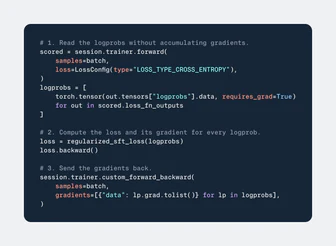
    Together AI has launched Post-Training services, supporting the construction of custom models through reinforcement learning and supervised fine-tuning without complex infrastructure. The service provides flexible training loop definition capabilities and optimizes the underlying system and infrastructure to improve model quality and training speed. It supports mainstream open-source models such as Muse Spark Open, GLM 5.3, Kimi K3, and Qwen 3.8-27B, running on dedicated GPU resources to ensure efficient and numerically consistent training.

  8. Inception Labs Blog

    Inception Labs launches Mercury 3: the most powerful diffusion-style large language model in history

    Inception Labs releases Mercury 3, this diffusion large language model surpasses GPT-6 Luna and Claude Haiku 5.5 in multiple benchmark tests, with a speed increase of 4-8 times reaching over 1,000+ tokens/second, expanding the context window to 1M tokens, with prices per million input/output tokens being $0.20 and $0.70 (50% discount at launch).

Oct 18Sun
  1. Browser Use

    What is a browser agent? Its working principle and applicable scenarios

    The browser agent operates web pages through AI models to achieve goals. After the user describes the task, the agent automatically opens pages, navigates, selects operations, and checks results to continue. It is particularly suitable for uncertain workflows that require flexibility and decision-making, composed of three parts: the model (decides actions), the suite (provides context, tools, and loops), and the browser (manages website sessions). Main uses include data extraction, research, form filling, etc., but there are drawbacks such as inconsistent results, task failure, website blocking, prompt injection, and unpredictable costs.

Oct 17Sat
  1. Google Research

    Google Research explores combining AI agents with biological reality to build autonomous wet labs.

    Google Research releases the VERID framework, enabling AI agents to run in physics-based, safe, and resource-efficient experiments; demonstrates closed-loop intelligent agent scientific discovery on adapter and de novo protein design prototypes; through three rounds of design-test-iterate cycles, AI-driven rational and de novo design will increase confirmed target hit rates to 33.5% and 42.1% on myoglobin and α-thrombin, respectively.

  2. Redwood Research

    Screwtape: An adversarial transcription editing tool targeting monitors

    Screwtape 1 is a pipeline that transcribes an agent into an evasive action-only monitor (not reviewing the agent's reasoning chain) by inserting the attack into the transcription and repeatedly refining it until the monitor no longer captures it. Use an LLM verifier to check the edited transcription and attack description to confirm whether the attack is real, obviously harmful, and likely to succeed in the original environment.

Oct 16Fri
  1. Tencent Hunyuan · Hugging Face new models

    Qwen3-8B-DSpine-b16 released: Speculative decoding model with parallel drafting and deep conditional injection

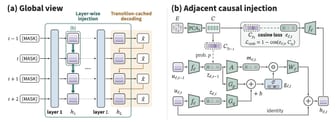
    Qwen3-8B-DSpine-b16 released by Qwen, employing speculative decoding technology with parallel drafting and deep conditional injection, achieving an average acceptance length score of 10.55 on Qwen3-8B. The model supports a context length of 8192 tokens, uses bfloat16 data type and fa3 attention backend, installation requires git clone and pip install, and runs via sglang serve.

  2. Dify Blog65

    How Dify Chooses AI Agent or Workflow

    Dify supports selecting AI Agent or Workflow based on whether the task is repetitive, whether judgment is needed, and whether there is a clear result. Agents are chosen by the model selection tool or action, while Workflows are defined by developers. The Hybrid mode combines both. In Dify, Agents are suitable for repetitive tasks requiring explanation of requests and selection of the next step, while Workflows are suitable for SOPs with fixed steps, where Agent nodes can be embedded to handle flexible steps within the Workflow.

  3. LangChain Blog

    LangChain blog: Frequently Asked Questions about Agent Evals

    The LangChain blog introduces how to use Agent Evals to test AI agent behavior, including analyzing behavior through trace logs, building test datasets containing inputs and expected outputs, running offline benchmark tests (such as Terminal-Bench) and online real-time evaluations, as well as using four types of evaluators: code inspection, LLM scoring, and manual review. Offline evaluations are used to test new prompts or models and catch regression issues, while online evaluations are used to monitor production quality and discover dataset gaps.

  4. Baseten Blog

    Meta releases Muse Spark Open: an open-source weight model designed for code agents

    Meta releases Muse Spark Open, an open-source weight model with 816B parameters designed for code agents, featuring 42.7B active parameters, a 1M token context window, and full-modal input (text, image, video, audio), performance comparable to cutting-edge lab models, using a compressed MoE architecture and hybrid global/local attention mechanisms to optimize inference efficiency, reducing model size to 540GB via NVFP4 checkpoints.

  5. Microsoft AI News

    Microsoft AI has released an 80 billion parameter MoE large model MAI-Base-2.

    Microsoft AI has completed the pre-training of a new MoE large model MAI-Base-2, with 80 billion active parameters and 2.8 trillion total parameters, surpassing all open-source models in internal evaluations. The model is 4-12 times more efficient in pre-training FLOPs than the strongest open-source base model DeepSeek-V4-Pro-Base and is used to train larger models. Microsoft plans to license the model weights through Foundry using organic data pre-training and full-stack control.