Skip to content
Live
Oct 21Wed
  1. Databricks Blog

    Deploy RFD4-Proteina on Databricks

    Databricks has integrated the RFD4-Proteina model into Genesis Workbench, supporting execution in AI runtime environments and connecting research data and workflows. Developers can build and adjust pipelines using Genie Code and the NVIDIA BioNeMo Agent Toolkit, leveraging serverless NVIDIA GPU computing for protein design.

  2. OpenHands Blog63

    Recursive Flint released on OpenHands: Open-source model helps local efficient coding workflows.

    Recursive Flint is released, a hybrid expert model with 4 billion parameters, designed for efficient local inference, activating only about 250 million parameters per token, achieving 125+ tokens/second on M4 Pro MacBook Pro, and reaching 150+ tokens/second on NVIDIA RTX Spark. OpenHands, as its first partner, supports the model's operation on local hardware, providing developers with an open-source coding model option.

  3. vLLM Blog

    Ant Group and the vLLM community open-source Humming: A general-purpose high-performance quantized inference kernel library

    Ant Group and the vLLM community open-source Humming, a high-performance quantized inference kernel library. Humming supports NVIDIA GPUs starting from the Turing architecture and CUDA-compatible devices like the T-Head Zhenwu 810E, providing extensive quantization support covering various integer and floating-point types, bit widths, and scaling schemes. It significantly outperforms existing implementations such as vLLM Marlin, FlashInfer, and DeepGEMM on multiple representative workloads.

  4. Google Developers Blog

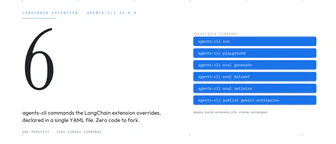
    Agents CLI Extension System: Supports the intelligent agent development lifecycle across frameworks.

    Agents CLI 1.5.0 version introduces an extension system, allowing developers to override or add commands without modifying the tool, supporting cross-framework usage; the official LangChain extension replaces framework-bound commands while retaining other lifecycle functionalities; developers can create custom extensions, such as adding deployment commands for software bill of materials (SBOM) scanning, enabling enterprise platform teams to enforce governance policies.

  5. Browser Use38

    Browser Use Cloud MCP Server introduction

    Browser Use Cloud MCP servers support proxies to submit complete web tasks in plain text form, which are processed by their cloud browser agents. The cost is $0.02 per hour, and up to 10 projects can run simultaneously. This service uses API V3, offering 11 model selections. The browser is a reinforced version of Chromium, with incognito mode and Cloudflare proxy support enabled by default.

  6. a16z News70

    OpenAI has acquired Orchestra Bio, but hardware design remains a challenge for AI.

    OpenAI has acquired Orchestra Bio. Current cutting-edge models like GPT-6 Astra, Fable 5.1, and Grok 4.6 can generate CAD, design PCBs, and describe assembly, but hardware design benchmarks like CAD Arena, EE Bench, and LuxoBench show that improvements are still needed. AI in hardware design faces the lossy problem of the interface between the digital and physical worlds, even if it can generate designs, a lot of work is still required.

  7. Databricks Blog

    Databricks introduces Agent Memory to enhance intelligent agent capabilities

    Databricks introduces Agent Memory, which improves agent quality, reduces costs and latency by storing key facts, preferences, and processes, and supports running on Lakebase. It is currently in Beta version. Agent Memory is based on Databricks' latest memory research and uses the MemCurrent architecture. In internal benchmark tests, it has tripled the pass rate of agent tasks while reducing token usage by 31%.

  8. OpenAI Alignment Blog50

    OpenAI introduces the complementary metric g-mean² to enhance model monitorability evaluation

    OpenAI has introduced the complementary metric g-mean² to improve model monitorability evaluation. g-mean² calculates TPR and TNR through behavioral labels and monitoring predictions, but cannot solve the problems of mixed differences in different model tasks and deployment risks. The new metric includes a paired matching metric for aligned shared instances and a post-control integrated metric simulating monitoring rejection of outputs, to more comprehensively evaluate model deployment risks.

Oct 20Tue
  1. Hugging Face Blog58

    How does ALTK-Evolve surpass state-of-the-art models in the τ²-bench customer service task through learning and memory?

    ALTK-Evolve uses GPT-4.1 to learn and apply customer service scripts. In the τ²-bench customer service agent benchmark test, it surpasses all retail entries in the retail sector, achieving a score of 67.5% Pass^4, and does not require updating model weights. The model is based on a basic ReAct agent and GPT-4.1. It attempts to analyze tasks and use GPT-4.1 to distill success and failure into short behavioral rules, then adds these guidelines to the agent's system prompts without updating weights or manual annotation.

  2. Tessl Blog

    Tessl Blog: Stop line-by-line code review, start verifying intent

    Tessl Blog stops line-by-line code review and starts verifying intent. The team's merged PR volume is four times that of last year and almost all AI-generated, making review a bottleneck. The team shifts to reviewing intent before code generation (acceptance criteria, constraints, and edge cases), and transforms repetitive review comments into machine-executable rules (invariants), thus shifting the focus of review from the code itself to decision-making and rule ownership.

  3. Tessl Blog75

    From Standalone Coding Tools to Development Platforms: How Trust Affects the Adoption of AI Code Assistants

    Engineering teams' trust in AI code assistants determines their scope of use, ranging from viewing code differences to full authorization for merging. Trust is built through rapid validation mechanisms. Development platform costs increase with the intensity of AI agent work, with about 80% of the budget consumed by 20% of heavy users, requiring an evaluation of the effective cost per unit of work. Successful teams start with auxiliary tasks and gradually expand the scope of AI, rather than applying it directly to core systems.

  4. Cohere Blog

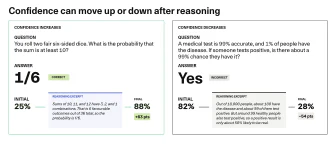
    CALIBER: Rethinking the Confidence of Reasoning Models

    CALIBER estimates success probability before inference through training reasoning models and evaluates the confidence of specific answers after inference, significantly reducing calibration error. This 7B model on the BigMathDigits benchmark reduces ECE from 0.059 to 0.028 (a reduction of 52.5%), while achieving an AUROC of 0.806 and a Brier score of 0.130, proving that confidence evaluation is more reliable and can effectively distinguish between correct and incorrect answers.

  5. Mistral AI

    Mistral AI has launched the Voxtral 3 voice agent SDK and cutting-edge voice models.

    Mistral AI has launched Voxtral 3, which includes an advanced voice model capable of real-time multi-step conversations in over 50 languages, along with a voice agent SDK. Its voice-to-text model, Voxtral Small Transcribe 3, achieved a Forced WER of 0.9% on the FLEURS 45 benchmark.

    Same story · 2 outlets

    How the accounts differ:The Decoder mentions a text-to-speech model (Voxtral Mini TTS 3) that is not detailed in the first report.

  6. IBM Research Blog

    llm-d 1.0 Released: Strengthening Open Source AI Inference Production Environment

    The llm-d project announces the release of version 1.0, which is a Kubernetes-native distributed inference service network that supports deploying any model's inference stack on any accelerator in any cloud. This version enhances multi-tenant quality of service, zero-downtime operations, and agent-aware services to achieve continuous performance in common production operations. Through techniques such as prefix cache-aware routing and KV cache offloading, llm-d 1.0 can capture 97% of available cache reuse, reducing the cost of large-scale AI services.

  7. Hugging Face Blog58

    AnyLanguageModel 1.0 is released: supporting local model advancements on Apple platforms for a year.

    AnyLanguageModel 1.0 is released, supporting local model advancements on Apple platforms for a year. New support added for cloud models such as OpenAI Chat Completions, Anthropic Messages, and Google Gemini. Local model support includes llama.cpp, MLX, and Core ML. Tool calling and guided generation features are expanded. Cloud models have the same functionality as local models, and API keys support dynamic acquisition through closures.

  8. Modal Blog58

    Modal introduces Sticky Sessions feature to achieve serverless strong affinity routing.

    Modal introduces Sticky Sessions functionality, implemented through the @modal.sessioned() decorator, to achieve strong affinity routing at the session level, ensuring all requests within the same session always reach the same container. It is suitable for workloads requiring state continuity, such as speech-to-text, voice proxying, and multiplayer games. This feature is based on the Modal Server architecture, authorizes by returning a signed session token, implements load balancing through container concurrency probing, and automatically scales sessions based on active session count.

  9. Meta Engineering

    Meta introduces GenRecs Tokenization to reshape ad recommendations with a stable model vocabulary.

    GenRecs Tokenization enhances conversion rates by 0.35% for advertisers by representing items like ads and products with a stable semantic vocabulary, combined with Meta's Generative Ad Model (GEM) and adaptive ranking model. This technology leverages the world knowledge of pre-trained large models to enable recommendation systems to understand preferences of new items or users with no historical interaction, accelerates learning through shared concepts, achieves cross-activity transfer, and improves performance as large model scale increases, forming a feedback loop for performance improvement.

Oct 19Mon
  1. O'Reilly Radar65

    The Monday Morning Agent project trains AI analysts using American football data.

    The Monday Morning Agent project uses the NFL public dataset to analyze a controversial American football topic every two weeks, gradually equipping AI agents with analytical capabilities. The project uses 250,000 game clips and current season data, each episode having AI explain a specific tactic (such as 'establishing the offensive line') and verify its analysis results. The AI must state data limitations during analysis and refuse requests beyond the task scope (such as predicting game outcomes).

  2. Sakana AI55

    Sakana AI proposes 'QD-Rec' to improve recommendation quality and diversity with an open-ended exploration method

    Sakana AI proposed 'QD-Rec', recommending candidate-hypothesis pairs as units, with generative AI writing new hypotheses based on past excellent hypotheses in a cycle to accumulate high-quality and diverse recommendations. Experiments were conducted in M&A, customer targeting, and paper recommendations, achieving high average evaluations in many settings and building large sets of recommendations.

  3. LangChain Blog

    How Nu company builds AI health coaches using LangGraph and LangSmith and prioritizes evaluation

    Nu company, while developing AI health coach Nu, prioritized building evaluation criteria to avoid boundary-crossing medical diagnoses. Using the LangGraph framework and LangSmith tools, it ensures the system meets health guidance needs while complying with regulatory requirements through LLM judges scored by category and open-ended behavior tests. The evaluation framework is designed separately for single responses and complete conversations, supporting rapid migration between two leading model providers. Safety probes and guard nodes review conversation content in real-time, ensuring the product stays within compliance boundaries.

  4. n8n Blog

    How to run n8n AI workflows locally on NVIDIA DGX Spark without cloud API

    n8n workflows can run locally on NVIDIA DGX Spark without calling cloud APIs. By deploying the 35B hybrid expert model Qwen3.6-35B-A3B (NVFP4 format) and 8 other models on DGX Spark, tasks such as transcription, OCR, and image generation are supported. All models are accessed by n8n through OpenAI-compatible endpoints. Deployment requires caching models and using version 0.30.0 of vLLM to ensure offline operation and license compliance.

  5. Hacker News · AI hot posts75

    Qwen3-4B-deslop released: A 4B open-source model to eliminate AI writing habits

    The Qwen3-4B-deslop model eliminates common AI writing habits (such as dashes, 'not X, but Y' sentences, three-element lists, etc.) through fine-tuning, reducing the SLOP score from 121 to 12.5 on 40 unseen prompts, with 68% of responses reaching human writing level. This 4B model, after being quantized by Ollama, is only 2.5GB and can run locally while still maintaining a 30/30 fact question accuracy rate comparable to the original version.

  6. IBM Research Blog22

    Coursera's new course 'AI Data Stream Architecture: From Principles to Practice' teaches the principles of modern accelerator operation

    Coursera's new course 'AI Data Stream Architecture: From Principles to Practice' teaches engineers how to work across GPUs, TPUs, Cerebras WSE, Groq LPU, and IBM Spyre accelerators. The course is taught by Kaoutar El Maghraoui, a senior research scientist at IBM Research, covering execution models, compilation, memory systems, debugging, and performance modeling through six courses and hands-on experiments, emphasizing how different architectures affect model performance and the key role of compiler optimization.