Skip to content
Live
Oct 25Sun
  1. Ant Group inclusionAI · Hugging Face new models58

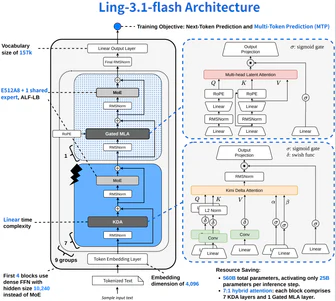
    inclusionAI/Ling-3.1-flash-base released: a sparse MoE architecture large model with 560B parameters.

    inclusionAI/Ling-3.1-flash-base is released, a sparse MoE architecture large model with 560B total parameters and 25B active parameters. It adopts a hybrid linear attention mechanism (63 KDA + 9 Gated MLA) and performs excellently in 47 cross-domain benchmark tests spanning eight fields. It supports continuous pre-training, domain adaptation, and post-training research. The model is trained with FP8 precision and released with BF16 precision, following the MIT license.

  2. ITHome · AI75

    The open-source project GPU Unlock can release the hidden AI computing power of RTX 30 series graphics cards, with testing showing an increase of up to 60%

    The open-source project GPU Unlock, developed by GitHub user Zagitta, can remove the instruction emission rate limit of Ampere architecture consumer-grade GPUs in FP16/BF16 tensor core operations without modifying the driver or flashing VBIOS.

    Why it matters: The original text provides measured improvement data for multiple RTX 30 GPUs under GEMM and image generation workloads, also indicating limitations such as memory bandwidth.

  3. TechCrunch · AI

    Block releases Dessa full-duplex speech model

    Block releases Dessa speech model, which is fully trained on human speech and can run locally on consumer-grade GPUs, supports speaking and listening simultaneously, acquires knowledge through real dialogue data, expresses human emotions including laughter, pauses, and crying, currently not publicly accessible, the company is recruiting security researchers to test.

    Same story · 2 outlets

    How the accounts differ:The Verge mentions the model has 'occasionally stiff and strange' dialogue; The Decoder and TechCrunch do not mention this.

Oct 24Sat
  1. ITHome · AI

    NVIDIA RTX Remix 1.6 Released: Path Tracing Support for Minecraft Java Edition, A-Series Performance Improvement of About 20%

    NVIDIA RTX Remix upgraded to version 1.6, experimental support for path tracing in Minecraft Java Edition, A-series card performance improved by about 20%. The new version introduces DLSS 5 3D guided neural rendering, up to 6x frame generation, native Windows on ARM support, and upgrades ComfyUI 2.0 resource pipeline.

  2. Latent Space67
    Same story · 3 outlets

    How the accounts differ:Artificial Analysis gives the score 55 and ranks fourth; MarkTechPost mentions the total parameters of 2.8T and the MoE model with 104B active parameters.

  3. Tencent Hunyuan · Hugging Face new models71

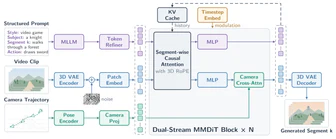
    Tencent Mixuan open-sources Hy-Nomas Interactive World Generation Model Diffusers version

    Tencent's Huyuan has released Hy-Nomas' BF16 Diffusers format distilled weights on Hugging Face. This video world generation model supports multi-round free interaction through text instructions and camera control, generating the same world segment by segment.

    Why it matters: Officially releases distilled BF16 Diffusers weights and supporting benchmarks, allowing readers to judge the practical usage and threshold of multi-round interactive world generation.

  4. 36Kr · AI52

    China Mobile launches its first AI foundation for the automotive industry and opens it to the entire industry for sharing

    China Mobile has launched its first AI foundation for the automotive industry, opening up its 'computing power—data—model' three core capabilities to the entire industry. It covers four major fields: R&D, manufacturing, intelligent driving, and testing evaluation, creating six intelligent entities. Related achievements have been implemented in over 10 central and state-owned automotive companies.

  5. MarkTechPost58

    Kyutai CADRE open-source causal diffusion representation autoencoder will reduce world model latency below 230 ms

    Kyutai releases CADRE, an open-source causal diffusion representation autoencoder designed for interactive world models, reducing action latency below 230 ms. CADRE includes 7 autoencoders, each with approximately 476M parameters plus 86M frozen DINOv3 ViT-B/16, a world model of 1.2B parameters, video resolution of 288×512, frame rate of 20 fps, running on 1 H100.

  6. IBM Research Blog

    IBM supports the project that won an award in the NEDO Challenge

    All nine winning teams used IBM Quantum computers in their research for the NEDO Quantum Challenge, covering three tracks: Social 5.0, Quality of Life (QoL), and Cool Japan, with applications including disaster prevention, drug discovery, and gut microbiota analysis. IBM provided participants with quantum computing resources, technical guidance, workshops, and educational content support. Of the 65 teams (about 81%), 65 chose the IBM Quantum platform, running 11,159 tasks and using over 5,900 minutes of quantum computing time.

  7. Cohere Blog

    Cohere Labs open science project reveals limitations in AI's understanding of culture

    Cohere Labs open-source science project collects cultural puzzles through global collaboration to test AI models, finding significant flaws in cross-linguistic cultural understanding, often answering incorrectly or hallucinating. Participants include over 100 people from more than 50 countries, including 16-year-old American student Henry Gagnier and retired teacher Jane Smith, who provided key insights, pointing out that the model not only lacks cultural knowledge but is almost clueless about common languages like Buginese.

  8. Cohere Blog58

    How Cohere Model Vault builds verifiable confidential AI reasoning

    Cohere Model Vault introduced confidential computing on Microsoft Azure using NVIDIA GPUs in its public test version, designed to reduce the plaintext data infrastructure customers must trust and provide cryptographic evidence for customers to verify before sensitive information is released. The system protects the computation itself through hardware-enforced isolation, uses Oblivious HTTP to encrypt sensitive request content, and employs a remote attestation mechanism to ensure the environment processing requests meets expectations, thereby protecting the entire process from request transmission to computation execution.

  9. SemiAnalysis

    Amazon Trainium dominates the training market

    Amazon Trainium has significantly improved its training experience with native PyTorch, enhancing its competitiveness in the training field. Trainium3 supports the standard PyTorch API, allowing most PyTorch code to be migrated to .to('neuron') without XLA annotations, but the BF16 training experience is still not fully refined. SemiAnalysis's engineering team testing shows its performance is close to the CUDA ecosystem, but there is still room for improvement.

  10. O'Reilly Radar

    Mozilla CTO Raffi Krikorian emphasizes the key role of open-source AI

    Mozilla CTO Raffi Krikorian points out that open-source AI is crucial for building a user-trustworthy AI ecosystem, requiring the construction of standard protocols including memory, tool calls, runtime environments, and rules. Currently, open-source model performance is close to the frontier but deployment is difficult, with about one-third of actual applications using open-source models.

  11. NVIDIA Technical Blog35

    NVIDIA TensorRT 11.1's Global Performance Tuner (GPT) extension enhances single-build optimization capabilities

    NVIDIA's Global Performance Tuner (GPT) introduced in TensorRT 11.1 can automatically perform precision-aware end-to-end performance tuning, extending single-build optimization capabilities by customizing optimization solutions for different models. GPT supports automatic adjustment of different optimization strategies within TensorRT.

  12. QbitAI

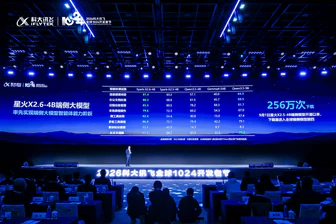
    iFlytek launched the Xingchen TaaS platform for the first time, making Tokens truly productive for thousands of industries.

    iFlytek released the Xingchen TaaS platform, which transforms Token consumption into business value such as simultaneous interpretation translation and digital employees through intermediate capabilities like model scheduling and intelligent agent engines. It provides solutions for industries such as enterprise services, finance, and healthcare, ensuring that Tokens are not wasted. The Spark X2.6 edge model is open-sourced, with an expanded context window to 1 million Tokens and an edge-cloud routing accuracy of 96.1%.

  13. LangChain Deep Agents releases15

    LangChain Deep Agents 0.7.31 released

    LangChain Deep Agents 0.7.31 released, fixed bugs such as omitting asynchronous task IDs from user responses by default, retaining filesystem permissions in SDK middleware overrides, and added a feature to expose execution output metadata retention in tracking.

  14. Amazon Science

    Audible's technology team has developed a new controllable speech synthesis technology to enhance the experience of audiobooks.

    Audible's technology team has developed a new controllable speech synthesis technology, by combining large language models (LLMs) and three innovative technologies to enhance the experience of audiobooks: 1) Develop a data synthesis pipeline to generate speech data with voice feature descriptions, train the model to understand the descriptions and generate matching audio; 2) Create an automatic system to analyze book characters and identify dialogues, with an accuracy of 97%, to provide stage directions for the model; 3) Improve the dialogue discrimination by 3.7 points in MUSHRA tests, and significantly improve the sound experience in English and Spanish tests by 80%.

  15. Hugging Face Blog

    LitPivot: Developing research ideas through dynamic context in the literature landscape

    LitPivot helps researchers adjust their research direction by reading previous literature, dividing research ideas into problems, contributions, and evaluation plans, and providing literature-based criticism and revision suggestions for each section. In a laboratory study involving 17 researchers, domain experts rated the literature foundation of novel ideas developed using LitPivot better than ideas developed using text editors and AI chat tools. Participants also reported stronger literature comprehension and improved understanding of the novelty and practicality of their ideas.

Oct 23Fri