Skip to content
Live
Nov 11Wed
Nov 10Tue
  1. LangChain Blog

    How LangChain improves AI agents through Eval-Driven Development (EDD)

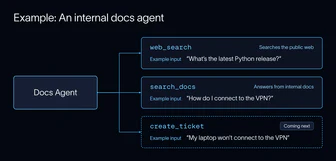
    LangChain improves AI agents through evaluation-driven development (EDD), defining agent behavior standards, building evaluations, adjusting code, and comparing results. EDD draws inspiration from test-driven development (TDD), targeting agents with non-deterministic outputs, measuring performance through evaluation metrics, and guiding development. Specific steps include defining agent behavior specifications, building test datasets containing inputs and reference outputs, and writing code or LLM evaluators to verify whether the behavior meets expectations.

  2. Hacker News · 300+65

    Show HN: Every satellite that passed over any place this week, and its photos

    A user developed a browser-based tool that allows inputting a location to query all satellites passing over it in the past 7 days and their real images (Sentinel-2/Landsat/NASA), rendering approximately 17,000 on-orbit objects via GPU and calculating Kepler's equations in real-time to achieve high-precision positioning. The tool only displays real satellite data and does not store user locations.

  3. Browser Use

    Integrating 1Password with Browser Use for automatic password filling and TOTP codes

    1Password connects to Browser Use via a service account, enabling automatic password filling and TOTP code completion for web tasks. Create a dedicated password vault and configure read-only permissions for the service account. After connecting with a Browser Use token, running login tasks can verify the authentication page. The integration requires an active 1Password connection for each project, distinguishing between service account tokens, vault IDs, and Browser Use API keys.

  4. Meta Engineering38

    LLDB extension architecture supports application debugging across CPU and GPU

    LLDB supports application debugging across CPU and GPU through the neutral accelerator plugin architecture of lldb-server, separating general debugging infrastructure from hardware-specific device control, presenting CPU and GPU as independent debugging processes that work together in a single debugging session. This architecture converts hardware-specific debugging APIs into concepts understood by LLDB through plugins, supporting collaborative debugging of CPUs and GPUs with different architectures, registers, memory spaces, and execution models while maintaining the neutrality of the client.

Nov 9Mon
  1. ITHome · AI65

    An engineer has developed an open-source script, Ram-Altman, which reports daily the amount of idle RAM to OpenAI CEO Altman.

    Engineer IainKay developed the open-source script Ram-Altman, which monitors computer memory usage through the Linux system. When available memory exceeds 10% of the total capacity, it automatically sends an email to OpenAI CEO Sam Altman daily to report idle RAM amounts, and has prepared various email subjects, body texts, and signatures. The project has been uploaded to GitHub for free use, but the developer warns users to avoid mass emailing to bother Altman.

  2. Hacker News · AI hot posts65

    How do I cope with AI job fatigue brought by Claude Code and Codex?

    When working with Claude Code or Codex from the terminal, users often experience mental exhaustion due to multi-threaded task processing. The author manages tasks in git by organizing work in a way similar to a priority queue, with each task being a markdown file and its status as a git snapshot. The AI agent processes new tasks in a loop, runs tests, and performs browser checks, but cannot make decisions and requires the user to handle them in the 'Owner Inbox' by viewing tasks with the Claude tool on a single page, closing them after completion to process one task at a time.

  3. Simon Willison65

    Hide the redundant information of Claude Code PR descriptions: Use HTML details/summary elements to optimize the code review experience.

    Claude Code or Codex generated PR descriptions are too verbose, but hiding them in HTML details/summary elements can optimize the reading experience. Use the model name and effort level as the summary, for example, 'Claude Opus 5.5 Medium', so readers can quickly get the core information. GitHub Markdown supports this feature; click the expand arrow to view the full content, making the PR no longer appear messy.

  4. Latent Space42

    How Stanford University Teaches AI Native Engineering - Mihail Eric and Monaco's Practice

    Stanford University's CS146S course has changed assignments to contributing to open-source projects, letting students use AI code review tools and learn collaboration; Monaco company adopts Devin code review tool, while building its own Agent workspace to maintain technical autonomy, and develops Hal system, allowing engineers and salespeople to solve problems through Agents.

  5. Hacker News · 300+78

    llama-modchip enables the 284B DeepSeek-V4-Flash to run on a 64GB memory without GPU

    llama-modchip releases a set of ggml/llama.cpp core patches and quantization transcoding tools, compressing the 284.33B DeepSeek-V4-Flash to 56.56 GiB (1.71 bpw), which can run on a pure CPU machine with 64 GB memory, with a peak memory of 57.61 GiB under 256K context and no need for swap.

    Why it matters: The project provides a quantization scheme and core patches for running 284B MoE on 64 GB memory, along with measured data for each hardware, which can be used to determine the feasible boundary for pure CPU deployment.

Nov 8Sun
  1. QbitAI42

    Qualcomm showcased the edge-side MoE intelligent agent at the CIIE, driving edge-side AI from single-point applications to intelligent agent experiences

    Qualcomm showcased its edge-side MoE intelligent agents at the 9th CIIE, driving edge-side AI from single-point applications to intelligent agent experiences. MoE technology enhances the intelligence level of edge-side models through mixed expert modules, achieving higher complexity task completion in the 2 billion to 3 billion parameter scale. Qualcomm collaborated with Infris AI, Changelong, and Jieyu Xingchen to optimize models, inference, storage, and chip platforms, demonstrating a systematic solution for edge-side AI ecosystem synergy.

  2. ITHome · AI65

    The remastered version of 'The Legend of Zelda: Ocarina of Time' runs on jailbroken PS5 and iPhone

    After the Nintendo 'The Legend of Zelda: Ocarina of Time' remastered version launched on Switch 2 on November 5, developers have successfully run it on jailbroken PS5 and iPhone. The PS5 version is based on the EglantinePS5 project, with a frame rate of about 15-20 FPS under the 12.40 firmware, but there are memory issues and rendering problems, with the patch written by Claude.

  3. MarkTechPost65

    How to use llama.cpp to run NVIDIA Dory 4B: Step-by-step guide

    Use llama.cpp to run the NVIDIA Dory 1.0 4B model, which achieves inference enhancement through repeated intermediate layer calculations. Each additional loop increases computational load without increasing parameters. Build the specified branch of llama.cpp, download the 3.7 GB GGUF file, analyze the parameters and cache consumption per loop, test decoding speed and cache impact, and evaluate accuracy, answer length, and inference time changes with loop counts on GSM8K.

  4. The Verge · AI65

    How does the NYT Cooking AI assistant help users solve dinner dilemmas?

    The NYT Cooking AI Assistant provides practical substitution suggestions and cooking guidance by analyzing user reviews, helping users adjust recipes based on available ingredients. The assistant was launched for the iOS version, where users can input questions in a small text box on the recipe page, such as 'What can I substitute for this ingredient?' or 'Adjust the recipe for seven people, making it vegetarian and gluten-free,' AI will generate a new version of the recipe and highlight the changes. Users can switch back to the original recipe at any time; the assistant does not modify the original recipe but creates a new version.

Nov 7Sat
  1. Claude · YouTube42

    How Salesforce leverages Claude Code to improve AI coding efficiency and output quality

    Salesforce expanded Claude Code to thousands of engineers, doubling effective output and reducing the number of bugs per line of code. The 'effective output' scoring system, co-built by the company's engineering leadership and Stanford researchers, measures AI coding ROI, and the intelligent agent maturity curve guides engineers from simple prompts to fully autonomous agents.

Nov 6Fri
  1. Browser Use

    Claude Code v2.1.159 release

    Claude Code v2.1.159 released, supports 8k context window, performs excellently on SWE-bench Verified; Anthropic launches Browser Use open-source library, allowing AI agents to control browsers via Chrome DevTools Protocol, providing Browser Use Cloud and Browser Use Agents services.

  2. O'Reilly Radar

    New knowledge carriers for the AI economy

    At the recent Foo Camp, participants believed that the primary carrier of software development is shifting from executable code to natural language prompts, generative processes, and developer skills. Some compared Python to assembly language, suggesting that natural language generation might make traditional code writing optional.

Nov 5Thu
  1. LangChain Blog

    How human insight constructs better intelligent agents - LangChain's three principles of human feedback

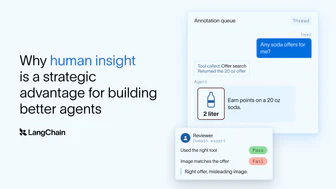
    LangChain explores three principles of human feedback to enhance agent development: expert judgment defines quality standards, comprehensive context evaluation, and converting feedback into reusable data; through agent trace to record user interactions and model behavior, manually labeled scoring with reasons, used to calibrate automated evaluators, improve evaluation criteria, and build golden datasets, forming reusable expert knowledge assets.

  2. IBM Research Blog38

    HRL Laboratory's MEMS inertial sensor can rival GPS

    HRL Laboratory develops an inertial measurement unit (IMU) using advanced algorithms, providing an uninterrupted GPS alternative. Its MEMS inertial sensor is the size of a can of soup, with accuracy close to GPS, and solves the long-standing problem of bias drift. Through the AutoCal automatic calibration system, it continuously corrects errors, achieving unlimited navigation support. The IMU uses ASIC and advanced packaging technology to optimize cost and size, making it suitable for light vehicles such as drones.

  3. ITHome · AI65

    Claude Code Helps Users Bypass iFIT Subscription Wall on Running Machines

    Netizens Successfully Bypass iFIT Subscription Wall on NordicTrack Running Machine Using Claude Code, Transforming the Device's Large Screen into a Free-Use Streaming Interface. The Modification Process Took About 1.5 Days to Complete, and the Project Has Been Opened on GitHub, Integrating Apps Like Netflix, Crunchyroll. Netflix Launch Time Is Reduced to About 21 Seconds, but Only Supports Standard Definition Quality and May Affect Warranty.

  4. NVIDIA Technical Blog65

    How NVIDIA Uses AI Agents to Simplify AI Factory Operations

    NVIDIA has developed the AI Factory Operations Agent to simplify operations within DGX SuperPOD, automatically correlating compute, network, hardware, and scheduling issues through a single interface to help SREs identify the causes of training performance degradation. The agent can process data from multiple dashboards, improving operational efficiency.

  5. AWS Machine Learning Blog60

    The four-layer context engineering of production-level AI agents: The practice of Deep Insight in runnable code.

    The AWS team, referencing the open-source multi-agent data analysis solution Deep Insight, has broken down the context engineering of production-level AI agents into four layers: multi-agent architecture isolation of context, using prompts to limit output, externalizing heavy content to the file system, and using a validation agent with a fallback mechanism.

    Why it matters: The AWS team has broken down the context engineering into four layers and provided specific code and token-saving data from the open-source reference implementation, which can be directly used to modify your own Agent.

  6. NVIDIA Technical Blog65

    Use NVIDIA NeMo to Turn Agent Failures into Tests and Utilize Solutions

    NVIDIA NeMo can transform agent failures in production into priority issues and generate customized evaluations to help improve prompts, tools, models, memory, skills, and code. When building agents for specific domains, general benchmark scores may not explain their failure reasons, such as the agent choosing the wrong tool, following the wrong workflow branch, omitting relevant context, or using unnecessary high-cost models.

  7. O'Reilly Radar65

    How to Measure AI's Impact on Delivery Speed

    Does AI make software development faster? Delivery speed is not productivity, but the ratio of value output to cost. Since software deliverables are not standardized, metrics like lines of code and PR numbers are unreliable, and estimations are inaccurate. Measuring delivery speed requires comparing a team's performance before and after. Through randomized controlled trials, alternating between tasks using AI and tasks not using AI can reduce interference from other process improvements, thus more accurately assessing the actual impact of AI on delivery speed.

Nov 4Wed