Skip to content
Live
Nov 5Thu
  1. Epoch AI65

    Epoch Capabilities Index update adopts Bayesian model methodology

    Epoch Capabilities Index (ECI) update adopts Bayesian model methodology, providing more reliable estimates of model capability uncertainty and the probability of comparing capabilities between models. The new method is based on four-parameter logistic (4PL) item response theory (IRT), using Claude 3.5 Sonnet (ECI 130) and GPT-5 (ECI 150) as anchor models, and achieves cross-temporal consistency through linear transformations to fix parameter location and scale.

Nov 4Wed
  1. 36Kr · AI72

    After the decision model became popular, why does the physical world need fast on-device judgment?

    TypeSafeAI released decision model Jev in mid-September, which only outputs yes/no, scores, or probabilities, and within weeks of launch, user numbers broke a million, with about one-third of Fortune 500 companies starting to use it, and its valuation increased from about $200 million to $7.5 billion in 24 days.

    Why it matters: From the explosion in popularity of decision models to on-device judgment in the physical world, it shows an industrial change in AI capabilities shifting from generation to measurable decision-making.

Nov 3Tue
  1. ITHome · AI65

    Developers flash Apple iOS 16.5 test firmware pack for Xiaomi REDMI K20 Pro

    Developer 'You say you like it but you're lying' has flashed the Apple iOS 16.5 test firmware package for Xiaomi REDMI K20 Pro phone, supporting dual systems and data persistence, requiring Android data to be cleared and TWRP Recovery to be replaced. It can switch systems through normal startup or Magisk module under Root privileges, but the developer emphasizes that this solution is a test version and carries the risk of bricking.

  2. ITHome · AI

    Aisin developed the world's first 16nm STT-MRAM AI SoC, achieving a 50-fold improvement in object detection efficiency.

    Aisin and Northeastern University have collaborated to develop the world's first 16nm AI SoC integrated with STT-MRAM, using a near-memory computing design to achieve 50 times the target detection efficiency. This SoC uses an 8/16-bit mixed multiplication architecture and weight sharing technology to complete target detection using Tiny YOLOv3 within 32MB of on-chip STT-MRAM, reducing startup time by 38.59 times and increasing AI processing speed by 10.16 times.

  3. ITHome · AI

    Qualcomm HBC technology completes validation: 133 TB/s memory bandwidth 18 times that of AI200, AI250 to be shown next year

    Qualcomm's HBC technology has completed hardware validation at its San Diego lab. Its first-generation solution provides 133 TB/s memory bandwidth for the AI250 accelerator card, an 18-fold increase over the AI200. This architecture achieves near-memory computing through multi-layer LPDDR memory stacking and is planned to be samples in the first half of 2027.

Nov 2Mon
  1. QbitAI70

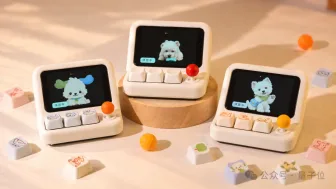
    Xiaomi open-sources AI desk setup HachimoDock, DIY cost about 150 yuan

    Xiaomi's Technology Committee's Innovation Product Team open-sources AI hardware HachimoDock (Hachimi Machine), DIY hardware cost about 150 yuan, can voice command computer Agent to execute tasks and synchronize display task status. The device also supports custom desktop pet images, generates minute-level components using natural language, and integrates with Xiaomi open-source project xiaomi Miloco to control smart home. Software source code has been published on GitHub, and the JLCPCB platform provides bill of materials, structural model, and assembly tutorial, but its development board and screen components have experienced price increases and shortages.

Oct 31Sat
  1. QbitAI58

    New Chipway releases X7 Ultra chip: World's first model guided design, NPU computing power reaches 700 TOPS with 98.7% utilization

    New Chip Voyage releases the X7 Ultra chip, describing its performance for the first time using 'large model computing power'. The NPU computing power reaches 700 TOPS with a utilization of 98.7%, the quantized model output similarity to the FP32 benchmark model exceeds 99.99%, memory bandwidth consumption is reduced by 80%, and energy efficiency is improved by 100%. This chip is designed specifically for mass production of intelligent driving large models, featuring a super-large core NPU architecture and a dedicated computing engine, paired with AI toolchain optimization to support kilowire-level LiDAR processing and camera latency jitter optimization. It is equipped with an Arm v9 automotive-grade CPU and meets ASIL-B/ASIL-D safety standards.

  2. NVIDIA Technical Blog65

    Running AI models in edge application development using a few commands

    Developers are building next-generation intelligent agents at the edge for monitoring driver attention and cabin conditions, helping robots understand environmental planning tasks, and coordinating machine clusters on production lines. These physical AI applications require models for perception, reasoning, and action that run within strict memory, power consumption, and latency budgets.

Oct 30Fri
  1. ITHome · AI78

    Xiaomi open-sources 0.8B document understanding model Xiaomi-OCR-0, supporting Markdown and JSON output

    Xiaomi open-sources lightweight document understanding model Xiaomi-OCR-0, with 0.8B parameter size, weights and inference code have been uploaded to Hugging Face and GitHub, a single model covers three tasks of document parsing, key information extraction, and OCR visual question answering.

    Why it matters: 0.8B parameters rank second on the overall list in OmniDocBench v1.6, and weights, MCP services, and Skill toolkits are also opened, which can be used to judge the boundary of small models for document parsing.

Oct 29Thu
  1. ITHome · AI65

    Yixing Yi Xi today launched the iFlow intelligent temperature control system: BCG non-contact monitoring, dynamic temperature control, starting at 9999 yuan

    Yujin Xiuhu released the iFlow smart temperature control system, starting at 9999 yuan. It supports BCG contactless monitoring, dual-person independent monitoring, and AI zone temperature control. The system is equipped with the MTK Genio 420 edge AI computing platform, capable of locally running the ISHO physiological signal large model to achieve dynamic temperature control. The Pro version upgrades to a 512-point flexible pressure sensing array, supporting high-temperature dust mite removal at 55℃.

  2. QbitAI72

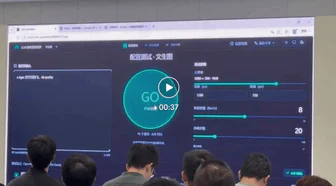
    Tenstorrent releases Tianhe 300 and Tongyang TY1200, on-site actual test targets NVIDIA H200 and Thor T5000.

    Tenstorrent releases cloud-based general-purpose GPU Tianhe 300 and edge product Tongyang TY1200 based on the Tianshu architecture, and compares them with NVIDIA H200, Jetson Thor T5000 on-site with random questions.

    Why it matters: On-site random tests, dual-track comparison of cloud and edge against NVIDIA, and providing reproducible test numbers and software stack implementation methods.

  3. ITHome · AI42

    XHEART NewCore Journey releases the intelligent driving large model chip X7 Ultra: 700 TOPS large model computing power, first in China to mass-produce Armv9 automotive-grade CPUs.

    XHEART NewCore Journey releases the X7 Ultra large model chip, achieving 700 TOPS of computing power, with mass-produced models achieving 99.99% alignment, a 80% reduction in memory bandwidth consumption, and a 100% improvement in energy efficiency. The chip incorporates a high-precision operator acceleration engine, natively supporting FP16/FP32 computing, and is the first in China to mass-produce Armv9 automotive-grade CPUs, offering a 20% performance boost and a 10% improvement in energy efficiency.

  4. ITHome · AI

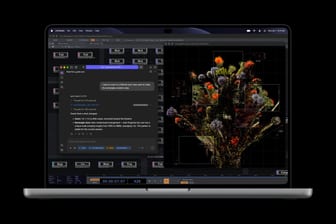
    Apple's first Touch MacBook Pro is released, featuring up to 128GB unified memory capable of locally running AI models with billions of parameters.

    Apple released its first touchscreen MacBook Pro equipped with a PROLED XDR display, featuring the M5 Max chip version with up to 128GB unified memory, capable of locally running large language models with billions of parameters, supporting applications like LM Studio, starting at 22,999 yuan.

Oct 28Wed
  1. ITHome · AI72

    Days Smart Chip Tianya 300 runs its first prototype, claims single-card throughput reaches 1.05 times that of NVIDIA H200

    Days Technology Core first publicly demonstrates Tianji 300 general GPU prototype running on October 28th Shanghai media open day, claiming it as the first general GPU in China with actual performance reaching NVIDIA H200 level. Third-party actual testing converts single card overall throughput to 1.05 times that of H200, but specific testing methods, model loads, and workload conditions have not been announced.

    Why it matters: Days Technology Core first publicly demonstrates Tianji 300 prototype running, providing throughput comparison with H200 and super-node cost estimation, allowing observation of domestic GPU's ground progress.

  2. ITHome · AI

    Opera launches WebAI web standard, supporting local deployment of AI models in the browser

    Opera introduces a new web standard called WebAI, allowing users to run AI models directly in the browser without relying on cloud services. WebAI is compatible with multiple open-weight AI models, such as Google's Gemma and Apple's on-device foundation models, and is currently available in an early preview version of the Opera One browser. Other Opera browsers will soon support it.

  3. QbitAI

    Yinqi has also achieved end-to-end for 4D radar

    Qianli Technology has launched an AI 4D millimeter-wave radar, equipped with a 10 TOPS NPU, supporting local AI perception and satellite architecture parallel output, achieving end-to-end AI processing from antenna design to point cloud output. The radar's point cloud density is enhanced 10 times, detection range is increased by 40%, ghost shadow elimination rate reaches 95%, and spatial angular resolution is improved 12 times. It provides three working modes: edge-side, satellite architecture, and compatible, to adapt to different functional levels and platform requirements.

  4. Hugging Face Blog76

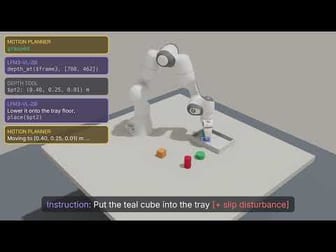
    Liquid AI releases LFM3 series: Same 2B backbone derived text, visual, audio, multimodal and decision models

    Liquid AI releases the new generation Liquid Foundation Models, LFM3, deriving six 2B-level models from the shared backbone LFM3-1.7B-Base, covering text, vision, audio, multimodal, and decision, all open weights on Hugging Face.

    Why it matters: Liquid AI derives six modality models from the same 2B-level backbone and provides single-card fine-tuning and edge deployment paths, which can be used to judge the specialization route for small models.

Oct 27Tue
  1. ITHome · AI

    Ollama Mac version adds offline AI voice generation: data stays within the door, speed up to 35% faster than the original solution.

    Ollama announced on October 24 that its Mac app officially supports text-to-speech (TTS) generation. The first supported voice model is the Phonon series developed by Gradium, which allows users to run it without relying on cloud services on Apple Silicon Macs. On MacBook Pro equipped with the M5 Max chip, Phonon voice generation speed is 35% faster than Gradium's own implementation and supports real-time voice generation.

  2. LangChain Deep Agents releases

    LangChain Deep Agents deepagents-code==0.2.2 release: Security and performance improvements

    The deepagents-code==0.2.2 version of LangChain Deep Agents has been released, including security and performance improvements. New features include GPT-6.1 Terra support, Chinese text input to chat, plugin update detection, etc.; bug fixes include project .env file trust value settings, terminal UI link limits, Git option limits, etc.; performance has been improved by reusing parent process context, optimizing server startup processes, and streamlining transcription rendering, etc. It is recommended to upgrade as soon as possible.

Oct 26Mon
  1. QbitAI67

    iFlytek Spark-X2.6 Open Source Model Released: National Product Computing Power Route Shows Significant Results

    Xunlei open-sources Spark-X2.6 large model with MoE architecture, 293B total parameters, supports 1M context, API price cut by 60%, 0.9 yuan per million input tokens. Tests show Spark-X2.6 improves code and agent capabilities by about 8 points, domestic computing power training efficiency increases 4 times, token consumption in high-frequency application scenarios drops by about 60%. The model supports three collaborative modes: pure edge, pure cloud, and cloud+edge. Completes weekly operational review for a robotics company under CPU inference in 6.8 minutes, delivering a complete report with 90% accuracy.

Oct 25Sun
  1. 36Kr · AI58

    Qianli Technology releases AI millimeter-wave radar integrated with a 10 TOPS NPU

    Qianli Technology releases AI millimeter-wave radar integrated with a 10 TOPS NPU, achieving internal target detection and classification for the first time, supporting edge-side, satellite, and three-compatible operating modes. This radar introduces data-driven models at the front end of the perception chain to break through the rule limits of traditional architectures, shortening response times and enhancing security. Through the acquisition of Ronggan Technology, Qianli Technology has closed the soft-hard integrated business loop, realizing joint optimization of self-developed algorithms and hardware.

  2. ITHome · AI62

    Block releases full-duplex AI voice model Dessa: full human-like feel, supports local operation on Apple MacBook

    Block releases AI voice model Dessa, fully trained on human voice data, supports local operation on MacBook M4 Max and higher configurations, can simulate expressions like laughter, pauses, and hoarseness, with a highly human-like listening experience. Dessa is a full-duplex model, capable of speaking and listening to user voice at the same time, its knowledge comes from the dialogue data used for training. Currently not open for trial, Block is sending test invitations to security researchers.

Oct 22Thu
  1. The Decoder74

    Recursive releases its first model developed in collaboration with Eureka Machine

    AI startup Recursive has released its first language model, Flint. During the development process, the AI system named Eureka Machine participated in proposing ideas, building, testing, and planning subsequent experiments.

    Why it matters: Recursive publicly announces its first model developed with the assistance of an automated research system, allowing readers to observe how far AI-assisted R&D can go.

  2. ITHome · AI75

    XPeng IRON Humanoid Robot Capability Upgrade: Re-rreasoning every 0.2 seconds, can predict action changes within 6 seconds

    The XPeng IRON humanoid robot re-rreasons every 0.2 seconds, can predict action changes within 6 seconds. It can flexibly respond to temporary 'moves' when interacting with people, such as handshakes, high fives, and slaps, and adjust responses. The robot is equipped with a large model of the physical world, featuring 3 Turing AI chips, building a high-level brain combination of VLT+VLA+VLM.

  3. TechCrunch · AI71

    Recursive has released a laptop-grade coding model called Flint, claiming it is mostly built with AI.

    Recursive releases its first model, Flint, a free coding model that can run on laptops, with almost the entire development process driven by AI. Recursive's automated research system, Eureka Machine, participated in almost every development step of Flint, enabling the team to complete the model construction in less than four months.

Oct 20Tue