Skip to content
Live
Oct 25Sun
  1. 36Kr · AI58

    Qianli Technology releases AI millimeter-wave radar integrated with a 10 TOPS NPU

    Qianli Technology releases AI millimeter-wave radar integrated with a 10 TOPS NPU, achieving internal target detection and classification for the first time, supporting edge-side, satellite, and three-compatible operating modes. This radar introduces data-driven models at the front end of the perception chain to break through the rule limits of traditional architectures, shortening response times and enhancing security. Through the acquisition of Ronggan Technology, Qianli Technology has closed the soft-hard integrated business loop, realizing joint optimization of self-developed algorithms and hardware.


  2. Ant Group inclusionAI · Hugging Face new models58

    inclusionAI/Ling-3.1-flash-base released: a sparse MoE architecture large model with 560B parameters.

    inclusionAI/Ling-3.1-flash-base is released, a sparse MoE architecture large model with 560B total parameters and 25B active parameters. It adopts a hybrid linear attention mechanism (63 KDA + 9 Gated MLA) and performs excellently in 47 cross-domain benchmark tests spanning eight fields. It supports continuous pre-training, domain adaptation, and post-training research. The model is trained with FP8 precision and released with BF16 precision, following the MIT license.

  3. ITHome · AI75

    The open-source project GPU Unlock can release the hidden AI computing power of RTX 30 series graphics cards, with testing showing an increase of up to 60%

    The open-source project GPU Unlock, developed by GitHub user Zagitta, can remove the instruction emission rate limit of Ampere architecture consumer-grade GPUs in FP16/BF16 tensor core operations without modifying the driver or flashing VBIOS.

    Why it matters: The original text provides measured improvement data for multiple RTX 30 GPUs under GEMM and image generation workloads, also indicating limitations such as memory bandwidth.

  4. vLLM Blog60

    vLLM serves DeepSeek-V4.1-Flash on GB300 NVL72: performance matches DeepInfer and extends to the entire rack

    The vLLM team used P/D separation and Wide-EP to serve DeepSeek-V4.1-Flash on a single NVIDIA GB300 NVL72 rack, achieving 954K tokens/s per GPU and 196 tokens/s for single-user P90 on SemiAnalysis AgentX, which is 7.9 times the early single-node results.

    Why it matters: The vLLM team has released per-item optimization and measured data for serving DeepSeek-V4.1-Flash on GB300 NVL72, which can be compared with DeepSeek's own engine DeepInfer.

Oct 24Sat
  1. The Decoder65

    Research finds that complex coding agent frameworks do not improve performance but increase costs

    Research indicates that the performance gap between different coding agent frameworks is within the range of statistical noise, and the effect of switching frameworks is comparable to rerunning with the same settings. Claude Code, OpenCode, and mini-SWE-agent three frameworks increase the number of tokens consumed per model by two to three times, but the pass rate is still within the range of measurement uncertainty. OpenCode shows statistically significant underperformance in large task sets, mainly due to output limits and shorter runtime limits, while system prompts and tool descriptions in other frameworks are the main sources of cost differences.

  2. ITHome · AI

    NVIDIA RTX Remix 1.6 Released: Path Tracing Support for Minecraft Java Edition, A-Series Performance Improvement of About 20%

    NVIDIA RTX Remix upgraded to version 1.6, experimental support for path tracing in Minecraft Java Edition, A-series card performance improved by about 20%. The new version introduces DLSS 5 3D guided neural rendering, up to 6x frame generation, native Windows on ARM support, and upgrades ComfyUI 2.0 resource pipeline.

  3. MarkTechPost58

    Kyutai CADRE open-source causal diffusion representation autoencoder will reduce world model latency below 230 ms

    Kyutai releases CADRE, an open-source causal diffusion representation autoencoder designed for interactive world models, reducing action latency below 230 ms. CADRE includes 7 autoencoders, each with approximately 476M parameters plus 86M frozen DINOv3 ViT-B/16, a world model of 1.2B parameters, video resolution of 288×512, frame rate of 20 fps, running on 1 H100.

  4. MarkTechPost83

    Moonshot AI has released Kimi K3.1 Pro: a 2.8T total parameter, 104B activated MoE model that supports a context length of 1M.

    Moonshot AI has released the first model of the K3.1 series, Kimi K3.1 Pro, which adopts a MoE architecture with a total parameter count of 2.8T and an activation parameter count of 104B, supporting a context length of 1M tokens. It has been launched on Kimi.ai, Kimi Work, Kimi Code, and Kimi API. The API pricing is $2 per million tokens for input and $10 for output, lower than K3's $3 and $15.

    Same story — showing the featured version《》

  5. Redwood Research62

    Redwood Research has released the Simulated Control Evaluation (SCEs) method

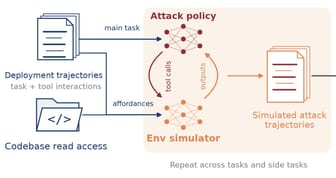
    Redwood Research has released the Simulated Control Evaluation (SCEs) method, used to test whether AI monitors can intercept harm intentionally caused by models in an environment close to real deployment. The method involves using an LLM simulator to execute attack model tool calls and letting the LLM judge whether the attack is successful, with the gap to real-world testing being approximately the same as the gap between two independent real runs. SCEs perform faithfully in verifiable scenarios and can significantly improve the representativeness of control evaluations for deployment, but long-term multi-agent attacks remain a limitation.

  6. Simon Willison82

    Kimi K3.1 Pro goes live with Kimi API, promising to open source weights by November 4th.

    Kimi K3.1 Pro goes live with Kimi API today, weights not yet open, Moonshot promises to release complete model weights by November 4th, 2026. Pricing is $2.00/100 million tokens for input, $10/100 million tokens for output, the same as GPT-6.1 Sol, half of Claude Opus 5.5, also provides a Highspeed version that is 2-3 times faster and doubles the price.

  7. Cohere Blog

    Cohere Labs open science project reveals limitations in AI's understanding of culture

    Cohere Labs open-source science project collects cultural puzzles through global collaboration to test AI models, finding significant flaws in cross-linguistic cultural understanding, often answering incorrectly or hallucinating. Participants include over 100 people from more than 50 countries, including 16-year-old American student Henry Gagnier and retired teacher Jane Smith, who provided key insights, pointing out that the model not only lacks cultural knowledge but is almost clueless about common languages like Buginese.

  8. Cohere Blog58

    How Cohere Model Vault builds verifiable confidential AI reasoning

    Cohere Model Vault introduced confidential computing on Microsoft Azure using NVIDIA GPUs in its public test version, designed to reduce the plaintext data infrastructure customers must trust and provide cryptographic evidence for customers to verify before sensitive information is released. The system protects the computation itself through hardware-enforced isolation, uses Oblivious HTTP to encrypt sensitive request content, and employs a remote attestation mechanism to ensure the environment processing requests meets expectations, thereby protecting the entire process from request transmission to computation execution.

  9. SemiAnalysis

    Amazon Trainium dominates the training market

    Amazon Trainium has significantly improved its training experience with native PyTorch, enhancing its competitiveness in the training field. Trainium3 supports the standard PyTorch API, allowing most PyTorch code to be migrated to .to('neuron') without XLA annotations, but the BF16 training experience is still not fully refined. SemiAnalysis's engineering team testing shows its performance is close to the CUDA ecosystem, but there is still room for improvement.

  10. vLLM Blog62

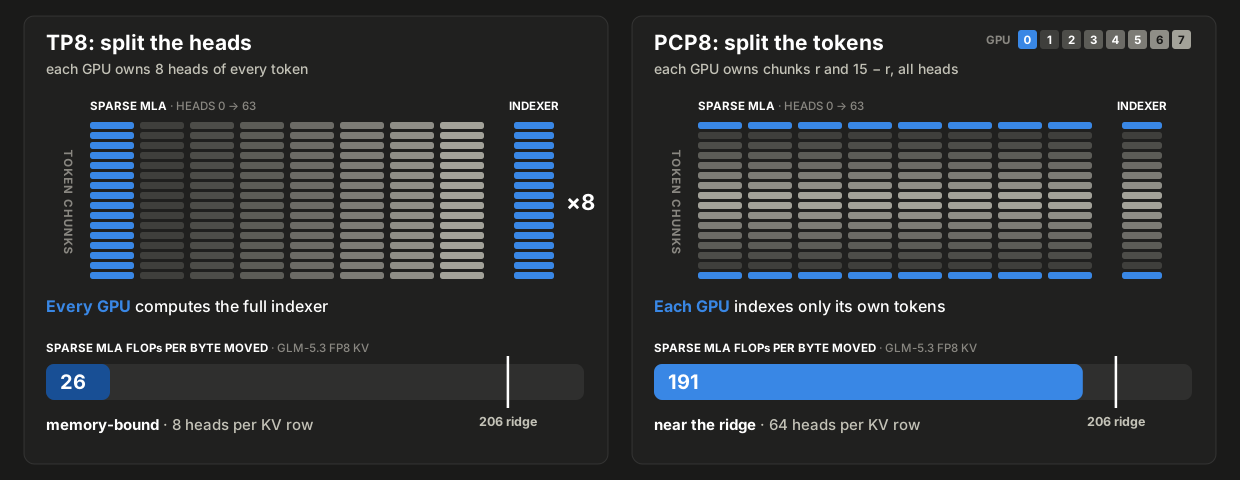
    vLLM provides an in-depth explanation of the optimization of PCP, DCP, and Hybrid HiSparse for GLM-5.3 on 16 H200s

    vLLM team releases the second part of GLM-5.3 optimization, deploying on 16 H200s with 1 pre-filled node and 1 decoding node, using PCP to split pre-fill by token and DCP to split KV cache by token, allowing 1M context to fit into the pre-fill node

    Why it matters: The vLLM team has dissected how PCP, DCP, and Hybrid HiSparse can be combined on 16 H200s, allowing readers to understand the memory and pre-fetch bottlenecks of long-context deployment.

  11. Databricks Blog58

    Spark's declarative pipelines: Use cases designed for AI agents

    Spark's declarative pipelines are 34 times faster than imperative pipelines in 22 data engineering tasks, halve the code volume, and have fewer errors. Declarative pipelines capture structural errors in advance through pre-execution validation and offload repetitive tasks like sorting and result saving to Spark, while imperative pipelines need to run on the cluster until the error step to detect them. The two methods perform equally in terms of logical error rates, but declarative pipelines have more concise and consistent code, making them easier to maintain.

  12. Hugging Face Daily Papers

    The FRED framework enhances the future video representation capabilities of world action models through self-distillation and temporal conditioning.

    The FRED framework enhances the future video representation capabilities of world action models through self-distillation and temporal conditioning, consistently outperforming competing models in real-world operational scenarios, achieving significant gains in zero-shot generalization on long-term and out-of-domain tasks, and increasing the success rate of human video skill transfer from 19.4% to 50.0%.

  13. NVIDIA Technical Blog35

    NVIDIA TensorRT 11.1's Global Performance Tuner (GPT) extension enhances single-build optimization capabilities

    NVIDIA's Global Performance Tuner (GPT) introduced in TensorRT 11.1 can automatically perform precision-aware end-to-end performance tuning, extending single-build optimization capabilities by customizing optimization solutions for different models. GPT supports automatic adjustment of different optimization strategies within TensorRT.

  14. Hugging Face Blog

    LitPivot: Developing research ideas through dynamic context in the literature landscape

    LitPivot helps researchers adjust their research direction by reading previous literature, dividing research ideas into problems, contributions, and evaluation plans, and providing literature-based criticism and revision suggestions for each section. In a laboratory study involving 17 researchers, domain experts rated the literature foundation of novel ideas developed using LitPivot better than ideas developed using text editors and AI chat tools. Participants also reported stronger literature comprehension and improved understanding of the novelty and practicality of their ideas.

  15. Latent Space

    OpenAI's Mathematical Breakthrough: How Models Solve Complex Problems

    OpenAI's internal models have solved the Erdős unit distance conjecture and proven other mathematical problems like the cyclic double cover problem. These models use depth-first search patterns, combined with massive computation and prompts, to validate ideas in minutes, while humans need months. AI's reasoning method is different from humans; its depth-first search and automated verification capabilities allow it to quickly explore complex problems, although it still requires human judgment for the feasibility of half-finished ideas.

Oct 23Fri
  1. ChinaTalk35

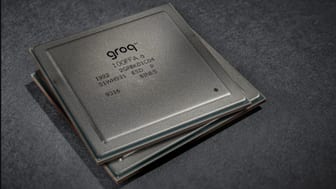
    Where is Groq in China?

    HBM was once popular at the end of 2025, as it could meet AI inference needs through high bandwidth, but the market has matured, single architecture no longer dominates, and different chips perform differently in training, pre-fetching, or decoding.

  2. MarkTechPost38

    TinyFish releases technical guidelines for Agent search architecture used in production-level AI agents

    TinyFish releases technical guidelines for Agent search architecture used in production-level AI agents, whose system is based on four web basic components: TinySearch, TinyFetch, TinyBrowser, and TinyAgent. It achieves a 79.0% completion rate on coding tasks on OpenBenchmarks by running a seven-stage control loop around the base model, realizing the lowest median task cost of $0.050 and token footprint.

  3. ITHome · AI

    LSTC, Hokkaido University, and five other parties are collaborating to develop a 2nm low-power AI inference chip for medical imaging.

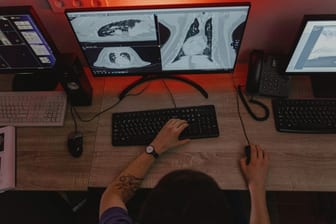
    LSTC, Hokkaido University, Fujifilm, GE Healthcare, and imec are collaborating to develop a low-power AI inference chip based on a 2nm process for medical imaging, used for photon counting CT high-speed reconstruction, ultrasound imaging real-time overlay, and real-time identification during surgical microscopes. The goal is to provide 5 times the image processing speed and 10 times the energy efficiency of existing GPUs. It will be migrated to a chip after development on IBM Spyre accelerators and will be used for clinical applications at the Hokkaido University Hospital.

  4. Hugging Face Daily Papers

    WeVisOne-VL: A unified visual perception model from object to pixel

    WeVisOne-VL predicts structured tokens to achieve unified object-level and pixel-level visual perception, supporting tasks such as detection, localization, counting, OCR, segmentation, and matting. It employs a lightweight pixel decoder and multi-stage training, leading in over 30 benchmark tests while maintaining robust rejection of non-existent objects.

    Same story · 2 outlets

    How the accounts differ:Hugging Face Daily Papers states it uses a lightweight pixel decoder; MarkTechPost mentions a 9.6M parameter decoder.

  5. Tencent Hunyuan · Hugging Face new models

    Tencent Mixuan releases WeVisOne-VL-4B unified visual language model

    Tencent Mixuan released the WeVisOne-VL-4B model, built on Qwen3-VL, integrating a 9.6M parameter pixel decoder, supporting object-level perception (open-vocabulary object detection, pointing localization, counting, pointing and OCR) and pixel-level perception (pointing segmentation and promptable alpha friction), suitable for research tasks such as visual localization, pointing, counting, OCR localization, pointing segmentation, and image friction.